 Orcas Island Siding
 Obstruction Pass sits on Orcas Island's quieter, water-facing side, and homes out here take a specific kind of beating that a lot of general siding advice never quite addresses. It isn't just "Pacific Northwest weather" in the abstract — it's salt-laden air moving off the water day after day, storms that drive rain sideways into walls instead of straight down, and a shaded, tree-covered landscape that keeps moss growing for most of the year. If you're looking at siding replacement for a home in this part of the island, the details matter more than they would somewhere drier and more sheltered. This page is about what that job actually involves and why it's worth getting right the first time.
What Obstruction Pass's Location Asks of Your Siding
San Juan County homes deal with a genuinely tough combination of conditions, and properties near Obstruction Pass sit right in the middle of it. Salt air off the water accelerates the breakdown of paint and finish films and corrodes fasteners and flashing faster than an inland site would ever see. Storms don't just soak a roofline and run off — wind-driven rain gets pushed sideways into south- and west-facing walls, working into seams, corner trim, and butt joints that a finish is supposed to keep sealed. And a lot of lots out here sit under fir, cedar, and madrona canopy, which shades walls and keeps them damp long after a storm has passed — exactly the condition moss needs to take hold and spread across siding, trim, and roof edges.
None of that is unusual for this part of the island. It's just the reason siding here needs to be chosen and installed with real intention, rather than treated as a generic exterior finish. A product and installation that would hold up fine in a dry inland town can fail early on a shaded, water-facing wall near Obstruction Pass.
Why Location on the Island Changes the Math
Two homes with identical siding can age at very different rates depending on how exposed they are to salt spray, how much direct sun their walls get, and how much tree cover keeps them damp. A sun-baked, open lot dries out fast after rain and fights moss naturally. A shaded, water-facing property near Obstruction Pass often doesn't get that advantage, which is exactly why we look at sun exposure, wind direction, and canopy cover on every estimate here rather than quoting a one-size-fits-all job.
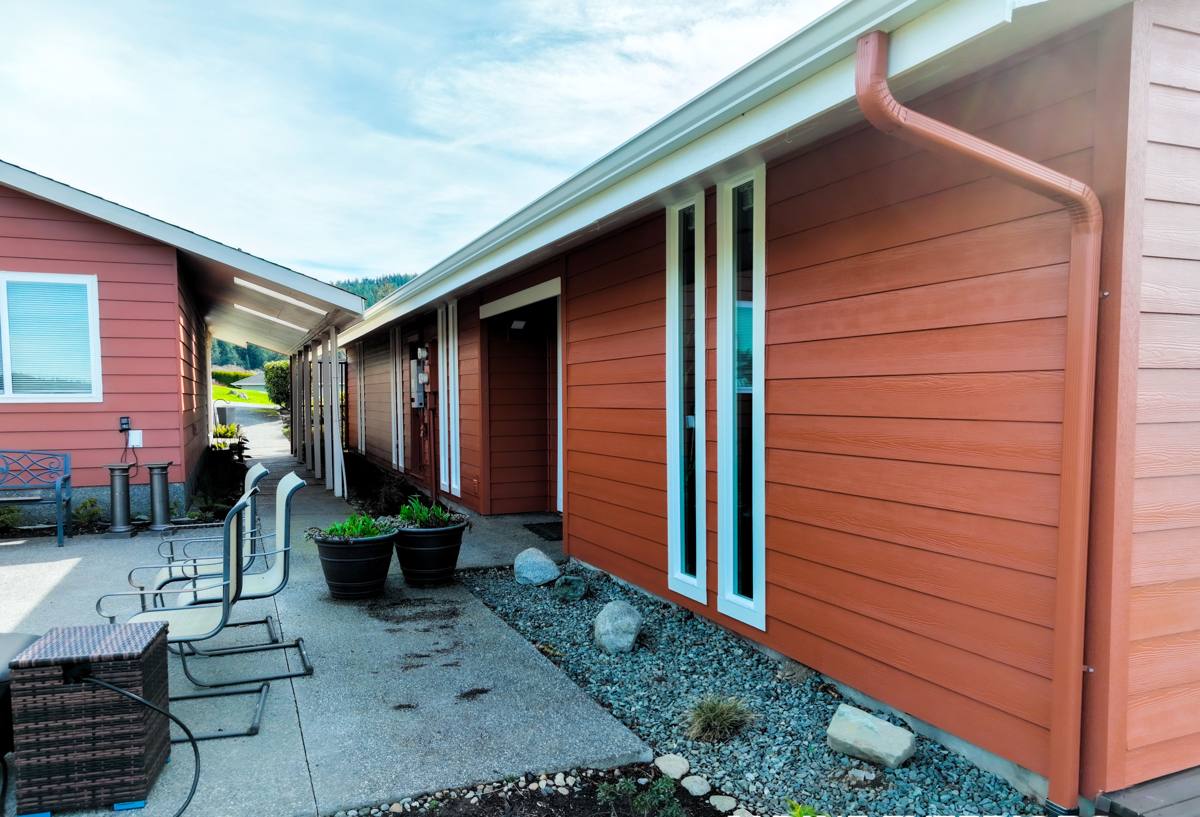
Signs Your Siding Has Reached the End of the Road
Siding failure on Orcas Island rarely happens all at once. It's usually a slow, localized process that's easy to miss until it's become a bigger repair than it needed to be. Watch for these on a home near Obstruction Pass:
- Soft spots or visible give when you press on the siding, especially near the ground, decks, or roof lines
- Paint or finish that's bubbling, peeling, or chalking well ahead of its expected repaint interval
- Persistent moss or algae staining on shaded or north-facing walls that keeps coming back after cleaning
- Visible warping, cupping, or gaps opening at butt joints and corners
- Swelling or crumbling at cut edges, corners, or seams, especially on wood-based products
- Rising repair frequency — patching the same few spots more than once in a couple of years
When Repair Still Makes Sense
Not every problem calls for full replacement. A cracked caulk joint, a section of damaged trim, or a small area of impact damage on otherwise sound siding can often be repaired directly, especially if the rest of the wall is dry and intact underneath. An honest contractor will tell you when a targeted repair is the right call rather than pushing a bigger job than the house needs.
When Replacement Is the Honest Answer
Replacement becomes the right call when the damage is spread across multiple walls, when moisture has clearly gotten behind the siding into the sheathing, or when the underlying material itself — not just the finish — has started to break down. On a home near Obstruction Pass, we'd also rather replace proactively on a wall that's showing early signs than wait for a full-blown moisture problem to develop behind boards that are already compromised.
What a Correct Siding Replacement Actually Involves
New siding is the visible result, but the work that actually determines how long it lasts happens underneath it. A replacement done right on this part of the island includes:
- Full tear-off down to the sheathing, not an overlay on top of old siding
- Inspection of the sheathing and framing for rot or moisture damage, with repairs made before anything new goes up
- A correctly installed weather-resistive barrier, properly lapped and sealed
- A drainage gap or rainscreen detail that lets any moisture that does get behind the cladding drain and dry out, instead of sitting against the wall
- Correct flashing at every window, door, and roof-to-wall intersection — the single most common place we find water damage originating
- Fastening to manufacturer spec, with fasteners rated for a marine, salt-air environment
Skip any one of those steps and the new siding can look fine for a year or two while a moisture problem develops behind it unseen — which is a much more expensive fix than the siding itself would have been.
Why We Install Only James Hardie Fiber Cement
This company installs one siding product: James Hardie fiber cement. We don't offer vinyl, LP SmartSide, Cemplank, Allura, primed spruce, or cedar, and on a site like Obstruction Pass, that's a deliberate call rather than a limitation. Fiber cement has no organic core for moss, mildew, or trapped moisture to work into over time, which matters directly in a climate with a moss season that runs most of the year. It's non-combustible, which carries real weight on a wooded island where wildfire risk is a genuine seasonal concern. And Hardie's factory-applied ColorPlus finish is baked on under controlled conditions and backed by its own warranty against fading and cracking — a real advantage over a field-applied finish fighting constant salt exposure and long gray stretches of weather.
Hardie also builds its HZ product lines specifically engineered for regions dealing with sustained moisture and coastal exposure, rather than selling one generic formulation everywhere. Combined with a strong transferable warranty, that gives an Obstruction Pass homeowner a documented, climate-appropriate installation rather than a product chosen mainly for upfront price or a particular look.
How It Compares to the Alternatives
| Material | Moisture & Salt Air Performance | Maintenance Burden | Our Take for This Location |
|---|---|---|---|
| Vinyl siding | Doesn't rot, but can crack and fade in UV and temperature swings, and traps moisture behind it if not detailed carefully | Low upfront, but panels can warp or need full-section replacement when damaged | Cuts corners on long-term performance in a demanding coastal climate |
| LP SmartSide | Engineered wood strand product; edges and cut ends are vulnerable to swelling if moisture gets in | Requires diligent caulking and paint upkeep to protect exposed edges | Installation-sensitive in a wet, salt-air environment with less margin for error |
| Cedar / primed spruce | Natural material; performance depends heavily on finish and joint maintenance | Recoating every 2-4 years, plus ongoing caulk and moss management | Real appeal, but a demanding maintenance schedule on an island where a contractor visit takes planning |
| James Hardie fiber cement | Non-organic core, doesn't swell, rot, or delaminate from moisture exposure | Factory finish means far fewer recoating cycles over the siding's life | What we install, and what we'd choose for our own homes here |
Our Siding Replacement Process
Every job starts with a walk-around of the actual house, not a generic quote. Here's how it runs:
- Assessment and estimate. We look at existing siding condition, sun exposure, tree canopy, and any visible moisture or rot before quoting the job — no guessing from a photo.
- Tear-off and sheathing check. Old siding comes off, and we inspect the sheathing and framing underneath for damage before anything new goes on.
- Weather barrier and drainage detail. A properly lapped weather-resistive barrier goes on, along with the drainage gap detail that lets any moisture behind the siding dry out instead of sitting against the wall.
- Flashing and installation. Windows, doors, and roof intersections get flashed correctly, and Hardie panels or lap siding go up fastened to spec.
- Trim, caulking, and finish work. Trim is fitted, joints are caulked where the product calls for it, and any factory-finish touch-up is completed.
- Final walkthrough. We go over the finished job with you before calling it done.
What Affects the Cost of Siding Replacement Here
Every home is different, and we won't quote a real number without seeing the property, but these are the factors that consistently move the price on a job near Obstruction Pass:
| Factor | Why It Matters |
|---|---|
| Home size and wall complexity | More square footage and more corners, gables, and trim detail mean more material and labor |
| Condition of the existing wall | Rot repair to sheathing or framing found during tear-off adds cost, but it's cheaper to fix now than to bury under new siding |
| Site access and tree cover | Tight, wooded, or waterfront-adjacent lots can slow material staging and require more hand-carrying |
| Trim and detail package | Full trim replacement, corner details, and matching existing architectural features add to scope |
| Color and finish choice | Standard ColorPlus color options are typically more efficient than heavily custom finish requests |
| Scheduling and material delivery | Getting crews and materials to island properties takes more lead time than a mainland job, which affects timeline more than base cost |
Why Hiring a Crew That Already Works Obstruction Pass Matters
Working on Orcas Island isn't the same as working on the mainland, and it shows up in ways homeowners don't always anticipate until they're mid-project. Materials, crews, and equipment all move by ferry, which means a contractor without established island logistics can lose days to a missed sailing or a scheduling mismatch that a crew already working here has already planned around. A contractor who regularly works this part of the island also knows what salt exposure and tree canopy actually do to a wall over a few seasons, not just in general terms — which shows up in how carefully they detail flashing, drainage, and fastener choice on the specific side of a house that faces the water.
There's also the practical matter of being reachable afterward. If a question comes up six months after installation, a crew that already works this area is a lot easier to get back out than one that made a single trip out from off-island and hasn't been back since.
Protecting Your Investment After Installation
James Hardie siding cuts the maintenance burden dramatically compared to wood-based products, but "low-maintenance" isn't "no-maintenance," especially in this climate. A little seasonal attention keeps it performing the way it's designed to:
- Rinse salt residue and airborne grime off the siding periodically, especially on walls that face open water
- Keep gutters and downspouts clear so water isn't overflowing onto walls below
- Trim back vegetation and tree limbs that shade walls and slow drying, since that's exactly the condition moss needs
- Do a quick annual look at caulking around windows, doors, and trim, and have any cracked sections renewed
- Address any impact damage or scuffs promptly rather than letting them sit through a wet season
Let's Take a Look at Your Home
If your siding near Obstruction Pass is showing its age, or you're planning ahead before a small problem becomes a bigger one, we're glad to come take a look and give you a straight answer about what your home actually needs. There's a free, no-pressure estimate form below — reach out and we'll walk the property with you.