 Orcas Island Siding
 Siding in Olga Has to Survive a Different Set of Conditions
Olga sits on the east side of Orcas Island, close enough to the water that salt-laden air is part of daily life, and far enough into the trees that shade and moisture linger on exterior walls long after a storm passes. Homes here take a combination of punishment that inland Washington siding rarely has to deal with: salt air that accelerates corrosion of fasteners and trim, driving rain that gets pushed sideways into wall assemblies during winter systems, and a moss and algae season that can run most of the year on north- and east-facing walls that don't get much direct sun. Any siding product installed in Olga has to hold up to all three at once, not just one of them.
This is the reality that shapes every recommendation we make for homes in this part of San Juan County. It's also why we install one product system, James Hardie fiber cement, rather than offering a menu of options and letting price alone decide. We'll explain why below, and walk through what a correct fiber cement job actually involves on a home like yours.
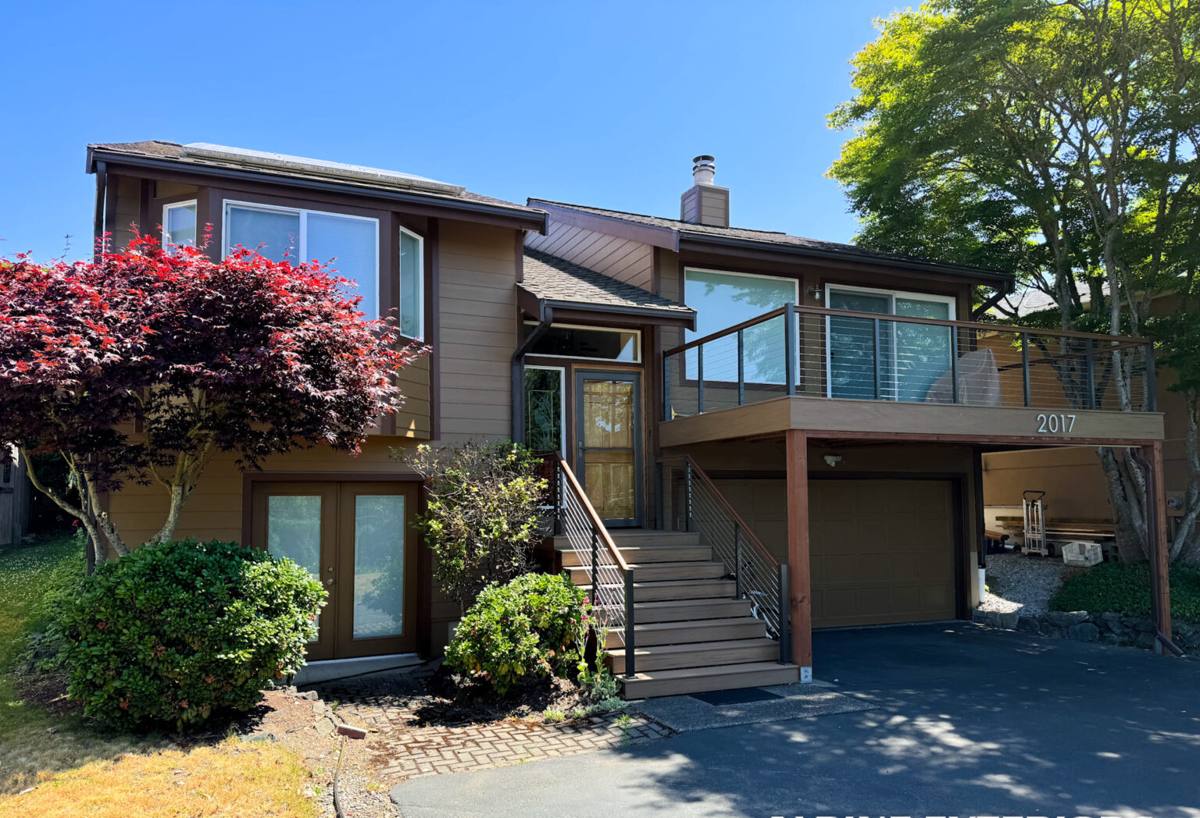
Why Fiber Cement Holds Up Where Other Sidings Struggle
Moisture and Rot Resistance
Fiber cement is made from cellulose fiber, sand, and portland cement, cured into a dense, dimensionally stable board. It doesn't absorb water the way wood does, and it won't swell, delaminate, or rot the way engineered wood products can once moisture finds a way behind the surface finish. On Orcas Island, where driving rain off the water can push moisture into siding laps and around trim for days at a stretch during winter storms, that stability matters more than almost any other property.
Standing Up to Salt Air
Salt air doesn't just affect metal fasteners and hardware, it also degrades paint films and accelerates the breakdown of less stable substrates over time. Fiber cement's factory-applied finish is baked on and bonded to a substrate that isn't organic, so there's no wood grain trying to swell and crack the coating from underneath. It's a meaningfully different equation than what you get with a wood-based or wood-fiber product exposed to the same salt exposure year after year.
Moss, Algae, and Shade
A lot of Olga's tree cover is a blessing for privacy and a curse for siding. Shaded, damp walls grow moss and algae faster than walls that get afternoon sun, and that growth holds moisture against the surface even longer. Fiber cement doesn't feed mold and mildew growth the way wood-based products can, and its dense, non-porous surface makes periodic washing far more effective at actually removing growth instead of just knocking back the visible surface layer while spores stay embedded.
How Fiber Cement Compares to the Alternatives
Homeowners on Orcas Island are usually choosing between a handful of options when it's time to re-side. Here's how they stack up against the specific conditions Olga homes face.
| Material | Salt Air Performance | Moss/Algae Resistance | Maintenance | Fire Resistance |
|---|---|---|---|---|
| Vinyl | Can become brittle and fade faster near salt exposure | Moderate; growth sits on the surface | Low, but limited repair options if damaged | Poor; melts and contributes fuel |
| Cedar / primed wood | Coating breaks down faster under salt and UV | Poor; organic surface feeds growth | High; repainting and caulk maintenance every few years | Poor; combustible |
| LP SmartSide (engineered wood) | Coating holds up reasonably, but core is still wood-based | Moderate; edge sealing is critical | Moderate; edges and cuts need ongoing attention | Poor; combustible |
| James Hardie fiber cement | Strong; non-organic substrate, factory-cured finish | Strong; dense surface resists and cleans up well | Low; periodic washing, no repainting cycle | Excellent; non-combustible |
This is also why we don't install LP SmartSide, vinyl, primed spruce, or cedar as our standard product. Each has situations where it can be a reasonable choice, but for the specific combination of salt exposure, driving rain, and shade that Olga homes deal with, we've made fiber cement our standard rather than offering a product mix that puts more maintenance burden back on the homeowner.
The James Hardie Products We Use
Hardie's lineup includes an HZ10 formulation engineered for wetter, harsher climates like the Pacific Northwest, which is what we specify for Orcas Island projects. We typically install HardiePlank lap siding for the main field of the wall, with HardiePanel or HardieTrim used for accent areas, soffits, and trim detailing depending on the home's design. All of it comes with Hardie's ColorPlus factory finish, a baked-on coating that's more consistent and more durable than field-applied paint, and it carries a longer finish warranty than what you'd typically get from repainting cedar or touching up vinyl.
Color selection matters more on Orcas Island than in a drier climate, because darker, high-contrast colors show water spotting and pollen differently than lighter tones once salt air and moisture start interacting with the surface. We'll walk through color options with an eye toward how they'll actually look on your specific site, not just how they look on a sample board.
What a Correct Fiber Cement Installation Actually Involves
The material is only half the equation. Fiber cement siding fails prematurely almost exclusively because of installation mistakes, not product defects, and in a climate like Olga's those mistakes show up faster than they would somewhere drier.
Weather Barrier and Flashing
Everything starts underneath the siding. A continuous weather-resistant barrier, properly lapped and taped at seams, is the first line of defense against wind-driven rain. Flashing at windows, doors, and any wall penetration needs to be installed so water is directed out and away from the wall assembly, not just tucked behind the siding and hoped away. Given how much wind-driven rain Olga sees off the water, this step is where a rushed installer creates problems that won't show up for a year or two, by which time the damage is already inside the wall.
Fastening, Clearances, and Caulking
Hardie's installation specifications call for specific fastener types, spacing, and penetration depth, and for minimum clearances between the bottom of the siding and grade, roofing, decks, and other horizontal surfaces. Those clearances exist to keep splash-back and standing moisture away from the cut edges of the board, which are the most vulnerable point in the whole system if they're not properly sealed and maintained. Skipping or shortcutting these details is the single most common cause of the callbacks we see on jobs done by crews that don't specialize in this material.
Cut-Edge Sealing
Every field cut exposes raw fiber cement that needs to be sealed with the manufacturer-approved sealant before installation. On a marine-climate island like Orcas, an unsealed cut edge is an open door for moisture intrusion, and it's one of the easiest details to miss if a crew is moving fast to hit a schedule.
Our Process for an Olga Project
- Free on-site estimate and walkthrough, where we look at your home's specific exposure to wind, rain, and shade, not just measure square footage.
- Written scope covering product line, color, trim details, and any repair work needed to sheathing or framing before new siding goes on.
- Scheduling that accounts for ferry logistics and material delivery timing, since everything for the job has to come over to the island in advance.
- Removal of old siding, inspection and repair of the underlying wall assembly, and installation of a new weather-resistant barrier before any new siding goes up.
- Installation of James Hardie siding and trim to manufacturer specification, including flashing, fastening, and cut-edge sealing.
- Final walkthrough with you before we consider the job finished.
Living With Fiber Cement Siding in a Marine, Mossy Climate
Fiber cement is low-maintenance compared to the alternatives, but "low-maintenance" doesn't mean "no maintenance," especially in a climate that pushes moss and salt at your walls year-round. A little routine attention keeps the siding performing and looking the way it should for the long haul.
- Rinse siding with a garden hose and soft brush once or twice a year, more often on shaded, north-facing walls where moss and algae build up fastest.
- Keep gutters clear so overflow isn't running down the face of the siding during heavy rain.
- Trim back vegetation and tree branches that keep walls shaded and damp longer than necessary.
- Check caulking at trim joints, windows, and doors annually, and re-caulk where it's cracked or pulled away.
- Watch for any staining or discoloration near the bottom courses, which can be an early sign of splash-back or a clearance issue worth addressing before it becomes a bigger repair.
Cost Factors for a Fiber Cement Project in Olga
Every home is different, and we'll only give you real numbers after seeing your specific project, but these are the main factors that move the price on Olga jobs.
| Factor | Why It Matters Here |
|---|---|
| Wall complexity and trim detail | More corners, gables, and trim lines mean more cutting, fitting, and flashing work |
| Condition of the existing wall assembly | Rot or water damage found once old siding comes off adds repair scope before new siding can go on |
| Material and delivery logistics | Getting product to Orcas Island adds lead time and coordination compared to mainland jobs |
| Siding line and trim selection | HardiePanel, HardiePlank, and custom trim packages carry different material costs |
| Site access | Driveway length, slope, and staging space affect labor time on many Orcas Island properties |
Why It Matters to Hire a Crew That Already Works Olga
Getting materials, equipment, and a crew to Orcas Island takes planning that mainland contractors often underestimate, and a job that stalls waiting on a missed ferry or a forgotten material order is a job that sits exposed to the weather longer than it should. A crew that regularly works in Olga and the surrounding areas of Orcas Island already has that logistics figured out, understands San Juan County's permitting expectations, and has seen firsthand how salt air, rain, and moss actually behave on homes in this specific location, not just in a general Pacific Northwest sense. That local experience shows up in the small decisions, flashing details, color selection, clearance heights, that separate a siding job that looks good for a year from one that performs correctly for decades.
If you're weighing options for your Olga home, we're happy to walk the property with you, look at what your walls are actually dealing with, and put together a free, no-pressure estimate using the form below.