 Orcas Island Siding
 Why Friday Harbor Siding Takes a Different Approach
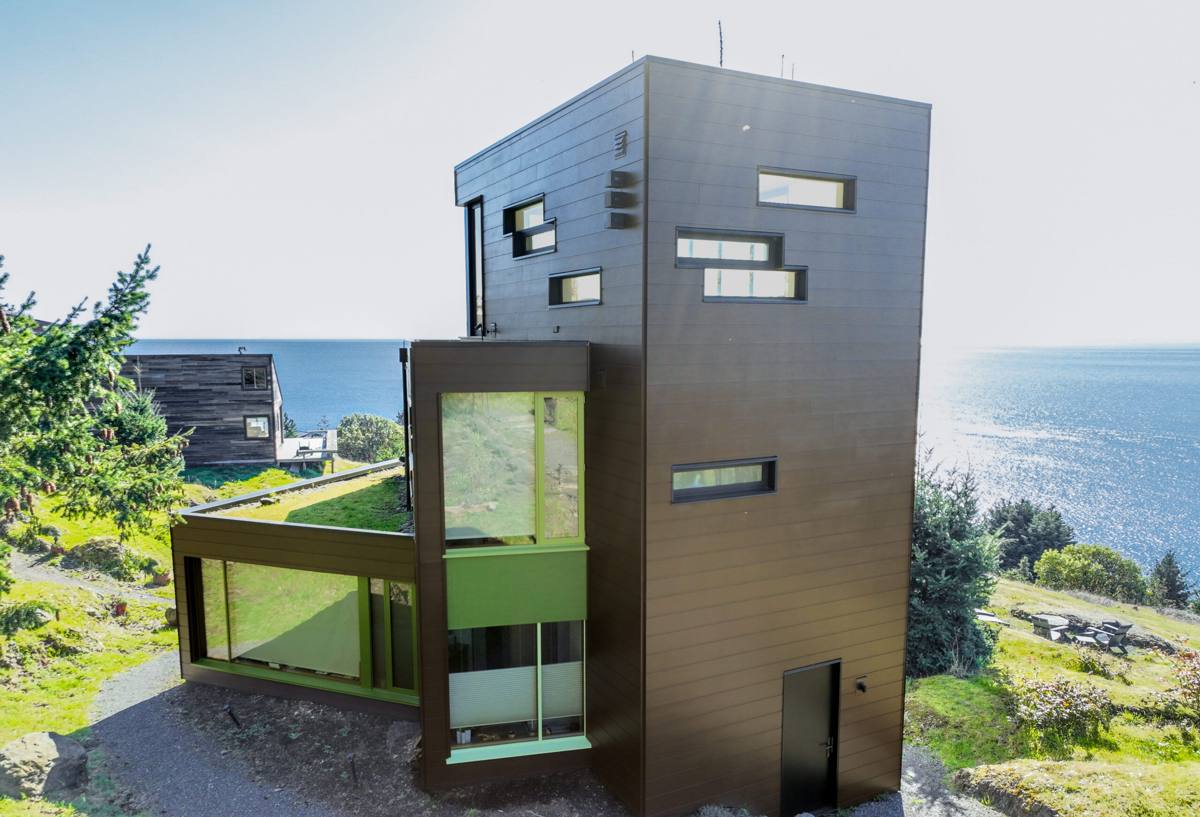
Friday Harbor sits in one of the more demanding exterior environments in Washington State. Homes here deal with salt-laden air off the water, long stretches of driving rain through fall and winter, and a moss and lichen season that can run most of the year on shaded or north-facing walls. None of that is dramatic on any single day — it's the cumulative exposure that wears down siding that wasn't built or installed for it.
That combination matters more than most homeowners realize when they're picking a siding material or a contractor. Salt air accelerates corrosion on fasteners and trim. Sustained moisture finds every gap in a weather barrier over time. Moss holds water against a wall surface far longer than open air would, which is hard on anything that isn't dimensionally stable or properly ventilated behind the cladding. Siding installation in this part of San Juan County isn't just about getting boards on a wall — it's about managing water and salt exposure for the next 30-plus years.
What a Correct Installation Actually Involves
Siding failure is rarely about the material itself. It's almost always about what happened underneath it, or wasn't done correctly during install. A correct job addresses several things that aren't visible once the siding is up:
Drainage and Moisture Management
A weather-resistive barrier goes on first, lapped correctly from the bottom up so water sheds outward instead of behind the barrier. On many homes, especially ones with a history of moisture issues or heavy wall exposure, a drainage plane or rainscreen gap behind the siding gives incidental moisture a way to escape instead of sitting against the wall sheathing.
Flashing at Every Penetration
Windows, doors, hose bibs, light fixtures, deck ledger connections — every penetration through the wall plane is a place water can get behind the siding if it isn't flashed correctly. This is where most real-world siding failures start, and it's also the part of the job that's easiest to rush.
Fastening and Clearances
Fiber cement siding has manufacturer-specified fastener types, spacing, and penetration depth — get those wrong and you either void the warranty or create a fastener that backs out or corrodes early. Clearance from grade, roof lines, and decks also has to meet spec, or water gets wicked up into the bottom of the boards.
Caulking and Joint Treatment
Butt joints, trim transitions, and corners need the right sealant, applied to the right surfaces — not just caulked everywhere out of habit. Over-caulking can trap moisture as easily as under-caulking lets it in.
James Hardie HZ10: Engineered for This Exact Climate
We install James Hardie fiber cement exclusively, and for homes in the San Juan Islands that matters more than it might in a drier inland climate. Hardie engineers its siding by climate zone, and the Pacific Northwest falls under what Hardie designates HZ10 — its formulation for high-moisture, marine-influenced regions. The HZ10 product line is built with that rain and humidity exposure in mind, rather than being a one-size-fits-all board shipped to every region.
Fiber cement is also non-combustible, which matters on islands where wildfire risk and limited fire department response times are real considerations for insurers and homeowners alike. And because it's dimensionally stable, it doesn't expand and contract with moisture the way wood-based products can — which reduces the joint movement that eventually opens gaps for water intrusion.
The factory-applied ColorPlus finish is baked on under controlled conditions before the boards ever reach the island, which gives it better fade and adhesion performance against UV and salt air than a field-applied paint job can consistently match. That's a real advantage in a place where materials are more exposed to marine air on a daily basis than in a typical inland neighborhood.
Our Installation Process
- On-site assessment — we look at wall exposure, existing moisture damage, current siding condition, and any problem areas (north walls, shaded siding prone to moss, low-clearance sections near grade or decks).
- Scope and material plan — we determine whether a full tear-off is warranted or if the existing assembly is sound enough to build over, and spec the correct Hardie product line, trim, and fastener package for the exposure.
- Removal and substrate check — old siding comes off where needed, and we inspect sheathing for rot or soft spots before anything new goes up. Hidden damage gets addressed before it's covered again.
- Weather barrier and flashing — house wrap or building paper installed correctly, with flashing detailed at every window, door, and penetration before siding starts.
- Installation to manufacturer spec — correct fastener type, spacing, and clearances, following Hardie's published installation requirements rather than generic siding practice.
- Trim, caulking, and final inspection — joints sealed appropriately, touch-up paint where needed, and a walkthrough before we call the job done.
Tear-Off vs. Installing Over Existing Siding
One of the first real decisions on a Friday Harbor project is whether to strip the old siding down to the studs or build a new assembly over what's there. Both are legitimate approaches depending on condition — the table below covers the trade-offs.
| Factor | Full Tear-Off | Install Over Existing |
|---|---|---|
| Best used when | Rot, moisture damage, or an outdated barrier is suspected behind current siding | Existing siding and sheathing are dry and sound, budget is a bigger constraint |
| Moisture management | Full access to inspect and correct sheathing and weather barrier | Relies on the existing wall assembly being in good condition already |
| Labor and cost | Higher — demolition, disposal, and full re-wrap | Lower — faster install, less demolition waste |
| Long-term risk | Lowest, since problems are found and fixed | Any hidden rot or moisture issue stays hidden |
For homes that have had persistent moss coverage, visible staining, or soft spots near the base of walls, we generally recommend tear-off so nothing gets sealed in behind the new siding. For homes in solid shape that just need updated cladding, building over can be a sound, more economical choice.
What Drives Cost on a Friday Harbor Project
| Factor | Why It Matters Here |
|---|---|
| Home size and wall complexity | More corners, gables, and trim detail means more cutting, flashing, and labor time |
| Tear-off vs. overlay | Demolition and disposal add cost but reduce long-term risk on older homes |
| Existing damage found underneath | Rotted sheathing or framing, once uncovered, has to be repaired before new siding goes on |
| Site access and logistics | Material delivery and crew scheduling on an island depend on ferry timing, which affects project sequencing |
| Wall exposure and detailing needs | North-facing or heavily shaded walls with moss history often need extra flashing and drainage attention |
Why an Island-Experienced Crew Matters
Siding work in the San Juan Islands isn't logistically the same as siding work on the mainland, and it shows up in ways homeowners don't always anticipate. Material deliveries, crew transport, and equipment all have to work around ferry schedules — a crew that hasn't planned for that can end up with delayed timelines or last-minute scrambles that show up as shortcuts on the job. Permitting through San Juan County also has its own process, and knowing what inspectors are looking for on an island project ahead of time keeps a job moving instead of stalling.
Beyond logistics, a crew that regularly works the islands has seen firsthand which walls take the worst of the salt air and driving rain, which orientations grow moss fastest, and where past installations in the area have failed. That's the kind of judgment that doesn't come from a spec sheet — it comes from doing the work here repeatedly and paying attention to what holds up.
Signs Your Current Siding May Be Failing
A lot of siding problems are visible well before they become structural. Homeowners in Friday Harbor should watch for:
- Persistent moss or algae that returns quickly after cleaning, especially on shaded or north-facing walls
- Soft or spongy spots when pressed near the bottom of walls or below windows
- Paint that's bubbling, peeling, or failing faster than expected
- Visible gaps opening at butt joints, corners, or trim over time
- Staining or discoloration that tracks downward from a window, fixture, or roofline
- Warping, cupping, or boards that no longer sit flat against the wall
- A musty smell or visible mold on interior walls that share an exterior wall with problem siding
Any of these are worth having looked at before they turn into a sheathing or framing repair.
After Installation: What Upkeep Actually Looks Like
Correctly installed fiber cement siding is low-maintenance, not no-maintenance. In this climate, that mostly means an occasional gentle wash to keep moss and salt residue from building up, periodic visual checks of caulked joints and trim, and prompt attention if a fastener ever backs out or a joint opens up. None of that is heavy lifting — the point of doing the installation correctly the first time is that upkeep stays simple instead of turning into repeated repair work.
If you're weighing a siding project for a home in Friday Harbor or elsewhere in San Juan County, we're glad to take a look and walk through what your specific walls need. The estimate is free, there's no pressure, and you'll get a straight answer about what your home actually requires — use the form below to get started.