 Orcas Island Siding
 Shaw Island's Climate Is Harder on Siding Than It Looks
Shaw Island sits in the same marine weather system as the rest of San Juan County, but its size and ferry-only access change how a siding project actually has to be planned and built. Homes here take a steady diet of salt-laden air off the surrounding water, wind-driven rain that finds every gap in a wall assembly, and long stretches of shade and dampness that keep north- and east-facing walls wet well after a storm has passed. That combination is exactly what causes premature siding failure elsewhere in the islands: swelling and rot at butt joints, chalking and fading on sun-exposed faces, and a steady green-black bloom of moss and algae on anything that stays damp too long.
None of that is unusual for the San Juan Islands. What matters is choosing a siding material and an installation approach that were actually engineered for it, rather than one that simply looks fine on the day it goes up. That is the entire reasoning behind why we install James Hardie fiber cement siding exclusively, and why a Shaw Island project gets specified and detailed differently than a job on drier, more sheltered ground.
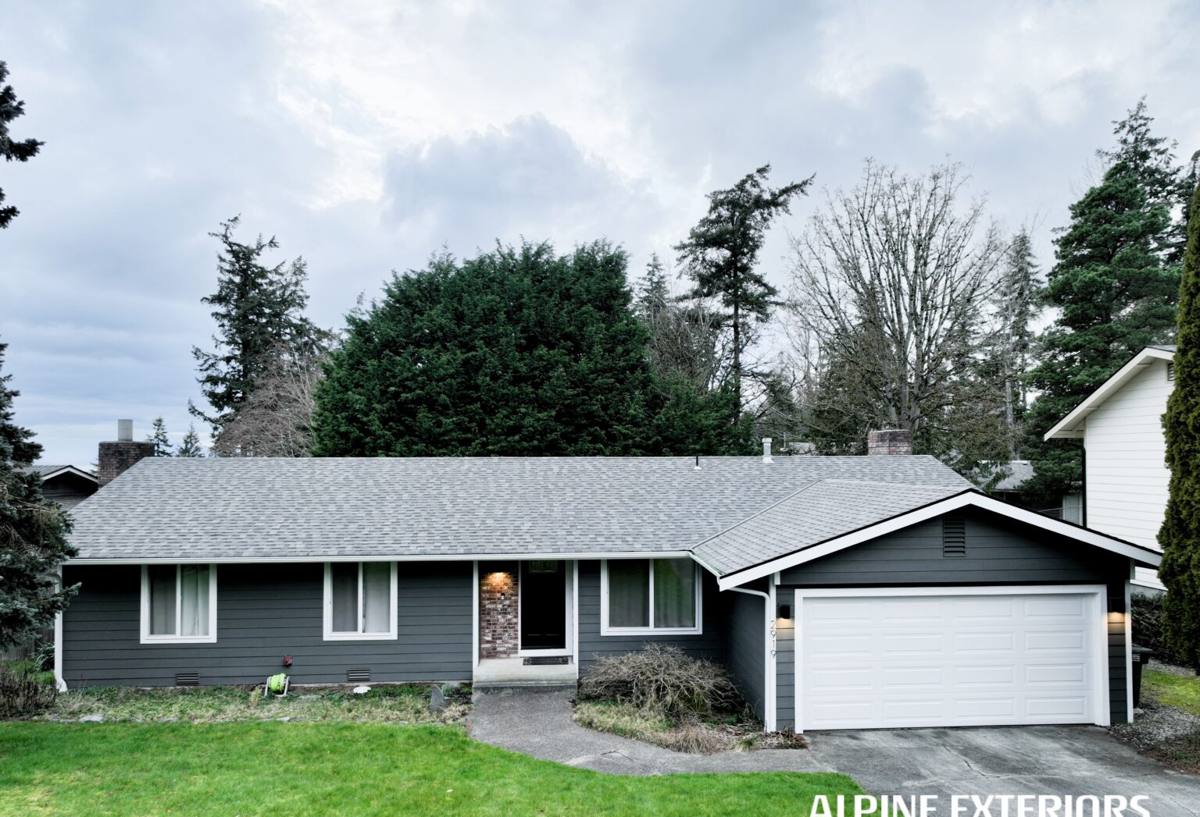
Why James Hardie Fits a Shaw Island Home
James Hardie's fiber cement siding is engineered specifically for regional climate stress, and the company's HardieZone system exists for exactly the kind of exposure Shaw Island sees. HZ5 products are formulated for wetter, colder marine and coastal climates, with a composition that resists moisture absorption far better than wood-based siding and won't warp, crack, or delaminate the way vinyl and some engineered wood products can under sustained damp-cold cycling.
Moisture and Salt Air
Fiber cement is not organic material, so it doesn't feed rot fungus or provide the same foothold for wood-boring insects that cedar and other wood sidings do. Combined with a correctly detailed water-management system behind the siding, that makes a meaningful difference on a property that sits directly in salt spray and wind-driven rain for months at a time.
Moss and Algae
Moss doesn't rot fiber cement the way it can compromise wood siding over time, and Hardie's factory-applied ColorPlus finish is baked on and far more resistant to the kind of surface staining that lets algae and moss get a grip. That doesn't mean a Shaw Island home will never see moss — anything in this climate will, given enough shade and moisture — but it means moss stays a cosmetic issue you can wash off rather than a structural one you have to cut out and replace.
Fire Resistance
James Hardie siding is non-combustible fiber cement. For island properties near dry brush, wood outbuildings, or simply wanting one less fire-risk material on the exterior, that's a real, practical advantage over vinyl or wood siding — independent of the moisture and durability case.
What a Correct James Hardie Installation Actually Involves
James Hardie's warranty is a system warranty, not just a product guarantee — it depends on the siding being installed to the manufacturer's published specifications for the local climate zone. That's a higher bar than it sounds, and it's where a lot of siding jobs quietly go wrong even when the material itself is right.
- Correct HZ5-rated product selection for a marine/coastal climate, not a generic or warmer-zone spec
- Proper weather-resistive barrier and flashing at every window, door, and penetration before a single board goes up
- Manufacturer-specified fastener type, spacing, and embedment depth — not "close enough" nailing
- Correct minimum gaps and clearances at butt joints, trim, and ground/roof lines to let the assembly drain and dry
- Factory-primed and factory-painted (ColorPlus) cut edges properly sealed on site, since exposed raw edges are where moisture gets in first
- Caulking and sealant used only where Hardie's install guide calls for it — over-caulking traps water just as badly as skipping it
Where Installations Commonly Go Wrong
The most common failure points we see aren't dramatic — they're small deviations that compound over a few wet seasons. Fasteners driven too shallow or too deep, house wrap lapped the wrong direction, missing kick-out flashing where a roofline meets a wall, or boards nailed tight against each other with no expansion gap. Any one of those can trap moisture behind the siding long enough to rot sheathing, even though the Hardie board itself is holding up fine on the surface. It's also the kind of mistake that can void the manufacturer warranty entirely, which is why installation detail matters as much as the product choice.
Siding Options and What They Actually Cost You Over Time
Homeowners often start by comparing sticker price, but on an island property the real cost comparison is maintenance burden and replacement timeline, not just install-day cost per square foot.
| Material | Salt Air / Moisture Performance | Moss & Algae Resistance | Typical Maintenance |
|---|---|---|---|
| James Hardie Fiber Cement (HZ5) | Engineered for marine/coastal exposure | Strong — factory finish resists staining | Periodic wash; repaint only if ever needed, typically decades out |
| Cedar / Wood Siding | Absorbs moisture; prone to rot at joints | Low — organic surface feeds growth | Regular staining/sealing, spot repair, moss removal |
| Vinyl Siding | Can warp/crack in cold-damp cycling | Moderate; growth still adheres to surface | Low upkeep but limited repair options, fades over time |
| LP SmartSide / Engineered Wood | Wood-strand core sensitive to sustained moisture | Moderate | Requires intact caulking/paint film to stay protected |
This is also why we don't install every product on that list. We've made James Hardie our standard because, installed correctly, it holds up to this specific climate with the least long-term maintenance and the fewest moisture-related surprises five or ten years down the road.
How We Handle a Shaw Island Project
Working on Shaw Island means planning around the ferry schedule, not just the weather. Materials, crew, and equipment all move on a fixed schedule, so a project here is sequenced differently than one on the mainland side of San Juan County.
Planning and Material Staging
We confirm full material quantities — siding, trim, flashing, fasteners, touch-up paint — before the first ferry trip, so the crew isn't waiting on a missing box of trim coil mid-job. Every board is measured and accounted for against the actual home, not a rough estimate.
On-Site Work
Once on site, the crew works efficient, consecutive days rather than scattered visits, both to respect the ferry schedule and to keep the home's weather barrier exposed for the shortest time possible — important on a site that can turn from dry to driving rain with little warning.
Inspection and Close-Out
Before we leave the island, we walk the full exterior with the homeowner, check every flashing detail and seam, and confirm the finish matches spec. Punch-list items get resolved before the crew demobilizes rather than requiring a separate return trip whenever possible.
Maintaining James Hardie Siding in a Marine Climate
Fiber cement is low-maintenance, not no-maintenance. On Shaw Island, a simple annual rinse-down — plain water and a soft brush or low-pressure wash — keeps salt residue and early moss growth from building up on shaded walls. Keep an eye on caulking at trim and penetrations; sealant is the first thing to age in salt air and driving rain, and catching a failed bead early is far cheaper than dealing with the water damage it eventually causes. Trim back vegetation and clear gutters so water isn't sheeting or ponding against the siding, and if a board ever gets damaged — a stray branch, a ladder mishap — it's a straightforward spot repair rather than a wholesale replacement.
Signs It May Be Time to Reside
- Soft, spongy, or visibly swollen siding, especially near the ground or roofline
- Persistent moss or algae that returns within weeks of washing
- Paint or finish failing in sheets rather than gradual fading
- Visible gaps, warping, or boards pulling away from the wall
- Interior signs of moisture — stains, musty smell — near exterior walls
Why It Matters That Your Crew Already Works This Island
Ferry-dependent job sites punish inexperience. A crew that hasn't planned around sailing schedules can end up stretching a project over weeks instead of days, with materials and equipment stranded on the wrong side of the water. A crew that hasn't accounted for San Juan County's specific wind and moisture exposure can under-detail flashing that would be perfectly adequate somewhere drier. We serve Orcas Island and the surrounding San Juan County islands regularly, which means Shaw Island logistics and this region's weather behavior aren't a variable we're solving for the first time on your property.
Get a Free, No-Pressure Estimate
If your Shaw Island home's siding is showing its age — or you're planning ahead before the next wet season — we're happy to take a look and walk you through what correct James Hardie installation would involve for your specific property. Use the form below to request a free estimate, with no pressure and no obligation.