 Orcas Island Siding
 Board & Batten in a Marine Climate: Why It Matters in Rosario
Board and batten has become a favorite look for homes around Rosario and the rest of Orcas Island — the strong vertical lines read as coastal and modern at the same time, and they suit everything from a shoreline cottage to a newer build tucked into the trees above the water. But the look is only half the story. Vertical siding behaves differently than horizontal lap siding when it comes to shedding water, handling wind-driven rain, and standing up to salt air, and on Orcas Island those differences show up faster than they would inland. A board and batten job that isn't detailed correctly for this environment can look right for a year or two and then start failing at the seams, the fasteners, or the base trim — exactly where homeowners can't see it until the damage is already underneath.
This page is about doing board and batten the right way for Rosario specifically: what the climate demands, what a correct installation actually involves, and why we only install this style in James Hardie fiber cement rather than the wood or engineered-wood versions that are more common elsewhere.
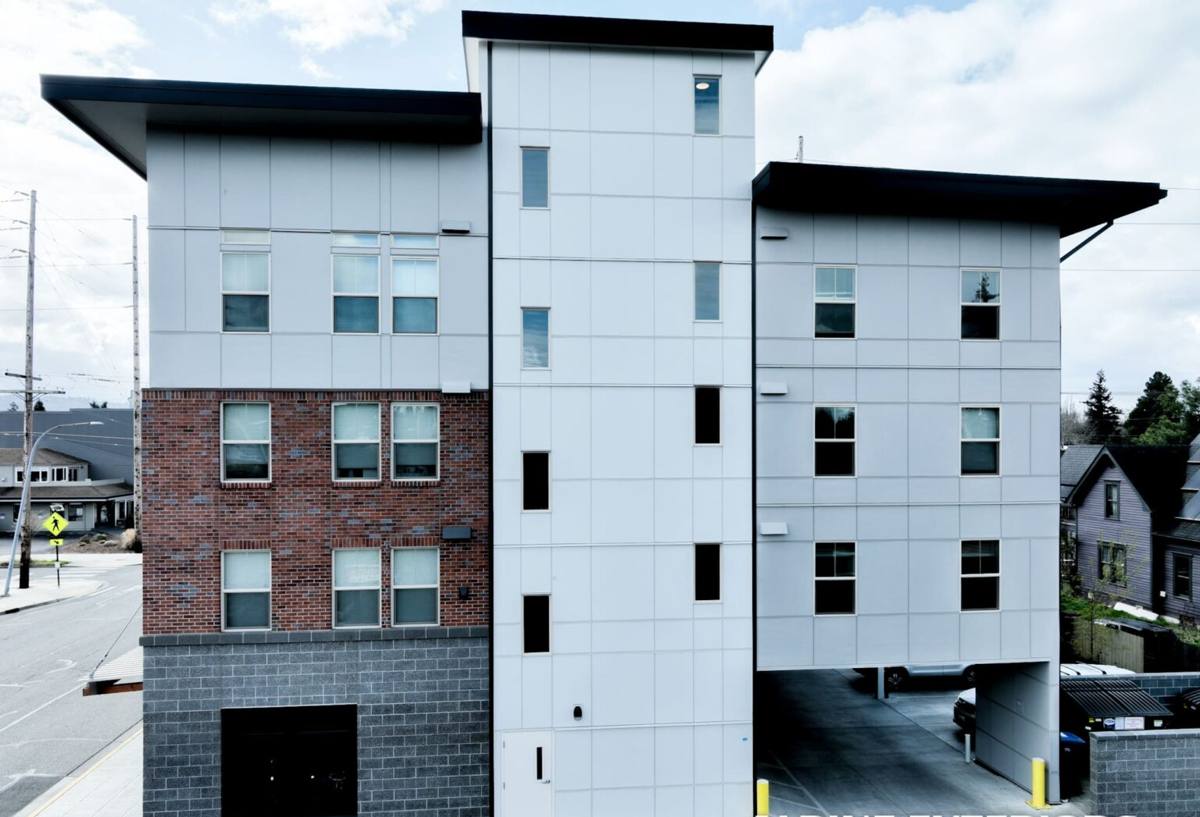
What Rosario's Weather Actually Does to Vertical Siding
Salt Air and Fastener Corrosion
Homes near the water on Orcas Island live in a low-grade salt fog most of the year, even on days that feel calm. Salt-laden moisture settles on siding, trim, and — critically — on every exposed fastener head. On vertical board and batten, the battens themselves are typically face-nailed or blind-nailed at fairly tight intervals, which means there are more fastener penetrations per square foot than on a lap profile. If the wrong fastener metallurgy is used, or if fastener heads are left exposed to the weather instead of protected, corrosion streaks and eventual fastener failure follow. This is a slower failure than storm damage, but it's a common one on older vertical siding jobs around the island.
Driving Rain and Batten Joints
Orcas Island gets weather systems that push rain sideways, not just down, especially through the fall and winter. Horizontal lap siding is inherently good at shedding that kind of rain because each course overlaps the one below it. Board and batten has to work harder — the flat panel behind the battens is the primary water-shedding surface, and the battens exist to cover the panel-to-panel joints and create shadow lines, not to be the waterproofing itself. When a batten system is installed without a real drainage plane behind it, driving rain can work its way behind the battens and track down the wall assembly, sometimes for a long time before it shows up as a stain or a soft spot.
Moss Season and Trapped Moisture
The long, wet moss season that the San Juan Islands are known for isn't just a roof problem. Moss and algae take hold anywhere organic material and dampness combine, including at the base of siding, in batten shadow lines, and on north-facing walls that don't get much sun to dry out between rains. Once moss establishes itself on a wall, it holds moisture against the surface far longer than bare siding would, which shortens the life of paint, caulking, and — on the wrong substrate — the siding material itself. Vertical siding with tight batten spacing and limited airflow behind it is more prone to holding onto that dampness than a wall with a properly vented rainscreen gap.
Why We Install Board & Batten Only in James Hardie Fiber Cement
Board and batten can be built out of real wood, engineered wood (like LP SmartSide), vinyl, or fiber cement. We've made a deliberate decision to install this style only in James Hardie fiber cement, and it comes down to how each material actually performs against the three conditions above — salt air, driving rain, and long-term dampness — not just how it looks on install day.
Solid wood board and batten needs regular refinishing and is the most vulnerable to moisture intrusion at end grain and joints; on a marine site like Rosario, that maintenance cycle compresses. Engineered wood products use a wood-strand core that, while treated, is still an organic substrate — if moisture gets behind a batten joint and stays there through a wet Pacific Northwest winter, that's exactly the failure mode those products are most sensitive to. Vinyl board and batten is low-maintenance but it's a thin, flexible material that can warp or fade under UV and thermal cycling, and its seams and channels aren't built for a hard driving-rain island climate the way a factory-finished, engineered fiber cement panel is.
James Hardie's fiber cement is cement, sand, and cellulose fiber — there's no organic core to rot, it doesn't support moss growth the way wood substrates can, and it holds its factory ColorPlus finish through years of salt exposure without the fade and chalk that unprotected wood or vinyl show. Hardie also engineers specific product lines (HZ5) for climates like ours, meaning the panel itself is formulated for the moisture and temperature cycling the islands see. That's the whole reason we standardized on it: we'd rather install one material correctly and stand behind it than offer several options and know some of them won't hold up to this specific stretch of coastline.
What a Correct Board & Batten Installation Involves
Panel Selection and Engineered-for-Climate Product Lines
For board and batten, we use HardiePanel vertical siding in the HZ5 formulation engineered for damp, marine-influenced climates like the San Juan Islands, finished with factory-applied ColorPlus so the color and the moisture-resistant coating go on under controlled conditions rather than being brushed on in the field.
Rainscreen Furring and Drainage Plane
The single biggest difference between a board and batten job that lasts and one that doesn't is what's behind the panel. We install a drainage plane and vertical furring strips so there's a real air gap and escape path behind the siding — meaning any moisture that does find its way past the surface can drain and dry out instead of sitting against the wall sheathing. This is especially important on the shaded or north-facing walls common on wooded Orcas Island lots, where natural drying is slower.
Fastener Schedule and Batten Spacing
We follow Hardie's fastener specifications for coastal exposure — corrosion-resistant fastener types, correct penetration depth, and a nailing pattern that won't split the panel or leave heads exposed to weather. Batten spacing is set to manufacturer tolerances so panels have room to expand and contract without binding, which matters through the temperature swings between a cold winter storm and a dry summer week.
Flashing, Sealant, and Finish Details
Every horizontal transition — window heads, the base of the wall, roof-to-wall intersections — gets proper flashing before any siding goes on, because siding is the last line of defense, not the first. Sealant is used only where Hardie's install specs call for it, at panel ends and specific joints, not as a substitute for correct flashing and lapping. Getting this sequence right is what actually keeps driving rain out, regardless of how good the siding material itself is.
Comparing Board & Batten Material Options
| Material | Salt Air / Moisture Performance | Maintenance | Typical Lifespan | Our Position |
|---|---|---|---|---|
| James Hardie fiber cement | Non-combustible, doesn't rot; engineered HZ5 line for marine/damp climates | Occasional wash; factory finish resists fade and chalking | Decades, with a strong transferable warranty | What we install |
| Solid wood | Vulnerable at end grain and joints; absorbs moisture | Regular refinishing/repainting | Shorter without diligent upkeep | Not installed |
| Engineered wood (e.g. LP SmartSide) | Wood-strand core sensitive to trapped moisture | Moderate; edge sealing critical | Good if kept dry, at risk if not | Not installed |
| Vinyl | Won't rot, but thin and flexible; can warp/fade | Low, but limited repair options | Variable; UV and impact sensitive | Not installed |
Our Process for a Rosario Board & Batten Project
- On-site assessment of the existing wall assembly, current siding condition, and any moisture or moss issues already present.
- A written scope covering panel selection, drainage plane and furring approach, flashing details, and color, so there's no ambiguity before work starts.
- Removal of existing siding where needed, with a check of the sheathing underneath for hidden rot before anything new goes up.
- Installation of the drainage plane, furring, flashing, and HardiePanel vertical siding with battens, following manufacturer fastening and spacing specifications.
- A final walkthrough covering caulking lines, trim, and touch-up, plus care guidance specific to a shoreline property.
Maintaining Board & Batten Siding on Orcas Island
- Rinse salt residue off the siding a few times a year, especially on walls that face the water directly.
- Keep vegetation and sprinklers from holding constant moisture against the base of the wall.
- Check batten lines and trim joints each fall for early signs of moss or algae before they establish.
- Clear gutters and downspouts before the wet season so overflow doesn't run down the wall face.
- Have any soft spots, staining, or fastener corrosion looked at promptly — these are cheaper to fix early than after a full wet season.
Why Hiring a Crew That Already Works Rosario Matters
Orcas Island is ferry-dependent, and that changes how a siding project has to be planned. Materials, equipment, and crews all have to be scheduled around ferry sailings, which means a contractor who doesn't already work the islands regularly can end up padding timelines or, worse, cutting corners to avoid an extra trip. A crew that's used to San Juan County permitting, island delivery logistics, and the realities of working a shoreline property doesn't lose days to avoidable scheduling problems, and they've already seen how this specific climate treats a wall over time — not just in a manufacturer's spec sheet, but on other homes in the area.
That familiarity also shows up in the small decisions that don't get written into a contract: which walls need extra attention because they don't get afternoon sun, how tight to set batten spacing given the temperature swings the islands see, and where moss tends to establish first on a given lot orientation. None of that replaces a correct installation, but it's the difference between a crew executing a spec and a crew that actually understands why the spec exists here.
Get a Free, No-Pressure Estimate
If you're considering board and batten siding for a home in Rosario or elsewhere on Orcas Island, we're happy to walk the property, look at what's there now, and talk through what a correctly detailed James Hardie installation would look like for your specific site. There's no pressure and no obligation — just a straight answer about what your home needs. Use the form below to request a free estimate.