 Orcas Island Siding
 Roofing in Olga's Marine Climate
Olga sits on the east side of Orcas Island, close enough to the water that salt air is part of daily life for every roof in the area. Combine that with San Juan County's long wet season, heavy fog, and shade from surrounding fir and cedar, and you get a climate that is genuinely hard on roofing materials. A roof that would last decades in a dry inland climate can show real wear in half that time here if it wasn't built, or replaced, with these conditions in mind.
This page is about one job, done right, in one place: replacing a roof on a home in Olga. Not a general overview of roofing — the specific decisions that matter when your house sits in a marine, moss-heavy environment on Orcas Island.
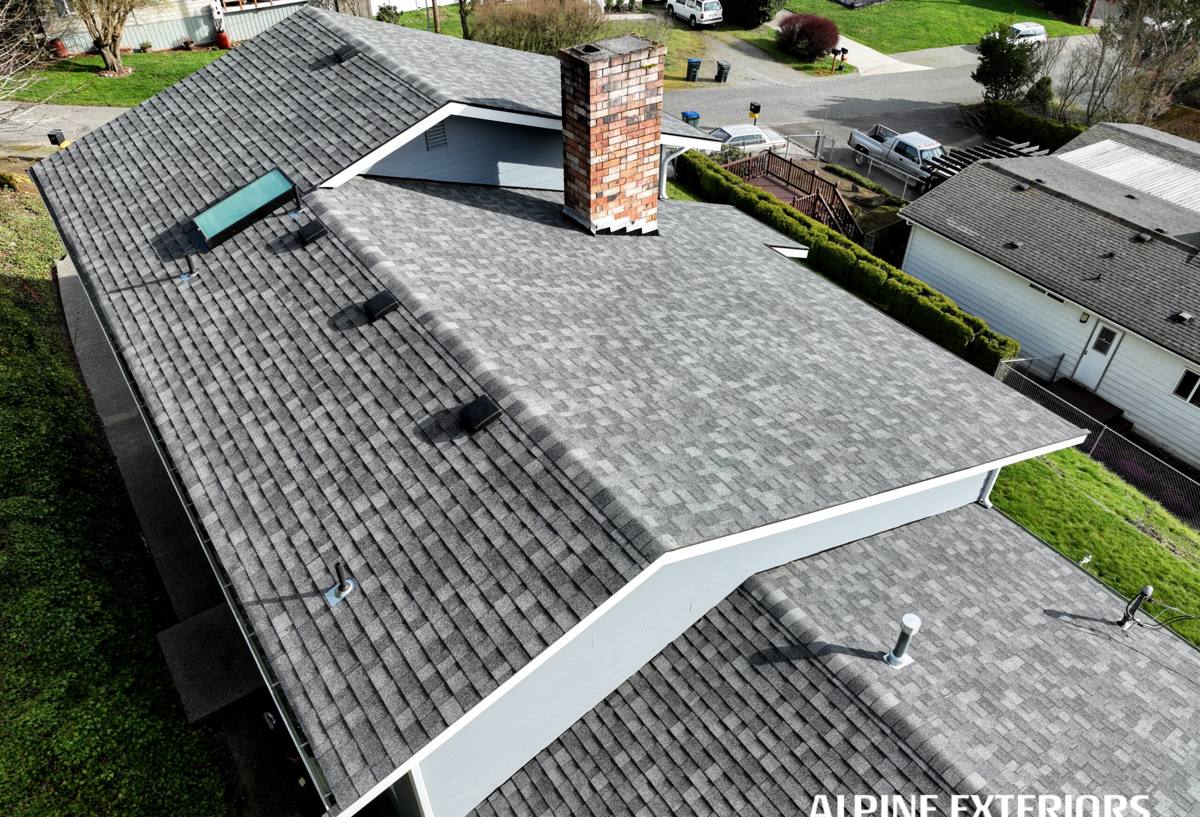
Signs an Olga Roof Needs Replacing, Not Just Repairing
Homeowners often call us for a "leak repair" and find out the leak is a symptom, not the problem. Some signs point to a patch job; others point to a roof that's past the point where patching makes financial sense.
- Shingles that are curling, cupping, or losing granules in patches rather than just at the edges
- Moss or algae growth that keeps coming back within months of being cleaned
- Soft or spongy spots in the decking when walked on, or sagging visible from the ground
- Daylight visible through the roof deck from inside the attic
- Repeated leaks around the same valley, chimney, or vent boot despite prior repairs
- A roof that's 18-20+ years old and has never been fully replaced, only patched
One or two of these on their own might be a repair. Several together, especially combined with roof age, usually mean replacement is the more honest recommendation — and the more cost-effective one over time.
Why Repairs Alone Fall Short Here
In a drier climate, a well-done patch can buy years. In Olga's marine air, moisture finds its way into any gap left by a repair that doesn't tie fully into the surrounding roof system. Underlayment that's already saturated or decking that's already soft won't hold a patch the way sound material would. We'll always tell you honestly when a repair is enough — but we won't recommend one just to avoid the bigger conversation about replacement.
What Salt Air, Rain, and Moss Actually Do to a Roof
Understanding the specific damage mechanisms helps explain why the same roofing job looks different in Olga than it would inland.
Salt Air
Airborne salt accelerates corrosion on any exposed metal — flashing, fasteners, vent caps, gutter hardware. Standard galvanized fasteners can start rusting years before they would in a non-coastal setting, and rust streaks on a roof are often the first visible sign that metal components need attention.
Driving Rain
Wind-driven rain off the water doesn't just fall straight down — it pushes sideways under shingle edges, around flashing laps, and into any seam that isn't properly shingled or sealed. This is why flashing detail and underlayment quality matter more here than in calmer inland microclimates.
Moss and Shade
Tree cover that makes Orcas Island beautiful also keeps roofs damp longer after every rain. Moss roots into the granule layer of asphalt shingles and lifts edges, giving wind and water a place to get underneath. Left unchecked, moss growth shortens the effective life of a roof regardless of the material's rated lifespan.
Choosing the Right Roofing System for Olga
There's no single "best" roofing material for every home — it depends on your roof's pitch, sun and shade exposure, budget, and how the home is used. Here's how the common options compare specifically for a marine, moss-prone site like Olga.
| Material | How It Handles Salt Air & Moisture | Moss Resistance | Typical Lifespan Here |
|---|---|---|---|
| Architectural asphalt shingle | Good with proper stainless/coated fasteners and flashing | Moderate — benefits from zinc/copper strips or algae-resistant granules | 20-25 years with regular upkeep |
| Standing seam metal | Excellent when fasteners and panels are coastal-rated | High — sheds moisture fast, little for moss to grip | 40-50+ years |
| Cedar shake | Traditional island look, but needs diligent maintenance in damp shade | Low without regular treatment and cleaning | 20-30 years with active maintenance |
| Composite/synthetic shingle | Good, resists moisture absorption | Moderate to high depending on product | 30-40 years |
We'll walk through these trade-offs with you in person, on your actual roof, rather than push one product across every home. A steep, sun-exposed roof and a low-pitch, shaded roof on the same street can call for different answers.
What a Correct Roof Replacement Involves
A roof is a system, not a single layer. Skipping steps to save time is where most premature failures start — especially in a climate that doesn't forgive shortcuts.
- Full tear-off. Old material and old underlayment come off completely so we can see the actual condition of the deck — not just the surface.
- Deck inspection and repair. Any soft, rotted, or delaminated plywood or sheathing gets replaced before anything new goes down.
- Ice-and-water or synthetic underlayment. Applied at eaves, valleys, and penetrations where wind-driven rain is most likely to get pushed underneath.
- Flashing. New flashing at chimneys, walls, skylights, and valleys, using corrosion-resistant materials suited to salt air.
- Ventilation check. Proper intake and exhaust airflow keeps the attic dry, which slows moss growth and prevents condensation damage from the inside out.
- Final material installation. Installed to manufacturer spec and fastener spacing appropriate for coastal wind exposure.
- Cleanup and walk-through. Site cleaned, debris hauled off, and we show you the finished work before calling the job done.
Our Process, Start to Finish
We keep the process straightforward and communicate at each step, because a roof replacement disrupts your home and we don't want surprises added to that.
1. On-Site Assessment
We inspect the roof from the ground and, where safe, from the deck itself — not just satellite imagery — to catch problems a remote estimate would miss.
2. Honest Scope and Written Estimate
You get a clear breakdown of what's being replaced and why, not a vague lump sum. If a repair is genuinely enough, we'll say so.
3. Scheduling Around Island Logistics
Materials and crew scheduling account for ferry timing so your project isn't delayed by something we could have planned around.
4. The Work Itself
Tear-off, deck repair, underlayment, flashing, and installation, done in the sequence outlined above — not compressed to finish faster at the expense of quality.
5. Final Walk-Through
We review the finished roof with you and answer any questions before considering the job complete.
Why a Crew That Already Works Olga Matters
Roofing on Orcas Island isn't the same logistical exercise as roofing on the mainland, and a crew that only occasionally works the San Juan Islands will feel that difference in your project.
- Ferry-aware scheduling. Materials and equipment have to be planned around sailing schedules, not just a calendar date.
- Familiarity with local permitting. San Juan County has its own permitting process, and knowing it ahead of time avoids delays.
- Realistic weather windows. We know how to plan tear-off and dry-in around the island's rain patterns so your home isn't left exposed longer than necessary.
- Access and site conditions. Long driveways, tree cover, and tighter building footprints are the norm here, and we plan equipment and material staging accordingly.
A crew that treats an Olga job the same as a job in a dry, flat, easy-access suburb is more likely to underestimate time, weather risk, or access challenges — and that shows up in the final result.
Roof Maintenance After Replacement
A correctly installed roof still needs upkeep in this climate. A little attention each year protects the investment.
- Clean gutters and downspouts at least twice a year, more often under heavy tree cover
- Have moss growth treated or removed before it spreads, rather than waiting until it's heavy
- Check flashing and fastener condition periodically for early rust or lifting
- Trim overhanging branches to reduce shade, debris buildup, and abrasion
- Schedule a professional inspection every couple of years, especially after major storms
Cost Factors for a Roof Replacement in Olga
Every roof is different, so we won't quote a number without seeing the job — but these are the factors that most affect cost on homes in this area.
| Factor | Why It Matters |
|---|---|
| Roof size and pitch | Steeper roofs take longer and require more safety setup |
| Deck condition | Rot or soft sheathing found during tear-off adds material and labor |
| Material choice | Asphalt, metal, cedar, and composite carry different material and labor costs |
| Access and site conditions | Tree cover, driveway length, and staging space affect labor time |
| Number of penetrations | Chimneys, skylights, and vents each need individual flashing work |
| Layers to remove | Tear-off of multiple existing layers adds disposal and labor time |
If your home in Olga is showing signs of roof wear, or you just want an honest read on where things stand, we're happy to take a look. The estimate is free, there's no pressure attached, and you'll get a clear answer either way — use the form below to get started.