 Orcas Island Siding
 North Beach Roofs Work Harder Than Most
A roof in North Beach isn't just shedding rain — it's fighting a slow, constant battle against salt-laden air off the water, wind-driven rain that finds every gap in flashing, and long stretches of shade and damp that turn north-facing slopes into moss farms. None of that is unusual for San Juan County. It's just the normal cost of island living. But it means a roof here needs to be built and installed differently than a roof going up somewhere dry and inland, and it means the wear shows up faster in some places than a homeowner might expect.
Salt air accelerates corrosion on any exposed metal — nails, flashing, vent boots, gutter hardware. Driving rain, especially in a wind, doesn't just fall on a roof, it gets pushed sideways and upward under shingle edges and around penetrations. And moss doesn't just look bad; it holds moisture against the roofing surface and works its way under shingle tabs, lifting them over time. Add in the tree cover common around Orcas Island and you get roofs that stay damp longer after every rain than a roof out in the open would. Understanding those three forces — salt, wind-driven rain, and moss — is the starting point for doing a roof replacement right in this specific area, not just installing whatever's standard everywhere else.
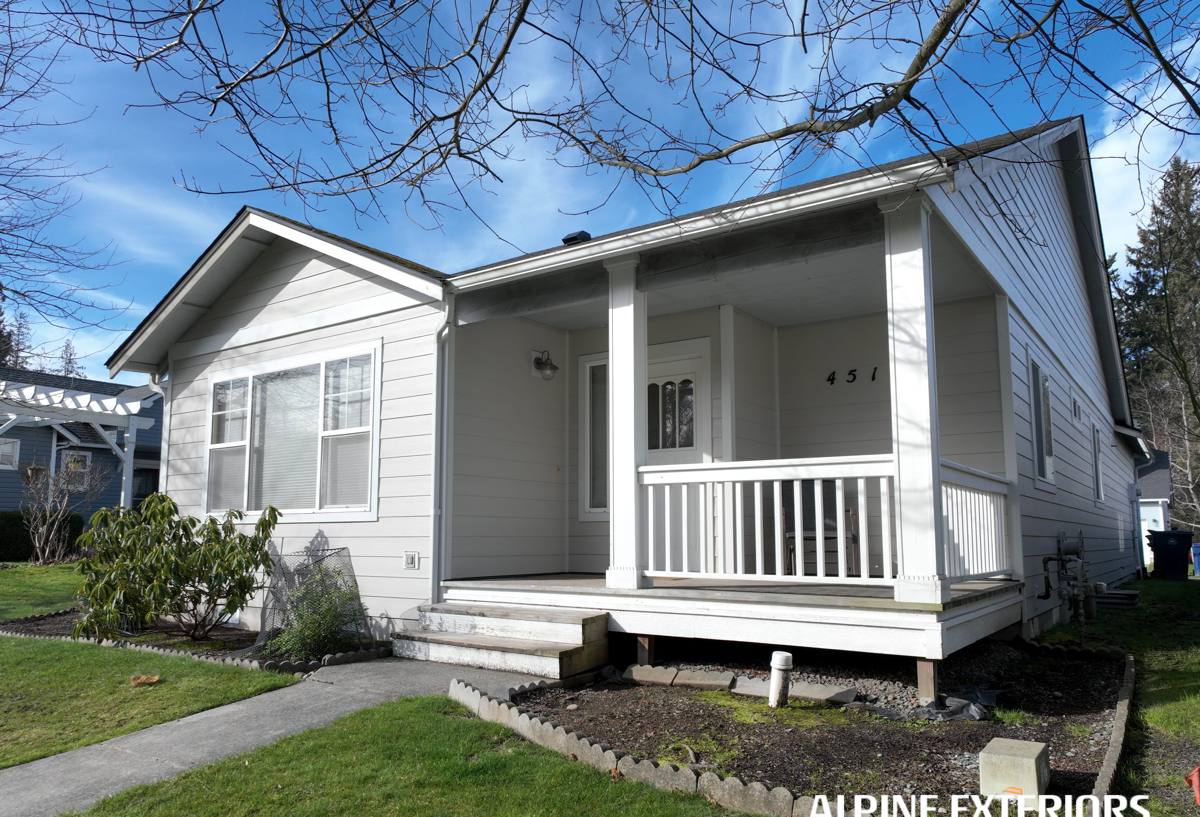
Signs a North Beach Home Needs Replacement, Not Just Repair
Not every roof problem means a full tear-off. But there's a point where patching stops making sense and replacement becomes the more honest recommendation. Some of the signs we look for:
- Granule loss showing as bald patches on asphalt shingles, especially on the more weather-exposed slopes
- Moss or thick lichen buildup that's lifted shingle edges rather than just sitting on the surface
- Soft or spongy decking felt underfoot during an inspection, a sign moisture has reached the plywood or OSB
- Rusted or failing flashing around chimneys, skylights, and roof-wall transitions
- Daylight or water staining visible in the attic, particularly near valleys and eaves
- A roof approaching or past the manufacturer's rated service life, especially one that's had multiple patch repairs already
When a roof is showing two or more of these signs at once, repair usually becomes a short-term patch on a longer-term problem. That's when we start talking replacement, and we'll say so plainly rather than stringing a homeowner along with repeat repair visits.
Choosing a Roofing System Built for This Climate
There's no single "best" roofing material for every home, but there is a best material for a given budget, roof pitch, and exposure level. In a salt-air, high-moisture environment like North Beach, some options hold up noticeably better than others.
| Material | Moss & Moisture Resistance | Salt Air Durability | Maintenance Needs |
|---|---|---|---|
| Architectural asphalt shingle | Good with proper ventilation and treated caps; moderate without | Good — fiberglass mat resists corrosion, but metal fasteners and flashing still need attention | Periodic moss treatment and gutter clearing |
| Standing seam metal | Excellent — sheds moss and debris, minimal surface for growth to grip | Very good with marine-grade or coated fasteners and proper coatings | Low; occasional fastener and sealant checks |
| Composite/synthetic shake | Good — engineered to resist moisture absorption better than natural wood | Good | Moderate; less than natural cedar |
We're generally cautious about recommending untreated natural cedar shake in this environment. It can look great, but it's more sensitive to sustained moisture and moss growth than the alternatives above, it needs more frequent maintenance to hold its warranty, and repairs down the road tend to be more labor-intensive. That's not a knock on cedar as a material — it's a professional judgment call about maintenance burden versus long-term performance for this specific climate, and we'll walk through the trade-offs honestly if it's a look you want.
Underlayment and Fasteners Matter More Here
The roofing material gets the attention, but in a wind-driven-rain climate, the underlayment and fastener choices often determine whether a roof actually stays watertight. We use synthetic underlayment with self-adhering ice-and-water membrane at eaves, valleys, and roof-wall intersections — the places wind-driven rain is most likely to get pushed uphill or sideways. Fasteners and flashing are specified for corrosion resistance, not just cost, because standard galvanized hardware degrades faster near saltwater than most homeowners expect.
What a Correct Roof Replacement Actually Involves
A roof replacement is more than laying new shingles over old ones. Done right, it includes:
- Full tear-off of existing roofing down to the decking, so hidden rot or moisture damage can't be covered up and reappear later
- Decking inspection and repair, replacing any soft, delaminated, or water-stained sheathing before new material goes down
- Ventilation assessment, checking that intake and exhaust venting actually balance — a common gap in older island homes that accelerates moss growth and shortens shingle life from the underside
- New underlayment, including ice-and-water membrane at vulnerable transitions
- New flashing at every chimney, skylight, vent pipe, and roof-wall junction — reused flashing is one of the most common causes of early leaks after a "replacement"
- Correct fastening and material installation per manufacturer specification, which is also what keeps the material warranty valid
- Final inspection and cleanup, including a magnetic sweep for stray nails
Skipping any of these steps is how a roof that looks fine from the ground ends up leaking within a few years. It's also how warranties end up voided without the homeowner realizing it until there's a problem.
Our Process From Estimate to Cleanup
We keep the process straightforward and try to remove the guesswork for the homeowner:
1. On-Site Assessment
We walk the roof and the attic, not just look from the ground. That's the only way to catch decking issues, ventilation problems, or flashing failures that don't show from a driveway inspection.
2. Honest Scope and Written Estimate
We explain what we found, what needs to happen, and what it will cost — including what could change if we find hidden decking damage once tear-off starts. No surprise change orders for things we should have flagged up front.
3. Material Ordering and Scheduling
Because Orcas Island depends on ferry service for material deliveries, we build lead time into scheduling rather than promising a start date we can't guarantee. It's a real logistical factor here, not an excuse.
4. Tear-Off and Installation
We protect landscaping and siding during tear-off, replace decking as needed, install new underlayment and flashing, and install the roofing system to manufacturer specification.
5. Final Walkthrough and Cleanup
We review the finished roof with the homeowner, confirm ventilation and flashing details, and do a full site cleanup including a nail sweep before we consider the job done.
Ventilation and Moisture Control Deserve Extra Attention Here
In a climate where roofs stay damp longer between rains, attic ventilation isn't a minor detail — it's one of the biggest factors in how long a new roof actually lasts. Poor ventilation traps warm, moist air against the underside of the decking, which speeds up moss and mildew growth from below and can shorten the life of shingles from the inside even while the top surface looks fine. On a lot of older North Beach-area homes, we find ventilation that was adequate when the house was built but no longer matches current roofing products or insulation levels. Part of a proper replacement is checking that balance and correcting it, not just installing new shingles over the same intake and exhaust setup and hoping it works.
What Drives the Cost of a Roof Replacement
Every roof is priced individually, but the same handful of factors move the number up or down on most North Beach-area homes:
| Factor | Why It Matters |
|---|---|
| Roof size and pitch | More square footage and steeper pitches mean more material and more labor, plus added safety measures on steep slopes |
| Number of existing layers | Tear-off of multiple old layers takes longer and generates more disposal cost than a single-layer roof |
| Decking condition | Hidden rot or delamination found during tear-off adds material and labor not visible during the initial estimate |
| Material choice | Architectural asphalt, metal, and composite shake carry different material and installation costs |
| Ventilation upgrades | Adding or correcting intake/exhaust venting adds labor but extends the life of the new roof |
| Access and logistics | Steep driveways, limited staging space, and ferry-dependent delivery timing can affect scheduling and cost |
As a rough starting point, many full asphalt shingle roof replacements on typical single-family homes fall somewhere in the low-to-mid five figures, with metal and specialty materials running higher. The only way to get a real number is a proper on-site assessment — anything quoted sight unseen should be treated as a rough guess at best.
Why Hiring a Crew That Already Works North Beach Matters
A roofing crew that mostly works dry, inland climates will still know how to nail a shingle in a straight line. What they won't necessarily have is a feel for how fast moss reestablishes on a shaded north-facing slope near the water, which flashing details actually hold up against sustained wind-driven rain, or how to plan a project around ferry-dependent material delivery instead of a next-day supply run. Those are things you learn from doing the work here repeatedly, not from a training manual.
There's also the practical matter of being reachable. Island properties benefit from a contractor who's already local, already knows the logistics of getting crews and materials to the job site, and isn't treating the trip out as a special circumstance that adds delay or expense. Local experience shows up less in the sales pitch and more in the small decisions made on the roof — where extra membrane goes, how vents get sealed, which fasteners get used — that a homeowner won't see but will benefit from for the next few decades.
After the Install: Keeping a New Roof Healthy
A correctly installed roof still benefits from basic upkeep, especially in a moss-prone, salt-air environment. A simple maintenance rhythm goes a long way:
- Clear moss and debris from north-facing and shaded slopes at least once a year
- Keep gutters and downspouts clear so water isn't backing up under the roof edge
- Trim back overhanging branches to reduce shade, debris, and moss pressure on the roof
- Have flashing and vent boots visually checked every couple of years, since these fail before the roofing material usually does
- Address any small leak signs immediately rather than waiting for a bigger repair
None of this requires special equipment or a professional visit every time, but staying ahead of moss and debris buildup is the single easiest thing a homeowner can do to protect the investment.
Let's Take a Look at Your Roof
If your North Beach-area roof is showing granule loss, moss buildup, flashing wear, or you're just not sure whether it's a repair year or a replacement year, we're glad to come take an honest look. There's no pressure and no obligation — just a straightforward assessment and a real answer. Fill out the form below to schedule a free estimate.