 Orcas Island Siding
 Why Roofs in Eastsound Wear Differently Than Roofs Inland
A roof in Eastsound is doing a different job than a roof forty miles inland, even one under the same brand of shingle. Sitting on Orcas Island in San Juan County, Eastsound homes deal with salt-laden air off the surrounding water, wind-driven rain that comes in sideways during winter storms, and heavy tree cover that keeps roof surfaces shaded and damp for months at a time. That combination shortens the useful life of a roofing system that wasn't built for it, and it's why a roof that looks fine from the ground can already be failing underneath.
Salt air accelerates corrosion on any exposed metal — nail heads, flashing, gutter hardware, even some shingle granule coatings — well before it would show wear in a drier, inland climate. Wind-driven rain doesn't just fall on a roof, it gets pushed up and under shingle edges, valleys, and anywhere a seal or flashing detail is even slightly short of correct. And the long moss season that comes with San Juan County's shaded, moist microclimate means organic growth has more time each year to work into shingle surfaces and hold moisture against the roof deck.
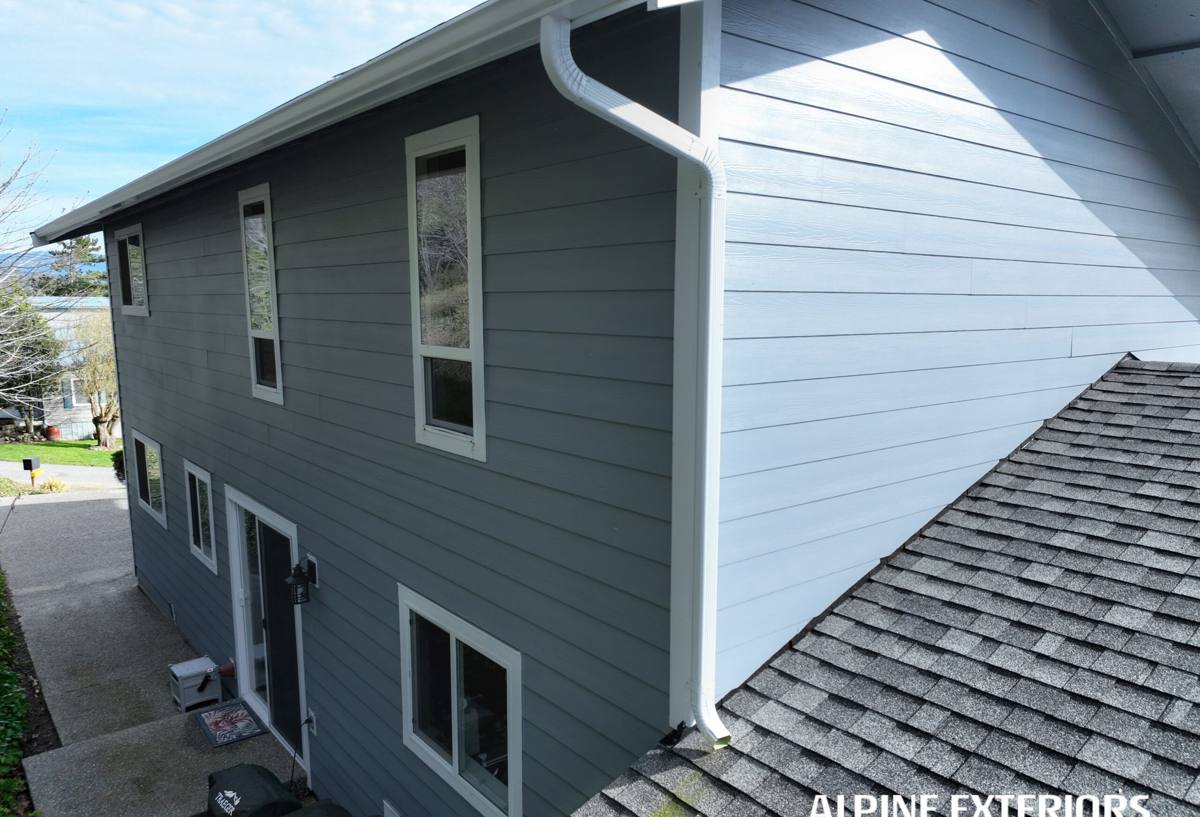
Signs an Eastsound Roof Is Due for Replacement
Roofs rarely fail all at once. They give warning signs first, and on Orcas Island those signs often show up earlier than a homeowner would expect based on the roof's age alone.
- Moss or dark algae streaking that keeps coming back within months of being cleaned off
- Granules collecting in gutters or at downspout outlets, a sign the shingle surface is breaking down
- Curling, cupping, or lifted shingle edges, especially on roof faces that catch the prevailing wind and rain
- Rusted or corroded flashing around chimneys, skylights, and roof-to-wall transitions
- Soft spots, sagging, or visible deck movement when walked on
- Water stains on interior ceilings or in the attic, particularly after a windy rainstorm rather than a calm one
- A roof that's 18-25 years old and has never had underlayment or flashing upgraded
Any one of these on its own might just mean a repair. Several together, or a roof that's reaching the upper end of its expected service life in this climate, is usually a sign it's time to talk about full replacement rather than another round of patching.
What a Correct Roof Replacement Involves Here
Starting With the Deck, Not the Shingles
A roof replacement that's done right starts underneath the shingles, not with them. Once the old roofing is stripped, the deck gets inspected for soft or delaminated sheathing — common on older Eastsound homes where slow leaks have gone unnoticed under moss cover for years. Any compromised sheathing gets replaced before anything new goes down, because a new roof over a weak deck is a short-term fix wearing a long-term label.
Underlayment That Matches the Rain, Not Just the Code Minimum
Given how much wind-driven rain this part of Washington sees, we don't treat underlayment as a formality. A synthetic underlayment with strong tear resistance, combined with self-adhered membrane at eaves, valleys, and roof penetrations, gives the roof a real second line of defense if wind ever pushes water past the shingle layer itself — which it will, eventually, on any roof exposed to Puget Sound and San Juan County storm patterns.
Flashing and Fasteners Built for Salt Air
This is where a lot of roofs quietly fail early. Galvanized fasteners and standard flashing corrode faster in salt-influenced air, and once flashing starts to rust and pit, it stops sealing the way it should. Our standard for Orcas Island homes is corrosion-resistant flashing and fastener materials at chimneys, skylights, valleys, and wall transitions, even where a lower-grade option would technically meet code.
Ventilation That Accounts for Shade and Moisture
Heavily treed lots keep roofs cooler and damper, which sounds harmless but actually slows drying time after every rain and encourages moss and mildew in the attic space too. Balanced intake and exhaust ventilation matters more here than it would on an open, sunny lot, and it's something we check and correct on every replacement rather than assuming the existing setup was adequate.
Choosing a Roofing Material for Eastsound's Climate
There's no single "best" roofing material for every home, but some perform noticeably better than others under salt air, driving rain, and heavy moss pressure. Here's how the common options stack up for this specific setting.
| Material | Salt Air Durability | Moss Resistance | Maintenance Burden |
|---|---|---|---|
| Architectural asphalt shingle | Good with corrosion-resistant fasteners/flashing | Moderate — benefits from periodic cleaning | Low to moderate |
| Standing seam metal | Very good with marine-grade coatings and fasteners | Very good — sheds moss more easily | Low |
| Cedar shake | Moderate — needs consistent upkeep near salt air | Poor without regular treatment/cleaning | High |
| Synthetic composite shingle | Good | Good | Low |
We're honest with homeowners about the trade-offs rather than pushing one product. Cedar shake has real visual appeal and a long history on the islands, but it demands a maintenance commitment — regular cleaning and treatment — that not every homeowner wants to take on, and skipping that upkeep in a moss-heavy environment shortens its life considerably. Metal and quality architectural asphalt tend to be the lower-maintenance choices for homeowners who want a roof they don't have to think about often.
Our Roof Replacement Process for Eastsound Homes
- On-site inspection. We walk the roof and attic, document existing damage, and check deck condition before quoting anything.
- Written estimate. A clear scope of work — materials, underlayment, flashing details, and ventilation plan — with no vague line items.
- Material staging and scheduling. Because everything supplying an Orcas Island job has to come over by ferry, we plan material delivery and crew scheduling around ferry sailings so a job doesn't stall mid-tear-off waiting on a delayed load.
- Tear-off and deck repair. Old roofing removed, deck inspected, any soft or damaged sheathing replaced.
- Underlayment, flashing, and ventilation installation. The parts of the job that determine whether the roof actually performs in this climate.
- Final roofing installation. Shingles, metal panels, or the chosen material installed to manufacturer specification.
- Site cleanup and walkthrough. Debris and old materials hauled off, and we walk the finished roof with the homeowner.
Why an Island-Based Crew Matters for This Job
A roof replacement on Orcas Island has logistics that a mainland-based crew often underestimates. Every delivery of shingles, underlayment, flashing, and disposal bins depends on ferry capacity and schedule, and a crew that doesn't plan around that can leave a homeowner with a tarped roof for days waiting on materials. A contractor who already works Eastsound and the rest of San Juan County builds ferry timing into the schedule from the start, keeps relationships with local suppliers who can get material to the dock on time, and isn't discovering the island's logistics for the first time on your job.
Local familiarity also matters for permitting and inspection. San Juan County has its own permitting process and timelines, and a crew that's pulled permits here before knows what documentation is expected and how to avoid delays that catch outside contractors off guard.
Keeping Moss and Debris From Cutting a New Roof's Life Short
A new roof isn't maintenance-free in Eastsound's climate — no roof is, given how much tree cover and moisture this area has. What changes after a proper replacement is how manageable that maintenance becomes. Correct flashing, ventilation, and a moss-resistant material choice mean the roof sheds moisture the way it's supposed to instead of holding it against organic growth.
- Have gutters and downspouts cleared at least twice a year, more often on heavily treed lots
- Remove overhanging branches that keep roof sections in constant shade
- Address moss growth early with gentle removal methods rather than pressure washing, which can strip granules and shorten shingle life
- Check flashing and roof penetrations after major windstorms, since that's when wind-driven rain finds any weak point
What Drives the Cost of a Roof Replacement in Eastsound
Every home is different, and we won't quote a number without seeing the roof, but the same handful of factors drive cost on almost every job in this area.
| Cost Factor | Why It Matters Here |
|---|---|
| Roof size and pitch | More surface area and steeper pitches mean more material and labor time |
| Deck condition | Hidden moisture damage from long-term moss cover often means sheathing replacement |
| Material choice | Metal and premium synthetic products cost more upfront but need less upkeep |
| Flashing and fastener grade | Corrosion-resistant materials cost more than standard grade but last longer in salt air |
| Ferry and delivery logistics | Material transport to the island is a real, planned-for cost factor, not an afterthought |
| Access and roof complexity | Multiple roof planes, skylights, and chimneys add flashing detail and labor |
Most full roof replacements represent a significant investment, and the honest answer is that the right number depends on what our inspection finds once we're actually on the roof and in the attic.
Get a Straight Answer About Your Eastsound Roof
If your roof is showing moss that won't stay gone, shingles that look tired, or you just want an honest read on how much life is left in it, we're glad to come take a look. The estimate is free, there's no pressure attached to it, and you'll get a clear explanation of what we find — good or bad. Use the form below to get started.