 Orcas Island Siding
 Roof Repair Built for West Sound's Weather
West Sound sits in a part of Orcas Island where the roof over your head does real work. Homes here face a steady mix of salt-laden air off the water, long stretches of driving rain through the fall and winter, and a moss season that seems to start earlier every year. None of that is unusual for San Juan County, but it adds up differently on a roof than it does on siding or trim. Roofing materials that hold up fine inland can wear out faster here, and small problems — a lifted shingle tab, a gap in flashing, a patch of moss holding moisture against the deck — turn into leaks faster than most homeowners expect.
We repair roofs on West Sound homes on a regular basis, which means we're not guessing at how this climate treats a roof. We're working from what we actually see when we're up there: where moss tends to establish first, which flashing details fail first in wind-driven rain, and which repairs hold up through another wet season versus which ones just buy a year or two.
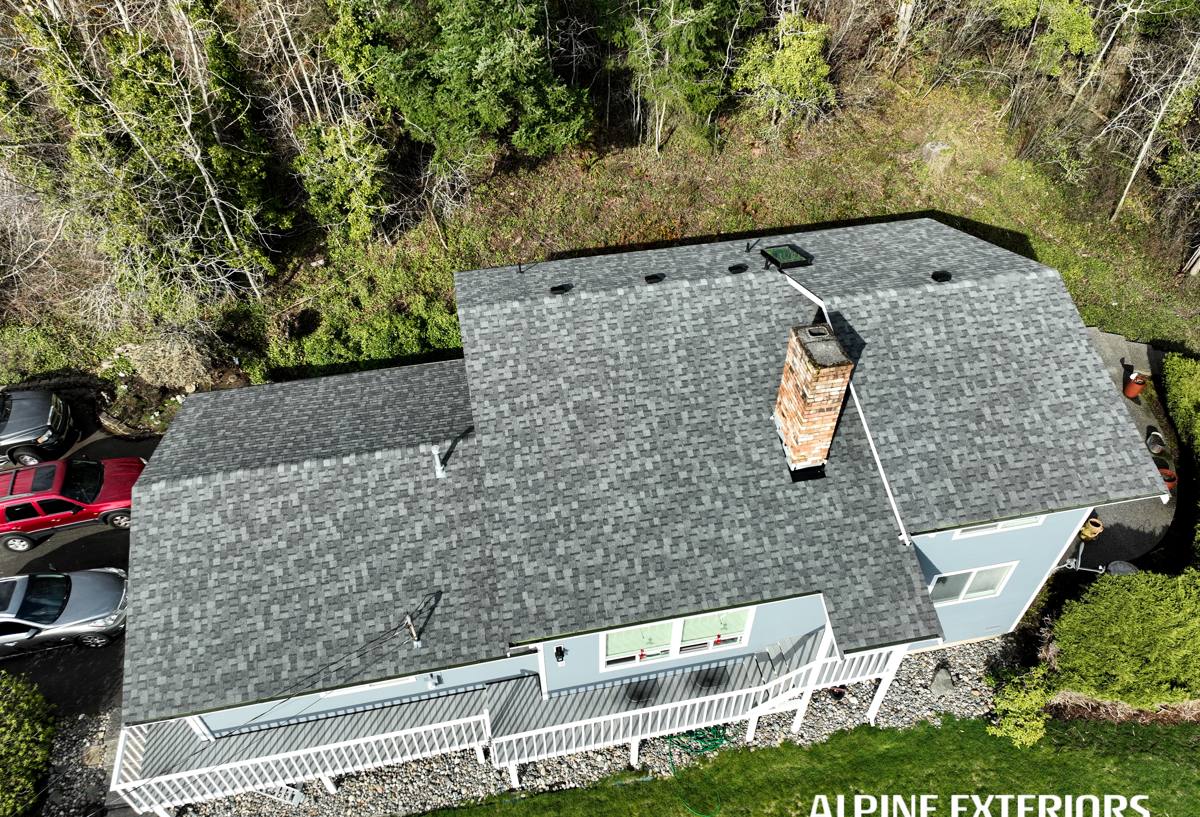
Signs a West Sound Roof Needs Repair, Not Just a Look
Roofs rarely fail all at once. They give warning signs first, and catching them early is almost always cheaper than waiting. Watch for these:
- Dark streaks or thick moss growth, especially on north-facing or shaded slopes
- Shingles that look cupped, curled, or are missing granules (often visible in the gutters as gritty buildup)
- Soft or discolored ceiling patches, especially after a heavy rain event
- Rust staining or gaps around flashing at chimneys, skylights, and roof-to-wall transitions
- Sagging in the roofline or visible daylight in the attic
- Granules collecting at the base of downspouts
- Loose, lifted, or clattering shingle tabs after a windy night
If you're seeing any of these, it's worth having someone look before the next storm system moves through — not after water's already found its way into the attic or a wall cavity.
Why Roofs Take a Beating in This Part of Orcas Island
Salt Air
Homes closer to the water deal with airborne salt that settles on roofing materials and metal components. Over time it accelerates corrosion on exposed fasteners, flashing, and vent caps. Galvanized materials that would last decades elsewhere can start showing rust streaks noticeably sooner in a marine environment like this one.
Driving Rain
San Juan County storms don't always come straight down. Wind-driven rain pushes water sideways and upward under shingle edges, around flashing laps, and into any gap that a calmer rain would never find. This is why flashing detail and underlayment quality matter more here than in drier, calmer climates — the margin for error is smaller.
Moss Season
Shade, moisture, and mild temperatures are exactly what moss wants, and West Sound has all three for a good chunk of the year. Moss doesn't just look bad — it holds water against the roofing material, works its way under shingle edges as it grows, and can lift tabs enough to let wind-driven rain in underneath. Left unaddressed, a moss problem becomes a leak problem.
What a Correct Repair Actually Involves
A Real Inspection First
A repair that only addresses the visible symptom often misses the cause. Before we patch anything, we look at the surrounding area: the decking underneath, the flashing details nearby, ventilation in the attic, and whether moss or debris buildup contributed to the failure. A leak that shows up in one spot on the ceiling doesn't always originate directly above it — water travels along rafters and decking before it drips.
Matching Materials, Not Just Covering Gaps
Repairs should blend into the existing roof system, not sit on top of it as an obvious patch. That means matching shingle type, profile, and where possible, color and age-appropriate appearance. It also means using compatible underlayment and fasteners so the repair doesn't create a new weak point where old and new materials meet.
Flashing and Transition Points
Most roof leaks trace back to flashing, not the field of the roof itself. Chimneys, skylights, vent boots, and roof-to-wall intersections are where materials change and water has the most opportunity to get in. A proper repair rebuilds these details correctly rather than sealing over a failure point with caulk, which is a short-term fix at best in a climate this wet.
Moss and Debris Removal Done Right
Moss removal on an older or more fragile roof has to be done carefully — aggressive scraping or high-pressure washing can do more damage than the moss itself, especially on asphalt shingles where it can strip granules and shorten the roof's remaining life. We remove moss using methods appropriate to the roofing material, then address the moisture and shade conditions that let it establish in the first place where that's practical.
Repair or Replace? What Actually Determines the Right Call
Not every roof problem needs a full replacement, and not every roof is a good candidate for another round of patching. The honest answer depends on a few factors:
| Factor | Leans Toward Repair | Leans Toward Replacement |
|---|---|---|
| Age of roof | Under roughly two-thirds of expected lifespan | Nearing or past expected lifespan |
| Extent of damage | Localized — one slope, one flashing detail | Widespread across multiple slopes |
| Decking condition | Solid, no rot found | Soft spots or rot present under shingles |
| Moss/algae history | First occurrence, caught early | Recurring, with granule loss already visible |
| Underlayment condition | Intact, still performing | Brittle, failing, or original to a very old roof |
We'll tell you plainly which category your roof falls into. If a repair will genuinely hold, we'll say so — there's no upside for us in replacing a roof that doesn't need it, and there's no upside for you in patching one that's already past the point of reliable repair.
How Our Repair Process Works
- Inspection and assessment — we get on the roof (not just a ground-level look) and check the surrounding structure, not just the obvious problem spot
- Written estimate — a clear explanation of what's wrong, what we recommend, and why, with pricing before any work starts
- Scheduling around the weather — roof repairs need a dry work window, and we plan accordingly rather than rushing a job into a rain system
- The repair itself — matched materials, correctly rebuilt flashing, and moss or debris cleared as needed
- Final check — we walk the repair area and the surrounding roof before we consider the job done
Materials and Why We Choose Them
For West Sound repairs, we lean toward materials and fasteners rated for coastal or marine exposure where the roof's location calls for it — corrosion-resistant flashing and fasteners hold up better against salt air than standard-grade hardware. We also pay close attention to underlayment quality on any repair, since it's the roof's last line of defense if wind-driven rain gets past the surface layer. When moss resistance is a factor, we'll talk through the trade-offs of moss-resistant shingle products or zinc/copper strip installations honestly — they help, but they're not a substitute for proper drainage, sun exposure where possible, and periodic maintenance.
Why a Crew That Already Works West Sound Makes a Difference
Roofing work on Orcas Island comes with logistics that mainland contractors don't always plan for — ferry schedules, material delivery timing, and weather windows that can close quickly. A crew already established in the area isn't figuring that out for the first time on your job. We also have a working sense of how different parts of San Juan County's roofs age — which details tend to fail first in this climate and which materials are worth the extra cost here versus elsewhere. That local pattern recognition is hard to substitute for.
Keeping a Repaired Roof in Good Shape
A good repair buys you real time, but a little upkeep protects that investment:
- Keep gutters and downspouts clear so water isn't backing up under the roof edge
- Trim back overhanging branches that keep sections of roof shaded and damp
- Have moss addressed early in the season rather than after it's established
- Do a visual check after major windstorms for lifted or missing shingles
- Have the roof looked at every couple of years, even if nothing looks obviously wrong
If you're seeing signs of trouble on a West Sound roof, or you just want an honest opinion on whether repair or replacement makes more sense, we're happy to take a look. Fill out the form below for a free, no-pressure estimate.