 Orcas Island Siding
 Roof Repair in Crow Valley: A Different Set of Problems Than Town
Crow Valley sits inland from the water, tucked between tree-covered slopes on Orcas Island, and that setting cuts both ways for a roof. The tree cover buffers some of the direct wind you'd get on an open shoreline lot, but it also means more shade, more falling needles and debris, and slower drying times after every rain. Add in the salt-laden air that moves across San Juan County even a few miles from saltwater, and you've got a roof environment that ages differently than a roof in a dry inland climate. Fasteners corrode faster, moss gets a longer growing season, and any weak point in the roofing system stays wet longer than it should.
None of that means Crow Valley roofs fail faster than roofs anywhere else. It means the maintenance schedule and repair priorities are different, and a repair that ignores those differences tends to come back as a second repair a year or two later.
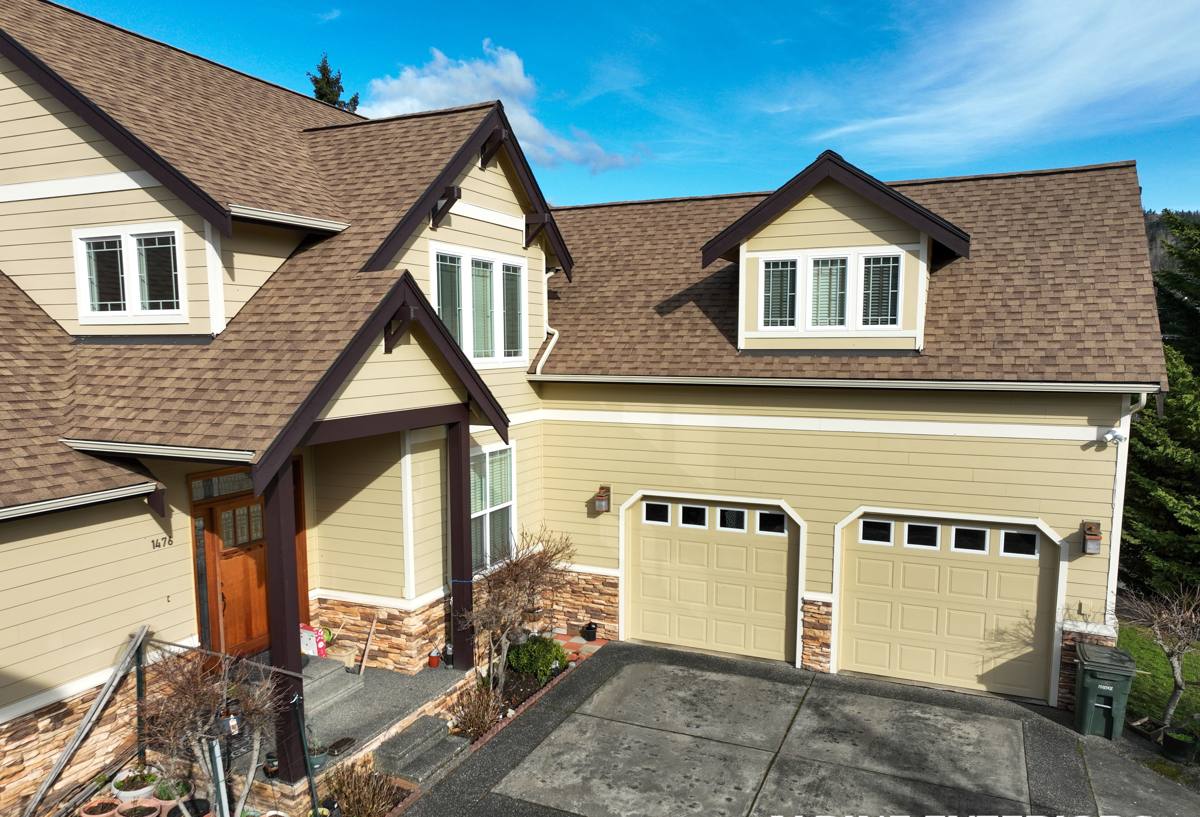
Signs a Crow Valley Roof Needs Repair — Not Just a Look
Most roof problems out here don't announce themselves with a dramatic leak. They show up as small, easy-to-ignore signs first:
- Dark streaking or thickening moss on north-facing slopes, especially under tree cover
- Granules collecting in gutters or at downspout outlets, a sign asphalt shingles are wearing thin
- Soft or spongy spots on the roof deck, usually felt more than seen
- Water stains on interior ceilings, particularly near chimneys, skylights, or valleys
- Curling, cracked, or lifted shingle edges after a hard windstorm
- Rust streaks below metal flashing or fasteners
- Daylight visible through the attic roof deck
Any one of these can be a contained, affordable repair if it's caught early. Left alone through another wet season, the same issue can spread into deck rot, insulation damage, or interior finish work — which is a different budget entirely.
When Repair Makes Sense vs. When It Doesn't
A roof repair is the right call when the damage is localized — a section of flashing, a run of shingles around a vent, a valley that's failed while the rest of the field is sound. It stops making sense when the roof covering is broadly at the end of its service life and repairs would just be chasing the next leak across a different part of the same worn-out roof. We'll tell you honestly which category your roof is in before we ever talk about scope of work.
What a Correct Roof Repair Actually Involves
A roof repair done right is not just patching the spot where water showed up inside the house. Water travels along roof decking and framing before it drips somewhere visible, so the visible stain and the actual entry point are often in different places.
Finding the Real Source
Before any material comes off the roof, the leak path gets traced — following it uphill from the interior stain through the attic or roof structure to where water is actually getting in. On a roof with heavy moss or debris buildup, this sometimes means clearing growth away from flashing and seams just to see what's underneath.
Flashing and Valleys First
The majority of roof leaks in this climate trace back to flashing — around chimneys, skylights, dormers, and roof-to-wall transitions — or to valleys where two roof planes meet and water volume concentrates. A repair that replaces shingles but reuses old, corroded, or improperly lapped flashing is a repair that will leak again. We rebuild flashing details to shed water correctly, not just cover the old flashing with new material.
Matching What's Already There
Wherever possible, repair materials should match the existing roof in type, weight, and color so the patch doesn't stand out or perform differently than the surrounding roof. When an exact match isn't available — which happens with older shingle runs — we'll explain the closest reasonable option and where we plan to place it so it blends in as much as possible.
Roofing Materials on Orcas Island Homes: Repair Considerations
What the roof is made of changes how it should be repaired. Here's how the common roof types on Orcas Island homes hold up and repair in this climate:
| Roofing Type | How It Handles Moss & Moisture | Repair Considerations |
|---|---|---|
| Asphalt composition shingle | Moderate — algae-resistant granules help, but shaded slopes still grow moss over time | Widely available, easiest to color-match, but older or discontinued lines may not match exactly |
| Cedar shake / shingle | More moisture-sensitive; needs airflow underneath and prompt moss removal to avoid rot | Requires like-for-like cedar and careful weaving into existing courses; more labor-intensive per repair |
| Standing seam metal | Sheds moss growth well due to smooth surface and slope; least moss-prone option | Repairs are usually about fastener backout, sealant failure at penetrations, or panel damage rather than material wear |
| Torch-down / low-slope membrane | Performs well if seams and flashing stay intact; ponding water is the main enemy | Seam and penetration repairs need heat-welded or manufacturer-approved patching, not just caulk |
We don't push homeowners toward a different roofing material during a repair unless there's a real performance reason to. If your roof is cedar shake and it's been maintained, a proper cedar repair is often the right call — the goal is honest repair, not an upsell.
Moss, Debris, and Tree Cover: The Ongoing Maintenance Reality
Because so many Crow Valley properties sit under fir and cedar canopy, moss and organic debris are the single biggest driver of repeat roof problems we see in this area. Moss holds moisture directly against roofing material, and as it spreads under shingle edges or shake courses, it lifts them just enough for wind-driven rain to work its way underneath.
A short seasonal checklist goes a long way toward avoiding repair calls:
- Clear needles, cones, and leaf debris from valleys and behind chimneys each fall
- Keep gutters and downspouts flowing freely — clogged gutters back water up under the roof edge
- Have heavy moss growth treated and physically removed rather than just power-washed, which can drive moisture under shingles
- Trim back branches that overhang the roof to reduce shade and debris load
- Do a visual check after any major windstorm for lifted or missing shingles
None of this replaces a professional inspection, but it meaningfully extends the life of a repair once it's done.
Our Roof Repair Process for Crow Valley Homes
- Inspection and diagnosis — we get on the roof (weather permitting) and in the attic to trace the actual leak path, not just the visible symptom.
- Written scope and estimate — you get a clear explanation of what failed, what we're repairing, and what it will cost before any work starts.
- Material sourcing — because we work this island regularly, we plan material pickups around ferry schedules so a repair isn't held up waiting on a supply run.
- Repair work — flashing, decking, and roofing material are addressed in that order, since flashing and deck condition determine whether the new roofing material will actually stay watertight.
- Cleanup and debris removal — old material, nails, and moss debris are cleared from the roof and property, not left to wash into gutters or landscaping.
- Follow-up — for larger repairs, we check back after the next hard rain to confirm the fix is holding.
What Affects the Cost of a Roof Repair Here
Every roof repair is different, but the same handful of factors tend to move the price up or down on Orcas Island jobs:
| Factor | Why It Matters |
|---|---|
| Roof pitch and access | Steeper roofs and limited ground access around trees or landscaping slow the work and affect safety setup |
| Extent of hidden deck damage | Rot found once shingles are pulled back adds material and labor beyond the original estimate |
| Roofing material type | Cedar shake and standing seam metal repairs generally take more skilled labor time than asphalt shingle |
| Material availability | Matching an older or discontinued shingle line can require sourcing time or a compromise on exact match |
| Scope of flashing work | A repair that includes full flashing replacement at chimneys or valleys costs more up front but prevents repeat leaks |
We give a written, itemized estimate so you can see exactly where the cost is going rather than a single lump number.
Why a Crew That Already Works Crow Valley Matters
Roofing on an island isn't the same logistics as roofing on the mainland. Every contractor working here has to plan around ferry schedules, weather windows, and the reality that a forgotten tool or material means a delay measured in hours, not minutes. A crew that already works Crow Valley and the surrounding Orcas Island neighborhoods has that logistics figured out — trucks loaded correctly, materials staged ahead of the weather window, and a working knowledge of which slopes on which properties hold moss longest or dry out slowest.
That local familiarity also matters when it comes to San Juan County permitting. Smaller repairs typically don't require a permit, but larger repairs or anything approaching a full re-roof may fall under county building requirements. A crew that works here regularly knows where that line is and handles the paperwork instead of leaving you to figure it out mid-project.
Finally, there's simple accountability. A contractor who's easy to reach for a follow-up because they're already on the island next week is a very different proposition than one who has to schedule a special trip to come back and check their own work.
Get a Straight Answer on Your Roof
If you've got a stain on the ceiling, a soft spot underfoot in the attic, or just moss that's gotten out of hand, we're happy to take a look and tell you honestly whether it's a repair, how big a job it is, and what it should cost — no pressure, no obligation. Use the form below to request a free estimate for your Crow Valley property.