 Orcas Island Siding
 Storm Damage in Crow Valley Isn't Like Storm Damage Everywhere Else
Crow Valley sits in a pocket of Orcas Island shaped by the terrain around it — open farmland and pasture bordered by tree lines and rising hills. That shape does something specific to weather moving through: wind that would otherwise pass overhead gets funneled and redirected at ground level, hitting rooflines from angles that don't match the "storms come from the southwest" rule of thumb most roofers work from elsewhere in San Juan County. A roof that's fine facing a straight southwesterly gale can still take a beating from wind that's been deflected sideways off higher ground nearby.
Add to that the two things every roof in this part of Washington deals with year-round — salt-laden air drifting in off the surrounding water, and a moss season that runs long into the year thanks to shade, moisture, and mild temperatures — and you get a roofing environment that punishes shortcuts. A repair that would hold up fine in a drier inland climate can fail here in a season or two if it isn't done with this specific combination of wind, salt, and moisture in mind.
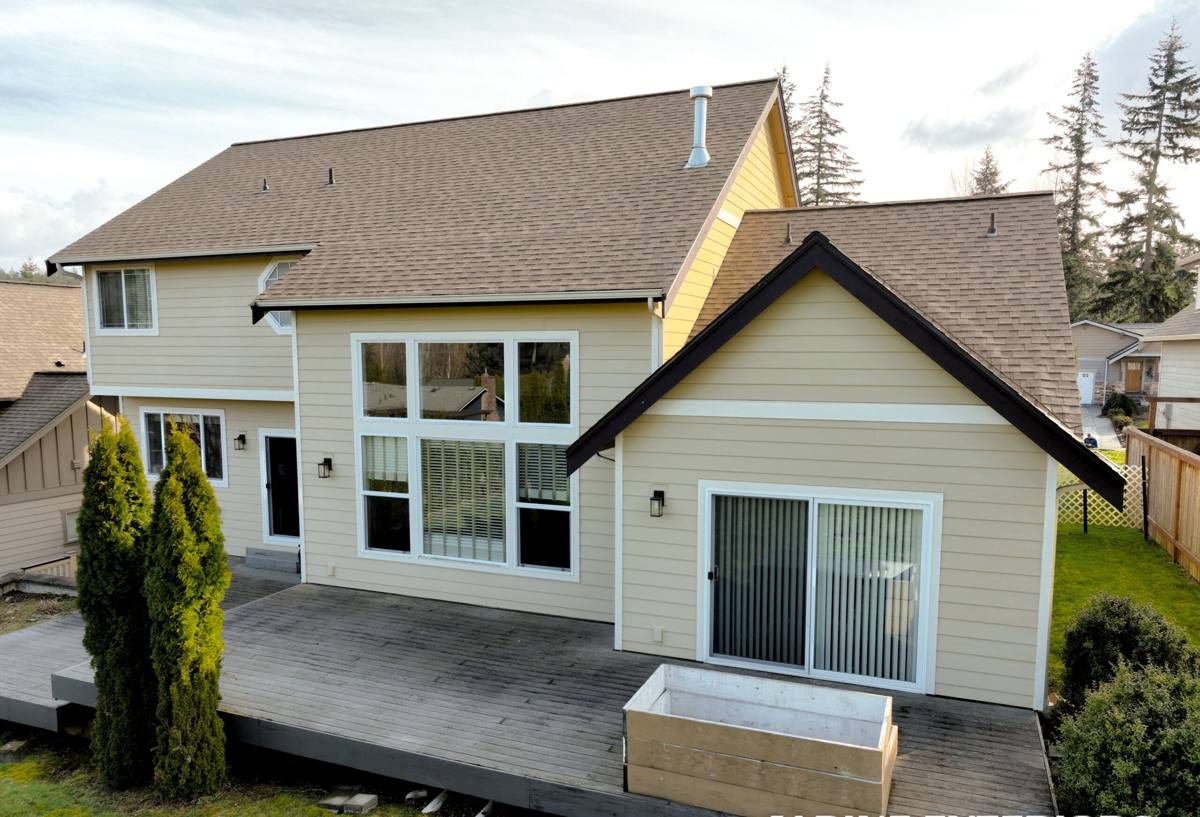
What Storm Damage Actually Looks Like on a Crow Valley Roof
Homeowners often assume storm damage means missing shingles scattered across the yard. Sometimes it does. More often, especially after the kind of wind events common here, the damage is quieter and easier to miss from the ground:
- Shingles that have been lifted and re-seated by wind but never actually torn off — the seal underneath is broken even though nothing looks wrong from the driveway
- Creased or bruised shingles where wind flexed them without removing them, which shortens their remaining life even if they don't leak this year
- Flashing around chimneys, vents, and valleys pushed loose or bent, often where the roof's geometry already made water management tricky
- Debris impact — branches and needles driven hard enough to punch through granule coating or crack shingle material, especially on roofs near tree lines
- Fastener back-out, where nails or staples work loose just enough to break the seal without visibly popping through the shingle
None of these show up clearly from a ladder glance or a photo taken from the ground. They show up when someone gets on the roof and checks seams, laps, and fastening by hand — which is the whole point of a real storm damage inspection versus a quick look.
Why Salt Air and Moss Make Storm Damage Worse, Faster
A cracked shingle or lifted seal in a dry inland climate might sit for a year without becoming a leak. Here, the same damage is an open door. Salt air accelerates corrosion on any exposed fastener or metal flashing edge, and moisture that gets past a broken seal doesn't dry out quickly in our humidity — it sits, and moss finds it. Moss doesn't just sit on top of shingles looking bad; it holds water against the roof surface and works its way under tab edges, which turns a small storm crack into a real leak path much faster than most homeowners expect.
What a Correct Storm Damage Repair Involves
A proper repair isn't just replacing the shingles that are obviously gone. It's a sequence, and skipping steps is exactly how a "repaired" roof leaks again the next season:
- Full roof-surface inspection — not just the area where damage was reported, since wind damage is rarely confined to one spot
- Check the decking underneath — any spot where water got past the shingle layer needs the plywood or board sheathing checked for soft spots or rot before anything gets nailed back down
- Underlayment assessment — if the felt or synthetic underlayment was compromised, it gets addressed, not just covered back over
- Matching materials — replacement shingles matched as closely as possible in type, weight, and color so the repair doesn't stand out or perform differently than the surrounding roof
- Flashing re-secured or replaced — bent or loosened flashing around penetrations gets reset with proper sealant, not just re-nailed
- Fastening to spec — correct nail placement and count matters more here than in calmer climates, since under-fastened repairs are the first thing to fail in the next wind event
- Final water test where practical — confirming the repaired area actually sheds water the way it's supposed to
Any one of these steps skipped is usually invisible from the ground and invisible in a quick "we patched it" photo. It only shows up as a callback months later.
Repair or Replace: How We Help You Decide
Not every storm-damaged roof needs full replacement, and not every roof that looks bad from the ground actually is. The honest answer depends on a few factors we walk through with you before recommending either direction.
| Factor | Leans toward repair | Leans toward replacement |
|---|---|---|
| Age of existing roof | Under roughly half its expected lifespan | Already near or past expected service life |
| Extent of damage | Isolated to one slope or section | Spread across multiple slopes or recurring in several spots |
| Decking condition | Sound, no rot found | Soft spots or rot discovered during inspection |
| Prior moss/moisture history | Minimal, well-maintained | Long-term moss buildup with signs of trapped moisture |
| Material availability | Matching shingles still findable | Discontinued profile or color, patch would be visibly mismatched |
We'll always tell you plainly which side of that table your roof lands on, and why — including when a repair is the right call even though it's the smaller job.
How Our Process Works for Crow Valley Homeowners
Working this valley regularly means we're not learning its quirks on your roof. A typical storm damage job runs like this:
- Initial inspection — on-roof assessment, not a drive-by estimate, documenting exactly what's damaged and why
- Written scope and estimate — plain-language explanation of what needs to happen and a real cost range, not a vague placeholder number
- Insurance documentation — if you're filing a claim, we provide the photos and written findings adjusters actually need, in the format they expect
- Scheduling around weather — storm repair work has a real weather window here, and we sequence jobs so temporary protection goes on fast if a repair can't happen immediately
- The repair itself — done to the full sequence above, not a shortcut version
- Walkthrough when finished — we show you what was done and why, and what (if anything) to watch going forward
Materials: What We Use and Why
For storm repair work in this climate, we lean toward materials that hold up specifically against salt air, sustained moisture, and moss — not just materials that look right on day one. That usually means asphalt shingles rated for higher wind exposure, corrosion-resistant fasteners and flashing rather than standard-grade hardware, and synthetic underlayment over older felt products where a section is being opened up anyway, since synthetic handles repeated wet-dry cycling better over time. Where a roof has a chronic moss problem tied into the storm damage, we'll talk through algae-resistant shingle options as part of the repair rather than just replacing like-for-like and leaving the underlying moss issue to cause the same damage again.
We don't push metal roofing or premium systems as the default answer to storm damage — for many Crow Valley homes, a properly done asphalt repair is the right, cost-effective call. Where a full replacement is genuinely on the table, we'll lay out the real trade-offs between materials honestly, including upkeep expectations, rather than steering you toward whatever's easiest for us to install.
Insurance Claims: What We Actually Help With
Storm damage is one of the more common insurance-eligible roof issues, but claims get denied or reduced when documentation is thin. We photograph and document damage the way adjusters need to see it — dated, specific, and tied to the actual storm event where possible — and we'll write up our findings in plain terms you can hand straight to your insurer. We're not a public adjuster and we won't promise a claim outcome, but a well-documented inspection from a contractor who saw the roof in person, close to the event, makes a real difference in how smoothly a claim goes.
After the Repair: Keeping Storm Damage From Coming Back
A good repair buys you time, but this climate keeps working on your roof year-round. A short list of things worth doing between storms:
- Clear debris and moss buildup from valleys and low-slope sections at least once a year
- Check flashing around chimneys and vents visually after any major wind event, even if nothing looks obviously wrong
- Keep gutters clear so storm water actually drains instead of backing up under the roof edge
- Trim back tree limbs that overhang the roof, since falling and rubbing branches are a repeat cause of storm damage here
- Have the roof looked at professionally every couple of years, not just after something goes visibly wrong
Why Hiring a Crew That Already Works Crow Valley Matters
Storm damage repair rewards familiarity. A crew that already knows how wind behaves across this particular terrain, how long moss really takes to become a moisture problem in this microclimate, and how salt air ages fasteners and flashing here isn't guessing at any of it — they're applying what they've already seen on roofs nearby. That shows up in faster, more accurate diagnosis, fewer surprises once a section is opened up, and repairs that are built for the conditions this valley actually produces rather than a generic playbook. Scheduling is easier too, since a local crew isn't routing a whole ferry trip and travel day around a single small repair.
If you've got storm damage on a Crow Valley roof — or you're not sure whether what you're seeing is storm damage at all — we're glad to take a look and give you a straight answer. Reach out for a free, no-pressure estimate using the form below.