 Orcas Island Siding
 Why North Beach Asks More of a Roof
North Beach sits close enough to the water that salt air is a daily fact of life, not an occasional nuisance. Combine that with the long stretches of driving rain that roll through San Juan County every fall and winter, plus a moss season that can run most of the year in the shaded, moisture-holding spots under fir and cedar canopy, and you have one of the more demanding roofing environments in western Washington. A roof here isn't just shedding water — it's fighting corrosion, resisting wind-driven rain intrusion at every seam, and holding up against organic growth that never fully dries out.
Metal roofing can handle all three of those things better than most materials, but only if the system, the coatings, and the installation details are matched to this specific setting. A metal roof spec'd for a dry inland town doesn't automatically hold up on Orcas Island, and we've adjusted our approach accordingly for the homes we work on out here.
What Salt Air, Rain, and Moss Actually Do to a Roof
Salt Air
Airborne salt doesn't need to be visible to be active. It settles on metal surfaces, fasteners, and flashing, and over years it accelerates corrosion — especially at cut edges, fastener heads, and anywhere two dissimilar metals touch. On a roof close to the shoreline, the wrong metal or an unprotected fastener can start showing rust streaks well before the panels themselves are anywhere near failure.
Driving Rain
Rain that comes in sideways off the water doesn't just test whether a roof sheds water downhill — it tests whether the roof resists water being pushed sideways and upward under wind pressure. That puts the emphasis on lap details, underlayment, and flashing at every penetration and transition, not just the field of the roof.
Moss and Organic Growth
Shaded, damp roof sections that never fully dry out are where moss takes hold first. Moss itself isn't a huge threat to metal panels the way it is to shingles, but the debris and moisture it traps at seams, valleys, and gutter lines can hold water against fasteners and trim longer than it should, which is exactly where corrosion gets a foothold.
Choosing a Metal Roofing System for This Location
Not every metal roofing product performs the same way in a marine environment. The panel style, the base metal, and the finish all matter, and the right combination depends on how close a home is to the water, how much tree cover it has, and what the homeowner wants to maintain over time.
| System | Corrosion Resistance Near Salt Air | Maintenance Load | Typical Fit |
|---|---|---|---|
| Standing seam, aluminum | Excellent — aluminum doesn't rust | Low | Best all-around choice close to the shoreline |
| Standing seam, coated steel | Good, if coating and cut edges are properly protected | Moderate | Solid choice set back from direct salt exposure |
| Exposed-fastener steel panels | Fair — fastener heads are the weak point over time | Higher (fastener checks) | Budget-conscious projects, outbuildings, shops |
| Copper or zinc | Very good, develops a protective patina | Low | Accent roofs, entries, higher-end projects |
For most North Beach homes, we lean toward standing seam aluminum or a well-coated steel standing seam system. The concealed-fastener design of standing seam matters more here than almost anywhere else we work — fewer penetrations through the panel means fewer places for salt-laden water to sit against a fastener.
Coatings Matter as Much as the Metal
The paint or coating system on a metal roof is what actually faces the weather day to day. In a marine climate, we look for a high-performance factory finish (PVDF-type coatings, not just a basic painted finish) with strong resistance to fading, chalking, and coastal corrosion. A cheaper coating may look fine for a few years, then start showing chalking or color loss well ahead of schedule, especially on south- and west-facing slopes that take the brunt of sun and salt spray together.
The Details That Determine Whether It Lasts
Metal roofing has a well-earned reputation for longevity, but that reputation depends entirely on installation quality. Most of the metal roof problems we get called out to inspect on Orcas Island trace back to a handful of avoidable details, not the panels themselves.
- Fastener material and gasket condition — mismatched or bare fasteners corrode faster than the roof around them and are the most common early failure point in salt air.
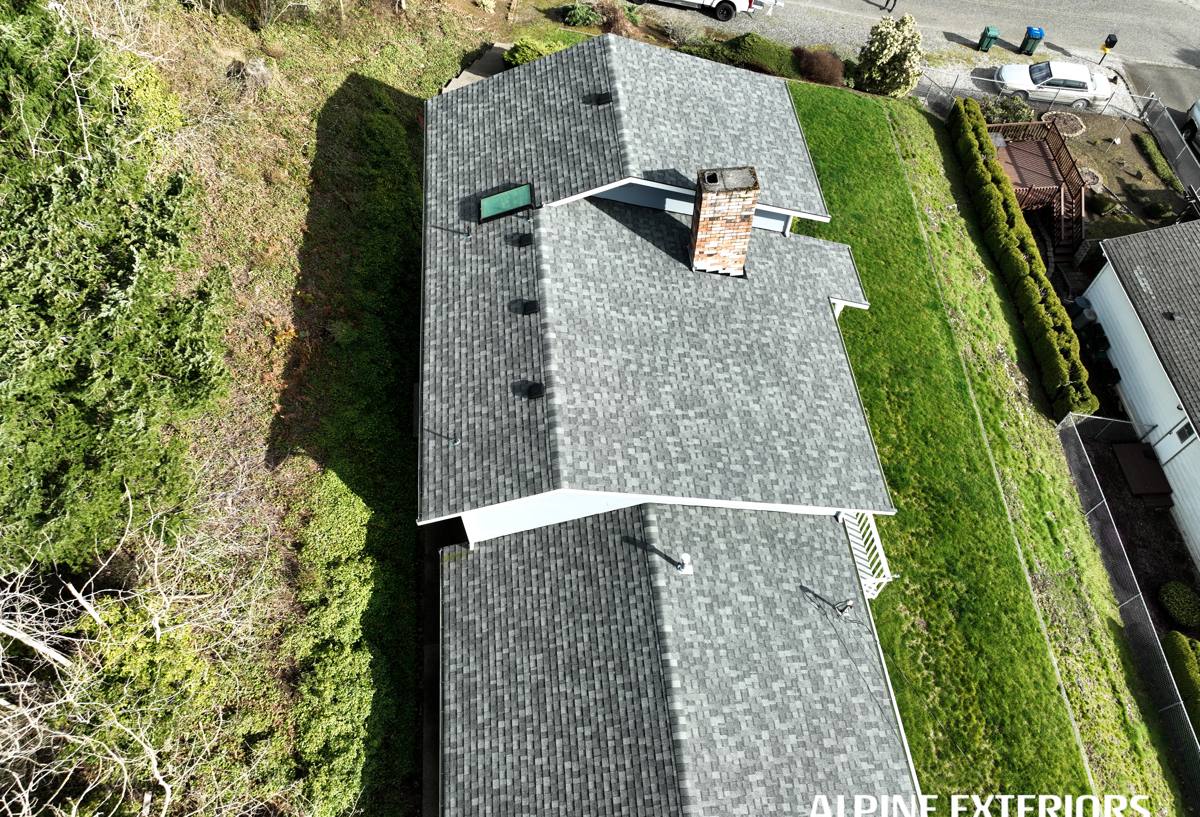
- Flashing at every penetration — chimneys, vents, skylights, and wall transitions need flashing designed for wind-driven rain, not just standard lap coverage.
- Underlayment quality — a synthetic or self-adhered underlayment rated for high-moisture climates gives you a real second line of defense if wind ever pushes water past the panel seams.
- Panel expansion allowance — metal expands and contracts with temperature swings; clips and seams need to allow for that movement without loosening over time.
- Cut-edge protection — any field-cut panel edge exposes raw metal unless it's properly sealed or coated, which is exactly where corrosion starts first in salt air.
Ventilation and Moisture You Can't See
A metal roof sheds surface water well, but the attic or roof deck underneath still needs to breathe. In a climate this wet, trapped moisture in the roof assembly is a bigger long-term risk to the wood structure than anything happening on the metal surface itself. We check ridge and soffit ventilation, ice-and-water shield placement at eaves and valleys, and deck condition before we ever talk panel selection — a beautiful metal roof over a poorly ventilated deck just moves the moisture problem one layer down.
Living With Moss and Debris Long-Term
Metal roofing resists moss far better than shingles or wood shakes, since there's no absorbent surface for it to root into. That said, needles, leaves, and windborne debris still collect in valleys and at gutter lines, especially on tree-covered North Beach lots, and that debris holds moisture against the roof longer than open sun would allow. A simple annual check — clearing valleys and gutters, confirming flashing is still sealed, and looking for any early rust at fastener heads — goes a long way toward getting the full service life out of the system.
A Practical Annual Checklist
- Clear needles and leaf debris from valleys, gutters, and any low-slope transitions
- Look for early rust streaking at fasteners, flashing, or panel cut edges
- Confirm downspouts are draining away from the foundation, not pooling at the eave line
- Check that ridge vents and soffit vents are unobstructed
- Note any lifted flashing or sealant that's shrunk or cracked at penetrations
Our Process for a North Beach Metal Roof
We treat every metal roofing project on Orcas Island as a system, not just a material swap. That means:
- On-site evaluation — checking existing deck condition, ventilation, exposure direction, and tree cover before recommending a system.
- System selection — matching panel type, metal, and coating to the home's actual exposure, not a one-size-fits-all default.
- Deck and moisture prep — repairing any compromised sheathing and installing underlayment rated for high-moisture, wind-driven conditions.
- Installation with corrosion-aware details — correct fasteners, sealed cut edges, and flashing built for sideways rain, not just gravity drainage.
- Final walkthrough — reviewing what routine maintenance the specific system will need going forward.
What Drives the Cost
Metal roofing costs more upfront than asphalt shingles, but the calculation changes when you factor in a marine climate and a multi-decade lifespan. The real cost swings come from a handful of variables specific to each home.
| Factor | Why It Matters Here |
|---|---|
| Panel material (aluminum vs. steel vs. copper) | Corrosion resistance and lifespan vary significantly this close to salt air |
| Roof complexity (valleys, dormers, penetrations) | More transitions mean more flashing detail, which is where wind-driven rain gets tested |
| Existing deck condition | Wet-climate homes more often need sheathing repair before panels go on |
| Access and site logistics | Tree cover, steep sites, and ferry-dependent material delivery affect scheduling and cost |
| Coating tier | Higher-performance finishes cost more but hold up longer against fading and chalking |
Why Local Experience Matters on Orcas Island
A metal roofing crew that only occasionally works in San Juan County can install a technically correct roof and still miss the details that matter most here — the fastener choice for salt exposure, the flashing approach for driving rain, the ventilation call for a shaded, moss-prone deck. A crew that already works North Beach regularly has seen how these roofs actually age in this specific climate, not just how they're rated to perform on paper. That local pattern recognition is what keeps small details from turning into ten-year problems.
Material and equipment logistics also work differently on an island — deliveries depend on ferry schedules, and weather windows for a full roof replacement need to be planned around this region's rain patterns, not a generic construction calendar. Knowing that going in keeps a project on schedule instead of stalling mid-tear-off.
If you're weighing metal roofing for a North Beach home, we're happy to walk the roof, talk through what your specific exposure and tree cover call for, and give you a straightforward, no-pressure estimate — no hard sell, just an honest read on what your home needs.