 Orcas Island Siding
 Why West Sound Roofs Wear Out Faster Than You'd Expect
If you own a home in West Sound, you already know the roof over your head is dealing with more than most inland houses ever will. The west-facing shoreline exposure means salt-laden air moves across your roofline pretty much year-round, and that salt doesn't just sit there — it works on exposed metal fasteners, flashing, and vent components a lot faster than it would twenty miles inland. Add in driving rain that comes sideways during winter storms, and you've got water being pushed up under shingle edges and flashing laps in ways a calm, straight-down rain never would.
Then there's the moss. Orcas Island's tree cover and marine humidity create a long moss season that can run most of the year on shaded, north-facing slopes. Moss holds moisture against the roofing surface, works its way under shingle tabs, and slowly lifts material that's supposed to stay flat and sealed. A roof that would last 25-30 years in a dry climate can start showing real problems well before that out here if it wasn't built with this specific combination of conditions in mind.
None of this means West Sound is a bad place to own a roof — it means the roof has to be installed correctly for these exact conditions, not just installed to code minimums and hoped for the best.
Signs Your Roof Is Telling You It's Time
Most West Sound homeowners don't wake up one day and decide to replace a roof — they notice a handful of warning signs over a season or two and eventually the math tips toward replacement instead of another round of repairs. Here's what we look for, and what you should be looking for too:
- Granule loss showing up in gutters or at downspout outlets, especially after a windy rainstorm
- Shingles that are curling, cupping, or have visibly lifted at the tabs
- Moss or algae streaking that keeps coming back within a season of cleaning
- Soft spots or slight give underfoot when walking the roof during inspection
- Daylight visible through the roof deck from inside the attic
- Water stains on ceilings or in the attic, particularly near valleys, chimneys, or skylights
- Flashing that's rusted, pulled loose, or was never properly sealed to begin with
- A roof that's simply reaching the back half of its expected lifespan for its material type
One or two of these on their own might just mean a repair. Several together, especially on a roof more than 15-20 years old, usually means it's time to talk about a full replacement before a small problem becomes a deck-level one.
Choosing the Right Material for a Marine Environment
There's no single "best" roofing material for every West Sound home — it depends on your budget, your roof's exposure and pitch, and how much ongoing maintenance you want to take on. What we can tell you honestly is how each option actually performs once salt air, driving rain, and moss are part of the equation.
| Material | Moss & Algae Resistance | Wind & Rain Performance | Maintenance Needs | Typical Lifespan |
|---|---|---|---|---|
| Architectural asphalt shingle (algae-resistant granules) | Good — copper/zinc-infused granules slow regrowth | Strong when properly fastened and flashed | Periodic moss removal on shaded slopes | 25-30 years |
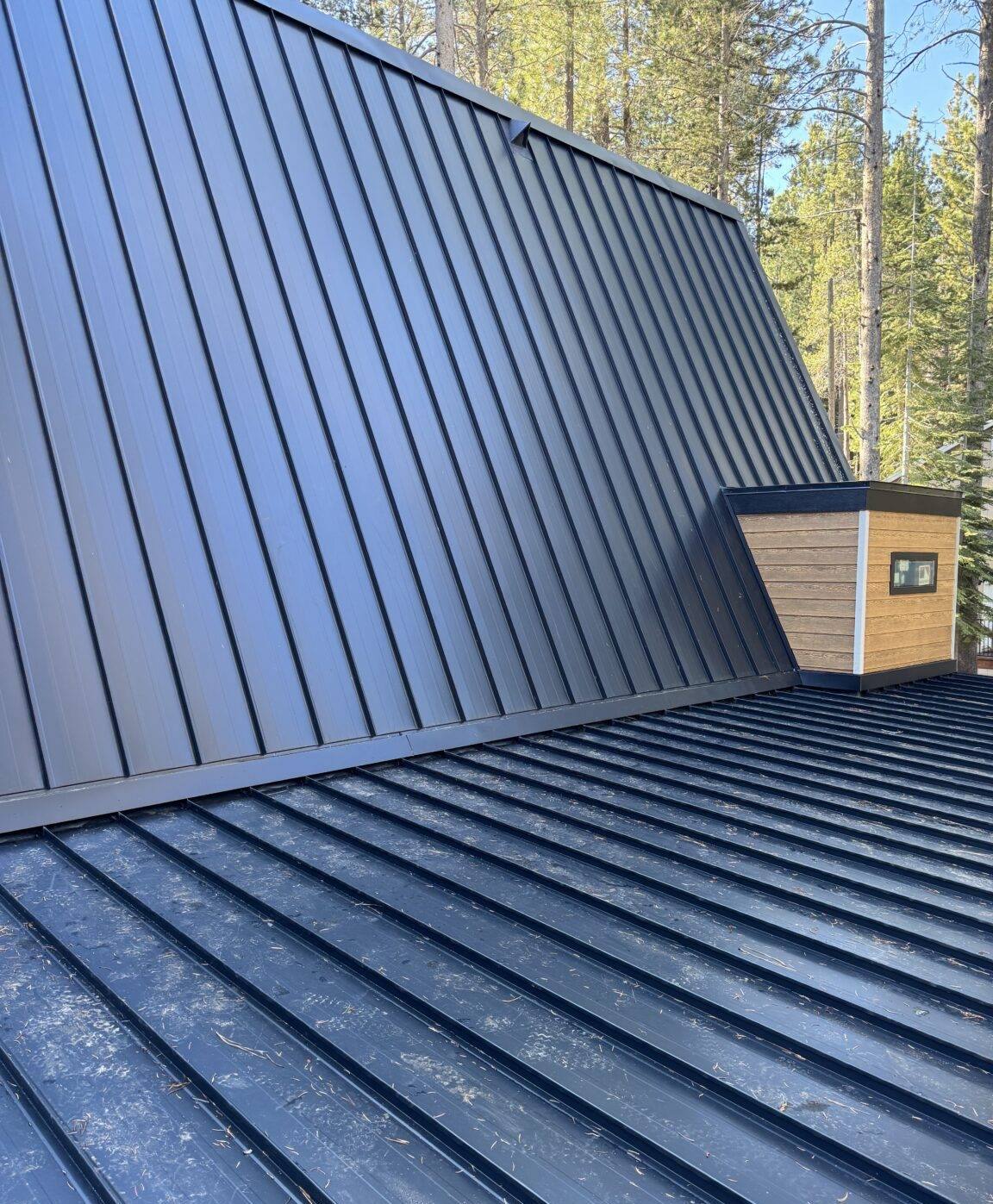
| Standing seam metal | Excellent — smooth surface sheds moss spores | Excellent — sheds driving rain, handles wind well | Low; occasional fastener/seam check | 40-50+ years |
| Cedar shake | Poor without diligent upkeep — organic material holds moisture | Fair; sensitive to installation detail | High — regular treatment and moss control required | 20-30 years with upkeep |
| Synthetic/composite shingle | Good — engineered for algae resistance | Good, varies by product line | Low to moderate | 30-50 years |
We'll be straightforward: on shaded, north-facing West Sound roofs where moss pressure is heaviest, we generally steer homeowners away from traditional cedar shake unless they're committed to a real maintenance schedule. It's not that cedar is a bad product — it's a beautiful, traditional look — but as an organic material it holds moisture against itself in exactly the conditions this island produces most of the year, and that shortens its practical life unless it's inspected and treated regularly. Standing seam metal and algae-resistant architectural shingles simply give you more roof life for less ongoing work in this specific climate.
Color and Granule Choices Matter Here Too
Darker roof colors and standard granules show moss and algae streaking faster than lighter colors or algae-resistant granule blends. If long-term appearance matters to you as much as performance, it's worth discussing granule type during material selection rather than choosing on color alone.
What a Correct Installation Actually Involves
A new roof is only as good as what's underneath the visible surface. This is where a lot of the long-term performance difference actually gets decided — and where cutting corners doesn't show up as a problem until years later.
Deck Inspection and Repair
Before anything new goes down, the roof deck itself gets inspected once the old material is off. Any soft, delaminated, or water-damaged sheathing gets replaced — installing new roofing over a compromised deck just locks the problem in for the life of the new roof.
Ice and Water Protection at Vulnerable Points
Eaves, valleys, and areas around penetrations like chimneys and skylights get self-adhering ice and water shield membrane, not just standard underlayment. These are the spots where wind-driven rain is most likely to force water backward under the roofing material, and they need a sealed, self-healing barrier, not just a felt layer.
Underlayment Across the Field
We install synthetic underlayment across the full roof deck rather than relying on old-style felt paper. Synthetic underlayment holds up better to the extended exposure that's common on island projects where weather can delay the final roofing layer, and it performs better long-term against the moisture this climate produces.
Flashing Details
Flashing around chimneys, skylights, sidewalls, and valleys is where most roof leaks actually originate — not in the field of the shingles themselves. Every flashing point is formed and sealed individually rather than relying on caulk as a substitute for proper metalwork.
Ventilation
Balanced intake and exhaust ventilation (soffit vents paired with ridge or other exhaust venting) keeps moist air moving out of the attic space instead of condensing against the underside of the deck. In a humid marine climate, poor ventilation is one of the most common hidden causes of premature deck rot — and it's invisible until you're already dealing with it.
Building for West Sound's Wind and Rain Exposure
West-facing water exposure means West Sound homes can see stronger, more direct wind-driven rain events than more sheltered parts of Orcas Island. That changes how a roof needs to be fastened and sealed, not just what material sits on top.
We follow manufacturer-specified nailing patterns for the wind exposure category of your specific site rather than a generic minimum, and we pay particular attention to starter course installation and hip/ridge fastening, since these are the areas most likely to lift in a sustained wind event. Proper drip edge installation at eaves and rakes also matters more here than in calmer inland settings — it's a small detail that determines whether wind-driven rain sheds cleanly off the roof edge or gets pushed back up under the first course.
Our Installation Process
We keep the process straightforward and communicate clearly at each stage, since a roof replacement is disruptive enough without added uncertainty.
- On-site inspection and estimate. We walk the roof, check the deck where accessible, and talk through material options based on your home's exposure, roof pitch, and budget.
- Material selection and scheduling. Once you've chosen a material and we've confirmed measurements, we schedule the project around a realistic weather window.
- Tear-off and deck prep. Old roofing comes off, the deck is inspected, and any needed sheathing repairs are made before new material goes down.
- Underlayment, ice/water shield, and flashing installation. This is the protective layer that does the real long-term work, installed before the visible roofing material.
- Roofing installation. Shingles, panels, or shakes are installed to manufacturer specification for your site's wind exposure.
- Ventilation check and final details. Ridge and soffit ventilation is confirmed, and all penetrations are re-checked for a tight seal.
- Cleanup and walk-through. We clear debris, run a magnetic sweep for stray fasteners, and walk the finished roof with you before we consider the job done.
Permits, Timing, and Island Logistics
Roofing projects on Orcas Island typically require permitting through San Juan County, and material deliveries generally come in by ferry, which means scheduling has to account for both the weather and the boat schedule — not just crew availability. A crew unfamiliar with island logistics can end up with materials staged too early and exposed to weather, or a job stretched out longer than it needs to be because deliveries weren't planned around ferry timing. We build project schedules around these realities from the start, so your roof isn't sitting half-tarped waiting on a load that missed its sailing.
Why a Crew That Already Works West Sound Matters
Roofing a house in West Sound isn't the same job as roofing a house in a sheltered inland neighborhood, even elsewhere on Orcas Island. The wind exposure, the salt air's effect on fasteners and flashing metal, and the moss pressure on shaded lots all factor into material choice and installation detail. A crew that regularly works this specific area already knows which slopes need extra attention to ventilation, which exposures call for tighter fastening schedules, and how to stage a project around ferry-dependent material delivery without losing time to weather.
There's also the practical matter of being reachable afterward. If a storm knocks something loose or you have a warranty question two years down the road, working with a crew that's local to the San Juan Islands — not a mainland outfit that came out for one job — means someone can actually get back out to your property without a multi-day ferry-dependent delay.
Get a Straight Answer About Your Roof
If your roof is showing wear, past its expected lifespan, or you just want an honest read on how much life it has left, we're happy to take a look. We'll give you a clear assessment of what your West Sound home actually needs — no pressure, no inflated scare tactics, just a straightforward evaluation and an estimate you can think over. Fill out the form below to schedule a free roof estimate.