 Orcas Island Siding
 Why Roofs in Rosario Wear Differently Than Roofs Inland
Rosario sits close to the water on Orcas Island, which means every roof here is dealing with a combination of stresses that inland San Juan County homes simply don't see as intensely. Salt-laden air moves off the water and settles on shingles, flashing, and fasteners. Driving rain off Rosario Strait doesn't just fall straight down — wind pushes it sideways and up under laps, valleys, and vents that were never designed to shed water from that angle. And the tree cover that gives so many Rosario properties their privacy also means shaded, damp roof planes that stay wet for days after a storm, which is exactly the condition moss needs to take hold.
None of that means a roof here is doomed to fail early. It means the materials, the details at penetrations and edges, and the ventilation strategy all have to be chosen for this specific environment, not for a generic Pacific Northwest install. A roof that would perform fine in Sedro-Woolley or Mount Vernon can underperform badly a few hundred feet from Rosario's shoreline if it wasn't built with salt air and moss in mind.
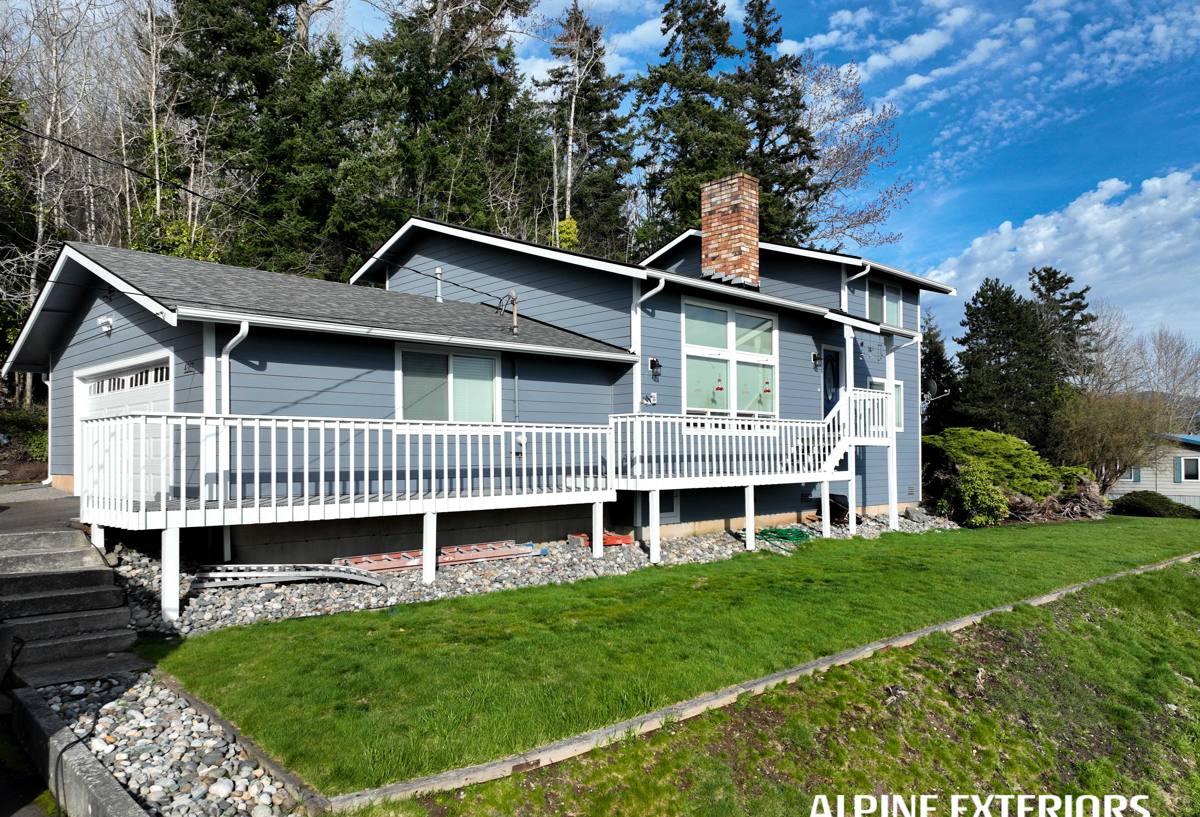
What "Correct" Actually Means on a Rosario Reroof
Tear-Off and Deck Inspection
We don't install new shingles over old ones, and we don't skip the deck inspection to save time. Once the old roofing is stripped, the sheathing gets checked panel by panel for soft spots, delamination, and water staining — all common where moss has been trapping moisture against the roof for years. Any compromised decking gets replaced before anything new goes down. Covering up bad sheathing is the single most common shortcut that leads to a "new" roof failing early.
Underlayment and Ice-and-Water Protection
Given how much wind-driven rain this area sees, we treat eaves, valleys, and any roof-to-wall transitions as high-risk zones and use self-adhered waterproof membrane there, not just standard felt. The field of the roof gets a synthetic underlayment rated for the exposure, which holds up better than old-style felt in a marine climate that stays damp for extended stretches.
Flashing at Every Penetration
Chimneys, skylights, plumbing vents, and wall intersections are where the vast majority of roof leaks actually start — not in the open field of shingles. Every one of these gets new step flashing, counterflashing, or a new boot, properly lapped with the underlayment and shingles so water is shed downhill at every layer, not just caulked and hoped for.
Choosing a Roofing Material for Rosario's Climate
There's no single "best" roofing material for every home — it depends on your roof's pitch, how much shade it sits under, your budget, and how the house looks. What we can do is lay out honestly how the common options actually perform in a salt-air, high-moss environment like Rosario.
| Material | Moss / Algae Resistance | Salt Air Durability | Typical Lifespan Here | Maintenance Needs |
|---|---|---|---|---|
| Architectural asphalt shingle (algae-resistant) | Good with AR granules; still needs periodic cleaning on shaded slopes | Good — copper/zinc granules resist algae staining | 25-30 years | Moderate — annual debris clearing, occasional moss treatment |
| Standing seam metal (aluminum or coated steel) | Excellent — moss struggles to grip a smooth metal surface | Very good if fasteners and flashing are correctly specified for coastal use | 40-50+ years | Low — mainly keeping debris off valleys |
| Cedar shake | Poor without diligent upkeep — organic material moss actively feeds on | Fair — salt accelerates weathering of the wood | 20-25 years with upkeep | High — regular treatment, cleaning, and inspection |
| 3-tab asphalt shingle | Fair — thinner profile sheds less efficiently in shaded areas | Fair | 15-20 years | Moderate to high |
For most Rosario homes we steer people toward algae-resistant architectural shingles or standing seam metal, depending on the roof's exposure and the look the homeowner wants. We're honest that cedar shake, while it has a traditional appeal some owners love, is a tougher sell here specifically because it's an organic material sitting in a climate that's practically ideal for moss growth — that's a maintenance-burden and moisture-behavior tradeoff, not a knock on the product itself.
Ventilation and Moisture Control
A new roof surface only solves half the problem if the attic underneath isn't breathing correctly. Trapped moisture in an attic condenses on the underside of the sheathing, which shortens the life of the decking and feeds the exact conditions that let moss and algae establish themselves on the roof above. On a Rosario reroof we evaluate intake ventilation (typically at the eaves) against exhaust ventilation (ridge or roof vents) and correct any imbalance we find. A roof with strong exhaust but weak intake — a common issue on older homes here — pulls conditioned air out of the living space instead of attic air, which wastes energy and can actually worsen condensation.
Our Installation Process
- On-site assessment: We walk the roof (or use a drone where pitch or access makes that safer) and inspect the attic from inside, noting deck condition, ventilation, and problem areas.
- Written estimate: You get a clear scope covering material choice, tear-off, deck repair allowance, flashing detail, and ventilation work — no vague line items.
- Material staging: Because everything for Orcas Island projects comes over by ferry, we plan delivery and dumpster placement in advance so the job isn't held up mid-tear-off waiting on a boat.
- Weather-window scheduling: We track the forecast and schedule tear-off for a stretch of dry days appropriate to San Juan County's weather patterns, keeping the home dried-in with temporary protection if conditions shift.
- Tear-off and deck repair: Old roofing comes off, sheathing is inspected and repaired as needed, and any hidden issues are shown to you before we cover them up.
- Underlayment, flashing, and roofing installation: Installed in the sequence and laps described above, penetration by penetration.
- Final walkthrough: We review the finished roof with you, including ventilation and any warranty paperwork, before calling the job done.
Common Problems We Find on Rosario Roofs
Because we work this specific area regularly, certain issues show up again and again on the roofs we inspect and replace here:
- Moss established in north-facing or tree-shaded valleys, holding moisture against the shingles or shakes long after the rest of the roof has dried.
- Corroded or failing fasteners and flashing on older roofs where standard (non-coastal-rated) hardware was used near the shoreline.
- Undersized or blocked intake ventilation at the eaves, often from insulation stuffed too far into the eave space.
- Wind-driven water intrusion at chimney and skylight flashing that was caulked instead of properly step-flashed.
- Granule loss and premature aging on lower-cost 3-tab shingles that weren't rated for sustained coastal wind exposure.
Permitting and Timeline in San Juan County
A full roof replacement on Orcas Island typically requires a permit through San Juan County, and depending on your property — shoreline setback zones in particular — there can be additional review. We handle the permit application as part of the project so you're not navigating that process solo. On timeline: once materials are staged, most single-family reroofs here take a few days to a bit over a week of actual on-roof work, though we build in flexibility for the marine weather this area is known for rather than rushing a tear-off into a rain system.
Signs Your Rosario Home May Need a New Roof, Not a Repair
Not every roof problem calls for full replacement — a lot of leaks are legitimately fixable with a targeted repair. But there's a point where patching becomes throwing money at a roof that's genuinely at the end of its service life. Watch for:
- Shingles that are cupping, curling, or losing granules across large sections rather than in one isolated spot.
- Moss or algae that returns within months of being cleaned, especially on shaded slopes.
- Daylight visible through the attic sheathing, or damp insulation after a storm.
- Multiple past repairs in different areas of the same roof — a sign the whole system, not just one section, is aging out.
- A roof that's approaching or past the upper end of its material's expected lifespan for this climate (see the comparison table above).
Why a Crew That Already Works Rosario Matters
Roofing on Orcas Island isn't the same logistics as roofing on the mainland. Every ferry sailing has a schedule, material and dumpster deliveries have to be planned around it, and a crew that hasn't worked here before often underestimates how much that affects both timeline and cost. A contractor already familiar with Rosario and the broader San Juan County permitting process, the local weather patterns, and the way salt air and moss actually behave on roofs in this specific pocket of the island isn't guessing — they've seen how these variables play out on real homes nearby, and they build the job around that experience instead of learning it at your expense.
If you're weighing a repair against a full replacement, or you just want an honest read on where your roof currently stands, we're glad to take a look. Reach out for a free, no-pressure estimate using the form below.