 Orcas Island Siding
 Storm Damage Roof Repair for the Mountain Lake Area
The homes around Mountain Lake sit up in the forest on the east side of Orcas Island, tucked under a heavy canopy of fir and cedar. That setting is beautiful and it's also exactly why roofs up here take a different kind of beating than roofs down along the water. Falling limbs and whole trees during winter windstorms, near-constant shade that keeps roof decks damp for days after a storm passes, and moss that never really stops growing because the canopy blocks the sun that would otherwise dry things out. When a storm damages a roof in this neighborhood, the repair has to account for all of that, not just patch the hole and move on.
This page covers what storm damage roof repair actually looks like for homes in the Mountain Lake area of Orcas Island, San Juan County — what we look for, how we repair it correctly, and why a crew that already works this specific microclimate gets better results than a general contractor passing through.
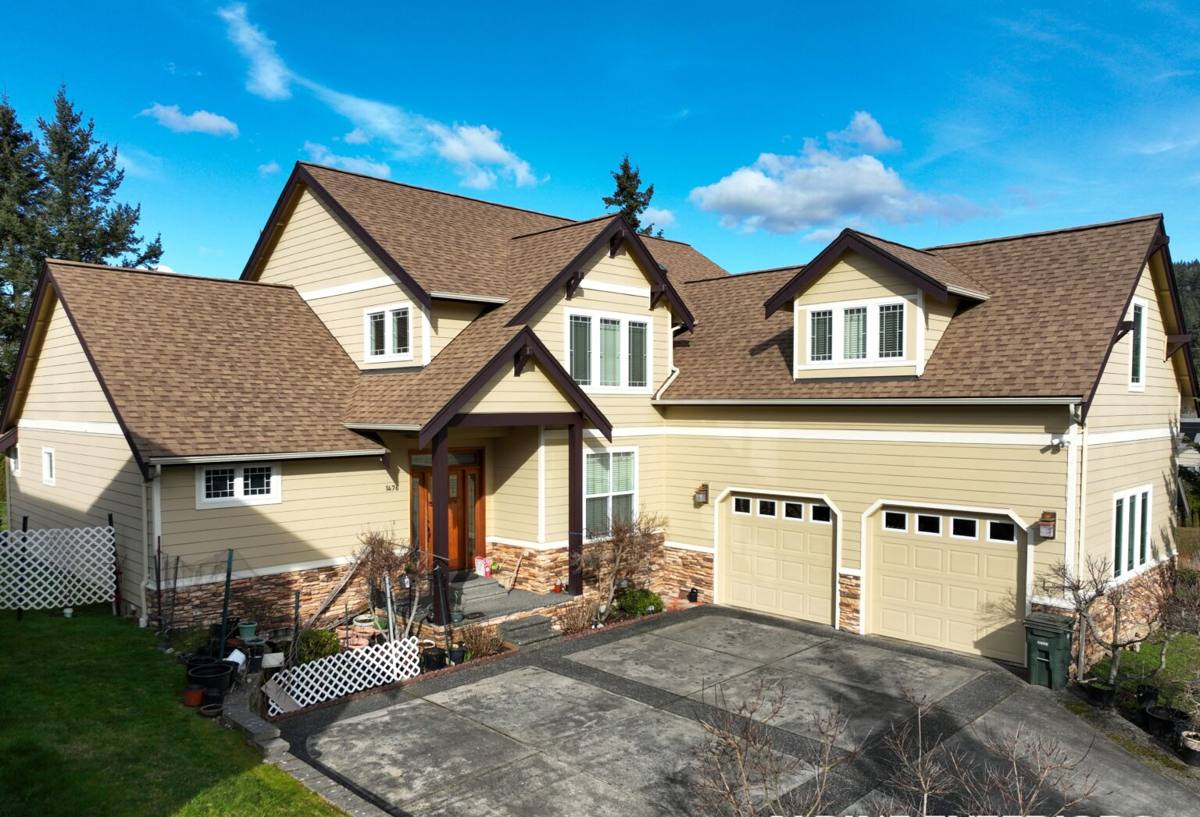
Why Mountain Lake Roofs Take Storm Damage Differently
Tree Cover Means Impact Damage, Not Just Wind Damage
Down near the shoreline, storm damage is mostly wind — lifted shingles, torn ridge caps, flashing peeled back. Around Mountain Lake, wind is still a factor, but the bigger risk is falling debris. Big leaf maple and alder limbs let go in saturated winter soil, and mature conifers can drop tops or come down entirely in a strong gust. That means storm damage here is more often a localized impact — a puncture, a cracked rafter, a section of decking staved in — rather than a broad blow-off across the whole field of the roof. Repair has to address the structure underneath, not just the roofing material on top.
Shade Slows Everything Down
A roof in full sun after a storm dries out in a day. A roof shaded by tall trees around Mountain Lake can stay damp for a week or more, especially in the shoulder seasons. That extended dampness is what drives moss growth and lets any water that gets in through storm damage sit against the decking instead of evaporating off. It also means repairs done in a hurry — patched while the wood underneath is still wet — tend to fail early because moisture gets sealed in rather than dried out first.
Salt Air Still Reaches Inland
Orcas Island homes don't have to be waterfront to feel salt air. Marine moisture moves with the wind across the whole island, and it accelerates corrosion on exposed fasteners, flashing, and any metal roofing components. Combined with the extra dampness from tree shade, that's a harder environment on fasteners and flashing than a drier inland climate would be, even a few miles from the water.
What a Correct Storm Damage Repair Involves
A repair that only addresses what's visible from the ground is a repair that comes back. Here's what we actually check and do:
- Structural check first. Any impact from a falling limb gets inspected from the attic or crawlspace side, not just the roof surface, to confirm rafters, sheathing, and decking are sound before anything gets re-covered.
- Dry before you cover. Given how slow roofs dry out under tree cover here, we don't seal wet decking under new material. If a section needs time to dry, we tarp it properly and wait rather than trap moisture in.
- Match the surrounding material. A patch that doesn't match the surrounding roofing in age, granule wear, or profile becomes its own future leak point at the seams. We match as closely as the existing roof allows, or explain honestly when an exact match isn't possible.
- Flashing gets replaced, not caulked. Storm-damaged flashing around chimneys, vents, and valleys gets rebuilt, not sealed over with mastic as a shortcut. Caulk is a maintenance item, not a repair.
- Fastener corrosion gets addressed. Given the salt-air exposure across the island, any corroded fasteners found near the repair area get replaced, not just the ones directly damaged by the storm.
- Moss and debris cleared from the whole roof, not just the damaged section. Storm cleanup is a natural point to clear built-up moss and needle debris before it holds moisture against the whole roof deck through the next wet season.
How Our Process Works
1. Assessment
We look at the damage from both the roof surface and the interior (attic, ceilings, upper-floor walls) to understand what's actually happened — surface only, or has moisture already reached the structure. On a heavily shaded roof, water can travel further from the entry point than it would on a roof that dries quickly, so we trace it rather than assume.
2. Temporary Protection
If a repair can't happen immediately — waiting on materials, waiting for wood to dry, waiting out a following storm — we get the area properly tarped and secured. A poorly secured tarp in Orcas Island's winter wind does more harm than good, so this step gets real attention, not a quick staple job.
3. Repair or Replace
Small, isolated storm damage gets repaired in place. Where the damage is extensive, or where the surrounding roofing is already near the end of its service life, we'll say so plainly and lay out the honest trade-off between a patch and a fuller re-roof of that section, rather than defaulting to whichever is more profitable for us.
4. Documentation
We document the damage and the repair with photos and a written scope, which matters if you're filing an insurance claim. We don't handle the claim for you, but we make sure you have what you need to support it.
Repair vs. Replacement: What Actually Drives the Decision
| Factor | Leans Toward Repair | Leans Toward Replacement |
|---|---|---|
| Extent of damage | Localized, single impact point | Damage spread across multiple sections |
| Roof age | Roof has significant remaining service life | Roof was already near end of life before the storm |
| Decking condition | Sheathing sound once dried | Soft, delaminated, or rotted decking found |
| Material availability | Close match to existing material available | Discontinued material forces a mismatch or wider re-cover |
| Moss/moisture history | Isolated dampness from this storm only | Long-term moss and moisture damage found during the repair |
Why a Crew That Already Works Mountain Lake Matters
Access is a real factor on this side of Orcas Island. Homes around Mountain Lake are often set back on gravel roads under tree cover, and getting equipment and materials in after a storm — when other roads on the island may also have downed limbs or debris — takes local knowledge of the area, not just a map. A crew that already works this neighborhood knows the terrain, knows which roofs in the area have had recurring moss or drainage issues, and isn't learning the access logistics for the first time while you're waiting on a tarp in the rain.
There's also a judgment factor that comes with familiarity. A crew that's repaired storm damage on shaded, tree-surrounded roofs across San Juan County knows what "dry enough to cover" actually looks like in this climate, versus a crew used to roofs that dry out in a day of sun. That's not a small distinction — it's the difference between a repair that lasts and one that traps moisture and fails within a season.
A Practical Post-Storm Checklist
If you've just had a storm come through and you're not sure whether you need a repair call, here's what's worth checking (safely, from the ground — we don't recommend climbing up after a storm):
- Any visible gaps, punctures, or displaced sections of roofing material
- Broken or hanging limbs still resting on or near the roof
- New water stains on interior ceilings or upper walls
- Debris buildup in valleys or against the chimney that could be trapping water
- Gutters pulled loose or overflowing due to debris blockage
- Any daylight visible through the roof deck from inside the attic
Insurance and Storm Damage Claims
Most homeowners insurance covers sudden storm damage — a limb falling on a roof, wind tearing off shingles — but coverage details and deductibles vary by policy, and we're not in a position to tell you what your specific policy covers. What we can do is provide a clear, honest assessment of the damage and photo documentation that supports whatever claim you file. We'd rather under-state damage than over-state it; an inflated scope doesn't help you and it damages trust that matters for the next storm.
Ready for an Estimate?
If a recent storm has left damage on your roof near Mountain Lake, we're happy to come take a look. There's no cost and no pressure to move forward — just an honest read on what happened, what it needs, and what the options are. Use the form below to request a free estimate.