 Orcas Island Siding
 Roof Repair Built for How Lopez Village Actually Weathers
A roof in Lopez Village doesn't fail the way a roof does in a drier inland climate. Out here, the damage is slower and sneakier — salt-laden air working into fasteners and flashing, driving rain finding the smallest gap under a lifted shingle, and a moss season that stretches for months and never really lets a roof dry out completely. By the time a homeowner sees a stain on the ceiling, the underlying problem has usually been building for a year or two. Roof repair in this part of San Juan County isn't just patching what's visible; it's understanding what the island climate has been doing to the roof all along.
This page is specifically about roof repair for homes in and around Lopez Village — not a full replacement, and not a generic roofing overview. If your roof is fundamentally sound but has a leak, storm damage, moss buildup, or aging flashing, this is what a correct fix looks like and what to expect from a crew that works these islands regularly.
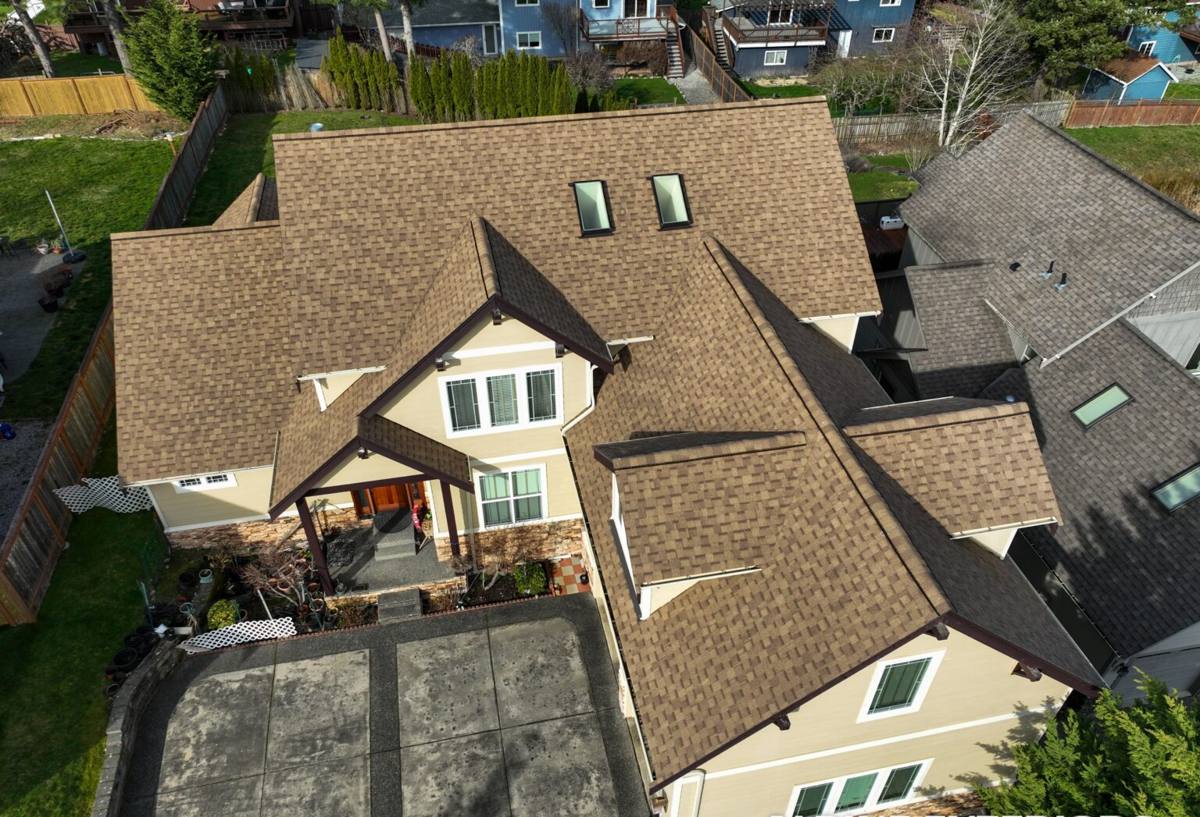
What Salt Air, Rain, and Moss Actually Do to a Roof
Each of these three factors causes a different type of damage, and a repair that only addresses one while ignoring the others tends to fail again within a season or two.
Salt Air
Airborne salt accelerates corrosion on exposed metal — nail heads, flashing, gutter fasteners, and any exposed screws on a metal roof. Once a fastener starts to corrode, it loses its grip and seals loosen, which is exactly where water finds its way in. This process is gradual and often invisible from the ground until a flashing seam has already opened up.
Driving Rain
Wind-driven rain off the water doesn't fall straight down — it gets pushed sideways and upward under roof edges, around chimneys, and into valleys. A repair that doesn't account for wind direction and water path, and only reseals the spot where a stain appeared inside, often misses the actual entry point, which can be several feet away.
Moss Season
Long, cool, damp stretches let moss and algae establish themselves on north-facing slopes and shaded roof sections. Moss holds moisture directly against shingles and roofing felt far longer than open air would, and as it grows it can physically lift shingle edges, creating a path for water even before any granule loss or material failure occurs.
Signs a Lopez Village Roof Needs Repair
Most roof problems here show up gradually. Homeowners are usually in a good position to catch early signs if they know what to look for.
- Moss or dark streaking concentrated on shaded or north-facing roof slopes
- Granules collecting in gutters or at downspout outlets after rain
- Shingles that look curled, lifted at the edges, or slightly out of alignment
- Rust staining below metal flashing, vents, or exposed fasteners
- Water stains on interior ceilings, especially near chimneys, skylights, or roof valleys
- Soft spots or sagging felt underfoot near roof edges or dormers
- Daylight visible through the attic roof deck at joints or nail holes
None of these on their own mean the whole roof is failing — but they're the signals worth having looked at before the next heavy rain rather than after.
What a Correct Repair Actually Involves
A repair that holds up on an island roof usually goes further than replacing the shingles at the visible damage point. The steps that actually matter:
- Tracing the water path. Interior stains rarely sit directly below the entry point. Wind-driven rain and moss-trapped moisture can travel along the roof deck or underlayment before showing up inside.
- Checking flashing before shingles. Around chimneys, vents, skylights, and roof-to-wall transitions, flashing failure is a more common cause of leaks than shingle wear, especially where salt air has corroded fasteners.
- Clearing and treating moss, not just removing it visually. Scraping moss off the surface without addressing what's under it leaves damaged, moisture-softened material in place.
- Matching materials correctly. A patch using the wrong shingle profile, weight, or fastening pattern can create a new weak seam rather than blending into the existing roof system.
- Verifying ventilation. Poor attic ventilation traps moisture from below, which compounds moss and rot problems from above — a repair that ignores this often needs to be redone.
What We Won't Do
We don't recommend pressure-washing moss off a roof, which can drive water under shingles and strip protective granules in the process. We also don't apply surface sealants as a substitute for fixing a flashing or underlayment failure — a sealant patch can mask a leak for a season while the deck underneath keeps deteriorating. Our standard is to fix the actual failure point, even if that takes longer to diagnose than a quick surface patch.
Repair or Replace? What Actually Drives the Decision
Homeowners often assume any leak means a full roof replacement is coming. In our experience, that's the exception, not the rule — most roofs that are otherwise structurally sound and reasonably young can be repaired soundly. The table below covers the main factors that push a decision one way or the other.
| Factor | Favors Repair | Favors Replacement |
|---|---|---|
| Roof age | Under roughly 15-20 years, depending on material | Near or past the material's expected lifespan |
| Extent of damage | Localized — one slope, valley, or flashing point | Widespread granule loss or damage across multiple slopes |
| Moss condition | Surface growth, deck underneath still sound | Deck showing rot or soft spots under moss |
| Flashing condition | Isolated corrosion or seal failure | Flashing failing at multiple points, original material outdated |
| Underlayment | Intact where inspected | Deteriorated or missing in multiple areas |
An honest assessment tells you which column your roof falls into, rather than defaulting to the more expensive option. If a roof genuinely needs replacement, we'll say so and explain why — but we don't start there.
Our Repair Process, Start to Finish
We keep the process straightforward so there are no surprises partway through:
- On-site inspection. We walk the roof (weather permitting) and check the attic from inside, looking at decking, insulation, and any staining patterns.
- Written assessment. We explain what we found, what's causing it, and what it will take to fix — in plain terms, not a sales pitch.
- Scoped repair. We fix the identified failure points: flashing, underlayment, shingle sections, ventilation issues, or moss remediation, as needed.
- Cleanup and debris removal. Old material, moss debris, and fasteners are cleared from the roof and gutters before we leave.
- Follow-up recommendation. If ongoing moss management or a future inspection interval makes sense for your specific roof, we'll tell you — no arbitrary maintenance contracts.
Why a Crew That Already Works the Islands Matters
Roof repair logistics in San Juan County aren't the same as on the mainland. Getting a crew, materials, and equipment to an island job takes ferry scheduling and planning that a contractor who doesn't already work here regularly won't have dialed in. That matters most when a leak needs attention before the next storm rolls through, not weeks later once scheduling finally lines up.
Beyond logistics, familiarity with how homes in this specific area age matters just as much. A crew that's repaired roofs across Lopez Village and the surrounding islands has already seen how salt air treats a particular flashing style, which roof orientations collect moss fastest, and where driving rain typically finds its way in on the home styles common to this area. That's knowledge you don't get from a one-off visit.
Materials and Methods We Use for Island Conditions
For repairs in this environment, we favor corrosion-resistant fasteners and flashing over standard hardware, since standard-grade metal simply doesn't hold up as long against salt air. Where a roof has heavier moss exposure, we look at ventilation and shading conditions as part of the repair, not just as an afterthought — treating the moss without addressing why that section stays damp longer than the rest of the roof just means it comes back. We match shingle or roofing material as closely as possible to the existing roof system so a repair blends in and performs consistently with the surrounding material, rather than creating a seam of mismatched materials that ages differently.
A Straightforward Look at Your Roof
If you're dealing with a leak, storm damage, or a roof that's showing its age in Lopez Village, an honest, no-pressure look at what's actually going on is the right first step. We'll tell you plainly what we find, what it will take to fix it correctly, and what it's likely to cost — no upsell to a full replacement unless the roof genuinely needs one. Use the form below to request a free estimate.