 Orcas Island Siding
 Why North Beach Windows Wear Out Differently
North Beach sits close enough to the water that salt-laden air is a daily fact of life, not an occasional weather event. That air finds its way into every gap in a window assembly — the seal between frame and siding, the corners of the sash, the fasteners holding trim in place. Add San Juan County's long wet season, where driving rain comes in sideways off the water for days at a stretch, and you have two forces working against your windows at once: corrosion from salt and saturation from rain that never lets a wall assembly fully dry out.
Then there's moss. Orcas Island's mild, damp climate means moss and algae get a long growing season, and they don't stay confined to roofs. Given the right conditions — shade, moisture, and a rough or porous surface to grip — moss will colonize window sills, trim boards, and the caulk lines around a frame. Once it's established, it holds water against the wood or composite longer than the material was ever designed to tolerate.
None of this means windows on North Beach are doomed. It means the installation has to account for these conditions from the start — correct flashing details, the right sealants, and materials chosen for how they'll actually perform here, not just how they look in a showroom.
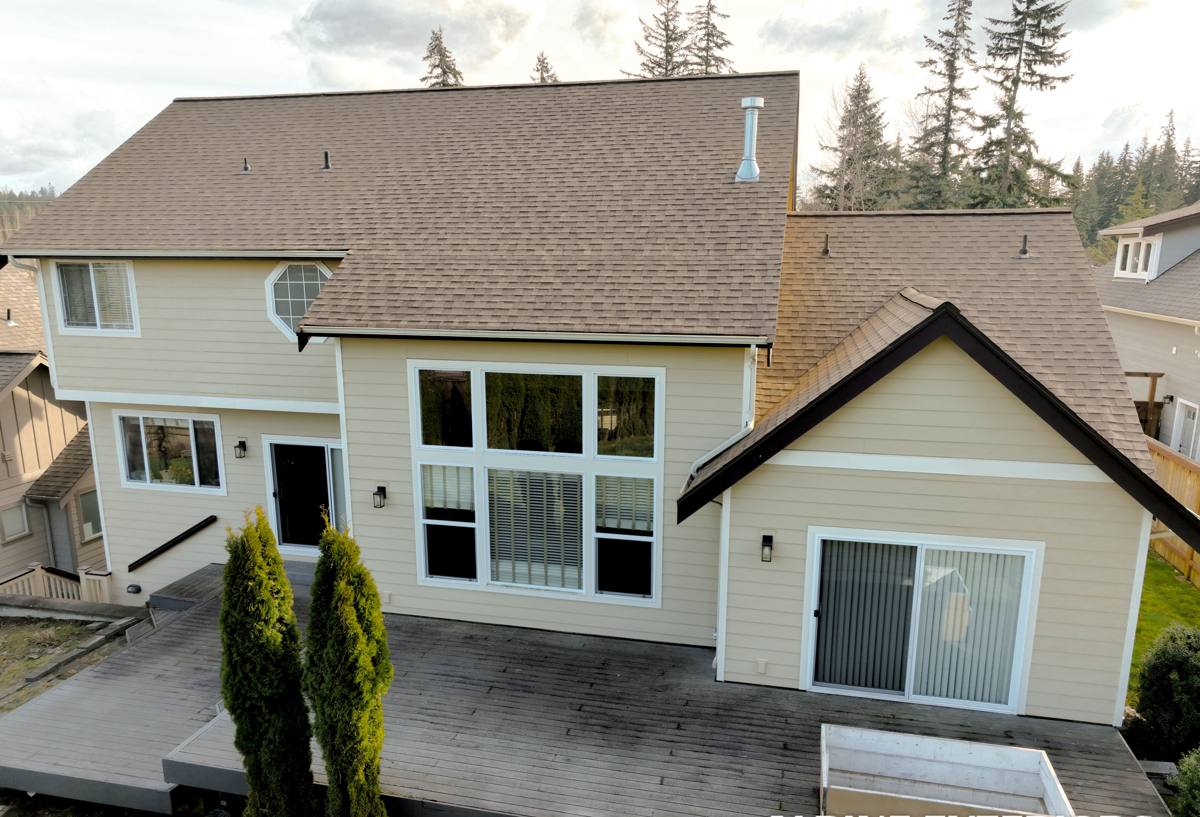
What Salt Air and Moisture Actually Do to a Window Assembly
Corrosion at the Hardware
Cranks, locks, hinges, and screws are usually the first casualties. Standard hardware can start pitting and seizing years before the glass or frame shows any real wear. Marine-grade or coated hardware costs more up front but avoids the slow creep of stuck locks and stiff cranks that salt-air homes tend to develop.
Wood Rot and Composite Swelling
Untreated or poorly sealed wood trim absorbs moisture at end grain and joints first. Even engineered and composite materials aren't immune — some swell or delaminate at cut edges if those edges aren't properly sealed during installation. The material choice matters less than whether every exposed edge was treated before it went into the wall.
Failed Seals and Hidden Water Paths
A window can look fine from the outside while water is quietly working its way behind the trim through a gap in the flashing or a cracked bead of caulk. On a site with as much wind-driven rain as North Beach gets, a marginal seal that might hold up in a drier climate can fail within a few seasons here.
Signs Your North Beach Home's Windows Need Attention
- Fogging or condensation between panes on double- or triple-glazed units — a sign the seal has failed
- Soft or discolored trim at the sill or corners, especially on north- and west-facing walls
- Moss or dark green growth building up in the corners of the frame or along the sill
- Drafts or whistling during storms that weren't there a few years ago
- Windows that are hard to open, close, or lock — often a sign of hardware corrosion or frame swelling
- Paint or finish bubbling or peeling near the window opening, which usually points to moisture trapped behind the surface
Any one of these on its own isn't necessarily an emergency, but a few appearing together on the same window is a good reason to have it looked at before the next wet season.
What a Correct Installation Actually Involves
Window installation gets treated as a simple swap far too often — pull the old unit, drop in the new one, caulk the edges. On a site exposed the way North Beach is, that approach shortens the life of even a good window by years. A correct job includes:
- Opening inspection. Before anything new goes in, the rough opening gets checked for hidden rot, soft sheathing, or prior water damage that has to be addressed first.
- Proper flashing sequence. Water needs a shingled path down and out — sill pan, side flashing, then head flashing installed in that order so each layer overlaps the one below it. Getting this sequence backward is one of the most common causes of hidden leaks.
- Sealant selection and placement. Not every caulk is rated for the same UV exposure, movement, or salt environment. The right product goes in the right place — and just as important, the wrong places (like the bottom of the sill, which needs to drain, not seal shut) get left open.
- Air and moisture barrier integration. The window's flanges need to tie into the house wrap or weather barrier correctly, not just get taped over on the surface.
- Hardware and finish matched to the exposure. Coastal-rated hardware and finishes on the walls that take the worst weather, standard options where exposure is lighter.
- Final adjustment and sealing. Every sash gets checked for square, smooth operation, and a tight seal before the job is called done.
Frame Material Comparison for a North Beach Exposure
| Material | How It Handles Salt Air & Moisture | Maintenance | Typical Trade-Offs |
|---|---|---|---|
| Vinyl | Resists corrosion and rot well; won't absorb moisture | Low — occasional washing to keep salt film and moss spores off | Limited color range; can flex on very large openings |
| Fiberglass | Very stable in wet, salty conditions; low expansion/contraction | Low | Higher upfront cost than vinyl |
| Wood (clad or unclad) | Good insulator, but exposed wood needs consistent upkeep in this climate | High — refinishing and moss/mildew control on any exposed surfaces | Best suited to sheltered elevations, not the most exposed walls |
| Aluminum | Prone to corrosion in salt air unless properly coated | Moderate | Conducts heat and cold; less common as a primary frame choice here |
We don't push one material for every wall of a house. It's common on a North Beach project to see a more moisture-tolerant frame on the water-facing side and a different material where a homeowner wants a specific look on a sheltered elevation.
Our Process for North Beach Window Projects
1. On-Site Assessment
We walk the exposure of each window individually — a window on a covered porch faces very different conditions than one on an open, water-facing wall. That assessment shapes the flashing detail, sealant choice, and sometimes the frame material recommendation window by window, not as a single blanket spec for the whole house.
2. Straightforward Scope and Pricing
Before work starts, you get a clear written scope: which openings are being replaced, what materials are going in, and what the flashing and sealing plan looks like. No vague line items.
3. Installation
We follow the flashing and sealing sequence described above on every opening, not just the ones that are easiest to reach. Openings with existing damage get repaired before the new window goes in — we don't install a new window into a compromised opening and call it finished.
4. Final Walkthrough
Every window gets operated, checked for square and a tight seal, and reviewed with the homeowner before we consider the job complete.
Cost Factors for North Beach Window Installation
| Factor | Why It Matters |
|---|---|
| Number and size of openings | Larger and more numerous windows increase both material and labor cost |
| Frame material | Vinyl is typically the most economical; fiberglass and clad-wood cost more |
| Exposure and elevation | Water-facing or high-wind walls may call for upgraded flashing details and coastal-rated hardware |
| Condition of the existing opening | Hidden rot or water damage found during removal adds repair work before installation can proceed |
| Access | Second-story or hard-to-reach windows can add time and equipment costs |
We'd rather walk your home and give you real numbers than quote a per-window average that doesn't hold up once we see the actual conditions.
Why a Crew That Already Works North Beach Matters
Window installation isn't a one-size-fits-all trade. A crew that's worked other parts of Washington but hasn't spent real time on Orcas Island can miss the details that matter here — how much of a role moss plays in sill deterioration, which elevations take the worst of the driving rain, or why a sealant that performs fine inland can fail faster on a salt-exposed wall. Familiarity with San Juan County's building requirements and the realities of getting materials and equipment to an island site also keeps a project moving instead of stalling on logistics nobody planned for.
We're not interested in overselling premium materials where they're not needed, or cutting corners on the flashing detail that actually protects your wall. Our standard is doing the installation right the first time, because a callback for a leak two winters later costs everyone more than getting the flashing sequence right today.
Keeping New Windows Performing Long-Term
- Rinse frames and sills periodically to clear salt film before it builds up
- Keep an eye on shaded corners and sills for early moss or algae growth and remove it promptly
- Check that weep holes at the sill stay clear so water can drain instead of pooling
- Operate hardware a few times a year, even on windows you don't open often, to keep locks and cranks from seizing
- Have caulk and sealant lines inspected every couple of years, especially on the most weather-exposed elevation
A well-installed window on North Beach can go a long time between issues, but a little seasonal attention — especially heading into the wet months — goes a long way toward avoiding the slow, hidden damage that's expensive to fix later.
If your North Beach home has windows showing any of the signs above, or you're planning a project and want a straight assessment of what your home actually needs, we're happy to walk the property with you. Estimates are free, there's no pressure, and you'll get a clear scope before any work begins — just fill out the form below to get started.