 Orcas Island Siding
 Siding on West Beach Has to Earn Its Keep
West Beach sits on the exposed western edge of Orcas Island, where weather off the water isn't a once-a-season event — it's a constant. Homes here take wind-driven rain straight off the Strait, salt-laden air that never really lets up, and long stretches of gray, damp winter that keep every north- and west-facing wall wet for days at a time. Siding that would coast through a drier, more sheltered part of San Juan County gets tested hard out here, and it shows the wear faster than most homeowners expect.
We install James Hardie fiber cement siding exclusively, and West Beach is a good example of why. This page isn't a general pitch for Hardie products — it's specifically about what this material needs to do on this stretch of coastline, what a correct installation looks like here, and why a crew that already knows these conditions matters more than it would somewhere calmer.
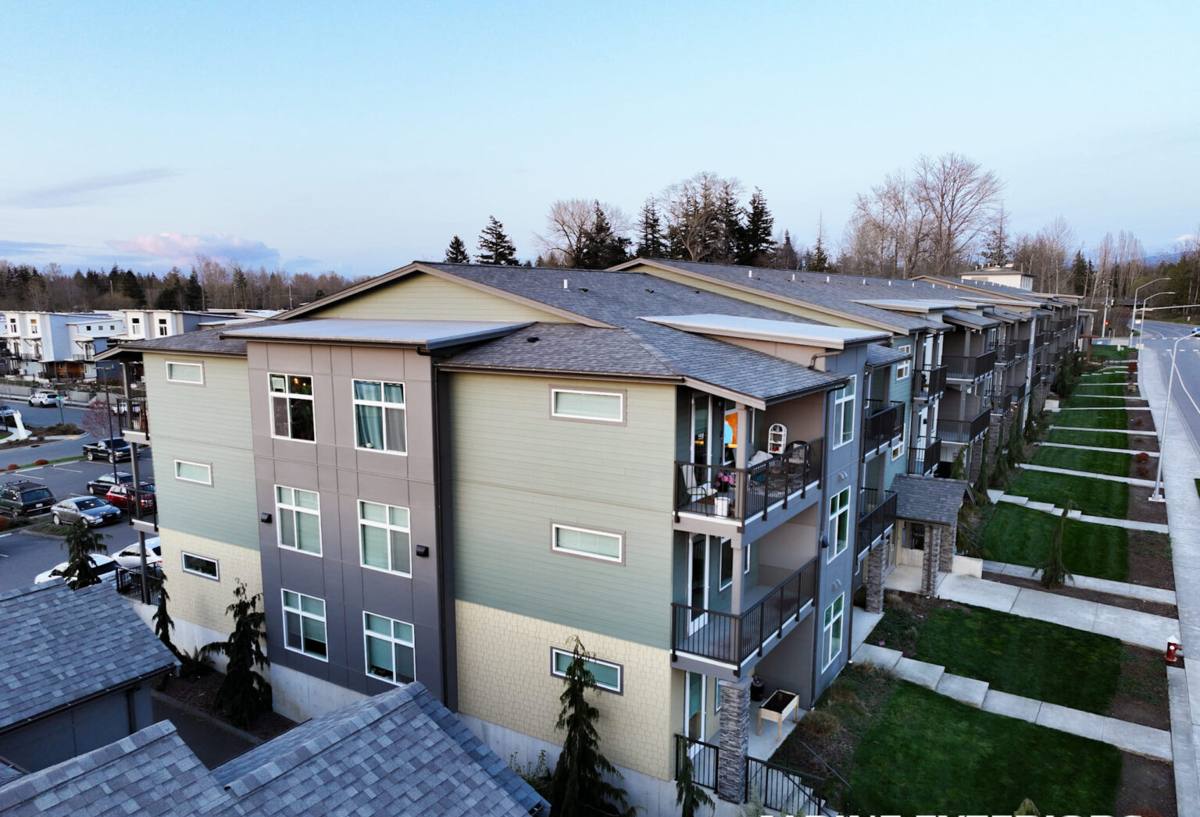
What Salt Air, Driving Rain, and Moss Season Actually Do
Three things wear down exterior siding on Orcas Island faster than almost anywhere else in Western Washington, and West Beach gets all three at once.
Salt Air
Airborne salt from the Strait settles on siding, trim, and fasteners. Over years, it accelerates corrosion in anything metal — nails, screws, flashing, hardware — and it degrades paint and coatings that aren't formulated to handle it. Products that rely on field-applied paint are especially exposed, since the coating is the only thing standing between the salt air and the substrate underneath.
Driving Rain
West-facing exposure means rain doesn't just fall on this siding, it's pushed into it sideways during storms. That puts real pressure on every seam, joint, and penetration in the wall assembly. A siding system with weak water management — poor flashing details, insufficient gapping, caulk doing work it shouldn't have to do — will let moisture find its way behind the cladding, and once that happens the damage is happening where you can't see it.
Moss Season
San Juan County's long wet season, combined with heavy tree cover on much of Orcas Island, means shaded and north-facing walls stay damp for extended stretches. That's exactly the environment moss and algae need to take hold. Siding materials that absorb moisture or have porous surfaces give organic growth something to grip onto; denser, factory-sealed surfaces make it much harder for moss to establish itself in the first place.
Why We Standardized on James Hardie for This Kind of Exposure
Fiber cement isn't a marketing choice for us — it's a materials decision. James Hardie siding is engineered specifically for regional climate demands, and the HZ10 product line that applies to the Pacific Northwest is built around exactly the conditions West Beach sees: sustained moisture, wind exposure, and temperature swings between wet and dry seasons.
| Climate Stress | How It Damages Weaker Siding | How Hardie's HZ10 System Responds |
|---|---|---|
| Salt air | Corrodes fasteners and hardware; breaks down field-applied coatings over time | Non-corrosive fiber cement substrate; ColorPlus factory finish resists salt-driven fading and chalking |
| Wind-driven rain | Forces water behind poorly flashed or gapped cladding | Engineered for proper rainscreen gapping and flashing details that shed water outward |
| Prolonged dampness / shade | Wood and composite products can swell, warp, or hold moisture that feeds moss and algae | Dense fiber cement composition resists moisture absorption and doesn't feed organic growth |
| Temperature swings | Repeated expansion/contraction stresses seams and paint adhesion | Dimensionally stable material with a factory finish engineered to move with the substrate |
The ColorPlus factory-applied finish matters as much as the substrate. It's baked on under controlled conditions, which gives it far more consistent coverage and adhesion than a coat of paint applied on-site in variable island weather. On a wall that's going to spend a third of the year wet, that difference compounds over time.
What a Correct Installation Involves Out Here
Hardie siding performs the way it's engineered to only when it's installed to spec — and on an exposure like West Beach, the margin for error is smaller than in a sheltered inland location.
Flashing and Water Management First
Every window, door, and penetration needs proper flashing detail before the first board goes up. On a wind-driven-rain exposure, this is the step that determines whether water stays out of the wall assembly for the next several decades or finds a way in within a few winters.
Fastening and Gapping to Manufacturer Spec
James Hardie publishes specific fastener types, spacing, and gapping requirements for a reason — get them wrong and you undermine the material's climate performance regardless of how good the product itself is. That includes proper clearance at the bottom of the wall and correct nailing patterns that account for the region's wind exposure.
Detailing Against Moss and Algae
Correct installation also means thinking about how water sheds off the wall, not just how it's kept out. Proper drip edges, kickout flashing at rooflines, and adequate ground clearance all reduce the standing moisture that gives moss a foothold on shaded elevations.
Our Process for a West Beach Project
| Step | What Happens | Why It Matters Here |
|---|---|---|
| 1. On-site assessment | We walk the exterior, check existing siding, flashing, and water damage, and note which elevations take the most weather | West-facing and shaded walls often need different attention than sheltered sides of the same house |
| 2. Scope and materials plan | We spec the right Hardie product line, profile, and ColorPlus finish for the home and confirm the installation detailing needed | Salt and rain exposure vary even within a single property depending on tree cover and prevailing wind |
| 3. Prep and moisture check | Remove old siding, inspect sheathing and framing for hidden moisture damage, repair as needed before new siding goes on | Covering up existing water damage is the single most common cause of premature siding failure |
| 4. Installation to spec | Flashing, gapping, and fastening done to James Hardie's published requirements for this climate zone | This is where the product's engineered performance is either preserved or compromised |
| 5. Final inspection | Walk the completed job checking seams, trim, and water management details | Confirms the installation will hold up to the specific weather this property sees |
Building on an Island Changes the Logistics
Working on Orcas Island isn't the same as working on the mainland, and it affects how a siding project needs to be planned. Material has to be barged or ferried over and staged correctly, since a missing piece isn't a quick supply-run away. Weather windows for exterior work are tighter given the exposure, and scheduling has to account for ferry timing on both ends of the job. A crew that already works San Juan County builds these realities into the plan from day one instead of discovering them mid-project.
What Drives the Cost of a Hardie Siding Project Here
| Cost Factor | Why It Varies |
|---|---|
| Home size and wall complexity | More corners, dormers, and trim detail mean more cutting, flashing, and labor time |
| Existing siding removal and condition | Hidden moisture or sheathing damage found during tear-off adds repair scope before new siding goes on |
| Exposure and elevation detailing | West-facing and high-wind walls often need additional flashing and water management work |
| Product line and finish selection | HardiePlank, HardieShingle, and HardiePanel carry different material and labor costs, as do custom ColorPlus finishes |
| Access and material staging | Island delivery logistics and site access can affect scheduling and cost compared to mainland jobs |
We won't quote a number without seeing the property — anyone who does is guessing. What we can tell you upfront is that cost estimates should always account for the tear-off findings, not just the visible siding, since that's where surprises usually live.
Why a Local Crew Matters More Here Than Elsewhere
A contractor who mainly works mainland jobs and occasionally takes the ferry over doesn't carry the same working knowledge of West Beach's exposure, San Juan County's permitting process, or the logistics of getting material and crew to the island reliably. A crew that already works Orcas Island regularly has seen how houses on this exposure age, knows which details actually hold up to the salt and rain here, and isn't learning island logistics on your project's schedule.
What to Ask Before You Hire
- Do they install James Hardie exclusively, or are they subbing in whatever product is cheapest that month?
- Can they explain their flashing and water-management approach for a west-facing wall, specifically?
- Do they follow James Hardie's published fastening and gapping requirements, or their own shortcuts?
- Have they worked on Orcas Island or elsewhere in San Juan County before, and do they understand the ferry/material logistics?
- Will they inspect sheathing and framing for hidden moisture damage before installing new siding, not just after?
- Do they offer a written scope that accounts for what tear-off might reveal, rather than a flat number with no contingency?
If you own a home on West Beach and your siding is showing its age — fading, staining, soft spots, or moss that keeps coming back no matter how often it's cleaned — we're glad to take a look and give you a straightforward, no-pressure estimate. Use the form below to get started.