 Orcas Island Siding
 Siding Built for Cascade Lake's Specific Climate
Homes around Cascade Lake sit in a pocket of Orcas Island where a few different weather patterns collide. There's the salt-laden air that drifts up from the surrounding San Juan County waterways, the driving rain that comes sideways off Pacific storm systems most winters, and a long, damp moss season that can run from fall through spring under the tree canopy common in this part of the island. Any one of those on its own is manageable. Together, over years, they're exactly the conditions that expose weak siding — bad caulk joints, thin paint, wood that never fully dries out between storms.
That combination is why we don't treat a Cascade Lake siding job like a generic re-side. The product, the detailing, and the install sequence all need to account for a wall that's going to spend a good portion of the year wet or shaded, and periodically get hit with wind-driven rain that pushes moisture into places it wouldn't reach on a more exposed, sunnier lot.
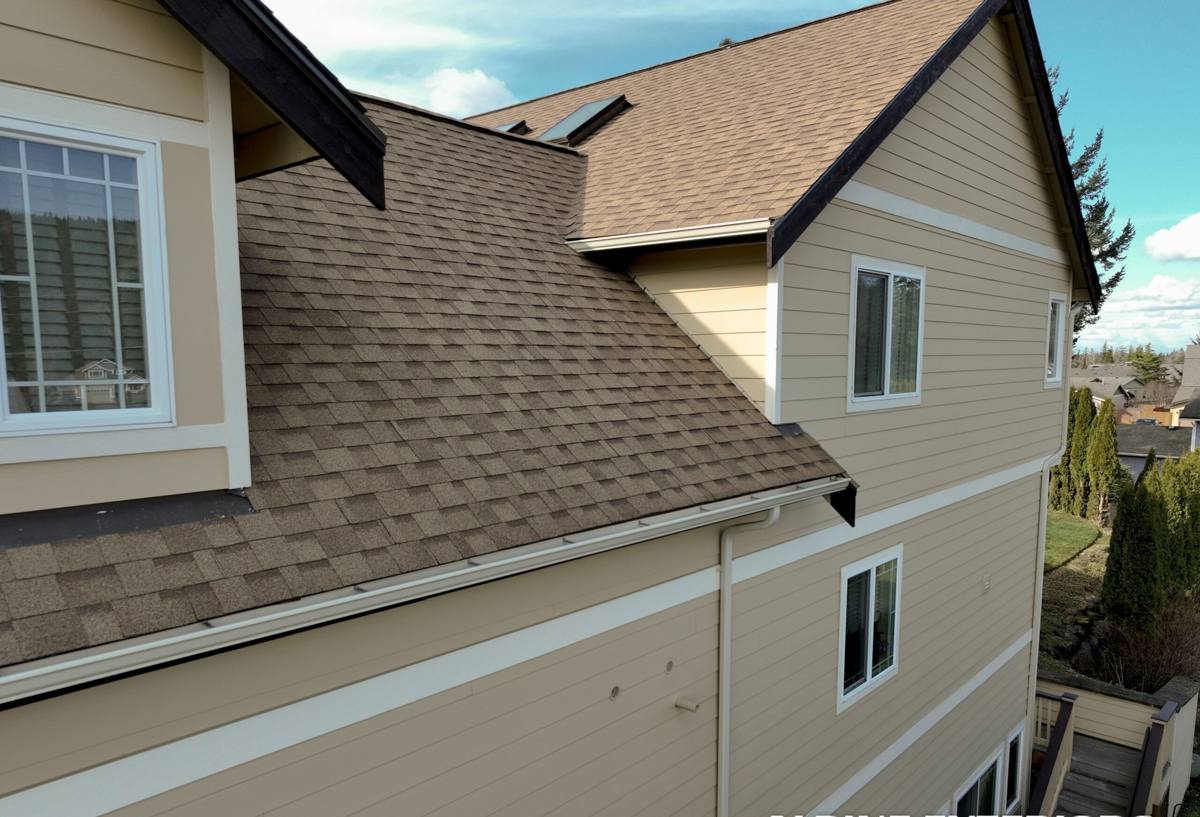
Why We Install Only James Hardie Fiber Cement
We install James Hardie exclusively — not vinyl, not LP SmartSide, not cedar or primed wood. That's not a marketing position, it's a standard we hold because of what we've seen happen to other materials in exactly this kind of environment. Fiber cement doesn't rot, doesn't feed moss and mildew the way wood fiber products can, and doesn't warp or buckle when it takes on repeated wetting and drying cycles the way engineered wood siding can over time.
The HZ5 Climate Engineering
James Hardie manufactures its siding in different formulations for different climate zones. For the Pacific Northwest, that means the HZ5 line, engineered specifically for damp, moisture-heavy regions like ours. It's a meaningful distinction — a product built for a dry, hot climate zone doesn't perform the same way in a place that stays wet and shaded for months at a stretch.
ColorPlus Factory Finish
Most of what we install carries Hardie's ColorPlus finish — baked on at the factory under controlled conditions rather than field-painted after installation. In a moss-prone, high-moisture area like Cascade Lake, that matters because factory-cured finishes resist fading, chipping, and the kind of hairline cracking that gives moisture an entry point at the surface. It also comes with its own finish warranty, separate from the substrate warranty on the panel itself.
What Correct Installation Looks Like on a Cascade Lake Home
Fiber cement is a durable material, but it is not forgiving of a sloppy install. Almost every siding failure we get called out to inspect on the island — regardless of brand — traces back to installation, not the product itself. On a home exposed to driving rain and long wet seasons, the margin for error is smaller than it would be somewhere drier.
Flashing and Water Management
Proper installation starts behind the siding, not at it. That means correctly lapped weather-resistant barrier, flashing at every window and door head, and z-flashing or drip caps at horizontal trim intersections so water sheds outward instead of finding its way behind the panel. On a wall that takes wind-driven rain regularly, a missed flashing detail is the single most common reason siding fails early.
Fastening and Clearances
James Hardie's installation instructions specify exact nailing patterns, fastener types, and minimum clearances from grade, roof lines, and decks — typically a couple of inches minimum, more in high-exposure spots. Those clearances exist so the bottom edge of the siding isn't sitting in standing moisture or splashback, which is a real risk on lakeside and tree-shaded lots where the ground stays damp longer after a storm.
Common Problem Spots We Find Around Cascade Lake
A few patterns show up repeatedly on older homes in this area, and they're worth knowing whether you're planning a full re-side or just trying to figure out if you need one:
- Moss and algae buildup on north- and east-facing walls that stay shaded most of the day
- Soft, discolored siding near grade where splashback and poor drainage keep the bottom courses wet
- Failed caulk joints around trim and window frames after repeated wet-dry cycling
- Paint peeling or bubbling on older wood or engineered wood siding, especially on walls facing prevailing storm winds
- Staining and streaking under gutters and roof-to-wall transitions where flashing was undersized or missing
None of these are unusual for the area — they're the predictable result of this climate acting on siding that wasn't detailed for it. The goal of a correct James Hardie installation is to remove every one of these failure points, not just cover them with a new material.
Our Process From Estimate to Finished Siding
We walk the exterior with you first, looking specifically at grade clearances, existing moisture damage, tree cover and shade patterns, and which walls take the worst of the weather. That assessment drives the actual scope — which trim gets replaced, where flashing needs upgrading, and which Hardie profile and ColorPlus color make sense for the home.
Once the scope is set, we strip the old siding down to the sheathing (not over-clad on top of existing material), repair or replace any damaged sheathing and framing we find, install a new weather-resistant barrier and flashing package, then install the James Hardie panels or lap siding to manufacturer spec — correct fastener spacing, correct clearances, correct joint treatment at every seam. We clean up thoroughly at the end of each work day, which matters more on tighter island lots where there's less room to stage debris.
Why Hire a Crew That Already Works This Area
Orcas Island has its own logistics that a mainland-only contractor won't have planned for. Materials come over by ferry on a schedule, not on demand, so a crew that doesn't already account for that will either delay your project or show up under-supplied. Lots around Cascade Lake also tend to have narrower access, more tree cover to work around, and septic or well systems that need to be respected during excavation or staging — none of which is obvious until you've actually worked the area.
A crew that's done siding jobs on Orcas Island already knows how to sequence material deliveries around the ferry schedule, how to work around the shade and moisture patterns specific to lakeside and tree-covered lots, and what San Juan County permitting and inspection expects. That local familiarity is the difference between a project that runs smoothly and one that stalls waiting on a part that should have been ordered a week earlier.
Cost Factors for a Cascade Lake Siding Project
Every home is different, but a few factors consistently move the price on jobs in this area more than they would elsewhere:
| Factor | Why It Matters Here | Typical Impact |
|---|---|---|
| Sun/shade exposure and tree canopy | Shaded walls near the lake hold moisture longer, often need more prep and moss remediation before install | Moderate |
| Existing siding condition and sheathing damage | Long-term moisture exposure sometimes means hidden rot behind old siding | Variable, found at tear-off |
| Wind/rain exposure by elevation | Higher, more exposed walls need more robust flashing and clearance detailing | Moderate |
| Trim and architectural detail complexity | More corners, dormers, and trim intersections mean more flashing and cut work | Moderate to significant |
| Site access and material staging | Narrower lanes or dock-only access on some island properties slow delivery and staging | Minor to moderate |
We walk through all of this with you during the estimate so there are no surprises once work starts — and so you understand exactly what's driving the number, not just what the number is.
Maintaining Your New Siding
James Hardie siding is low-maintenance compared to wood or engineered wood alternatives, but "low-maintenance" doesn't mean "no maintenance" — especially in a climate that grows moss as reliably as this one does. A little seasonal attention goes a long way toward getting the full lifespan out of the material and finish:
- Rinse shaded, moss-prone walls once or twice a year with a garden hose — avoid high-pressure washing directly at joints and seams
- Keep gutters clear so overflow doesn't run down the wall face repeatedly
- Trim back vegetation and tree limbs that keep a wall section damp and shaded longer than necessary
- Check caulk joints at trim and penetrations annually and recaulk if you see cracking or gaps
- Address any grade or landscaping changes that reduce the clearance between soil and the bottom of the siding
If you're weighing a siding replacement on a Cascade Lake home, we're happy to come take a look and give you a straightforward, no-pressure estimate — what we'd recommend, what it would involve, and what it would cost. There's a form below to get that started.