 Orcas Island Siding
 Why Friday Harbor Roofs Take a Different Kind of Beating
A roof in Friday Harbor doesn't fail the way a roof in a dry inland town fails. Out here, three things work against it at the same time: salt-laden air off the water that speeds up corrosion on anything metal, wind-driven rain that finds its way into seams and flashing a calmer climate would never stress-test, and a moss season that can stretch from early fall through late spring. Add in the shade from mature fir and cedar canopy common on San Juan County properties, and you get roof slopes that stay damp for months at a stretch. None of that means a roof here has to fail early — it means the installation has to be done with those conditions in mind from the first nail.
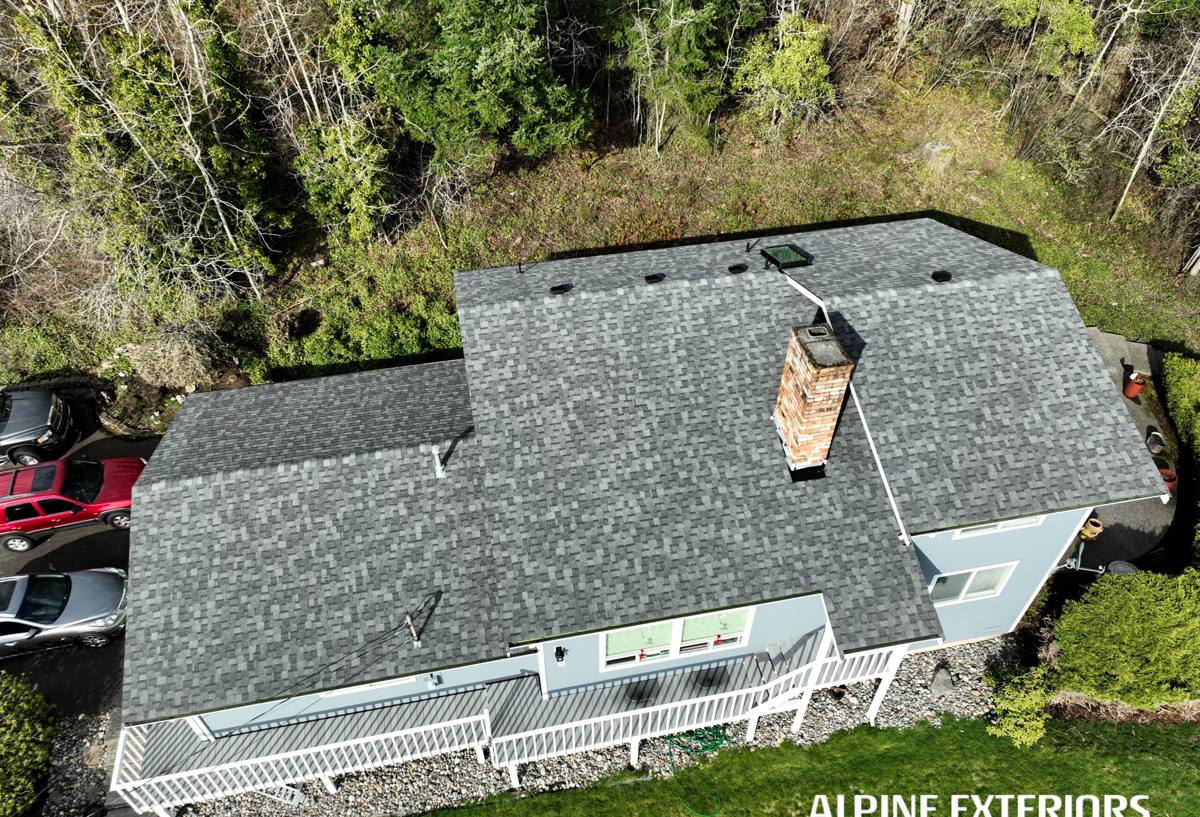
Signs a Friday Harbor Home Needs a New Roof, Not Another Repair
Repairs make sense when the problem is isolated. A full replacement makes sense when the roof system itself — deck, underlayment, flashing, and covering — is wearing out as a whole. Here's what tells us which category a roof is in:
- Granule loss or bald patches on asphalt shingles, especially on slopes that catch the most weather
- Moss or algae mats thick enough to hold moisture directly against the shingle or deck surface
- Curling, cupping, or lifted shingle edges from repeated wind-driven rain
- Soft spots, sagging, or a spongy feel underfoot when walking the roof
- Daylight, staining, or musty smells in the attic after storms
- A repair history that's stacking up in cost without solving the underlying problem
- Rusted or badly corroded flashing, fasteners, or vent boots from years of salt-air exposure
- A roof at or past the manufacturer's expected service life for its material and this climate
Picking a Roofing System Built for a Marine Climate
Asphalt Shingles
Still the most common choice for good reason: reasonable upfront cost, a wide range of colors, and solid performance when installed with the right underlayment and flashing details for a wet climate. The tradeoff is that lower-grade shingles can lose granules faster under constant damp-and-dry cycling, so the grade of shingle matters more here than it would somewhere drier.
Metal Roofing
Sheds moss and standing moisture far better than any shingle, and handles driving rain well because of how few seams it has. The tradeoff is upfront cost and the need for fasteners and flashing rated for salt-air exposure — cutting corners on hardware quality is where metal roofs in this climate actually get into trouble, not the panels themselves.
Cedar Shake
Fits the look a lot of island homes want, but it's the highest-maintenance option in a climate this wet. Shake needs consistent airflow underneath it and regular upkeep to keep moss and rot at bay — we'll install it when a homeowner wants that look and understands the maintenance commitment, but we won't pretend it's a low-effort choice here.
| Material | Moss & Moisture Resistance | Salt-Air Durability | Typical Lifespan | Maintenance Needs |
|---|---|---|---|---|
| Architectural Asphalt Shingle | Good with proper ventilation | Good with corrosion-rated fasteners | 25–30 years | Moderate — periodic moss treatment |
| Standing Seam Metal | Excellent | Excellent with marine-grade hardware | 40–50+ years | Low |
| Cedar Shake | Fair — needs airflow & upkeep | Fair — fasteners still need protection | 20–25 years | High — regular treatment & inspection |
What a Correct Installation Actually Involves
Tear-Off and Deck Inspection
Every job starts with a full tear-off down to the deck, not a layer-over-layer shortcut. That's the only way to actually see what's underneath — soft or rotted decking, hidden past leaks, or ventilation problems that a new layer of shingles would just hide for a few more years.
Underlayment and Water Barrier
In a climate with this much wind-driven rain, the underlayment matters as much as the shingle on top of it. We use synthetic underlayment across the field and self-adhering ice-and-water barrier at the eaves, valleys, and around every roof penetration — the spots where wind-blown rain is most likely to get pushed sideways underneath the covering.
Flashing Details
Flashing is where most roof leaks actually originate, not the field of the roof. Chimneys, skylights, sidewalls, and valleys all get new, correctly lapped flashing — never caulked-over old flashing left in place to save time.
Fastener and Hardware Choice
Salt air corrodes standard fasteners faster than most homeowners expect. We use corrosion-resistant nails, screws, and vent hardware rated for coastal exposure, because replacing a roof only to have the fasteners rust out in a few years defeats the purpose.
Ventilation
A balanced intake-and-exhaust system keeps heat and moisture from building up in the attic, which matters in a humid marine climate where trapped moisture behind the roof deck is a bigger long-term threat than any single storm.
Our Process, Start to Finish
1. On-Site Evaluation
We walk the roof and the attic, not just the ground-level view, so the estimate reflects the actual condition of the deck and ventilation, not just the visible shingle wear.
2. Material Selection and Ordering
We help homeowners weigh the material table above against their budget and how the home is exposed to weather and shade, then order materials with enough lead time to account for island delivery schedules.
3. Scheduling Around Weather Windows
Tear-off exposes a home to the weather, so we schedule around realistic dry windows rather than forcing a start date that risks a half-finished roof getting rained on.
4. Tear-Off and Deck Repair
Full removal of the old roofing, any rotted or soft decking replaced, and the deck inspected before anything new goes down.
5. Installation
Underlayment, flashing, ventilation, and the finish material go in, in that order, with attention to the details covered above rather than a rushed race to close in the roof.
6. Cleanup and Magnetic Sweep
Old material and debris are hauled off, and the property gets a magnetic sweep for stray nails and fasteners before we consider the job finished.
7. Final Walkthrough
We walk the finished roof with the homeowner, explain what was done, and go over any maintenance the specific material needs going forward.
What Drives the Cost of a New Roof in Friday Harbor
Every estimate is specific to the home, but the same handful of factors move the price up or down on most projects:
| Cost Factor | Why It Matters |
|---|---|
| Roof pitch and access | Steeper or harder-to-access roofs take longer and require more safety setup |
| Number of existing layers to remove | More layers mean more tear-off labor and disposal |
| Decking condition | Rotted or soft decking found during tear-off needs replacement before installation continues |
| Material choice | Asphalt, metal, and cedar carry different material and labor costs |
| Delivery logistics | Getting materials to an island property affects lead time and, on larger orders, cost |
Why It Matters to Hire a Crew That Already Works the San Juan Islands
A roofing crew that only occasionally works out here can get caught out by things a local crew plans around as a matter of course: ferry schedules that dictate when materials and crews can actually arrive, weather windows that are shorter and less predictable than on the mainland, and San Juan County permitting and code requirements that don't always match what a mainland-based crew is used to. Hiring a crew based on Orcas Island and already familiar with Friday Harbor and the wider San Juan Islands means fewer surprises, fewer delays, and a team that already knows which materials and installation details actually hold up in this specific climate — not just in general.
Questions Worth Asking Before You Hire a Roofing Contractor
- Are they licensed, bonded, and insured in Washington State?
- Are they certified to install the specific material you're considering?
- Will you get a written scope of work, not just a verbal estimate?
- What does the warranty actually cover — materials, labor, or both?
- Have they worked on the islands before, and do they understand ferry-dependent scheduling?
- Is cleanup and a magnetic sweep for stray fasteners included in the price?
- Can they give you a realistic timeline that accounts for weather and delivery logistics?
Protecting Your New Roof After Installation
A correctly installed roof still needs some upkeep in this climate. Keep gutters clear of fir and cedar needle drop so water isn't backing up at the eaves. Have moss and debris removed from shaded slopes before it has a chance to mat down and hold moisture. Avoid pressure washing, which can strip granules and force water under shingle edges. And have the roof looked at periodically for early signs of flashing or fastener corrosion from salt air — catching that early is far cheaper than dealing with a hidden leak later.
If your roof is showing any of the signs above, or you're just weighing your options for a home in Friday Harbor or elsewhere in the San Juan Islands, we're happy to take a look and put together a straightforward, no-pressure estimate. Use the form below to get started.