 Orcas Island Siding
 Why Eastsound Siding Takes More Punishment Than Most
Eastsound sits at the head of a saltwater bay, which means every home in the area lives with a version of the same three problems: salt-laden air moving off the water, long stretches of driving rain pushed in by Pacific storm systems, and a moss and lichen season that can run most of the year in the shaded, damp corners of a lot. None of these are dramatic events. They're slow, constant conditions that work on a home's exterior day after day, year after year. Siding that isn't built for that combination doesn't fail all at once — it fails quietly, a little at a time, until a homeowner notices soft trim, streaked paint, or a patch of siding that's gone spongy under a moss mat.
San Juan County's marine climate is mild compared to a lot of the country, and that's exactly why siding problems here sneak up on people. There's no hard freeze to force annual maintenance thinking, and no extreme heat to make people check caulk lines. Instead there's a steady drip of moisture and salt that rewards materials engineered for it and punishes materials that aren't.
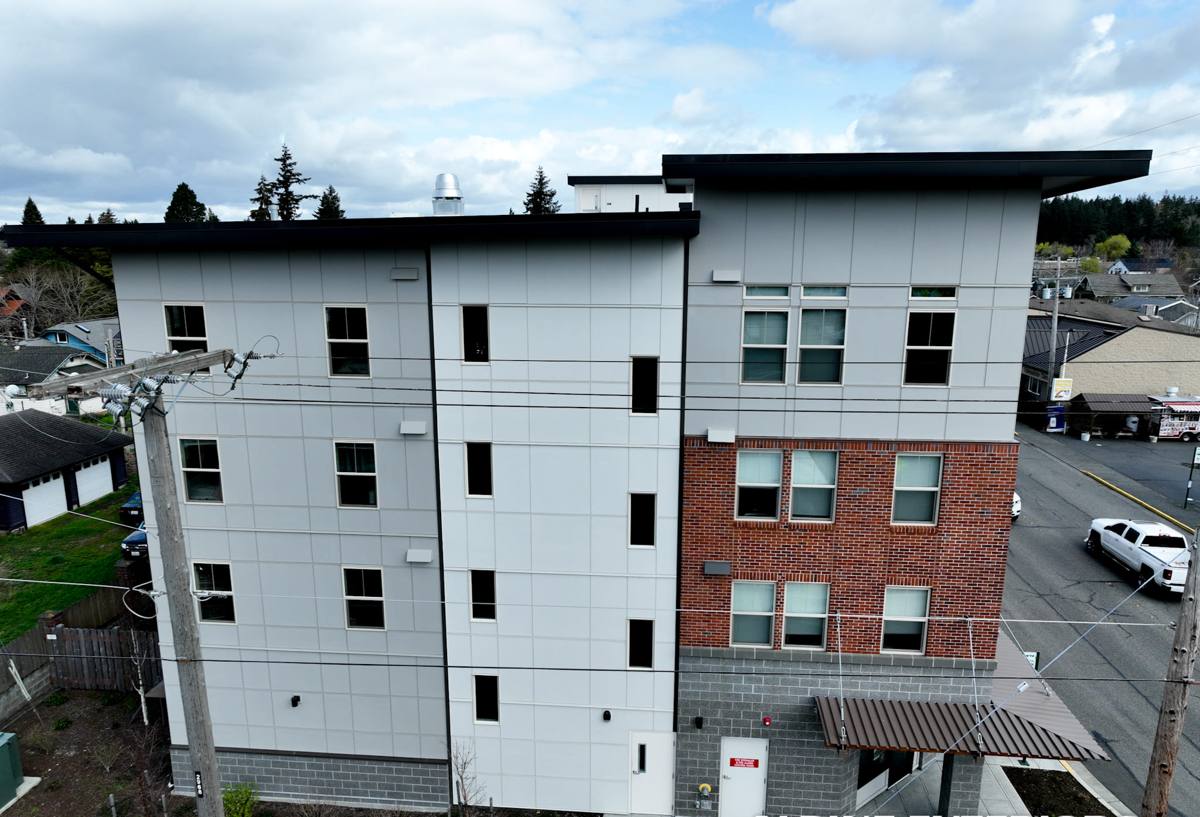
What Siding on an Eastsound Home Actually Has to Handle
Salt Air and Corrosion
Airborne salt from the bay settles on every exterior surface, including siding, trim, and the fasteners holding it all together. Over time it accelerates corrosion in poor-quality fasteners and metal flashing, and it can pit or dull paint finishes that weren't designed to shed it. This is one of the reasons fastener selection and flashing detail matter as much as the siding panel itself on a home near the water.
Driving Rain and Wind-Driven Moisture
Storms coming off the Strait of Juan de Fuca and the Salish Sea don't just drop rain straight down — they push it sideways into wall assemblies, laps, and seams. A siding system that only handles vertical rain well will eventually let water behind the cladding on an exposed Eastsound wall. That's a weather-resistive barrier and flashing problem as much as a siding-material problem, and it's where a lot of installations quietly go wrong.
Moss, Lichen, and Organic Growth
Shaded north sides, tree-lined lots, and the general dampness of the island give moss and lichen a long growing season here. Organic growth holds moisture against the wall surface longer than open air would, which is a problem for any siding material that can absorb water or that relies on a coating rather than the material itself to resist moisture damage.
Why We Install Only James Hardie Fiber Cement
We've standardized on James Hardie fiber cement for every siding job we take on, including here in Eastsound, and we don't install vinyl, LP SmartSide, primed spruce, cedar, or other fiber cement brands. That's a deliberate professional standard, not a sales pitch. Fiber cement is non-combustible, dimensionally stable in wet-dry cycling, and doesn't feed moss and mildew the way wood-based products can. James Hardie's ColorPlus factory-applied finish is baked on under controlled conditions rather than field-applied, which gives it better adhesion and UV stability than most job-site paint jobs — a real advantage in a climate that's damp more often than it's dry. Hardie's HZ5 product line is engineered specifically for climate zones with more moisture exposure, which fits the Orcas Island environment well. The company backs its products with a strong transferable limited warranty, which matters to homeowners who may sell in a market where buyers are increasingly asking what the siding is and how old it is.
None of that means other products are without merit — it means we've made a professional choice to install one system correctly and consistently rather than several systems adequately, and Hardie is the one that best matches what Eastsound homes are up against.
What a Correct Fiber Cement Installation Involves
Weather-Resistive Barrier and Flashing First
The siding panel is the last line of defense, not the only one. A correct install starts with a properly lapped weather-resistive barrier, correctly flashed window and door openings, and flashing at every horizontal transition — roof-to-wall, deck ledger, trim board — before a single piece of Hardie board goes up. This is the layer that actually keeps driving rain out of the wall assembly, and it's also the layer that's easiest to shortcut and hardest to inspect once the siding is on.
Fastening, Clearances, and Gaps
James Hardie publishes specific fastener types, spacing, and embedment requirements, along with minimum clearances from grade, roof lines, and decks. Skipping those specs to save time is one of the most common ways a fiber cement job underperforms — not because the material failed, but because the installation didn't follow the manufacturer's own standard. In a climate with this much moisture exposure, those clearances aren't a formality.
Caulking, Paint Lines, and Field Touch-Up
Cut edges and any field-touched areas need to be properly sealed and painted with a compatible product, and joints need the right sealant applied correctly, not just caulked over. Done sloppily, these are the spots where water finds its way in first — and where salt air and constant moisture make a bad detail worse faster than it would inland.
Correct vs. Rushed Installation
| Detail | Correct Installation | Common Shortcut |
|---|---|---|
| Weather barrier | Fully lapped, integrated with flashing at every penetration | Barrier installed, flashing details skipped or minimized |
| Fastener spacing | Per Hardie spec, corrosion-resistant fasteners | Wider spacing, general-purpose fasteners |
| Clearance from grade/roof | Manufacturer minimums maintained | Reduced to fit tight site conditions |
| Cut edges | Sealed and touched up with compatible paint | Left bare or lightly caulked |
| Butt joints | Properly sealed per spec, sometimes flashed | Caulk only, no flashing |
Our Process for an Eastsound Siding Job
- On-site assessment of the existing wall assembly, moisture exposure by elevation, and any moss, rot, or trim damage already present
- Removal of failing siding and inspection of sheathing underneath before anything new goes up
- Repair of any damaged sheathing or framing found during tear-off — this gets flagged and discussed before we cover it up
- Installation of weather-resistive barrier and flashing at every window, door, and horizontal transition
- James Hardie panel or lap installation to manufacturer spec, with fastening and clearances matched to the specific elevation's exposure
- Sealing, caulking, and final touch-up using compatible products
- Walkthrough with the homeowner before we consider the job finished
Siding Options Compared for a Marine Climate Like Orcas Island
| Material | Moisture/Salt Air Behavior | Moss Resistance | Typical Maintenance | Relative Cost |
|---|---|---|---|---|
| James Hardie fiber cement | Engineered for wet climates (HZ5), dimensionally stable | Doesn't feed organic growth like wood-based siding | Occasional wash, repaint on a much longer cycle | Mid-to-upper |
| Vinyl siding | Can warp or become brittle over time; seams are a moisture entry risk | Moderate | Low, but limited repair options if damaged | Lower |
| Wood/cedar siding | Absorbs moisture, needs consistent sealing | Prone to moss and rot without upkeep | Frequent refinishing and inspection | Mid-to-upper |
| Primed spruce/engineered wood | Depends heavily on coating integrity and correct install | Vulnerable if coating fails | Regular inspection of seams and edges | Lower-to-mid |
Costs vary by home size, tear-off scope, and site access, so treat the table above as a general comparison rather than a quote — we'll give you real numbers after we've seen the house.
Keeping Fiber Cement Siding Looking Good on Orcas Island
- Rinse siding periodically to remove salt residue and airborne grime, especially on sides facing the water
- Trim back vegetation and tree cover that keeps a wall surface shaded and damp
- Gently remove moss or lichen buildup before it spreads across a wide area
- Check caulking at joints and trim every year or two and re-seal where it's cracked or pulled away
- Keep gutters clear so overflow isn't running down the siding face during heavy storms
- Watch for soft spots near ground contact or under decks, which usually mean a clearance or flashing issue rather than a material issue
Why It Matters That We Already Work on Orcas Island
Getting materials, crews, and equipment to and from Orcas Island takes planning that a mainland contractor doesn't have to think about. A crew that already schedules work around the ferry, already knows how exposed a given Eastsound lot is to wind and salt spray, and already carries the right fasteners and flashing details for this climate isn't guessing at the job — they've done it before, on houses that face the same weather this one does. That matters more with fiber cement than with some materials, because so much of its long-term performance comes down to installation detail, not just the product itself.
If you're weighing a siding replacement or repair in Eastsound, we're happy to take a look at the house, talk through what your specific elevations are dealing with, and give you a straightforward, no-pressure estimate using the form below.