 Orcas Island Siding
 North Beach's Siding Problem Isn't Like the Rest of Orcas Island
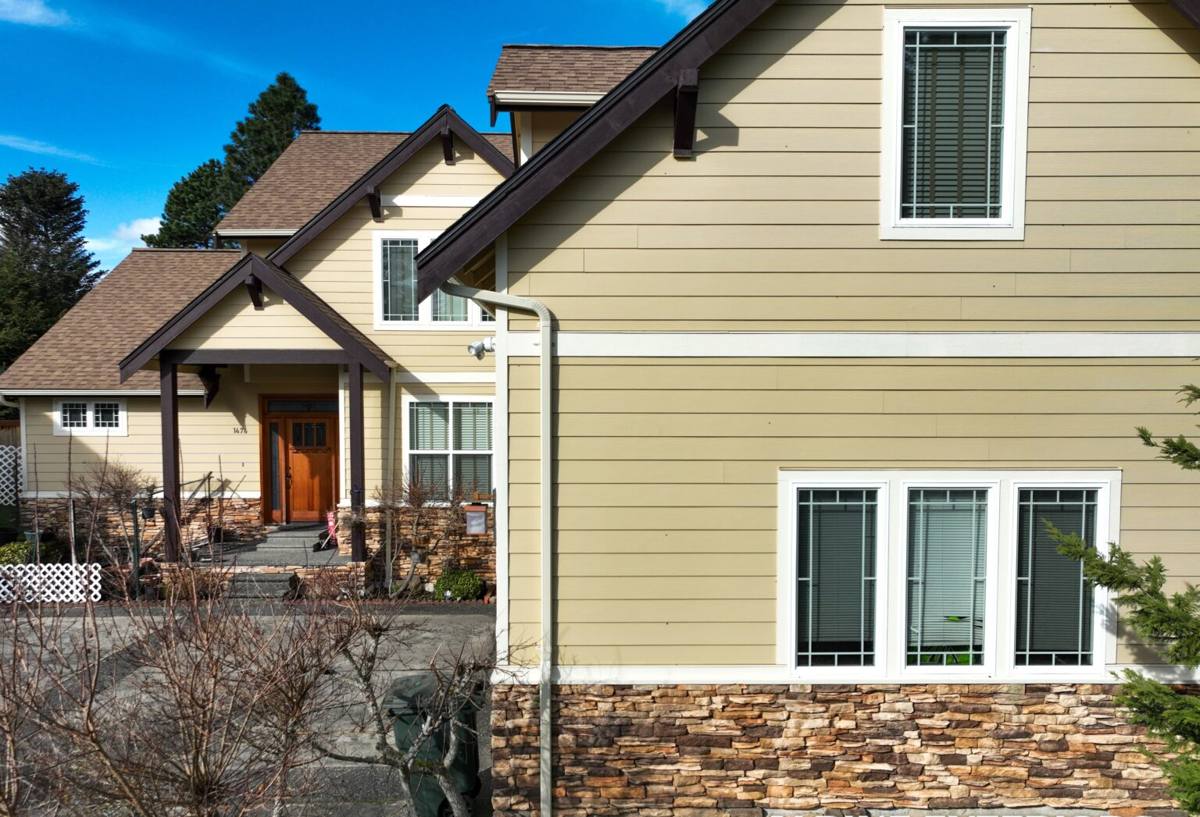
North Beach sits closer to open water and weather than the more sheltered interior of Orcas Island, and that changes what siding has to survive out there. Homes along this stretch take a steadier dose of salt-laden wind, get hit harder by driving, sideways rain during winter storms, and often sit under enough tree cover that shaded walls stay damp for days after a system passes through. That combination — salt, wind-driven moisture, and shade — is a tougher test for exterior siding than most inland San Juan County properties ever face, and it's the reason a "good enough anywhere else" siding job doesn't hold up the same way here.
We've worked on enough homes in this part of the island to know the failure points aren't random. They show up in the same places every time: north- and west-facing walls that never fully dry out, trim and butt joints where water gets driven in sideways instead of running off, and shaded corners where moss gets a foothold and doesn't let go. A siding job done for this exposure has to account for all three, not just look good on installation day.
What Salt Air, Rain, and Moss Actually Do to Siding
Each of these three stressors attacks siding differently, and understanding the mechanism matters because it tells you what to actually fix.
Salt air
Airborne salt settles on exterior surfaces and accelerates the breakdown of paint film and the corrosion of exposed metal fasteners and trim. On siding with a field-applied finish, that means faster chalking, fading, and peeling on the walls facing the water or open exposure, even when the rest of the house looks fine.
Driving rain
Wind-driven rain doesn't just fall on siding — it gets pushed sideways and upward into laps, seams, and anywhere flashing is missing or undersized. If there's no drainage path behind the siding, that moisture has nowhere to go and it sits against the sheathing.
Moss and prolonged dampness
Shaded, damp walls are exactly where moss and algae take hold. On organic siding materials — solid wood, and to a lesser degree wood-based composites — that growth holds moisture against the surface and feeds ongoing decay. Moss doesn't cause rot in fiber cement the way it can contribute to it in wood-based products, but it will stain a finish and needs to be factored into how a wall is detailed and maintained.
Why Fiber Cement Is the Right Answer for This Exposure
We install James Hardie fiber cement siding exclusively, and North Beach is a good example of why. Fiber cement is made from cement, sand, and cellulose fiber — it isn't an organic, cellulose-based product the way solid wood or wood-strand composite siding is, so it doesn't provide the same food source for moss, mold, and fungal decay. It's also dimensionally stable in a way wood products aren't: it doesn't swell, cup, or warp as it cycles through wet and dry, which matters enormously on walls that stay damp longer than the rest of the house.
The finish matters just as much as the material. Hardie's ColorPlus finish is baked on at the factory under controlled conditions, not brushed or sprayed on-site, and it's engineered to hold color and resist fading in coastal UV and salt exposure far longer than field-applied paint. That's a direct answer to the salt-air fading problem specific to this exposure.
The James Hardie Product Lines We Use Here
James Hardie doesn't sell one generic siding — it engineers different formulations for different climates, and getting that match right is part of doing this job correctly.
| Product | Where It Fits on a North Beach Home |
|---|---|
| HardiePlank lap siding | Primary field siding on most walls; the workhorse for full-house replacement |
| HardieShingle | Accent gables or transitions where a shingle look is wanted without the moisture drawbacks of real cedar shingle |
| HardiePanel | Board-and-batten style sections, porches, and accent walls |
| HardieTrim | Corner boards, fascia, and window trim matched to the siding system |
For this part of Orcas Island, we spec Hardie's HZ5 climate-engineered formulation, built for wetter, colder Pacific Northwest conditions rather than the HZ10 formulation made for hot, dry climates. That distinction is easy to overlook and it's part of why product selection alone isn't the whole job — the right product still has to be matched to the region.
What a Correct Installation Looks Like in This Climate
On a shoreline-exposed, shaded property like the homes in North Beach, the installation details matter more than they would on a sheltered, sun-drenched lot. A few of the details we treat as non-negotiable:
- A drainage gap (rainscreen) between the siding and the weather-resistive barrier, so any water that does get past the cladding has a path to drain and dry instead of sitting against the sheathing
- Proper head flashing over every window and door, and kick-out flashing at every roof-to-wall intersection, so wind-driven rain can't track behind the siding at these vulnerable transitions
- Correct clearance — siding held back from grade, decks, and roof lines per Hardie's published minimums, so splashback and standing snow or debris don't sit against the bottom edge
- Fastening in the manufacturer's specified pattern and location, not just "close enough," since improper fastening is one of the most common causes of premature siding problems
- Caulking only where Hardie's install guide actually calls for it — over-caulking traps moisture in places it should be able to escape
None of this is exotic. It's the standard Hardie installation spec, applied without shortcuts. The difference on an exposed property like this one is that skipping any single item shows up sooner and worse than it would on a sheltered wall.
Our Process on a North Beach Project
Every job starts with a walk of the property specifically looking at exposure — which walls take the direct weather, where shade and moss have already established themselves, and what the existing siding and sheathing look like once we're past the surface. Older Orcas Island homes were often sided in cedar or plywood-panel products, and removal is the point where we find out what's really going on underneath: soft sheathing, missing flashing, or moisture trapped from a prior installation with no drainage path.
From there, any damaged sheathing gets replaced, a proper weather-resistive barrier and drainage gap go on, and the Hardie system goes up to spec — correct clearances, correct flashing, correct fastening. We plan material delivery and crew scheduling around ferry logistics and weather windows, since a wind-driven rain event mid-installation is a real scheduling factor out here, not a hypothetical. The job wraps with a walkthrough so you know exactly what was done and what maintenance, if any, it needs going forward.
What Drives the Cost of a North Beach Siding Job
Costs vary by home, and we're not going to quote a number that doesn't reflect your specific property — but these are the factors that actually move the estimate on jobs in this area:
| Factor | Why It Affects Cost |
|---|---|
| Home size and wall complexity | More square footage and more corners, gables, and transitions mean more material and labor |
| Condition of existing siding and sheathing | Hidden rot or moisture damage found during removal adds repair scope before new siding goes on |
| Shade and moss severity | Heavily shaded walls may need extra prep and sometimes minor trimming/clearance work to improve drying |
| Trim and accent detail | Board-and-batten sections, shingle accents, and custom trim add labor beyond a straight lap-siding wall |
| Site access | Waterfront and wooded lots can add material staging and logistics time compared to an easy-access lot |
| Color and finish selection | Standard ColorPlus colors versus custom or premium selections can shift material pricing |
Maintenance North Beach Homeowners Actually Need to Do
Fiber cement cuts maintenance dramatically compared to wood, but "low maintenance" isn't "no maintenance," especially in this exposure. A short, honest list:
- Rinse salt residue off exterior walls periodically, especially on the sides facing open water or prevailing wind
- Keep gutters and downspouts clear so water isn't overflowing directly down the siding
- Trim back vegetation near shaded walls where possible to improve airflow and sun exposure, which slows moss regrowth
- Do a yearly walk-around checking caulking at trim and penetrations for cracking or gaps
- Address any moss on trim, fascia, or roof edges promptly rather than letting it spread onto siding surfaces
- Avoid aiming a pressure washer directly into seams and laps — a garden hose and soft brush is enough for routine cleaning
Why Hiring a Crew That Already Works North Beach Matters
Siding installation quality depends on judgment calls that a spec sheet can't fully cover — how much drainage gap a specific wall needs, where kick-out flashing is actually required given the roof geometry, how to schedule around a real weather window instead of a generic forecast. A crew that has already worked this specific stretch of Orcas Island has seen how the salt air, the wind direction, and the shade patterns actually play out on real houses here, not just in general Pacific Northwest terms. That translates into fewer surprises during removal, fewer callbacks after the first hard winter storm, and a job that's built for the exposure your home actually has rather than an average one.
If you're weighing options for a North Beach home, we're happy to walk the property, look at what your current siding and sheathing are telling us, and put together a straightforward, no-pressure estimate for a correctly installed James Hardie fiber cement system. Use the form below to get started.