 Orcas Island Siding
 Fiber Cement Siding for Friday Harbor Homes
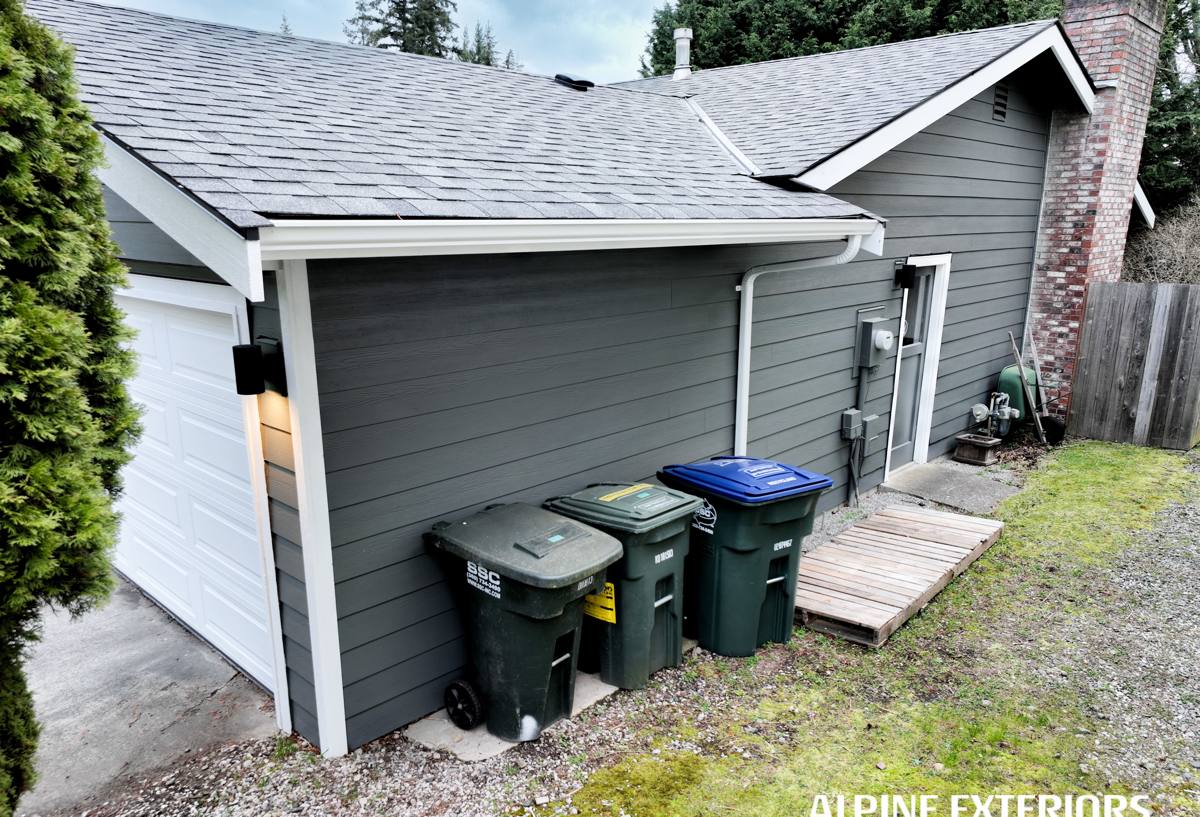
Friday Harbor sits close enough to open water that its houses take a steady beating from salt-laden air, wind-driven rain, and a moss season that can run most of the year in shaded spots. Siding that looks fine on a mainland spec sheet doesn't always hold up the same way out here. When we talk about fiber cement siding for this area, we're talking specifically about James Hardie products, installed to the manufacturer's wet-climate specifications, by a crew that already knows what San Juan County weather does to a building envelope.
This page covers what Friday Harbor homes actually need from their siding, what a correct installation looks like in this climate, and why the crew doing the work matters as much as the product itself.
What the Local Climate Actually Does to Siding
Salt Air and Slow Corrosion
Proximity to the water means airborne salt settles on exterior surfaces year-round, not just during storms. Salt is hard on exposed metal fasteners, flashing, and trim — it accelerates corrosion and can cause staining and premature failure at every point where metal meets wood or siding. Any siding job here has to account for corrosion-resistant fasteners and flashing details, not just weather-resistant panels.
Driving Rain and Wind-Driven Moisture
San Juan County storms rarely come straight down. Wind pushes rain sideways into wall assemblies, which means water finds its way behind siding at laps, seams, and penetrations far more often than most homeowners assume. Siding that isn't installed with proper overlaps, clearances, and drainage behind it will eventually let moisture into the sheathing, even if the surface material itself is rated for wet climates.
A Long Moss and Mildew Season
Shaded, tree-covered lots — common around Friday Harbor — stay damp for extended stretches. That moisture supports moss, algae, and mildew growth on any surface that holds water or lacks airflow. Siding material and installation gaps both play a role here: some products absorb and hold moisture, which feeds growth, while others shed it. How siding is hung — with or without an air gap behind it — has a direct effect on how fast moss and mildew take hold.
Why We Only Install James Hardie in This Climate
Fiber cement as a category holds up well against salt air, moisture, and temperature swings, but not all fiber cement is engineered the same way. James Hardie builds its HardieZone system specifically around regional climate data, and the Pacific Northwest — including the San Juan Islands — falls into the HZ5 zone, engineered for wetter, harsher exposure. We standardized on Hardie rather than other fiber cement brands, primed spruce, cedar, or vinyl because it gives us one consistent, climate-matched product line with a factory-applied finish and a warranty structure we can stand behind on every job we do out here.
That's a professional standard, not a knock on every alternative on the market. Vinyl is lightweight and inexpensive but expands, contracts, and can crack in cold snaps; cedar looks great new but demands ongoing maintenance against the rot and moss this climate produces; primed spruce needs field-applied paint that has to be maintained on a schedule most homeowners don't keep up with. Hardie's ColorPlus finish is baked on at the factory and backed by its own finish warranty, which matters in a climate that's hard on painted surfaces.
HardieZone HZ5 and What It Means Here
HZ5 products are formulated for regions with significant moisture exposure and freeze-thaw cycling — which describes San Juan County's marine climate well. In practice, that means panels engineered to resist moisture-related damage over the long haul, rather than a one-size-fits-all national product. It's a meaningful distinction when the house in question is a short walk from saltwater.
What a Correct Installation Involves
Fiber cement siding fails early almost exclusively because of installation mistakes, not product defects. In a climate like this one, a few details matter more than usual:
- Rainscreen or drainage gap: A small air gap behind the siding lets any moisture that gets past the surface drain and dry out instead of sitting against the sheathing — important given how much wind-driven rain this area sees.
- Correct fastener type and placement: Corrosion-resistant fasteners, driven per Hardie's specification (not overdriven, not underdriven), reduce the salt-air corrosion and water intrusion points that shortcut installs create.
- Proper flashing and caulking at penetrations: Windows, vents, and trim intersections are where wind-driven rain gets in. Flashing has to shed water outward, and sealant has to be used at the right joints — not as a substitute for flashing.
- Manufacturer-specified clearances: Hardie calls for minimum clearance from grade, roofing, and decks so siding doesn't sit in standing water or splash-back, which matters in a wet, moss-prone environment.
- Factory-cut and pre-primed edges where possible: Field cuts should be sealed per spec so raw edges aren't left absorbing moisture.
Skipping any one of these doesn't show up on day one. It shows up two or three winters later as staining, soft spots, or moss creeping in behind trim — which is exactly the kind of damage that costs far more to fix than it would have to do right the first time.
How Our Process Works for Friday Harbor Jobs
Working on the islands adds logistics that a mainland-only crew often underestimates. Material has to be ordered and staged well ahead of the install date, since fiber cement siding, trim, and accessories typically travel to the islands by ferry rather than same-day mainland delivery. Weather windows for exterior work also need more buffer here — a driving-rain forecast can push a schedule by days, and a crew unfamiliar with island ferry timing can end up burning labor days waiting on material that a better-planned schedule would have avoided.
Our process on a Friday Harbor project generally runs like this:
- On-site inspection of the existing siding, sheathing, and any moisture or moss damage already present.
- A written scope covering tear-off (if needed), housewrap or drainage plane condition, trim, flashing details, and the specific Hardie products and colors selected.
- Material ordered and staged with enough lead time to account for ferry delivery schedules.
- Installation to Hardie's HZ5 specifications, including fastening, clearances, and flashing detail work.
- A final walkthrough covering caulking, trim, and any touch-up needs before we consider the job finished.
Cost Factors for Fiber Cement Siding Here
Every home is different, but the same handful of factors drive most of the cost variation we see on island siding jobs. We'd rather walk through these honestly up front than surprise anyone mid-project.
| Factor | Why It Matters Here |
|---|---|
| Existing siding removal | Tear-off adds labor, and moisture-damaged sheathing found underneath (common with older siding in this climate) may need repair before new siding goes on. |
| Home size and wall complexity | More corners, gables, and trim detail mean more cutting, flashing, and labor time. |
| Siding profile and color | Lap width and ColorPlus color selection affect material cost; some finishes and profiles are stocked differently and affect lead time. |
| Trim and accessory scope | Corner boards, fascia, and soffit work done at the same time affects both cost and how well the whole envelope performs against wind-driven rain. |
| Material delivery logistics | Ferry-dependent delivery affects scheduling more than it affects price directly, but poor planning around it can extend project timelines. |
| Site access | Tree cover, driveway access, and staging space on the lot affect labor efficiency. |
We give straightforward, itemized estimates rather than vague lump-sum numbers, so homeowners can see exactly what's driving the cost of their specific project.
Why the Crew You Hire Matters
Fiber cement siding is unforgiving of shortcuts, and island logistics are unforgiving of poor planning. A crew that hasn't worked in the San Juans before may not budget for ferry-dependent material delivery, may not have experience with HZ5-specific installation detailing, and may treat weather buffers the way they would on the mainland — where a rain delay costs an afternoon instead of a shipping cycle. A crew that already works Friday Harbor and the surrounding islands knows how to sequence a project around ferry schedules, how the local moisture and moss patterns behave on different lots, and what installation details actually hold up against this specific climate rather than a generic one.
That local familiarity isn't a marketing point — it's the difference between a siding job that's still performing well in fifteen years and one that starts showing moisture problems in three.
Maintenance Once It's Installed
Correctly installed Hardie siding is low-maintenance, but "low" isn't "none," especially in a climate that grows moss on nearly everything. A little regular attention keeps the siding — and the warranty — in good standing.
- Rinse siding annually with a garden hose to clear salt residue, pollen, and early moss growth before it takes hold.
- Keep gutters clear so overflow doesn't run down the siding face and feed moss or staining.
- Trim back tree limbs and shrubs that keep sections of the wall shaded and damp.
- Inspect caulking at trim, windows, and penetrations every couple of years, and re-seal any joints that have cracked or pulled away.
- Address any small paint chips or damage at seams promptly — exposed edges are where moisture problems start.
None of this is heavy work, but skipping it in a climate this consistently damp is how avoidable problems turn into expensive ones.
Get a Straight Answer on Your Siding
If you're dealing with aging siding, moss buildup, or moisture damage on a Friday Harbor home, we're happy to take a look and give you a clear, no-pressure estimate — including an honest read on what shape your current siding and sheathing are actually in. Fill out the form below to get started.