 Orcas Island Siding
 Windows Built for San Juan Island's Marine Climate
San Juan Island sits out in the Salish Sea alongside Orcas Island, and the two share the same weather pattern: salt-laden air blowing off the water, long stretches of driving rain in the fall and winter, and a damp, shaded moss season that never really seems to end. That combination is hard on windows in ways that inland homes never have to deal with. Seals fail faster near the water. Hardware corrodes. Wood swells and sticks. And older single- or early dual-pane windows that were fine for a few decades quietly become one of the biggest sources of heat loss in the house.
When we talk about "energy-efficient windows" for a home in San Juan County, we're not just talking about a lower heating bill, though that matters on an island where propane and electric heat both cost more to deliver than they do on the mainland. We're talking about windows and installation details that are matched to a climate that's mild in temperature but relentless in moisture.
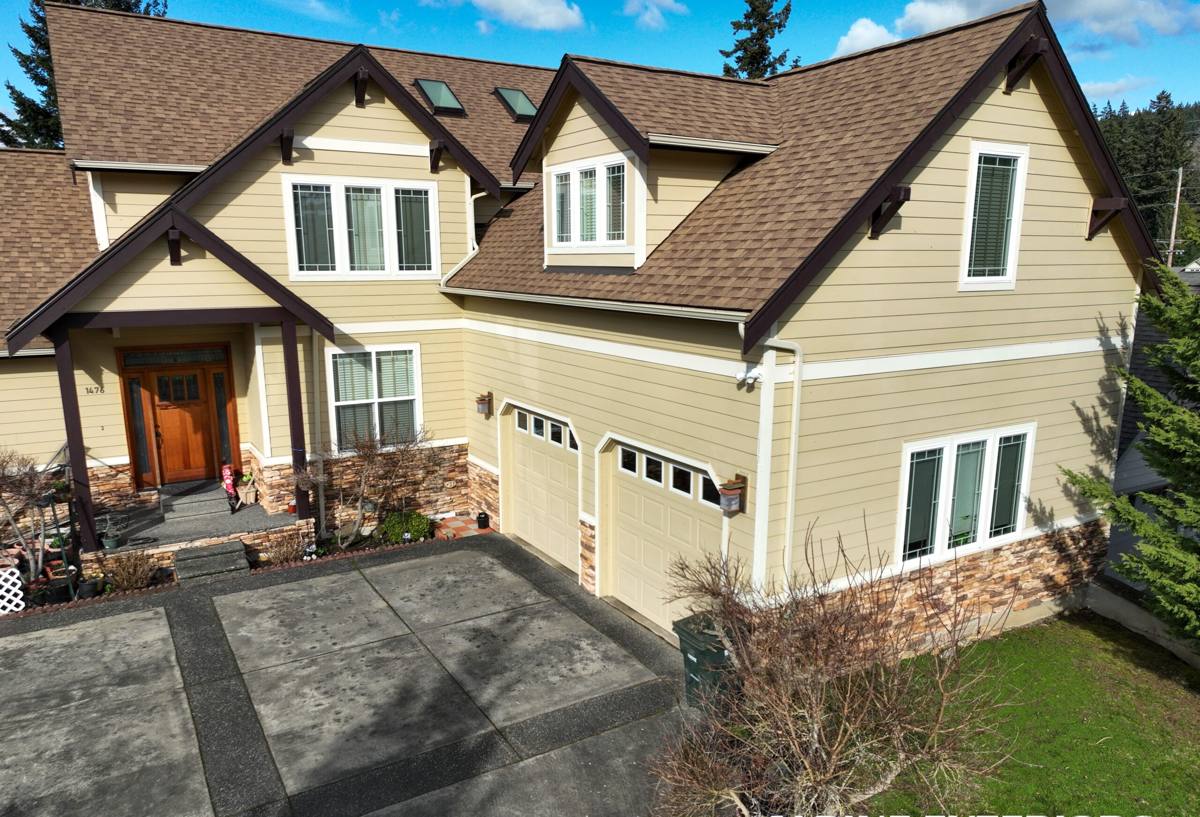
What "Energy-Efficient" Actually Means
The label gets used loosely, so it's worth breaking down what actually shows up on a window's NFRC (National Fenestration Rating Council) sticker and why it matters here specifically:
- U-factor — how well the window resists heat loss. Lower is better. This is the number that matters most for our climate, since we're dealing with cool, wet weather more months than not.
- SHGC (Solar Heat Gain Coefficient) — how much solar heat passes through the glass. In hot, sunny climates this is the headline number. Here, with our overcast winters and tree cover, it's secondary to U-factor and air leakage.
- Air leakage rating — how much air passes through the window assembly itself. Wind-driven rain will find any gap in a poorly rated or poorly installed window, so this number is directly tied to moisture problems, not just drafts.
- Low-E coatings and gas fills — microscopically thin coatings and argon or krypton gas between panes that improve insulating value without changing how the glass looks.
For most San Juan Island homes, we're prioritizing low U-factor and strong air infiltration performance first, solar gain second — the opposite emphasis you'd use for a house in a hot, dry climate.
Frame Material: The Decision That Matters Most Here
Glass performance gets the attention, but frame material is often what determines how a window actually holds up in salt air and constant damp. Each option has real trade-offs, and the right answer depends on how exposed the home's walls are to weather off the water.
| Frame Material | Strengths | Trade-offs in This Climate |
|---|---|---|
| Vinyl | Low maintenance, good insulating value, no painting | Lower-grade vinyl can become brittle with long-term UV and salt exposure; welded corners depend heavily on correct installation to stay watertight |
| Fiberglass | Very stable in temperature swings, resists moisture and corrosion well | Higher upfront cost; fewer color/finish options than vinyl |
| Wood / Wood-clad | Traditional look, often matches older island homes | Requires diligent upkeep — exposed wood is the first thing moss and rot attack if a seal ever fails |
| Aluminum | Strong, slim sightlines | Conducts heat and cold readily and is prone to interior condensation unless thermally broken; we generally don't recommend it for primary living spaces in this climate |
None of these are "bad" products — they're built for different priorities. Our job is matching the material to the wall it's going in, not defaulting to whatever's easiest to install.
Windward vs. Sheltered Walls
A window facing open water or prevailing weather takes a very different beating than one tucked under an eave on the lee side of the house. We look at each elevation separately rather than specifying one product for the whole house — it's common for us to recommend a more moisture-resistant frame and glazing package on the exposed side and a lighter-duty spec elsewhere.
Signs Your Current Windows Are Already Costing You
Most homeowners don't notice window failure until it's obvious, but there are earlier warning signs worth checking for, especially on a home that's been through a few island winters:
- Fogging or a visible haze between panes (the seal has failed and the gas fill is gone)
- Windows that stick, don't latch fully, or have swollen shut in damp weather
- Moss or dark staining building up in the track, sill, or corners
- Cold drafts you can feel standing near the window on a windy day
- Visible gaps in exterior caulking or trim around the frame
- A noticeable jump in heating costs without a change in usage
Any one of these on its own might just mean a window needs recaulking. Several together, especially on the weather-facing side of the house, usually means the window itself is due for replacement.
What a Correct Installation Actually Involves
In a climate this wet, the installation matters more than the product spec sheet. A great window installed with sloppy flashing will leak; a mid-range window installed correctly will outperform it. The details we treat as non-negotiable:
- Proper integration with the home's weather-resistant barrier (housewrap or building paper) — the new window has to shed water into the existing drainage plane, not behind it
- A sloped sill pan so any water that does get past the exterior seal drains back out, rather than pooling against the framing
- Backer rod and sealant chosen to be compatible with both the window frame and the siding material — not just "whatever caulk is on the truck"
- Correct shimming so the window is square and operates smoothly for years, not just on install day
- Insulation that fills the gap without overpacking it, which can bow the frame and cause operational problems
- Matching the new flange or trim detail to the existing siding so water is shed, not trapped, at the transition
Older San Juan Island homes sometimes have flashing details — or none at all — that wouldn't meet current best practice. Part of our job is identifying that during the walk-through, not discovering it after the new window is already caulked in.
Our Process
1. On-Site Assessment
We look at each window opening individually — exposure, existing moisture damage, wall assembly, and what's actually driving the homeowner's concern (drafts, condensation, appearance, or just age).
2. Product Selection
We match frame material and glazing package to each elevation's exposure rather than specifying one product across the whole house, and we walk through the real trade-offs of each option rather than steering toward whatever has the best margin.
3. Scheduling
Island work means building in lead time for materials and factoring in ferry schedules and weather windows — we plan installation days around forecasts, since window openings are exposed to the elements mid-install.
4. Installation
Careful removal, inspection of the framing for hidden rot before the new unit goes in, correct flashing and sealing, and a finish that matches the surrounding trim.
5. Verification and Cleanup
We check operation, seal integrity, and site cleanup before we consider the job done — and we tell you plainly if we saw anything else on the wall that's worth watching.
What Drives the Cost
Every job is different, and we'd rather give you an accurate number after seeing the house than a generic one that doesn't hold up. That said, these are the main factors that move the price up or down:
| Factor | Effect on Cost |
|---|---|
| Frame material (vinyl vs. fiberglass vs. wood-clad) | Vinyl is typically the most budget-friendly; fiberglass and wood-clad cost more upfront |
| Number and size of openings | More or larger windows increase material and labor time |
| Custom shapes or sizes | Non-standard openings require custom-order units, which cost more and take longer to arrive |
| Hidden rot or framing damage | Repair work discovered during removal adds to the scope — we flag this before proceeding, not after |
| Access and site conditions | Upper-floor windows or tight, weather-exposed lots can add labor time |
| Delivery logistics | Getting materials to the island reliably takes more lead time than a mainland job |
Why It Matters That We Already Work San Juan Island
A contractor who mainly works the mainland and occasionally takes an island job is working against the calendar every time: ferry schedules limit how flexible a work day can be, weather windows for exterior work are shorter here, and a missed delivery slot can push a job back by days, not hours. Working San Juan Island and Orcas Island regularly means we plan around all of that as a matter of course, not as a surprise mid-project.
It also means familiarity with the housing stock — the build eras common on the island, the kinds of flashing shortcuts that show up in older construction, and which exposures genuinely need a more resistant frame versus which ones are relatively sheltered. And it means using hardware and fasteners suited to salt air from the start, rather than standard-grade components that corrode within a few seasons near the water.
Living With Your Windows Afterward
New windows still need a little seasonal attention in this climate:
- Rinse accumulated salt spray off exterior frames periodically, especially on water-facing sides
- Keep weep holes and tracks clear of moss, needles, and debris so water can actually drain
- Check exterior caulking once a year for cracking or separation, particularly after a hard winter
- Trim back vegetation that's shading a window and keeping it damp longer than the rest of the house
None of this is heavy maintenance — it's the same kind of seasonal check most island homeowners already do for the rest of the exterior.
If your windows are drafty, fogged, sticking, or just original to a house that's been through a lot of San Juan County winters, we're happy to take a look. We'll walk the exposures with you, explain what we're seeing, and put together a free, no-pressure estimate using the form below.