 Orcas Island Siding
 Roofing in Doe Bay Is a Different Job Than Roofing Inland
Doe Bay sits on the exposed east side of Orcas Island, where weather comes straight off the water with nothing to slow it down. Homes here deal with a combination that inland San Juan County properties rarely see all at once: salt-laden air that accelerates corrosion on metal components, driving rain that gets pushed sideways into laps and flashings by wind, and a wet, shaded climate that keeps moss and moss spores active for most of the year. A roof replacement out here isn't just about swapping old material for new — it's about choosing a system and a detail package that actually holds up to those three things working on your house at the same time.
We've replaced roofs on homes tucked into the trees near Doe Bay and on more exposed lots closer to the water, and the failure patterns we see are consistent: fastener corrosion on lower-grade metal trim, moss-driven shingle degradation on north-facing and shaded slopes, and water intrusion at flashings that were installed for a drier, calmer climate than this one.
Signs a Doe Bay Roof Is Due for Replacement, Not Another Repair
Roofs on Orcas Island tend to show their age differently depending on orientation and tree cover. A slope buried in shade will grow moss and hold moisture long after a sun-exposed slope on the same roof still looks fine. That uneven wear is exactly why a full inspection matters before you decide between repair and replacement — patching one bad spot doesn't tell you what's happening two courses over on the shaded side.
- Granule loss heavy enough that you can see bare, shiny patches on asphalt shingles, especially on north or shaded slopes
- Moss mats thick enough to hold water against the shingle surface rather than shedding it
- Curling, cupping, or cracked shingles, particularly where sun and wind exposure is highest
- Rusted or streaking fasteners and flashing, a common early warning sign in salt air
- Soft spots, sagging, or visible daylight in the attic where decking has taken on moisture
- Recurring leaks near valleys, chimneys, or skylights despite prior spot repairs
- A roof original to the home and now 20-plus years old, even if it "looks okay" from the ground
If you're only seeing one or two of these, a targeted repair may still make sense. If you're seeing several, or the roof is old enough that repairs are becoming a pattern rather than a one-time fix, replacement is usually the more honest recommendation — and the more economical one over a five-to-ten-year horizon.
Choosing a Roofing System for Salt Air, Rain, and Moss
Asphalt Composition Shingles
Still the most common and most budget-friendly option for Doe Bay homes. The key decision isn't just the shingle line — it's whether it carries algae- and moss-resistant granules (copper- or zinc-infused), which matters far more here than in a drier climate. A standard shingle without that treatment will visibly green and darken on shaded slopes years before a treated one does.
Standing Seam Metal
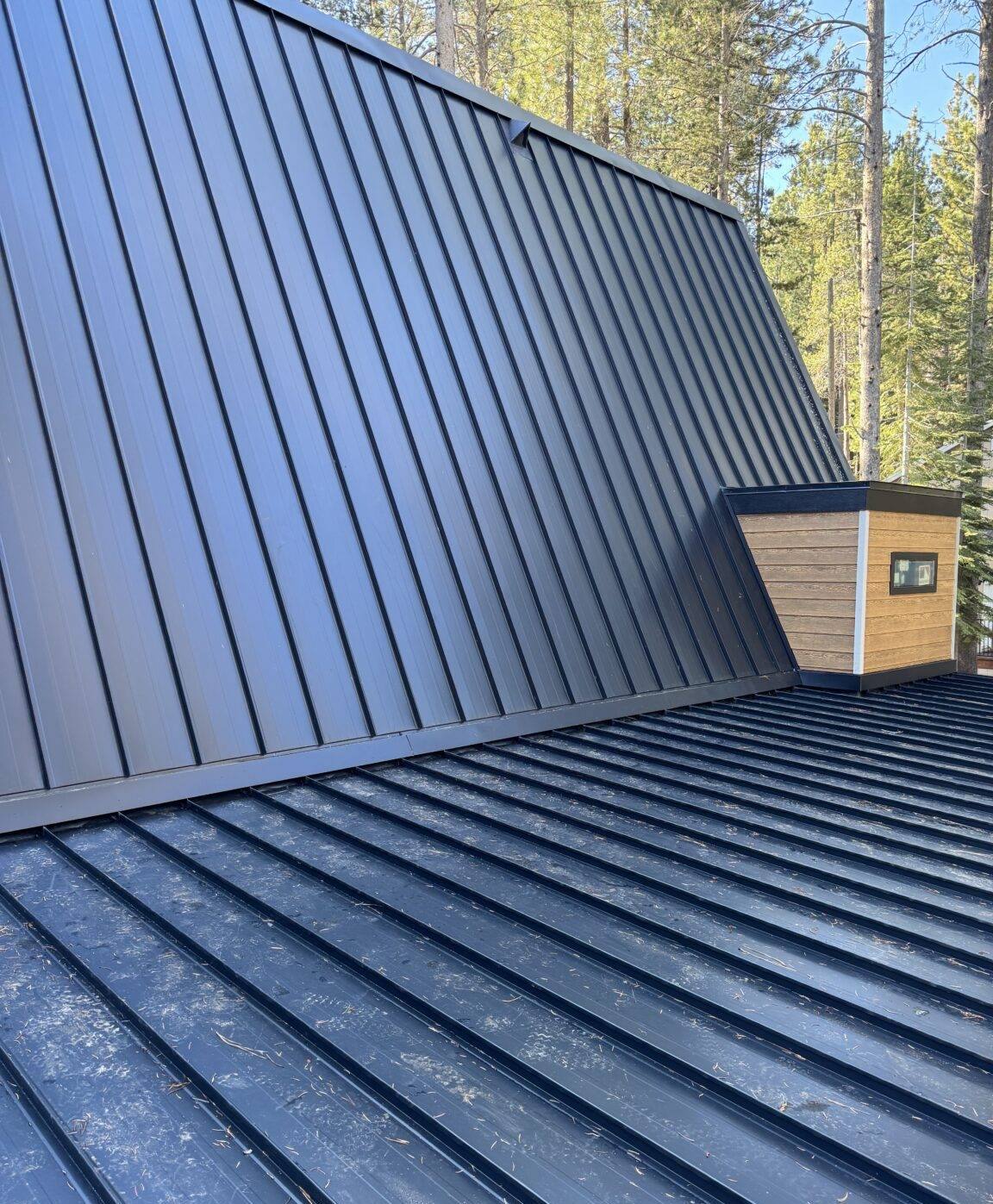
Metal roofing sheds moss and rain extremely well because of its smooth, steep-shed surface and minimal horizontal laps, and it holds up to wind-driven rain better than most other systems when installed correctly. The trade-off in a coastal environment is fastener and trim quality — we spec corrosion-resistant fasteners and coated panel systems specifically because standard hardware degrades faster this close to salt water. Metal costs more up front but typically outlasts asphalt by a wide margin.
Composite and Synthetic Shake
An option for homeowners who want a shake or shingle look without the moisture-retention problems of real wood shakes, which are difficult to keep moss-free on this kind of site. Composite products vary widely in quality, so we're selective about which lines we install based on how they perform in wet, shaded conditions over time.
| Roofing System | Moss/Algae Resistance | Wind-Driven Rain Performance | Typical Lifespan Here |
|---|---|---|---|
| Standard asphalt shingle | Fair (worse on shaded slopes) | Good with correct underlayment | 15-20 years |
| Algae-resistant asphalt shingle | Good | Good with correct underlayment | 20-25 years |
| Standing seam metal | Very good | Excellent | 40-50+ years |
| Composite/synthetic shake | Good (product-dependent) | Good | 30-40 years |
What a Correct Roof Replacement Involves
A roof replacement that's actually built for this climate is more than a tear-off and a new layer of shingles. The parts that don't show from the ground are usually the parts that determine whether the roof lasts 15 years or 30.
Full Tear-Off and Decking Inspection
We remove the old roofing down to the deck rather than overlaying, because overlaying traps moisture and hides decking damage that's common on older Doe Bay roofs with a history of moss and slow leaks. Any soft, delaminated, or rotted decking gets replaced before anything new goes down.
Underlayment Built for Wind-Driven Rain
Standard felt underlayment isn't enough on exposed, wind-loaded slopes. We use synthetic or self-adhered underlayment at eaves, valleys, and other vulnerable areas so wind-driven rain that gets under the surface layer still has a sealed barrier to stop it before it reaches the deck.
Flashing and Penetration Details
Chimneys, skylights, vents, and valleys are where most Orcas Island roof leaks actually start. We install new flashing rather than reusing old pieces, and we pay particular attention to corrosion-resistant materials given the salt air.
Ventilation
Proper intake and exhaust ventilation keeps the attic dry and temperature-balanced, which slows moss growth from the underside and prevents the condensation issues that show up in poorly vented island homes with heavy tree cover.
Moss and Debris Management Going Forward
Even the best system benefits from keeping overhanging branches trimmed back and gutters clear, since trapped organic debris is what gives moss a foothold in the first place. We'll walk you through what upkeep actually matters and what doesn't.
Our Process, Start to Finish
- Inspection and estimate — We walk the full roof, check the attic from the inside where accessible, and give you a straightforward assessment of condition, not just a quote.
- Material selection — We go over the trade-offs between asphalt, metal, and composite options for your specific slopes and exposure, with honest pricing for each.
- Scheduling around weather and logistics — On Orcas Island, materials and crews move by ferry, so we plan delivery and install windows around both the forecast and the schedule.
- Tear-off and deck repair — Old roofing comes off, decking is inspected and repaired as needed, and the site is protected throughout.
- Underlayment, flashing, and roofing installation — Installed in the sequence and detail that actually resists wind-driven rain, not just a fast standard install.
- Final walkthrough and cleanup — We check the finished roof with you, clear debris and fasteners from the property, and confirm ventilation and drainage are working as intended.
Cost Factors for a Doe Bay Roof Replacement
Every roof is priced on its own specifics, but the same handful of factors tend to move the number most on Orcas Island projects.
| Factor | Why It Matters Here |
|---|---|
| Roof pitch and complexity | Steeper, multi-plane roofs take longer and need more flashing detail |
| Material choice | Asphalt, metal, and composite carry different material and labor costs |
| Decking condition | Moss- and moisture-related decking repair is common and adds material/labor |
| Access and tree cover | Tight or heavily wooded lots slow staging and material handling |
| Delivery logistics | Material barging/ferry scheduling can affect project timing on island jobs |
| Ventilation upgrades | Older homes often need added intake/exhaust vents brought up to standard |
We'll break down exactly where your number comes from in the estimate — no vague allowances, no surprise add-ons for things we could see during the inspection.
Permits and Island Logistics
Roof replacements in unincorporated San Juan County, which includes Doe Bay, typically require a building permit, and we handle that process as part of the job rather than leaving it to you. Beyond paperwork, working on Orcas Island means planning material deliveries and crew schedules around the ferry system, which is a real scheduling factor that off-island contractors often underestimate. Staging enough material on-site, timing tear-off so the roof isn't left open longer than necessary, and having a plan if weather delays a ferry run are all things we account for before your project ever starts.
Why Hiring a Crew That Already Works Doe Bay Matters
A roof replacement done by a crew unfamiliar with this specific stretch of coastline tends to miss the details that matter most here — the underlayment upgrade at wind-exposed eaves, the fastener spec that resists salt corrosion, the ventilation plan that accounts for heavy tree cover and moss pressure. Those aren't exotic requirements, but they're easy to skip if you're not used to building for this climate every day. A local crew also understands the practical side: how ferry scheduling affects timelines, what San Juan County permitting actually requires, and how to stage a job on a wooded or water-adjacent lot without unnecessary delays or damage to the property.
If your roof is showing moss, granule loss, or recurring leaks, we're happy to come take an honest look and walk you through what we find. Reach out for a free, no-pressure estimate using the form below — there's no obligation, just a straight answer about what your roof needs.