 Orcas Island Siding
 Why Doe Bay Roofs Wear Differently
Doe Bay sits on the exposed east side of Orcas Island, where roofs deal with a combination most inland San Juan County homes never see: salt-laden air off the water, wind-driven rain that gets pushed sideways under poorly flashed edges, and heavy tree canopy that keeps north-facing slopes shaded and damp for months at a stretch. None of these factors are dramatic on their own, but together they shorten the useful life of a roofing system that wasn't specified for this exact combination. A roof that would last 25 years in a dry, open, inland climate can start showing granule loss, moss colonization, and flashing corrosion well ahead of schedule out here.
New roof installation in Doe Bay isn't just about swapping old shingles for new ones. It's about choosing materials, fasteners, underlayment, and ventilation details that account for salt exposure, sustained moisture, and the shade pattern of a heavily wooded lot. Get those details right and a new roof will genuinely outperform the one it replaced. Get them wrong and you're back to repairs in a fraction of the time.
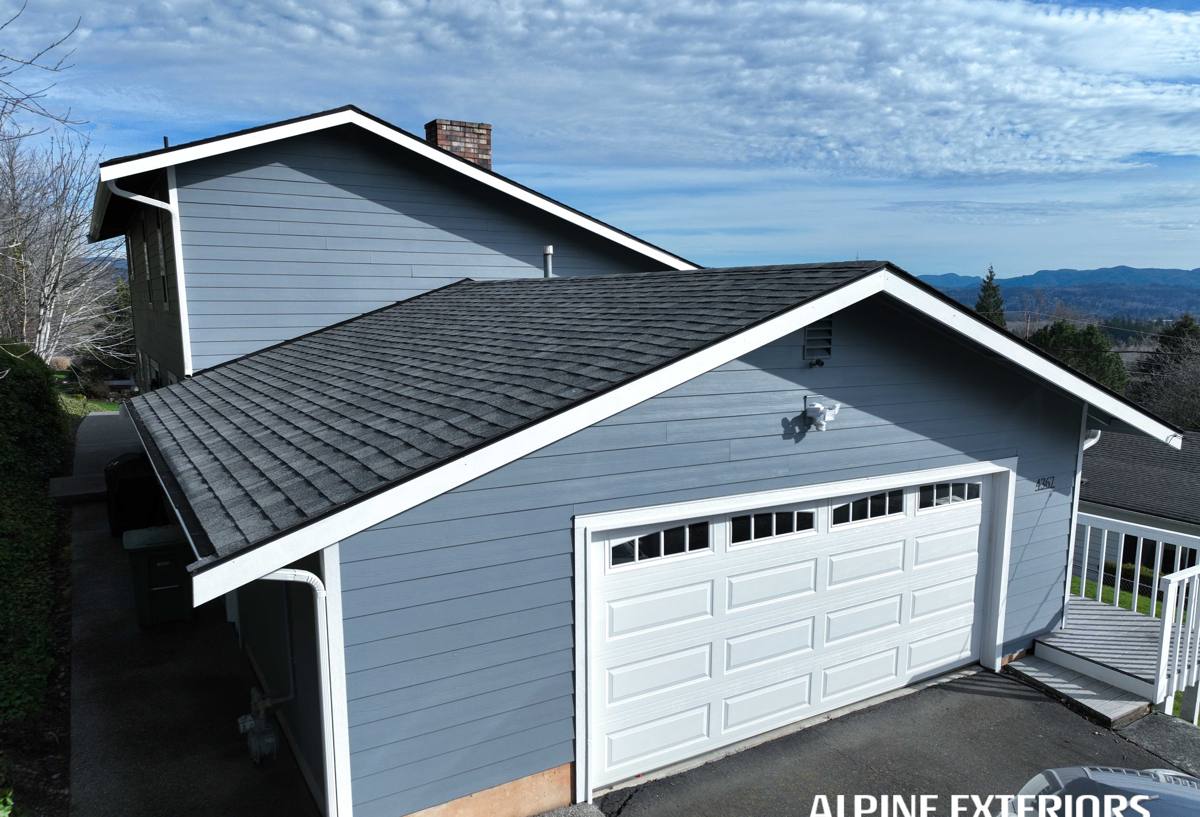
Signs Your Doe Bay Home Needs a New Roof
Roofs rarely fail all at once. Most homeowners notice a combination of smaller warning signs first. If several of these apply to your roof, it's worth having it looked at before the next wet season:
- Moss or algae streaking that keeps coming back within a season or two of cleaning
- Granules collecting in gutters or at downspout outlets
- Shingles that are curling, cupping, or visibly brittle
- Dark stains or soft spots on interior ceilings, especially near chimneys or skylights
- Flashing around chimneys, vents, or valleys that's rusted, lifted, or missing sealant
- A roof that's 20-25+ years old, even if it "looks fine" from the ground
- Daylight visible through the roof deck from inside the attic
- Persistent damp or musty smell in upper rooms or attic spaces
Any one of these alone might just mean a repair. Several together usually means the roofing system as a whole is past the point where patching makes financial sense.
Choosing the Right Roofing System for This Climate
There's no single "best" roofing material for every Doe Bay property — it depends on tree cover, roof pitch, budget, and how much maintenance you're willing to do. Here's how the common options actually compare for salt air, rain, and moss exposure:
| Material | Moss/Algae Resistance | Salt Air Performance | Typical Lifespan | Maintenance |
|---|---|---|---|---|
| Architectural asphalt shingle (algae-resistant) | Good, with occasional cleaning | Good with corrosion-resistant flashing | 25-30 years | Low-moderate |
| Standard 3-tab asphalt shingle | Fair — stains sooner | Fair | 15-20 years | Moderate |
| Standing seam metal | Very good — sheds moss with pitch | Very good with proper coating/fasteners | 40-50+ years | Low |
| Cedar shake | Poor without diligent upkeep | Fair — needs regular treatment | 20-30 years with upkeep | High |
Metal roofing has become a common upgrade choice on shaded, moss-prone island lots because its smooth surface and steeper effective pitch make it harder for moss to take hold. That said, a well-specified architectural shingle roof with algae-resistant granules — from established manufacturers such as GAF or CertainTeed — is still a solid, more budget-friendly option for many Doe Bay homes, especially on roofs with decent sun exposure. Cedar shake looks great and has a long island tradition, but on a shaded, damp lot it demands a level of upkeep most homeowners underestimate; we'll tell you that honestly rather than sell you a roof that becomes a maintenance project.
What a Correctly Installed Roof Actually Includes
The material on top is only part of the system. In a climate like this, the details underneath and around it matter just as much:
Underlayment and Ice-and-Water Protection
Self-adhering ice-and-water shield belongs at eaves, valleys, and around every roof penetration — not because Doe Bay gets heavy ice, but because wind-driven rain finds its way under standard underlayment at exactly those spots. Synthetic underlayment across the rest of the deck holds up better than felt in a consistently damp climate.
Flashing and Fasteners
Salt air accelerates corrosion on unprotected metal. That means stainless steel or hot-dip galvanized fasteners, and flashing material chosen to resist salt exposure rather than whatever's cheapest — particularly around chimneys, skylights, and dormers, which are the most common leak points on older Doe Bay roofs.
Ventilation
A roof deck that can't breathe traps moisture underneath the shingles, which speeds up rot and shortens shingle life regardless of how good the shingle itself is. Balanced intake and exhaust ventilation is part of a correct install, not an upsell.
Moss Prevention Details
On shaded roof planes, we install zinc or copper strips near the ridge. Rain washing over these strips releases trace metal ions that inhibit moss and algae growth down the roof face — a low-maintenance defense that works with the climate instead of fighting it every season.
Permitting and Island Logistics
Most full roof replacements in unincorporated San Juan County require a building permit, and requirements can vary depending on scope, structural changes, and whether the property is in a shoreline or critical areas overlay. We handle the permit application and coordinate inspections as part of the job, so you're not the one tracking down county paperwork.
Island logistics are the other piece that catches homeowners off guard when they hire a mainland contractor. Materials, dumpsters, and disposal all move by ferry, and delivery windows have to be planned around ferry schedules rather than same-day trucking. A crew that already works Orcas Island on a regular basis has these logistics built into how they bid and schedule jobs — material orders go out early, dumpster and disposal arrangements are already in place, and the crew isn't burning a full day of your project just getting equipment to the island.
Our Process, Start to Finish
- On-site inspection. We walk the roof (or use a drone where pitch or access makes that safer) and check the deck, flashing, ventilation, and any interior signs of moisture before recommending anything.
- Written estimate. You get a clear scope of work and pricing before any material is ordered — no vague allowances that turn into surprise costs.
- Material ordering and scheduling. Materials are ordered with ferry lead time built in, and we schedule around the weather forecast, not just the calendar.
- Tear-off and deck inspection. Old roofing comes off down to the deck, and any soft or rotted sheathing is identified and addressed before new material goes down — not covered up.
- Installation. Underlayment, flashing, ventilation, and the roofing material go on in that order, with attention to the salt-air and moss details covered above.
- Cleanup and haul-off. Job site debris and old material are cleared and hauled off the island — nothing left for you to deal with.
- Final walkthrough. We go over the finished roof with you before calling the job done.
Why Hiring a Crew That Already Works Doe Bay Matters
A roofing crew that only occasionally makes it out to Orcas Island tends to price in a lot of uncertainty — extra ferry trips, unfamiliar permitting, guesswork on how local salt air and shade patterns affect material choice. A crew that regularly works Doe Bay and the surrounding areas of Orcas Island has already worked out the logistics, knows what San Juan County inspectors look for, and has seen firsthand how different roofing systems hold up on shaded, waterfront-adjacent lots versus open, sun-exposed ones. That local track record translates into fewer surprises, tighter scheduling, and a roof specified for the conditions it will actually face.
Maintaining Your New Roof Through Moss Season
Even a well-installed, moss-resistant roof benefits from basic upkeep. Keep gutters clear so water isn't backing up under the eaves, trim back overhanging branches where practical to reduce shade and debris buildup, and do a visual check after major storms for lifted flashing or displaced shingles. A soft wash (never high-pressure) every couple of years keeps moss from establishing on shaded slopes, especially in the years before zinc or copper strips have fully done their work. None of this is heavy maintenance — it's the small routine that keeps a correctly installed roof performing for its full expected lifespan in this climate.
If your Doe Bay roof is showing its age or you're planning ahead of the next wet season, we're happy to take a look and give you an honest read on what it actually needs. Use the form below to request a free, no-pressure estimate.