 Orcas Island Siding
 Building New in Doe Bay? Get the Windows Right the First Time
If you're framing a new home or a major addition in the Doe Bay area on the east side of Orcas Island, the windows you choose and how they're installed will do more to determine your long-term comfort and maintenance load than almost any other single decision in the build. New construction gives you a one-time opportunity that replacement work never does: the chance to flash, seal, and integrate the window with the wall assembly correctly from the studs out, before siding, trim, or interior finish covers up the work. Get it right now and you won't touch these windows again for decades. Get it wrong, and the problems — moisture intrusion, rot at the sill, failed seals — often don't show up until they're expensive to fix.
We install new-construction windows across San Juan County, and Doe Bay's specific exposure — open water views, salt-laden air, and long stretches of wind-driven rain — means the margin for error is smaller here than it is for an inland build. This page covers what that means in practice, what a correct installation actually involves, and how our process works for builders and homeowners in the Doe Bay area.
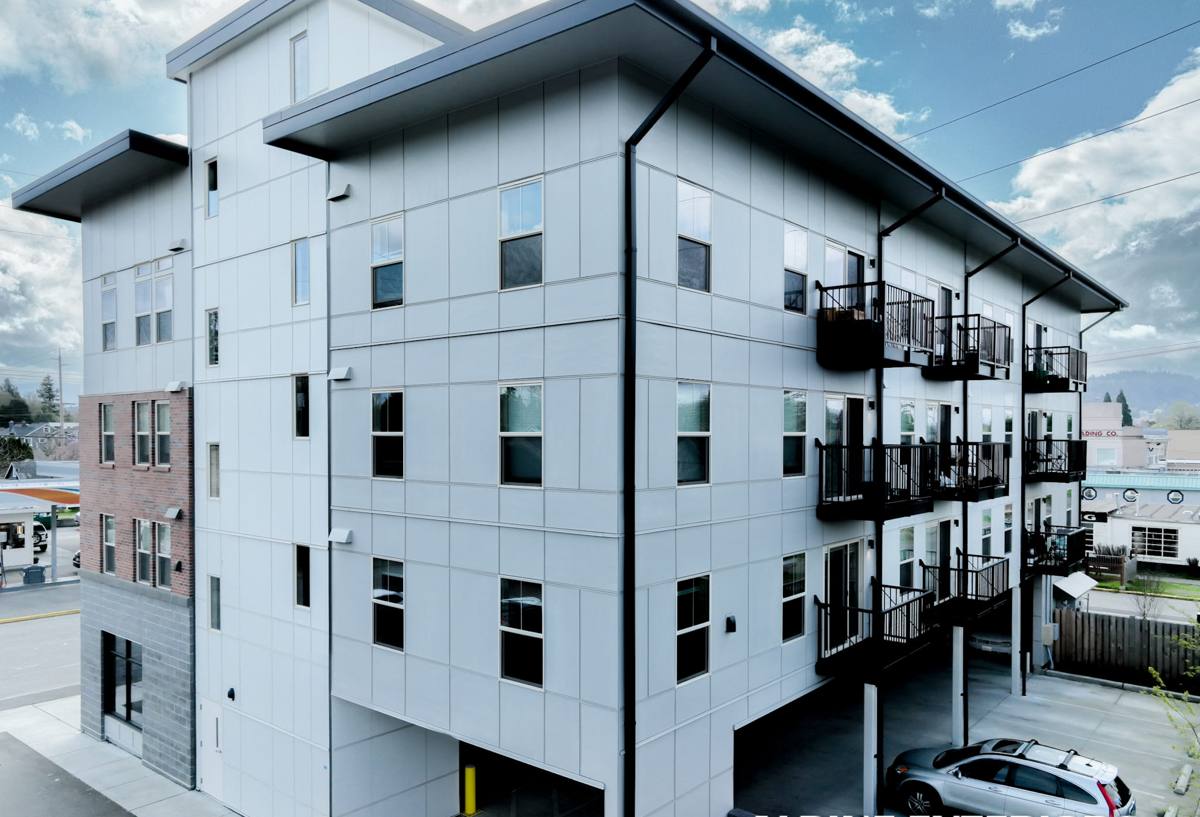
What Doe Bay's Climate Actually Does to Windows
Doe Bay sits exposed to weather coming off the water, and that exposure shapes every decision about window selection and installation on a new build here.
Salt Air
Marine air carries fine salt particulate that settles on and around exterior building materials. Over years, that salt accelerates corrosion on hardware, fasteners, and any metal components that aren't rated for coastal exposure. On a new build, this means we pay close attention to the corrosion resistance of hinges, cranks, locks, and flashing metal — not just the window frame material itself. A window that performs well inland can wear out its hardware years ahead of schedule this close to the water.
Driving Rain
Orcas Island storms don't always come straight down. Wind-driven rain hits window assemblies at an angle, which puts real pressure on the flashing details and sealant joints around the rough opening. This is precisely where new-construction installation has an advantage over replacement — we can build a proper drainage plane and flashing sequence into the wall before the exterior finish goes on, so water that reaches the window is directed back out rather than trapped behind it.
Moss and Sustained Dampness
San Juan County's long wet season keeps north-facing and shaded exterior surfaces damp for extended stretches, which is exactly the environment moss and algae favor. On windows, that dampness lingers around sills, trim, and any horizontal surface that doesn't shed water quickly. Sill design and drainage matter more here than in a drier climate, and window materials that hold moisture against wood trim can accelerate rot in ways that aren't obvious until years later.
New Construction vs. Replacement — Why the Distinction Matters
We treat new-construction window installs differently from replacement work, and it's worth understanding why if you're a homeowner working with a builder or general contractor on a Doe Bay project.
New-construction windows typically have a nailing fin (or flange) around the perimeter that gets integrated directly into the wall's water-resistive barrier — the house wrap or building paper — before siding goes on. This lets us build a shingled, lapped flashing system where every layer overlaps the one below it, so water always has a path down and out, never in. Replacement windows, by contrast, usually go into an existing opening without disturbing the surrounding wall finish, which limits how much of the flashing detail can be redone.
On a new build, we have full access to the rough opening and the wall assembly. That's the advantage — and it's also where corners get cut if a crew is moving fast or isn't used to coastal exposure. Doe Bay's weather doesn't leave much room for shortcuts on this step.
Choosing the Right Window for a Doe Bay Build
There's no single "best" window material — the right choice depends on budget, exposure, maintenance appetite, and the look you want for the home. Here's how the common options compare for a coastal Orcas Island build.
| Frame Material | Coastal Durability | Maintenance | Typical Trade-Offs |
|---|---|---|---|
| Vinyl | Good — won't corrode or rot | Low — occasional cleaning | Lower cost; limited color/finish options; can look less premium on higher-end builds |
| Fiberglass | Very good — dimensionally stable, resists salt exposure well | Low | Higher upfront cost; strong long-term value in marine climates |
| Aluminum-clad wood | Good on the exterior face if properly sealed; interior wood needs protection from any water that reaches it | Moderate — depends on finish and sealant condition over time | Attractive wood interior; exterior cladding needs correctly detailed flashing to avoid trapped moisture |
| Solid wood | Weakest choice for direct salt/rain exposure without disciplined upkeep | High — regular refinishing needed | We're honest with clients about this one: on an exposed Doe Bay elevation, the maintenance burden is real and ongoing |
For most Doe Bay builds, we steer clients toward vinyl or fiberglass on exposed elevations, and reserve wood or wood-clad units for protected sides of the home where they're sheltered from direct weather. That's a judgment call based on orientation and exposure, not a one-size-fits-all rule — we'll walk your specific site plan with you.
Getting the Installation Right
The window itself is only part of the equation. A quality window installed poorly will underperform a modest window installed correctly. Here's what a correct new-construction install involves on a coastal San Juan County home:
- Rough opening sized and squared to the window manufacturer's specification, with proper shim space for adjustment
- Sill pan flashing installed first, sloped to shed any water that reaches it back to the exterior
- Water-resistive barrier (house wrap) integrated with the window flange in a shingled, lapped sequence — each layer overlapping the one below
- Corrosion-resistant fasteners appropriate for marine exposure, not standard interior-grade hardware
- Sealant used at the correct joints only — over-sealing can trap moisture behind the window rather than letting it drain
- Window checked for level, plumb, and square before final fastening, then re-checked after
- Interior and exterior trim installed to shed water away from the frame, not direct it toward the joint
Every one of these steps is inspectable at the time of installation but becomes difficult or impossible to verify once siding and trim are closed up. That's why we document flashing details as we go and why we encourage clients or their general contractor to walk the openings with us before we move to the next phase of the build.
Our Process for New-Construction Window Installs
For a Doe Bay build, our process usually looks like this:
- Plan review and site visit. We look at the elevations, orientation to prevailing weather, and window schedule to flag any openings that need extra attention due to exposure.
- Material selection. We help you weigh frame material, glazing, and hardware options against your budget and the specific exposure of each elevation — not a blanket recommendation for the whole house.
- Coordination with the framing and wrap schedule. Window installation has to happen at the right point in the build sequence, after rough opening framing and before or during house wrap installation. We coordinate directly with your builder or general contractor to hit that window.
- Installation. Sill pan, flashing, window setting, and fastening, done opening by opening with the same sequence every time.
- Walk-through. We review completed openings with you or your builder before the crew moves on to siding.
What Drives Cost on a New-Construction Window Job
Every build is different, but these are the main factors that move the price on a Doe Bay new-construction window package:
| Factor | How It Affects Cost |
|---|---|
| Frame material | Vinyl is typically the most budget-friendly; fiberglass and wood-clad units cost more upfront |
| Number and size of openings | More openings and larger units (picture windows, large sliders) increase both material and labor cost |
| Glazing package | Upgraded glass for energy performance or sound control adds cost but pays back in comfort, especially on exposed elevations |
| Access and site conditions | Doe Bay's rural roads and some steep or waterfront lots can affect staging and delivery logistics |
| Coordination complexity | Jobs where we're working tightly with a framing crew and wrap schedule take more planning than a standalone install |
We don't publish a flat price list because every build's window schedule is different — the honest way to get a real number is a site visit and a look at your plans.
A Checklist If You're Vetting Contractors for This Job
Whether you hire us or someone else, these are worth asking about before a new-construction window install starts on a Doe Bay project:
- Do they use sill pan flashing on every opening, or only "if needed"?
- Can they describe their flashing sequence in specific terms, not just "we seal everything"?
- Do they adjust hardware and fastener specs for coastal/marine exposure?
- Will they coordinate directly with your framer or general contractor on timing?
- Do they document or photograph flashing details before they're covered by siding?
- Are they familiar with San Juan County permitting and inspection expectations for new construction?
Why Local Experience on Doe Bay Actually Matters
A lot of window installation guidance is written for a generic climate, and it shows up on generic websites that don't account for what an island crew sees on the ground. Doe Bay's combination of salt exposure, driving rain off the water, and a long damp season isn't the same as what a crew from the mainland or a drier part of the county deals with routinely. We work Orcas Island regularly, which means we've seen how specific elevations, orientations, and lot conditions in this area actually perform over time — not just how a spec sheet says a window should perform.
That local pattern recognition shapes real decisions on your build: which elevations need the more resistant frame material, where extra flashing attention pays off, and which details are worth the added time versus which are overkill for a given exposure. It's the difference between a crew installing windows to a generic standard and a crew installing windows for the house they're actually standing in front of.
If you're planning a new build or major addition in Doe Bay and want windows installed correctly from the framing stage forward, we're happy to walk your plans and site with you. Reach out for a free, no-pressure estimate using the form below.