 Orcas Island Siding
 New-Construction Windows in Deer Harbor
Deer Harbor sits on the water, which means every window opening on a new build or addition here is fighting a different battle than a window fifty miles inland. Salt-laden air moves off the harbor and up through the trees, wind-driven rain comes in sideways off Puget Sound during winter storms, and the shaded, damp lots that make this part of Orcas Island so beautiful also grow moss on anything that stays wet too long. New-construction window installation is the point where you either build in protection against all of that or you build in a slow leak you won't notice for a few years.
"New-construction" windows are different from replacement windows in one important way: they install with a nailing flange that gets integrated directly into the wall's weather-resistant barrier and flashing system before the siding goes on. That flange-and-flashing assembly is what actually keeps water out of the wall — the window itself is only half the system. Get that sequence wrong on a Deer Harbor lot and San Juan County's climate will find the mistake for you.
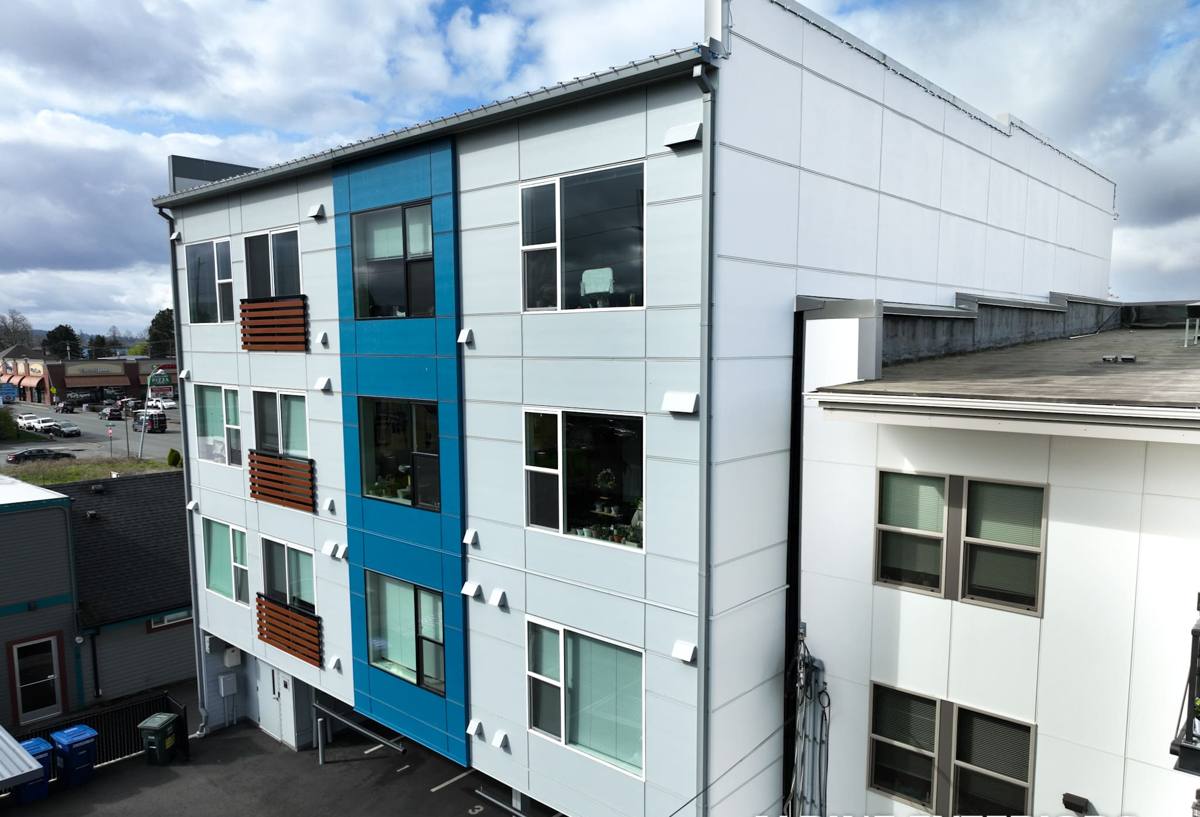
What This Climate Does to a Window Opening
Wind-Driven Rain
Storms coming off the water don't just drop rain straight down — they push it sideways into vertical wall assemblies, right at the window head and jambs. A window opening that relies on caulk alone, without a proper sill pan and shingle-lapped flashing, will eventually let that wind-driven rain past the frame and into the framing cavity. On a new build this is preventable; it's far cheaper to flash it right the first time than to open up a wall in five years to find rot.
Salt Air and Metal Components
Being close to the harbor means airborne salt settles on everything, including window hardware, screen frames, and any exposed fasteners. Standard steel fasteners and low-grade hardware corrode faster here than they would on a lot even a mile inland. We pay attention to fastener and hardware ratings on every coastal Deer Harbor job, not just the glass and frame.
Moss Season and Moisture Retention
Shaded, tree-covered lots around Deer Harbor stay damp for a long stretch of the year, and moss will colonize any horizontal surface — including window sills and trim — that doesn't shed water cleanly. A sill without the right slope, or trim details that trap organic debris, gives moss a foothold that holds moisture against the wood and finish longer than it should.
What a Correct Installation Actually Involves
New-construction window work is a sequence, and skipping a step doesn't show up as a problem right away — it shows up as a callback two or three winters later. On every job we follow the same order:
- Rough opening is checked for square, level, and correct dimension before the window ever gets set.
- A sloped sill pan flashing goes in first, so any water that does get past the window has a path back out, not into the framing.
- The window is set, shimmed to keep the frame square (an out-of-square frame stresses the sash and shortens the life of weatherstripping), and fastened per the manufacturer's schedule.
- Flashing tape and the weather-resistant barrier are lapped in shingle fashion — top piece over the one below it — so water always moves downward and outward, never into a seam.
- Sealant is applied at the specified joints only; sealing every gap, including ones meant to weep water out, traps moisture instead of releasing it.
- Interior and exterior trim goes on last, sloped and detailed to shed water rather than collect it.
None of this is exotic — it's standard window-and-door flashing practice. What matters is that every step gets done, in order, on a job where the crew understands why each one matters for a marine climate specifically.
Choosing Windows for a Coastal San Juan County Lot
Material choice matters more here than in a dry inland climate. We walk homeowners through the trade-offs honestly rather than pushing one product line:
| Frame Material | Coastal Performance | Maintenance | Trade-Offs |
|---|---|---|---|
| Vinyl | Good — won't corrode or rot, handles salt air well | Low | Limited color/finish options; can expand/contract with big temperature swings |
| Fiberglass | Very good — dimensionally stable, resists moisture and salt exposure | Low | Higher upfront cost than vinyl |
| Wood-clad | Good if detailed and finished correctly; clad exterior protects the wood | Moderate — exposed wood interior sightlines need periodic attention | More installation-sensitive; a poor seal at the cladding lets moisture reach the wood core |
| Bare aluminum | Poor near saltwater — prone to corrosion and condensation without thermal breaks | Higher | We generally steer Deer Harbor clients away from this unless it's a thermally broken, marine-rated product |
There's no single "best" answer for every project — a shaded, moss-prone lot and a sun-exposed bluff lot both in Deer Harbor can call for different choices. What we won't do is put a bare aluminum frame or a poorly clad wood window on a harbor-exposed wall and call it good; the maintenance burden and failure risk aren't worth it, and we'll say so up front.
Sizing and Glazing for the Site
New construction gives you the chance to plan window placement and glazing package around the actual site conditions instead of working around what's already there. On Deer Harbor lots we typically talk through:
- Overhang and eave depth relative to window height — deeper overhangs reduce how much wind-driven rain ever reaches the glass and frame
- Glazing package (double vs. triple pane, low-E coatings) balanced against the Pacific Northwest's mild-but-damp temperature swings
- Sill height and slope on any window facing prevailing storm direction
- Screen and hardware finishes rated for coastal/marine exposure
- Whether a given wall assembly needs additional rainscreen detailing behind the siding for extra drainage
Our Process on a Deer Harbor Build
We work new-construction window installs as part of the broader building envelope, not as a standalone trade dropped in and out. A typical project runs:
Site and Plan Review
We look at the plans, the lot's sun and wind exposure, and how close the structure sits to the water before recommending frame materials or glazing.
Coordination with the Build Schedule
Window installation has to land at the right point in the framing sequence — after the WRB is up, before siding closes the wall. We coordinate directly with the builder or general contractor so that sequence isn't rushed or skipped.
Installation and Flashing
Every opening gets the same sill-pan-first, shingle-lap sequence described above, regardless of window brand or size.
Final Walkthrough
Before we leave a job, we check operation, seals, and trim on every opening, and walk the homeowner or builder through what was done and why.
Why a Crew That Already Works Deer Harbor Matters
A window installer who mostly works drier, inland jobs can do everything "by the book" and still miss what a marine climate needs, because the book doesn't specify San Juan County wind exposure or moss-prone shade patterns. Crews that regularly work Deer Harbor and the rest of Orcas Island know which lots need extra flashing detail at the head, which sites need corrosion-resistant hardware as a default rather than an upgrade, and where moss and standing moisture are going to be a long-term issue if sills aren't sloped correctly from day one. That local pattern recognition is hard to get from a crew that only passes through the islands a few times a year.
Questions Worth Asking Before Work Starts
- What flashing sequence will be used at the sill, jambs, and head — and can it be explained in plain language?
- Are the frame material and hardware finish rated for coastal/marine exposure, not just standard exterior use?
- How will window installation be coordinated with the framing and siding schedule?
- What's the warranty structure — on the window unit itself, and separately on the installation and flashing work?
- Has this crew worked other Deer Harbor or Orcas Island properties, and do they understand the site's specific sun, wind, and moisture exposure?
Cost Factors to Expect
New-construction window pricing on Orcas Island depends on frame material, glazing package, window size and count, and site access — barge or ferry logistics for materials add real cost on island projects that a mainland job wouldn't have. We don't quote a job without walking the plans and the lot first; broad estimates without seeing the actual opening count and site conditions aren't reliable for either side.
If you're planning a new build or addition in Deer Harbor and want windows installed and flashed correctly the first time, we're happy to walk the plans with you and put together a free, no-pressure estimate. There's a form below to get that conversation started.