 Orcas Island Siding
 Building Decks for San Juan Island's Marine Climate
A deck on San Juan Island lives outside year-round in conditions that are a lot harder on wood, fasteners, and finishes than most people expect. The Salish Sea marine climate brings salt-laden air off the water, long stretches of driving rain through fall and winter, and a moss season that can run from October well into spring on any surface that doesn't get much sun or airflow. None of that is dramatic weather — no hurricanes, no heavy snow loads most winters — but it's relentless, and relentless moisture is exactly what wears decks out early.
We're based on Orcas Island and build and repair decks throughout San Juan County, including San Juan Island. This page covers what we've learned building decks in this specific environment: what actually fails first, what a correctly built deck looks like here, and how our process works from first call to final walk-through.
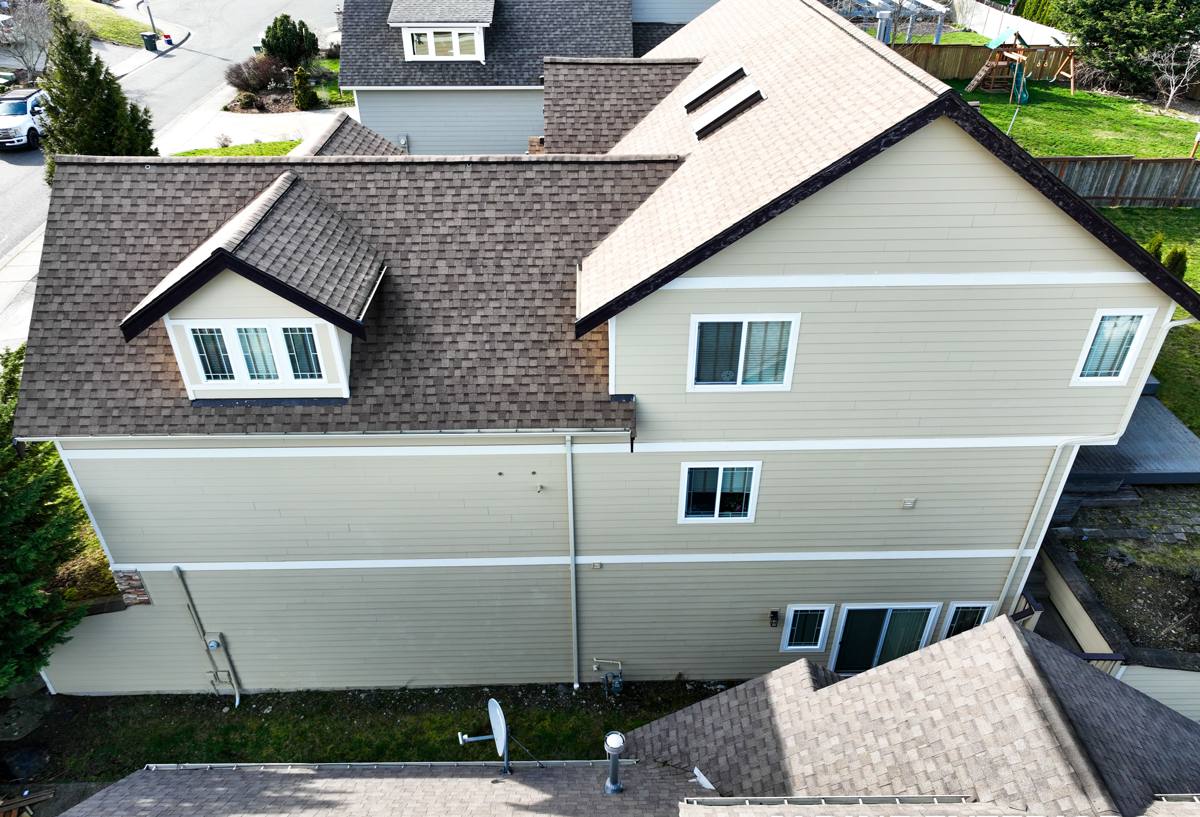
What a Deck on San Juan Island Actually Needs to Hold Up
Most deck failures we see aren't dramatic structural collapses — they're slow moisture and corrosion problems that show up two, five, or ten years in because a detail was skipped during the build. In this climate, a handful of details matter more than they would somewhere drier:
- Ledger board flashing — where the deck attaches to the house is the single most common source of hidden rot. Proper flashing and a moisture barrier behind the ledger keep rain from tracking behind the board and into the house framing.
- Corrosion-resistant fasteners — salt air accelerates corrosion on standard hardware. Stainless steel or high-quality coated fasteners cost more up front but avoid the rust streaks and weakened connections that show up on cheaper hardware within a few years, especially on decks closer to the water.
- Footings sized for local soil conditions — soil on the islands varies a lot from lot to lot, from thin soil over rock to denser glacial till. Footings need to be sized and set to the conditions on your specific site, not a generic spec.
- Drainage and slope — decking needs a slight pitch away from the house and consistent gapping so driving rain sheds instead of pooling and soaking into end grain.
- Airflow underneath — a deck built low and tight to the ground with no ventilation traps moisture underneath, which speeds up rot in the joists and encourages moss and algae growth on the decking above.
None of this is exotic. It's standard good practice applied consistently — but it's exactly the kind of thing that gets shortcut on a rushed or underbid job, and shortcuts here show up as expensive repairs later, not immediately.
Choosing the Right Decking Material for This Climate
There's no single "best" decking material — it depends on your budget, how much upkeep you want to do, and how close your home is to the water. Here's how the common options compare for San Juan Island conditions specifically.
| Material | Upfront Cost | Maintenance Here | Salt Air / Moisture Behavior | Typical Lifespan |
|---|---|---|---|---|
| Pressure-treated wood | Lowest | Annual cleaning and periodic sealing needed to prevent moss and gray weathering | Prone to moss buildup and surface checking if not maintained; treatment resists rot but not appearance changes | 15-20 years with upkeep |
| Cedar | Moderate | Regular sealing to maintain color and resist moisture absorption | Naturally rot-resistant but still needs finish maintenance in this much rain | 15-25 years with upkeep |
| Composite decking | Higher | Low — periodic washing to prevent surface algae/moss film | Doesn't absorb moisture like wood, resists rot, but can still get slick with moss film if shaded and unwashed | 25-30+ years |
| PVC/vinyl decking | Highest | Lowest — occasional washing | Fully moisture-resistant, best option for shaded or water-adjacent sites prone to constant dampness | 30+ years |
We install all of the above and will talk through the honest trade-offs for your project rather than pushing one product. Wood costs less initially but demands the most attention in a climate this wet. Composite and PVC cost more up front but make sense for owners who want to spend their weekends doing something other than resealing a deck every year or two.
A Note on Railings and Fasteners
Railing systems and fastener hardware deserve the same scrutiny as decking material. A beautiful deck surface paired with mismatched or under-rated hardware is a maintenance headache waiting to happen — we spec railing posts, connectors, and fasteners rated for coastal exposure as a standard part of the build, not an upgrade.
How We Build a Deck — Our Process
Site Visit and Design
We start on-site, looking at your home's ledger attachment point, sun and shade exposure, existing drainage, and soil conditions. We'll talk through size, layout, material options, and railing style, and give you a straightforward estimate based on what your specific site needs — not a generic per-square-foot number that ignores site conditions.
Permitting
Deck projects on San Juan Island typically require a permit through San Juan County, and projects near the shoreline may also fall under the county's shoreline regulations depending on proximity to the water and the scope of the work. We handle the permit application and make sure the design meets current code before we start building, so you're not stuck redoing work later.
Framing and Structural Work
This is where the details that matter most in our climate get built in: properly flashed ledger connections, footings sized to your soil, corrosion-resistant structural hardware, and framing spaced to allow airflow underneath. This stage isn't visible once the deck is finished, which is exactly why it's the stage most worth doing right.
Decking, Railings, and Finish Work
Decking boards go down with consistent gapping for drainage and expansion, railings are installed to current code height and baluster spacing requirements, and any wood surfaces get sealed before we consider the job done.
Final Walk-Through
We walk the finished deck with you, cover basic care for whatever material you chose, and make sure you know what to watch for over the first year as everything settles in.
Island Logistics: Materials and Scheduling
Building on San Juan Island comes with a logistics layer that a mainland contractor doesn't have to think about. Lumber, composite decking, and hardware all have to be ordered ahead and routed through ferry schedules, and weather can push a delivery or a work day by more than it would on the mainland. Because we're based on Orcas Island and regularly work throughout San Juan County, we build ferry timing and material lead times into the schedule from the start instead of discovering the problem mid-project. That means fewer surprise delays and a more realistic timeline when we give you one.
Common Deck Problems We Find on San Juan Island Homes
- Rot at the ledger board from missing or failed flashing
- Rusted or corroding fasteners on decks close to the water
- Moss and algae film making the deck surface slick, especially on shaded north-facing decks
- Undersized or poorly set footings on lots with thin or rocky soil
- Decking installed with inconsistent or no gapping, causing standing water and cupped boards
- Low clearance underneath the deck with no ventilation, trapping moisture against the framing
- Railing posts loosening from hardware not rated for long-term wet exposure
Most of these are fixable without a full rebuild if they're caught early. Left alone, they compound — a moss-slicked surface is a slip hazard, and hidden ledger rot can eventually compromise the whole structure's attachment to the house.
Maintaining Your Deck Through Salt Air and Moss Season
Whatever material you choose, a little seasonal attention goes a long way in this climate. A basic maintenance routine:
- Wash the deck surface at least once a year, more often in shaded areas prone to moss
- Check fasteners and railing connections annually for corrosion or loosening
- Reseal wood decking on the manufacturer's recommended schedule — don't wait until it's visibly gray and dry
- Trim back overhanging vegetation to let sun and air reach the deck surface
- Keep nearby gutters and downspouts clear so runoff isn't draining directly onto or under the deck
- Sweep leaves and debris off the surface before wet weather sets in, since trapped organic matter feeds moss growth
Why Hire a Crew That Already Works San Juan Island
A deck built to a generic mainland spec doesn't account for what actually wears decks out here — salt air corrosion, near-constant winter moisture, and moss that takes over anything shaded and unmaintained. Hiring a crew that already works this island means the ferry logistics, material lead times, county permitting process, and climate-specific building details are already familiar, not something being figured out on your project. We're not visiting once and leaving — we're based nearby on Orcas Island and continue to be reachable if something needs attention down the road.
If you're planning a new deck or need an existing one looked at, we're happy to come take a look and give you a straightforward, no-pressure estimate. Use the form below to get in touch.