 Orcas Island Siding
 Window Replacement Built for Crow Valley's Climate
Crow Valley sits a bit inland from Orcas Island's shoreline, which spares homes here some of the direct salt spray that coastal properties deal with. But that doesn't mean the valley is easy on windows. The same marine air moves through, humidity sits in the low ground longer after a storm, and the valley's mix of open farmland and tree-sheltered pockets creates its own moisture pattern — heavy dew, slow-drying siding, and long stretches of gray, damp weather that keep window frames wet far more often than a drier climate would. Add San Juan County's long moss season, and you've got conditions that are hard on wood, hard on seals, and unforgiving of a sloppy install.
We've replaced windows on homes throughout this valley, from older farmhouses with original wood sash to newer builds that were fitted with builder-grade vinyl. The lesson is consistent: in this climate, the window unit matters less than how it's installed. A mid-range window put in correctly will outlast a premium window installed carelessly.
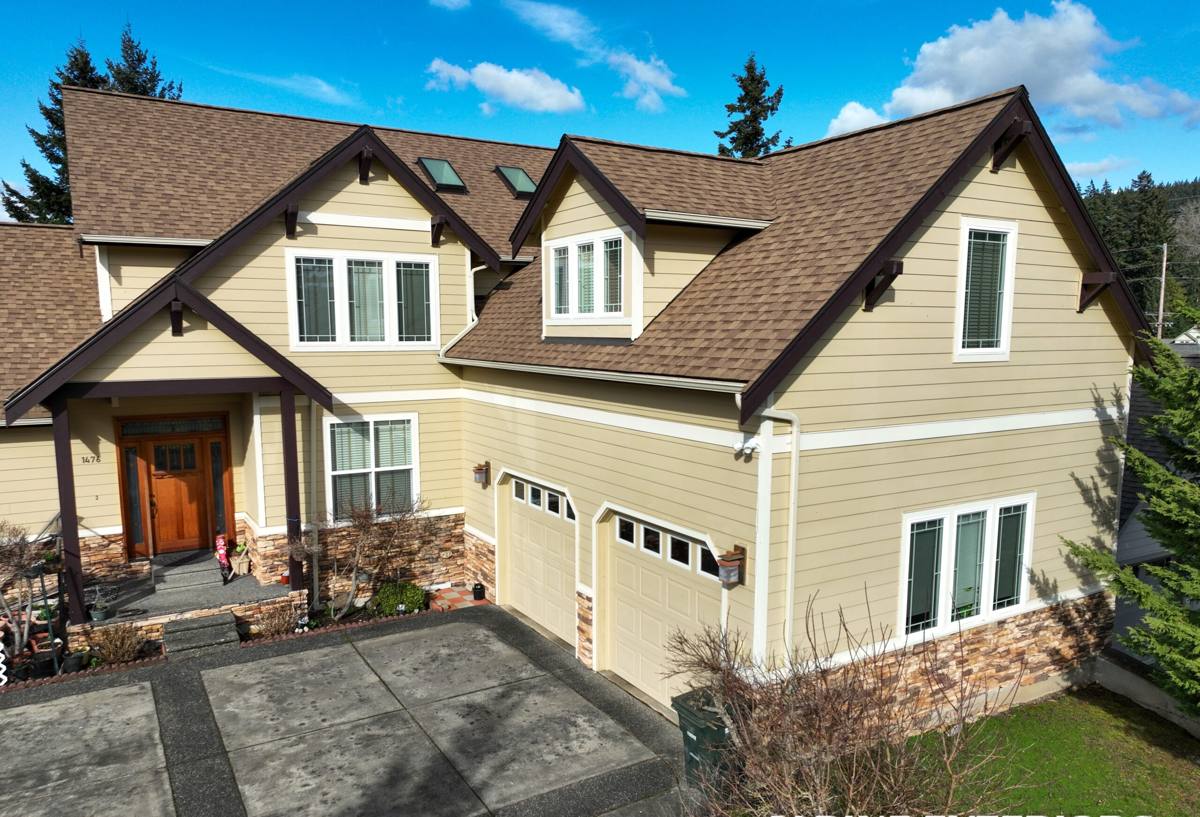
What Crow Valley Homes Are Up Against
A few local factors show up again and again when we're diagnosing failed or failing windows in this area:
- Persistent dampness: valley low points and tree cover slow down drying time after rain, so any gap in flashing or caulking stays wet longer than it would on an exposed, sunnier lot.
- Moss and organic buildup: moss doesn't just grow on roofs — it collects in window sills, tracks, and exterior trim, holding moisture against wood and paint long after the rain stops.
- Wide seasonal swings: summer sun on south-facing glass followed by cool, wet winters stresses seals and caulk lines, which is why failed seals and fogged double-pane glass are common on older installs.
- Older wood-frame construction: many properties in the valley have original or early-replacement wood windows where the frame, sill, or surrounding trim has taken decades of moisture cycling.
None of this means Crow Valley is a bad place to own a home — it just means window work here needs to account for moisture first, aesthetics second.
Signs It's Time to Replace, Not Repair
Not every window problem calls for full replacement. But there are clear signals that patching is just delaying the inevitable:
- Fogging or a milky haze between panes — the seal has failed and the insulating gas is gone for good
- Soft, spongy, or visibly rotted wood at the sill or lower frame corners
- Windows that won't stay open, won't latch, or have warped enough to bind in the frame
- Visible daylight or a noticeable draft around the frame even when the window is latched
- Moss or dark staining creeping up from the sill that keeps returning after cleaning
- Noticeably higher heating bills with no other explanation
If you're only seeing one or two of these on an otherwise sound window, repair or reglazing may still make sense. Once rot has reached the frame itself, replacement is almost always the more honest recommendation — patched rot comes back.
Choosing the Right Window for This Climate
We don't push one brand or material as the answer for every home. What we do insist on is matching the window to how much moisture exposure that specific wall sees. A north-facing wall shaded by trees behaves very differently than a sunny, open south wall, even on the same property.
| Frame Material | How It Handles This Climate | Maintenance Reality |
|---|---|---|
| Vinyl | Handles moisture well, no repainting needed, good value | Low — occasional cleaning, seals eventually need replacement |
| Fiberglass | Very stable in temperature swings, resists warping better than vinyl | Low — durable finish, minor cost premium |
| Wood (modern, clad exterior) | Traditional look with a protective exterior shell against rain | Moderate — interior wood still needs periodic attention |
| Solid wood, unclad | Best matches historic character but most exposed to moisture | High — repainting and sealing on a regular schedule |
For most Crow Valley homes we recommend vinyl or clad-exterior options for anything facing weather or shaded and slow to dry. Where a home's character calls for real wood — a farmhouse look, a historic renovation — we'll say so plainly, but we'll also be honest that it comes with an ongoing maintenance commitment in this climate.
Glass and Seal Considerations
Double-pane, low-E glass is the practical standard here — it cuts heat loss and reduces condensation on the interior pane, which matters when humidity sits high for weeks at a time. Triple-pane is worth discussing for particularly exposed or noise-sensitive spots, but it adds weight and cost that isn't always justified on a typical valley lot.
What a Correct Installation Actually Involves
Most window failures we see in this area aren't a product failure — they're an installation shortcut. Here's what we do differently, and why each step matters in this climate:
- Remove the old unit and inspect the rough opening. This is where hidden rot or water damage from years of slow moisture intrusion gets found — and it has to be fixed before a new window goes in, not painted over.
- Repair or rebuild the sill and framing as needed. A new window installed over a compromised sill just resets the clock on the same failure.
- Install house wrap and flashing tape correctly shingled. Flashing has to overlap in the right order — top piece over the one below it — so water sheds outward instead of behind the siding. This is the single most common shortcut we find on prior installs.
- Set the window level, plumb, and square. An out-of-square window stresses the seal and hardware from day one, shortening its life regardless of quality.
- Insulate the gap properly. Too little insulation leaves a draft; overpacking with the wrong material can bow the frame. Low-expansion foam or backer rod, used correctly, avoids both problems.
- Seal and trim the exterior. Caulk lines and trim are the last line of defense against driving rain — we use products rated for this climate, not whatever's cheapest at the hardware store.
- Final check and clean-up. Operation, locks, weep holes, and a final look at the exterior seal before we call the job done.
Our Process, Start to Finish
We keep the process straightforward because homeowners deserve to know what's happening on their own property:
- On-site assessment: we look at every window being considered, check the surrounding trim and siding, and flag any rot or moisture issues we find — no surprises added mid-job.
- Straightforward estimate: written pricing that separates the window units from any framing or siding repair, so you know exactly what you're paying for.
- Scheduling around the weather: we plan installs for dry stretches whenever possible, since an opening should be exposed as little as possible in this climate.
- The install itself: typically one to two windows per day depending on complexity and whether framing repair is needed.
- Walkthrough: we go over the finished work with you before we consider the job done.
Cost Factors Worth Understanding
We're not going to quote a number here that doesn't mean anything without seeing your home, but the honest factors that move price up or down are these:
| Factor | Why It Affects Cost |
|---|---|
| Frame material chosen | Vinyl is typically the most economical; clad wood and fiberglass cost more upfront |
| Rot or framing repair needed | Hidden damage found during removal adds carpentry time before the new window goes in |
| Window size and style | Larger units, custom shapes, or operable styles like casements cost more than standard double-hung |
| Number of windows in one visit | Doing several windows in a single trip is more efficient than one-off replacements |
| Access and site conditions | Second-story or hard-to-reach windows take longer and require more setup |
Beware of a quote that's dramatically lower than everyone else's — in our experience that usually means shortcuts on flashing, insulation, or an assumption that no framing repair will be needed until it's too late to renegotiate.
Why Local Experience Matters Here
Window replacement isn't identical from one region to the next. A crew used to dry-climate installs can do a technically fine job that still fails here within a few years, simply because they underestimate how much moisture this part of San Juan County deals with — the flashing detail that's optional in Arizona is not optional in Crow Valley. We work this island's homes regularly, which means we already know to check for the rot patterns common in valley-sited houses, to plan around weather windows for a clean install, and to spec sealants and flashing that actually hold up through an Orcas Island winter.
It also means fewer surprises for you. We're not learning San Juan County's climate on your project — we're applying what we already know works here.
Get a Straightforward Estimate
If your Crow Valley home has windows that are drafty, foggy, rotting at the sill, or just original single-pane units that have never been touched, we're happy to take a look and give you an honest read on repair versus replacement. There's no pressure and no obligation — just a clear assessment and a written estimate. Use the form below to get started.