 Orcas Island Siding
 Why Roofs in Crow Valley Wear Differently
Crow Valley sits back from the open water that wraps most of Orcas Island, but San Juan County's marine climate doesn't stop at the shoreline. Salt-laden air still moves through on the wind, driving rain still comes in sideways during fall and winter storms, and the fir and cedar canopy that lines the valley's pastures and hillsides keeps roofs shaded and damp long after roofs on more exposed parts of the island have dried out. That shade is part of what makes Crow Valley what it is, but it's also why roofs here tend to grow moss faster and hold moisture longer than roofs with more open sky above them.
None of that means a Crow Valley roof is doomed to fail early. It means the roof needs to be built and maintained with that microclimate in mind, from the ventilation behind the shingles to the material chosen to sit on top of them. A roof spec'd for a sunny, exposed lot won't necessarily hold up the same way under a tree canopy that keeps the decking cool and slow to dry.
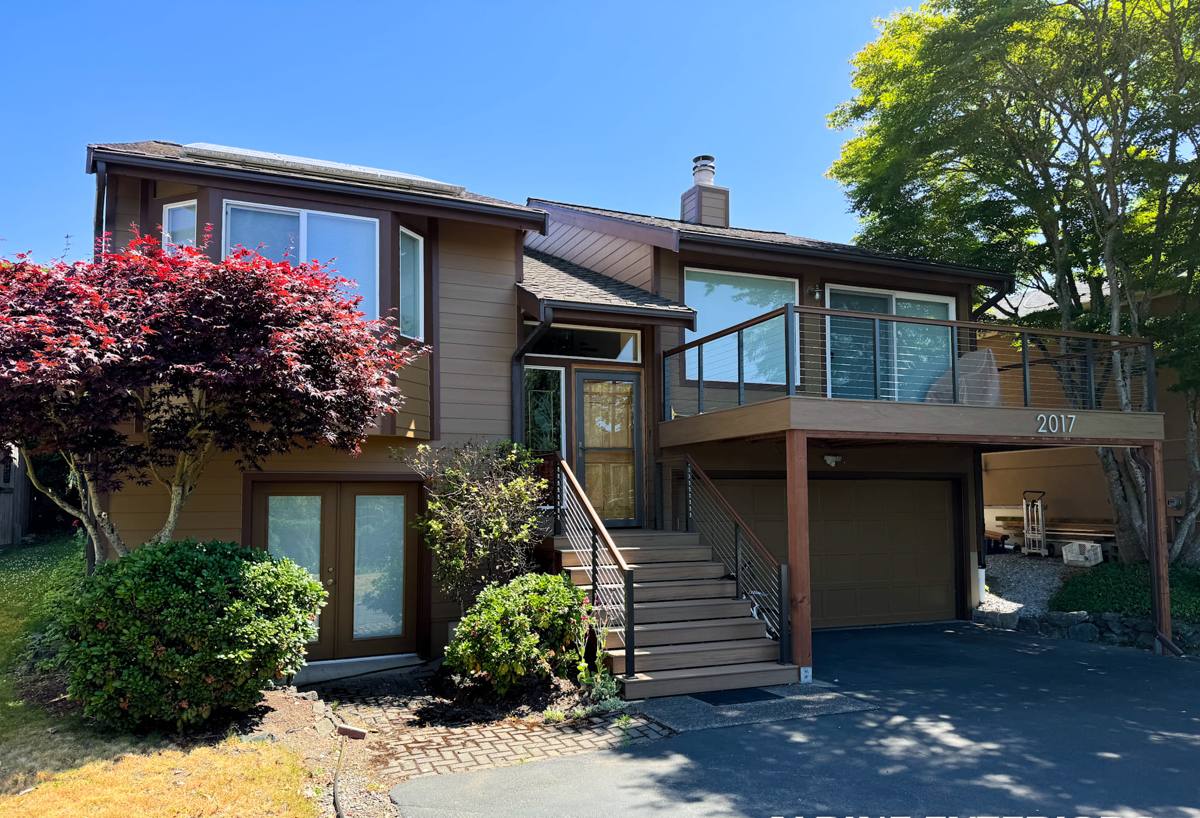
Signs a Crow Valley Roof Needs Replacement, Not Another Repair
Most roofs give warning before they fail outright. On shaded, moss-prone roofs, the warning signs are often moisture-related rather than just age-related:
- Moss established under shingle tabs, not just on the surface — this lifts shingles and lets water track underneath
- Granule loss heavy enough that you can see bare asphalt in patches
- Soft or spongy spots when walking the roof, which usually means the decking underneath has started to rot
- Daylight visible through the attic roof boards, or damp insulation below the roof deck
- Repeated leaks in the same spot, especially around valleys, chimneys, or skylights, even after patching
- Shingles that are curling, cracking, or losing their seal in a pattern that spreads year over year
When a Repair Still Makes Sense
A single damaged section, a flashing failure around one penetration, or storm damage limited to a small area is usually a repair, not a full replacement. The distinction that matters is whether the decking and underlayment are still sound. If moisture has only reached the shingles, repair can buy real time. If it's reached the wood underneath, patching the surface just hides a problem that keeps spreading.
Choosing a Roofing System for a Shaded Valley Setting
There's no single "best" roofing material for Orcas Island — the right choice depends on how much sun a particular roof gets, the pitch, and how much upkeep the homeowner wants to take on. For Crow Valley properties under heavier tree cover, moss resistance and drying time matter as much as upfront cost.
| Material | Moss/moisture resistance | Typical lifespan | Maintenance |
|---|---|---|---|
| Architectural asphalt shingle | Good with algae-resistant granules; still needs periodic moss removal in heavy shade | 25–30 years | Low to moderate |
| Standing seam metal | Excellent — sheds moisture fast, little surface for moss to grip | 40–50+ years | Low |
| Cedar shake | Attractive but holds moisture longest in shade; needs active upkeep to avoid rot | 20–30 years with upkeep | High |
We'll install any of these when it's the right fit, but our standard advice for heavily shaded Crow Valley lots leans toward asphalt with algae-resistant granules or metal. Cedar can still work on a roof that gets real sun exposure and airflow; under a tight tree canopy it simply asks for more attention than most homeowners want to give it, and moisture that gets trapped under shakes takes longer to dry than on either alternative. That's a maintenance and moisture-management trade-off, not a knock on the material itself.
What a Correct Roof Replacement Involves
A roof replacement is more than swapping old shingles for new ones. Done right, on a valley property, it includes:
- Full tear-off of the old roofing, not an overlay — an overlay traps existing moisture problems under new material
- Inspection of the decking once it's exposed, with any soft or rotted sheathing replaced before anything new goes down
- Ice-and-water shield at eaves, valleys, and around penetrations, where wind-driven rain is most likely to find a way in
- A quality synthetic underlayment across the full roof as a second line of defense
- Proper flashing at chimneys, skylights, and wall intersections — flashing failure is one of the most common causes of "mystery" leaks
- Balanced ventilation, matched intake at the eaves with exhaust at the ridge
Skipping any one of these doesn't necessarily show up right away. It shows up two or three winters later, as a soft spot or a leak that traces back to a decision made during installation.
Ventilation and Moisture Control Under Tree Cover
On a shaded roof, ventilation matters even more than it does on an open, sun-exposed one. Without enough airflow moving through the attic, moisture from inside the house condenses on the underside of the decking, and moisture from outside — driving rain, morning dew, dripping tree canopy — takes longer to evaporate off the roof surface. That combination is exactly what drives moss growth on top and slow decking rot underneath, sometimes at the same time.
A correct ventilation setup pulls fresh air in low, at the eaves, and pushes warm, moist air out high, at the ridge. If either side of that system is undersized, blocked, or missing, the roof works harder than it should to stay dry — no matter how good the shingles are. Part of any honest roof replacement quote for a Crow Valley home should include an actual look at the current ventilation, not just a material swap.
Our Roof Replacement Process
- On-site inspection — we walk the roof and the attic, not just look from the ground, and check decking condition, ventilation, and flashing points
- Written estimate — a clear scope of work and material options, with the trade-offs explained rather than a single default recommendation
- Material selection — matched to the roof's sun exposure, pitch, and how much upkeep the homeowner wants going forward
- Scheduling around weather — tear-off work is timed to avoid an open roof sitting under an incoming storm; on Orcas Island that also means planning around material delivery
- Site protection — many Crow Valley properties have gravel driveways, pastures, gardens, or livestock nearby, so staging and tarping are set up to protect the property, not just the roof
- Tear-off, decking repair, and installation — done in one continuous sequence rather than left exposed overnight when it can be avoided
- Cleanup — full debris haul-away and a magnetic sweep for stray nails and fasteners, which matters on properties with animals or bare feet in the yard
- Final walkthrough and warranty paperwork — covering both the manufacturer's material warranty and our workmanship warranty in writing
What Drives Roof Replacement Cost in Crow Valley
There's no honest flat price for a roof replacement without seeing the roof — but the factors that move the number up or down are consistent. We walk through all of these during the estimate.
| Cost factor | Why it matters |
|---|---|
| Roof size and pitch | More square footage and steeper pitches mean more material and more labor time |
| Material choice | Asphalt, metal, and cedar carry different material and installation costs |
| Number of layers to tear off | A roof with an old overlay underneath takes longer to strip than a single layer |
| Decking repair needed | Rotted sheathing found during tear-off adds material and labor not visible in a ground-level quote |
| Access and tree clearance | Long or narrow driveways, staging space, and overhanging limbs affect equipment and labor time |
| Valleys, chimneys, and skylights | Each penetration adds flashing work and detail time |
We'd rather walk a roof and give a real number than quote a range that doesn't hold up once tear-off starts. Decking condition especially can only be confirmed once the old roofing is off.
What to Ask Before Hiring a Roofer for a Crow Valley Home
- Do they carry active Washington contractor licensing and liability insurance, and can they show it?
- Will they inspect the attic and ventilation, not just the shingles, before quoting?
- Do they have experience with heavily shaded or tree-covered roofs specifically, not just island roofing in general?
- How do they handle decking repair pricing if rot is found once tear-off starts?
- What's included in cleanup — debris haul-away, magnetic nail sweep, landscaping protection?
- What does the workmanship warranty cover, separate from the manufacturer's material warranty?
- Are they familiar with getting materials and crews to a valley property with limited or gravel access?
Why a Crew That Already Works Crow Valley Matters
A roofing crew that hasn't worked Crow Valley before is guessing at things a local crew already knows: which properties have long gravel driveways that change staging plans, how tree cover changes drying time between tear-off and dry-in, and how tightly a weather window needs to be planned around Orcas Island's fall and winter storm pattern. That local knowledge doesn't show up as a line item on a quote, but it shows up in how smoothly the job actually goes — fewer surprises, less exposed roof sitting under open sky waiting on a break in the weather, and a finished roof that's actually set up for the shade and moisture it's going to sit under for the next few decades.
If your Crow Valley home is due for a roof — or you're not sure whether what you're seeing is a repair or a replacement — we're happy to take a look and walk the roof with you. The estimate is free, there's no pressure attached to it, and you'll get a straight answer either way. The form below is the easiest way to reach us.