 Orcas Island Siding
 Crow Valley's Climate Asks More of Siding Than People Expect
Crow Valley sits back from Orcas Island's open shoreline, tucked into the rolling farmland and mature timber of the island's interior. That inland setting feels calmer than a bluff-top lot facing the Strait, but it doesn't mean the siding on a Crow Valley home has an easier job than one on the water. San Juan County's marine air still works its way up the valley, tree canopy holds moisture against exterior walls longer than open, wind-swept sites do, and the region's long wet season gives moss and lichen months at a time to take hold on anything that stays damp. Add driving rain off Pacific storm systems and the freeze-thaw swings of a Pacific Northwest winter, and you have a climate that is genuinely hard on siding — just in a different way than a waterfront property faces.
We install James Hardie fiber cement siding exclusively, and we work this area on a regular basis. This page is about what that means specifically for a Crow Valley home: what the local conditions demand, what a correct Hardie installation involves, and why those details matter more here than they would in a drier climate.
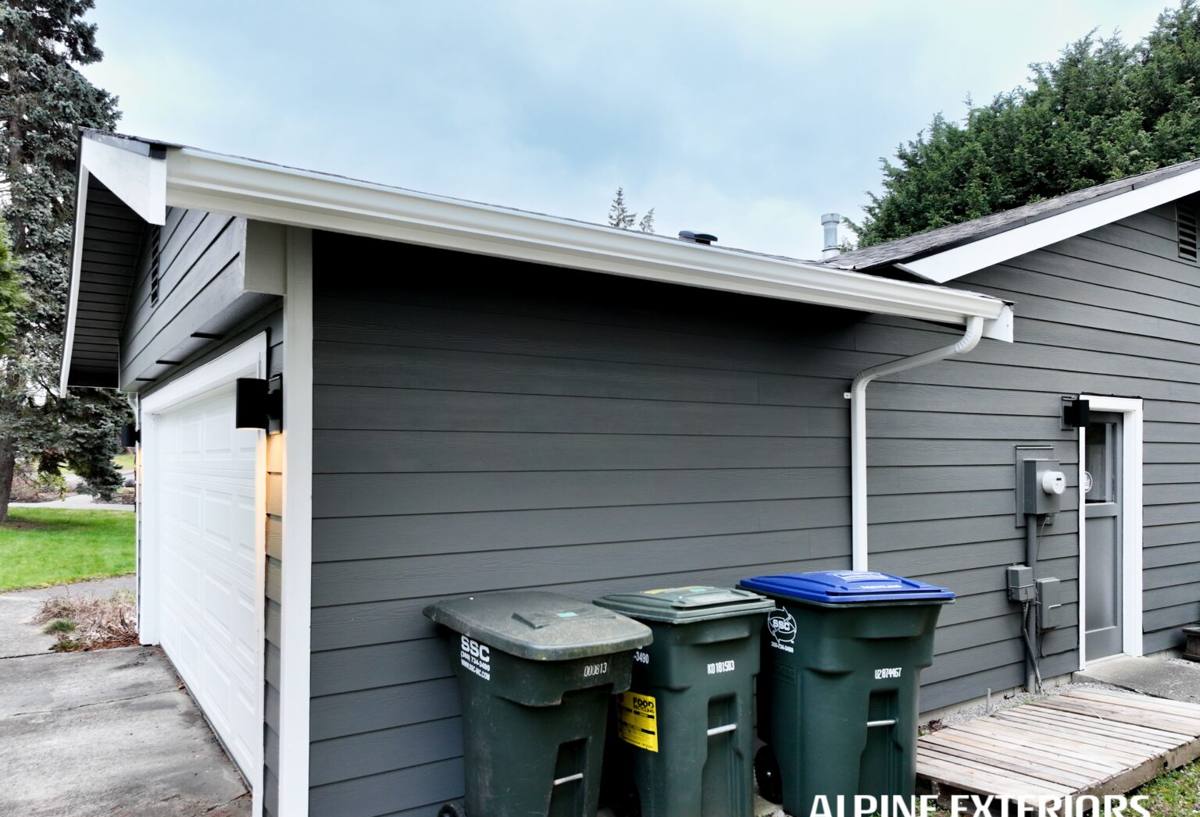
What a Shaded Valley Setting Actually Does to a House
Moss and Lichen Have Time to Work
Homes tucked under fir and cedar canopy, or bordered by fields and hedgerows, dry out more slowly after rain than homes in the open. Moss and lichen don't need saturated wood to get started — they need surfaces that stay damp for extended stretches, and shaded siding in a valley setting gives them exactly that. Left unaddressed for years, moss holds moisture directly against the siding surface, which becomes a real problem for absorbent materials and, at minimum, an ongoing cosmetic and cleaning burden for anything else.
Moisture Retention Under Tree Cover
Open, breezy sites dry between storms. Valley sites with heavier tree cover and less air movement don't dry as fast, so siding, trim, and the water-resistive barrier behind it all stay wet longer after each rain event. Over a full wet season, that adds up to meaningfully more cumulative moisture exposure than the rainfall totals alone would suggest.
Salt Air Still Reaches Inland
Crow Valley isn't beachfront, but Orcas Island is an island, and airborne salt travels with the wind well past the immediate shoreline. It's a lighter dose than a home facing open water, but it's steady, and combined with the valley's persistent dampness it still contributes to corrosion on fasteners, flashing, and any hardware that isn't rated to handle it.
Why We Standardized on James Hardie for This Climate
We made a deliberate decision to install only James Hardie fiber cement siding, and not vinyl, not engineered wood products like LP SmartSide, not cedar, and not other fiber cement brands. That's not a marketing position — it's a professional judgment about what holds up correctly, over decades, in conditions like Crow Valley's, without asking the homeowner to babysit it.
| Material | Behavior in Damp, Shaded Conditions | Maintenance Burden | Longevity Here |
|---|---|---|---|
| James Hardie fiber cement | Non-combustible, dimensionally stable, resists moisture-driven warping and rot | Occasional wash to control moss buildup; factory finish holds color | Decades when installed to spec, backed by a strong transferable warranty |
| Vinyl siding | Doesn't rot, but can warp or distort with heat and UV, and traps moisture behind it if not detailed carefully | Low, but limited repair options — panels crack and fade over time | Moderate; appearance degrades faster in coastal UV and salt exposure |
| Engineered wood (e.g. LP SmartSide) | Wood-based core is more moisture-sensitive at cut edges and joints; performance depends heavily on flawless sealing | Higher; edges and seams need ongoing inspection | Shorter in consistently damp, shaded microclimates unless perfectly maintained |
| Cedar / natural wood | Absorbs and releases moisture constantly; ideal breeding ground for moss and mildew in shade | High — refinishing, staining, and moss treatment on a recurring cycle | Shortest without aggressive, ongoing upkeep |
None of the alternatives are junk products — vinyl and engineered wood both have legitimate uses. But for a shaded, damp, salt-touched valley climate, they ask more of the homeowner in upkeep and give back less certainty in return. That trade-off is why we don't install them.
The James Hardie Product Lines That Make Sense for Crow Valley
HZ5 Engineered for This Region
James Hardie makes climate-specific HZ formulations, and the Pacific Northwest falls under their higher-moisture engineering category. That means the plank's composition is built around the reality of extended wet seasons rather than a one-size-fits-all national spec. For a valley property with reduced airflow and more shade than a waterfront lot, that engineering margin matters more, not less.
ColorPlus Factory Finish
ColorPlus is baked on at the factory under controlled conditions, rather than field-painted after installation. In a climate where field-applied paint has fewer good drying windows and moss stains show up faster on a chalky or worn finish, a factory finish that resists fading and holds its bond gives a real, measurable advantage — not just a warranty talking point.
Plank Profile and Texture Choices
HardiePlank lap siding is the most common choice for Crow Valley's mix of farmhouse and traditional island homes, available in smooth and cedar-textured finishes. Panel and shingle-style Hardie products are also options where the architecture calls for a different look, but the underlying moisture and fire performance is consistent across the system.
What a Correct Installation Actually Involves
James Hardie siding performs to its rated lifespan only when it's installed to the manufacturer's specifications — and in a climate like this one, the margin for error is smaller than it looks. A large share of the "siding problems" homeowners eventually deal with trace back not to the material, but to installation shortcuts.
- Correct fastener type, spacing, and depth per Hardie's published installation guide — not a generic nailing pattern
- Proper clearance between the bottom of the siding and grade, decks, patios, and roof lines to keep splashback and ponding water off the material
- Flashing installed at every window, door, and penetration, lapped correctly so water sheds outward rather than behind the siding
- Factory-cut edges and field cuts sealed per spec, since exposed raw edges are the most common point of moisture intrusion
- A code-compliant water-resistive barrier and, where called for, a drainage gap behind the siding so incidental moisture can escape instead of sitting against the wall
- Caulking used only where Hardie's guidelines call for it — over-caulking traps moisture just as often as under-caulking lets it in
- Touch-up done with the matched ColorPlus product, not a generic exterior paint that will weather differently and show a seam
None of this is exotic. It's disciplined, by-the-book installation — but it's also exactly the kind of detail that gets rushed on jobs where the crew doesn't work this climate regularly and doesn't feel the consequences of a shortcut until years later.
Our Process for a Crow Valley Job
Every property is different, but the sequence we follow is consistent:
- On-site assessment — we look at sun exposure, tree cover, drainage patterns, and the condition of the existing siding and sheathing before quoting anything.
- Tear-off and substrate check — old siding comes off and we inspect the sheathing and framing underneath for hidden moisture damage before anything new goes up.
- Weather barrier and flashing — this is the step that determines how the house performs for the next 30 years, and we don't shortcut it.
- Hardie installation to spec — correct fastening, clearances, and sealing as described above.
- Final detailing and cleanup — trim, caulking where appropriate, touch-up, and site cleanup.
We schedule around the wet season where we can, since a dry install window matters for sheathing and barrier work even though Hardie itself ships weather-resistant.
Keeping Moss From Coming Back After Installation
New Hardie siding starts with a clean, factory-finished surface, but a shaded Crow Valley lot will eventually see moss and organic growth again if the site conditions that caused it in the first place don't change. A few things genuinely help:
- Trimming back branches and vegetation that keep siding in constant shade or brush directly against the wall
- Periodic gentle washing (low-pressure, not a pressure washer aimed directly at seams) to remove buildup before it stains
- Keeping gutters clear so overflow doesn't run down the siding face repeatedly in one spot
- Addressing any sprinkler or irrigation overspray that hits the siding directly
This is lighter maintenance than cedar or engineered wood siding requires in the same conditions, but it isn't zero-maintenance, and we tell homeowners that plainly rather than overselling it.
What It Costs and What Drives the Number
We don't publish blanket per-square-foot pricing because the honest answer depends on the house, but these are the factors that actually move the estimate:
| Cost Factor | Why It Matters |
|---|---|
| Existing siding removal | Tear-off and disposal of old material adds labor before installation even starts |
| Sheathing or framing repair | Hidden moisture damage found during tear-off has to be fixed before new siding goes on |
| Home size and wall complexity | Dormers, multiple gables, and cut-up wall planes take more time than a simple rectangular elevation |
| Plank profile and texture selection | Smooth versus cedar-textured, and lap width, affect material cost slightly |
| Site access | Long driveways, tree cover, and staging space on a rural valley lot affect equipment and labor logistics |
| Trim and detail work | Corner boards, window trim, and fascia detailing add scope beyond the flat wall area |
We walk every property in person and give a written estimate based on what's actually there, not a phone-quote guess.
Why Hiring a Crew That Already Works Crow Valley Matters
Siding installation isn't uniform across San Juan County. A crew that mostly works dry, open sites in town can do a technically fine install and still miss the details that matter for a shaded, damp valley property — because those failure modes simply don't show up as often where they usually work. Familiarity with Crow Valley's tree cover, drainage patterns, and moss pressure means fewer surprises during tear-off, better decisions about flashing and clearances, and a finished job that's built for the conditions it will actually sit in, not a generic install that happens to be located here.
If you're weighing a siding replacement or repair on a Crow Valley property, we're happy to walk the house, look at what's there now, and give you a straightforward, no-pressure estimate for James Hardie siding done right for this climate. There's no obligation, and no sales pressure — just an honest look at what your home needs.