 Orcas Island Siding
 Decking Built for Eastsound's Marine Climate
A deck in Eastsound lives a different life than a deck fifty miles inland. Homes here sit close to salt water, catch wind-driven rain off the Sound, and often sit under a canopy of fir and cedar that keeps surfaces damp and shaded for long stretches of the year. That combination — salt exposure, sustained moisture, and low sunlight — is hard on decking materials that aren't chosen or installed with it in mind. We've built and repaired enough decks on Orcas Island to know which failure points show up first, and we design around them from the start rather than fixing them later.
This page covers what composite decking actually needs to hold up in Eastsound conditions, what a correctly built substructure and fastening system look like, and how our process works from first visit to finished deck.
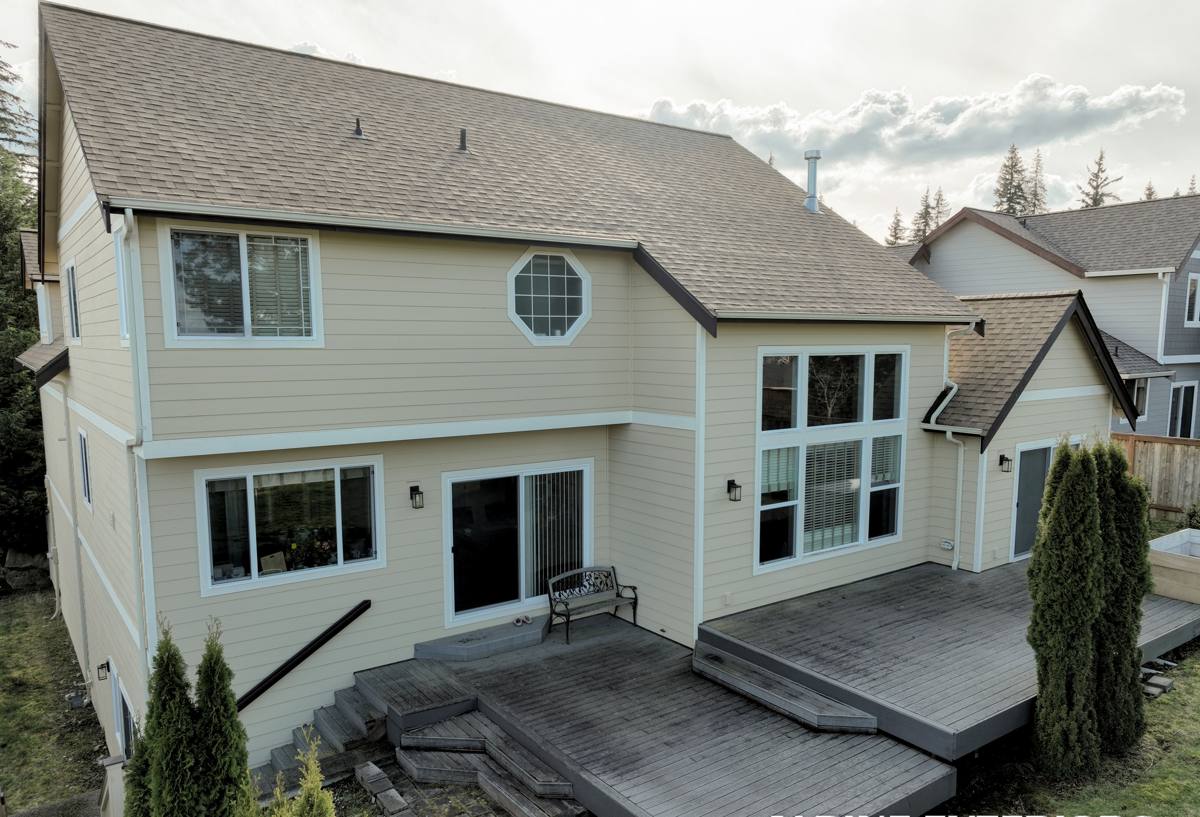
Why San Juan County Conditions Are Hard on Decks
Salt Air and Corrosion
Airborne salt from the surrounding water settles on every exterior surface, including decking hardware. Standard fasteners and brackets corrode faster here than they would inland, and once a fastener starts to rust, it can stain the board around it and weaken the connection. This is a hardware problem as much as a decking problem, and it's one that's easy to overlook if you're not used to building on the water.
Driving Rain and Standing Water
Winter storms off the Sound bring rain that comes in sideways as often as it falls straight down. Water gets pushed into gaps, seams, and under rail posts that would stay dry in a calmer climate. A deck built without real attention to drainage and slope will hold water in exactly the spots you can't see — under boards, around post bases, and in the substructure.
Shade, Moss, and Algae
Many Eastsound lots have mature tree cover, which is part of the appeal of living here but also means decks get less direct sun and dry out more slowly after rain. That extended damp period is exactly what moss and algae need to take hold. On wood decking, that moss layer traps moisture against the board and accelerates rot. On composite, it's mostly a surface and slip-hazard issue — but it still needs airflow underneath the deck to keep from becoming a long-term problem.
Why Composite Makes Sense in This Climate
Wood decking can absolutely be done well on Orcas Island, but it asks for a maintenance schedule most homeowners don't want: annual cleaning, periodic sealing, and close attention to any spot where moss or standing water develops. Composite decking removes most of that burden because the boards themselves don't absorb water, rot, or need sealing.
That doesn't mean composite is maintenance-free — no decking product installed outdoors in a wet, salty climate is. What it means is that the maintenance shifts from "protect the material from moisture" to "keep the surface clean and the substructure dry," which is a much smaller and more predictable job for a homeowner to keep up with.
What a Correct Composite Deck Installation Involves
The Substructure Comes First
Composite boards are only as good as what they're fastened to. We size joists and joist spacing to the specific board manufacturer's requirements — composite typically needs tighter joist spacing than wood decking, especially on diagonal patterns or stair treads, because the boards flex differently under load. Skipping this step is one of the most common shortcuts we see, and it shows up years later as bounce, sag, or fastener pull-through.
Fastening and Hardware
We use fasteners and hidden clip systems rated for coastal or marine exposure, not standard interior-grade hardware. In a salt-air environment, the difference between corrosion-resistant fastening and standard fastening is the difference between a deck that still looks clean in ten years and one with rust streaks and loosening boards in three.
Drainage and Airflow Underneath
The space under the deck matters as much as the surface. We grade and vent the substructure so water moves off the site instead of pooling under the framing, and we keep enough clearance for air to circulate and dry out the underside of the deck after storms. This is the detail that prevents the slow, hidden moisture damage that eventually undermines an otherwise good deck.
Post Bases and Ledger Connections
Ledger boards attached to the house and post bases at grade are the two spots most exposed to standing water and rot. We flash and isolate these connections properly so water sheds away from the house structure and away from the base of every post, rather than collecting at the one point where structural failure would be worst.
Choosing the Right Composite Board for This Environment
Not all composite decking is built the same, and the differences matter more in a salt-air, high-moisture climate than they would somewhere dry and inland.
| Board Type | How It Handles Moisture | Best Fit For |
|---|---|---|
| Uncapped composite | Wood fibers exposed on the surface can absorb moisture over time, leading to fading, staining, and surface wear | Budget-conscious projects in drier, more sheltered spots |
| Capped composite | A protective polymer shell resists moisture absorption, staining, and fading far better | Most Eastsound homes — the added upfront cost pays off in reduced maintenance |
| PVC / all-polymer decking | No wood content at all, essentially immune to moisture absorption and rot | Waterfront or heavy-shade lots with constant dampness |
We install capped composite on most Eastsound projects because it strikes the right balance between upfront cost and long-term performance in a marine climate. For lots that sit right on the water or stay shaded and damp most of the year, we'll walk through whether a fully capped or all-polymer product is worth the added cost for your specific site.
Our Process, Start to Finish
- Site visit and assessment — we look at sun exposure, tree cover, drainage patterns, and how close the deck sits to the water, since all of that affects material and structural decisions.
- Substructure evaluation — for replacement projects, we check whether the existing framing is sound or whether it needs to be rebuilt to support composite decking correctly.
- Board and hardware selection — we walk through the honest trade-offs between board tiers based on your specific lot, not a one-size-fits-all recommendation.
- Installation — proper joist spacing, corrosion-resistant fastening, graded drainage, and correctly flashed ledger and post connections.
- Final walkthrough — we go over basic care and answer questions before we consider the job done.
Living With a Composite Deck in a Moss-Prone Climate
Composite decking cuts down on maintenance dramatically compared to wood, but a deck sitting under tree cover on Orcas Island still needs some regular attention to stay clean and safe underfoot.
- Sweep off fallen needles and leaves regularly — trapped organic debris holds moisture against the board surface
- Rinse the deck periodically to keep salt residue and pollen from building up
- Clean visible moss or algae with a soft brush and a cleaner made for composite decking — avoid pressure washing at close range, which can damage the board surface
- Keep gutters and downspouts near the deck clear so runoff isn't draining directly onto or under it
- Check railing posts and stair connections once a year for any looseness
- Trim back overhanging branches where practical to improve sun exposure and airflow
Mistakes We Commonly Find on Existing Eastsound Decks
When we're called out to repair or replace a deck that's failing early, the causes are consistent: joists spaced too far apart for the composite board installed on them, standard interior fasteners used in a coastal environment, no real drainage plan under the structure, and post bases or ledger boards without proper flashing. None of these are visible from the surface when the deck is new, which is exactly why they get missed — and exactly why they matter more than the board brand printed on the warranty card.
Why Hire a Crew That Already Works Orcas Island
Building decks in San Juan County means building around ferry schedules, limited local material supply, and a climate that punishes shortcuts faster than it would on the mainland. A crew that already works Eastsound and the surrounding island knows which fastening systems hold up to the salt air here, how to plan material deliveries around the ferry, and which spots on a given lot are going to collect water or shade before the framing ever goes in. That local experience shows up in the details — the ones that determine whether a deck still looks and performs well a decade from now.
Get a Straightforward Estimate
If you're planning a new composite deck or replacing one that's showing its age, we're happy to take a look and give you an honest read on what your home and site actually need — no pressure, no upsell. Fill out the form below to request a free estimate for your Eastsound property.