 Orcas Island Siding
 Cascade Lake's Microclimate Is Tougher on Siding Than It Looks
Cascade Lake sits inside a pocket of Orcas Island where thick forest canopy, still lake air, and San Juan County's marine climate all combine on the same wall surfaces. Homes closer to the open water get more wind, which at least helps siding dry out between storms. Homes around Cascade Lake often sit under fir and cedar cover with less direct sun and airflow, so siding stays damp longer after every rain. That single difference changes what "correct" siding installation looks like here.
It's not just about picking a durable material. It's about installing it in a way that accounts for a lot that rarely dries fast, a canopy that drops needles and moss spores onto every horizontal surface, and a driving-rain pattern that finds every gap in flashing and caulk if the install wasn't done right the first time.
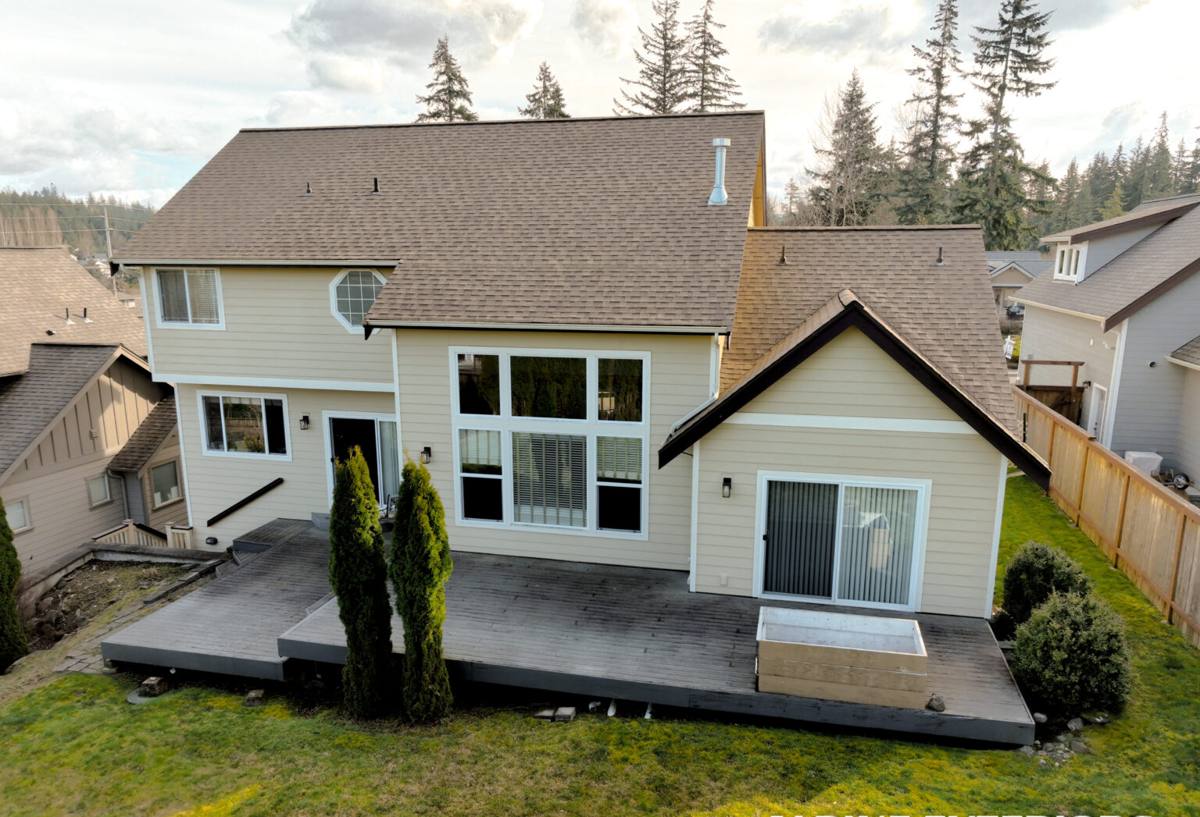
What the Climate Actually Does to a Home's Exterior
Three conditions define the Cascade Lake siding problem, and each one demands something specific from the material and the installer.
Salt Air
San Juan County sits in a marine environment, and airborne salt reaches inland further than most homeowners assume. Salt-laden moisture accelerates corrosion on fasteners, trim, and any siding product that isn't engineered to resist it — vinyl can become brittle and faded, and untreated wood trim corrodes its own fasteners from the inside out.
Driving Rain
Storms coming off the water push rain sideways, not straight down. That means water finds its way behind siding at butt joints, window and door trim, and any penetration that wasn't flashed correctly. A siding job that looks fine on a calm day can fail the first real wind-driven rain if the water management behind the surface wasn't done right.
A Long Moss Season
Shade, moisture, and organic debris from the tree canopy add up to a moss and algae season that runs most of the year around Cascade Lake. Moss holds moisture against the siding surface, which is exactly the condition that causes paint failure, substrate softening, and premature aging in materials that aren't built to shrug it off.
What a Correct Siding Installation Involves Here
A siding job is only as good as what's underneath it. Around Cascade Lake, we treat the assembly behind the surface as seriously as the finish itself.
Drainage and Ventilation Behind the Siding
A drainage plane and rainscreen gap give bulk water and trapped humidity somewhere to go instead of sitting against the back of the siding or the wall sheathing. On shaded, slow-drying lots, skipping this step is one of the most common reasons siding fails early — the wall assembly simply never gets a chance to dry out between rain events.
Flashing and Trim Details
Every window, door, deck ledger, and roof-to-wall transition is a place where driving rain will try to get behind the siding. Correct step flashing, kick-out flashing at roof lines, and properly lapped house wrap at every penetration matter more here than in a drier climate, because there's less margin for error before moisture becomes a rot problem.
Fastening and Manufacturer Specs
Fiber cement siding has to be fastened, gapped, and finished according to the manufacturer's published instructions to keep the warranty valid and to perform as designed. That means correct fastener type and spacing, proper clearance from grade and roof lines, and sealing cut edges — details that are easy to shortcut and hard to catch once the wall is closed up.
Why We Install Only James Hardie Fiber Cement
We don't install vinyl, LP SmartSide, Cemplank, Allura, primed spruce, or cedar. That's a deliberate standard, not a default, and it comes directly from what holds up on lots like the ones around Cascade Lake.
James Hardie fiber cement is non-combustible, which matters on a wooded island where wildfire risk is a real consideration for insurance and building codes alike. It's manufactured with a factory-applied ColorPlus finish that's baked on and warranted against fading and peeling, so it resists the moss-and-moisture cycle that strips field-applied paint faster in shaded, damp locations. Hardie also builds climate-specific HZ product lines engineered for moisture exposure and freeze-thaw cycling, which fits the wet-and-mild pattern this part of Washington sees.
Products like vinyl and LP SmartSide aren't necessarily poorly made — they're just built around different trade-offs. Vinyl can warp and fade under UV and doesn't stand up to fire the way fiber cement does. LP SmartSide is an engineered wood product, meaning it's more sensitive to sustained moisture exposure than fiber cement if any water management detail behind it is off. Cedar and primed spruce look great initially but require an ongoing refinishing commitment that's hard to keep up with on a shaded lot where things stay damp longer. Given the Cascade Lake climate, we'd rather stand behind one product installed correctly than offer several and hope the wrong one doesn't end up on the wrong lot.
Material Comparison for a Shaded, Damp Lot
| Material | Moisture/Moss Resistance | Fire Resistance | Ongoing Maintenance |
|---|---|---|---|
| James Hardie Fiber Cement | High — factory finish resists moss staining and paint failure | Non-combustible | Occasional rinse; no refinishing needed |
| Vinyl Siding | Moderate — can trap moisture at seams; fades with UV/salt exposure | Combustible | Low, but prone to warping/cracking over time |
| Cedar / Primed Spruce | Low to moderate — absorbs moisture, feeds moss growth | Combustible | High — regular refinishing and moss treatment required |
| LP SmartSide (Engineered Wood) | Moderate — sensitive to prolonged moisture if details fail | Combustible | Periodic inspection and touch-up recommended |
Our Process for a Cascade Lake Project
Every project starts with an on-site assessment of the home's exposure — how much canopy cover it sits under, how the roof sheds water toward the walls, and where the existing siding or trim is already showing moss, staining, or soft spots. From there:
- We remove the existing siding and inspect the sheathing and framing underneath for hidden moisture damage before anything new goes on.
- We repair or replace any compromised sheathing, trim, or framing rather than covering it up.
- We install house wrap, flashing at every penetration, and a rainscreen gap so the wall assembly can drain and breathe.
- We install James Hardie siding and trim to manufacturer specifications — correct fastener spacing, gapping, and sealed cut edges.
- We do a final walkthrough covering caulking, touch-up, and how the finished assembly manages water around windows, doors, and roof lines.
Because much of Orcas Island runs on ferry schedules, material staging and delivery timing get planned as part of the project schedule up front, not worked around after the fact. That planning is part of why timelines here look a little different than a mainland job, and it's something we account for before we ever give you a start date.
A Maintenance Checklist for Homes Near Cascade Lake
Even correctly installed Hardie siding benefits from a bit of seasonal attention on a lot like this. A short list goes a long way:
- Rinse siding once or twice a year to clear moss spores, pollen, and tree debris before they take hold
- Keep gutters clear of needles and leaves so overflow doesn't run down the siding face
- Trim back branches and vegetation that touch or overhang the siding directly
- Check caulking at trim, windows, and doors annually for cracking or separation
- Inspect low, shaded sections of the wall each fall, since they hold moisture longest
- Address any soft trim or staining early — small moisture issues are far cheaper to fix than the rot they turn into
Why It Matters to Hire a Crew That Already Works This Area
Siding installation on Orcas Island isn't the same logistical job as siding installation on the mainland. Material deliveries have to work around ferry schedules, weather windows are shorter and less predictable, and San Juan County permitting and inspection scheduling have their own rhythm. A crew that already works Cascade Lake and the rest of the island has already solved those logistics — the project timeline you're quoted actually accounts for how work really gets done here, instead of assuming mainland conditions and slipping once reality sets in.
Just as important is familiarity with how this specific microclimate behaves. A crew that's only worked drier, sunnier sites may not flash a roof-to-wall transition or plan a drainage gap the same way a crew that's seen what shaded, damp lots around this lake actually do to siding over time.
If you're weighing a siding project on or near Cascade Lake, we're happy to walk the property, look at what your current siding and trim are telling us, and put together a straightforward, no-pressure estimate for a James Hardie installation built for this exact climate.