 Orcas Island Siding
 Board & Batten in Doe Bay: A Style That Has to Earn Its Keep
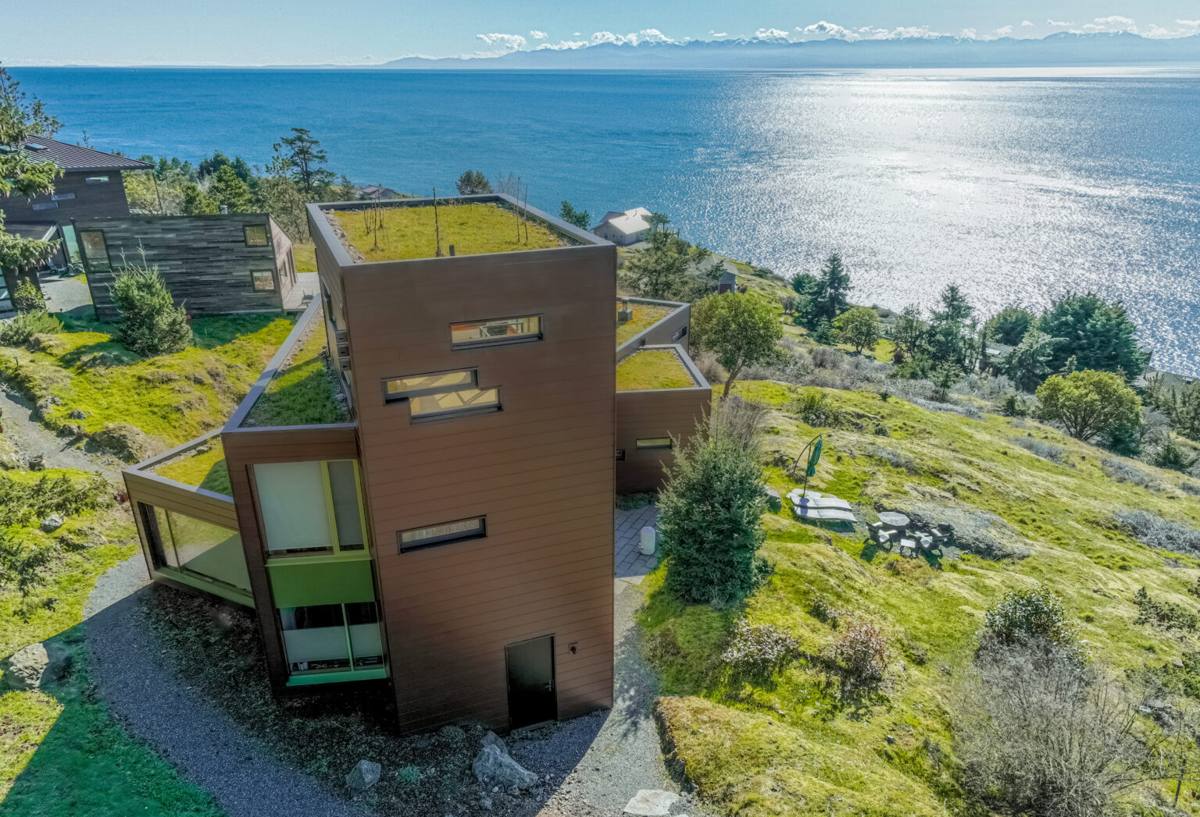
Doe Bay sits on the exposed eastern side of Orcas Island, where cabins, cottages, and newer builds alike lean toward a vertical board and batten look — clean lines, a cabin-in-the-woods feel, and a profile that reads well against the trees and water. It's a good-looking siding choice for this part of San Juan County. But board and batten is also a style that punishes shortcuts more than most, and Doe Bay's weather is not a forgiving place to find that out after the fact.
This page is about doing board and batten siding correctly for a Doe Bay home — what the climate demands of it, how it should be built, and why we only install it in James Hardie fiber cement rather than the wood or engineered-wood versions many homeowners initially picture when they think "board and batten."
What Orcas Island's Climate Actually Does to Vertical Siding
Doe Bay gets the full package: salt-laden air off the water, driving rain that comes in sideways during winter storms, and a long stretch of the year — often five or six months — where shade, moisture, and mild temperatures combine to make moss and algae growth almost a given on north- and east-facing walls. Board and batten siding is more exposed to these forces than horizontal lap siding in a few specific ways.
Vertical Joints Collect Water Differently
Every seam between a board and its neighboring batten is a place water can sit, wick, or find its way behind the cladding if the install isn't detailed correctly. On horizontal lap siding, gravity does some of the work shedding water downward off each course. On board and batten, water runs down the face and along vertical joints, so the fastening pattern, caulking strategy, and the gap behind the battens matter more, not less.
Salt Air Accelerates Fastener and Finish Failure
Being close to the water means airborne salt settles on every exterior surface. Over years, that accelerates corrosion in fasteners and trim hardware that aren't rated for it, and it breaks down paint finishes faster than they'd fail even a few miles inland. A siding product with a factory-applied, marine-durable finish holds up here in a way that field-painted wood struggles to match.
Moss Season Is Long and It's Not Just Cosmetic
Moss and algae aren't only an appearance problem. Where they take hold, they hold moisture against the siding surface for extended periods, which is exactly the condition that causes wood-based products to swell, cup, or rot at the edges. A siding material that doesn't feed moisture into its own substrate handles a Doe Bay moss season far better than one that does.
What a Correct Board & Batten Job Actually Involves
Board and batten is a layered assembly, not just boards nailed to a wall. Done right, a Doe Bay installation includes:
- A continuous water-resistive barrier (house wrap or equivalent) installed and lapped correctly, with all penetrations flashed before any siding goes up
- A rainscreen gap — vertical furring strips that hold the siding off the wall assembly so water that does get behind the cladding can drain and air can dry the cavity
- Properly sized and spaced fasteners driven into framing, not just into sheathing, using fasteners rated for the coastal exposure
- Batten placement and reveal that's consistent across every elevation, including around windows, doors, and corners
- Correct flashing and kickout details at every roof-wall intersection, deck ledger, and window head — the majority of siding failures we see start at these transition points, not in the field of the wall
- Factory-finished boards and battens wherever possible, minimizing field-cut edges left unsealed
Skip any one of these steps and the siding can still look right for a year or two. In Doe Bay's climate, the gaps show up as swelling, staining, or soft spots well before they would somewhere drier — usually first at the bottom courses and around windows, where wind-driven rain concentrates.
Why We Only Install This in James Hardie Fiber Cement
Board and batten can be built out of real wood, engineered wood (like LP SmartSide), vinyl, or fiber cement. We've made a deliberate decision to install James Hardie fiber cement exclusively, and it's worth explaining honestly why — including what the other options get right.
Real Wood: Beautiful, but Honest About Its Upkeep
Cedar and other real-wood board and batten can look excellent, and there's nothing dishonest about that appeal. The trade-off is maintenance: wood needs refinishing on a recurring cycle, and in a marine, moss-prone climate like Doe Bay's, that cycle tends to arrive sooner than homeowners expect. Skipped maintenance windows are where wood siding gets into trouble — cupping, checking, and moisture intrusion at joints and fastener holes.
Engineered Wood: Good Product, Wrong Climate Match for This Job
Engineered wood siding (OSB-based products like LP SmartSide) resists some of the drawbacks of solid wood, but it's still a wood-fiber product at its core, meaning its long-term performance depends heavily on edges and cut ends staying sealed. In a location with as much sustained moisture exposure as Doe Bay, we're not comfortable being the crew that installs a product whose failure mode is edge swelling in exactly the conditions this site provides in abundance.
Vinyl: Wrong Look and Wrong Physics for This Profile
Vinyl board and batten exists, but it telegraphs its plastic origin more obviously in a vertical, high-contrast profile than it does in lap siding, and it doesn't hold up to direct, sustained salt air exposure as well as a factory-finished fiber cement product. It's also not what most Doe Bay homeowners are picturing when they ask for board and batten in the first place.
Why James Hardie
James Hardie fiber cement is non-combustible, dimensionally stable, and doesn't feed moisture into a wood-based substrate — there isn't one. Its ColorPlus factory finish is baked on under controlled conditions and resists fading and chipping far better than field-applied paint, which matters directly against Doe Bay's salt air. Hardie also engineers its product formulations by climate zone; the HZ5 formulation used in the Pacific Northwest is built specifically for regions with sustained moisture rather than deep freeze-thaw cycles, which is a closer match to Orcas Island's marine climate than a one-size-fits-all product. Backed by a strong transferable warranty, it's what we're willing to put our name behind on this stretch of coastline.
Comparing Board & Batten Material Options for a Doe Bay Home
| Material | Salt Air / Moisture Resistance | Maintenance Cycle | Typical Lifespan (well-installed) |
|---|---|---|---|
| Solid cedar / wood | Moderate — depends entirely on finish upkeep | Refinish every 3-7 years | 15-25 years before major refinishing needed |
| Engineered wood (LP SmartSide, etc.) | Moderate — vulnerable at cut edges and joints | Repaint/reseal edges periodically | 20-30 years, edge-dependent |
| Vinyl | Fair — doesn't rot, but can fade and become brittle | Low, but limited repair options if damaged | 20-30 years |
| James Hardie fiber cement (ColorPlus) | Strong — non-combustible, doesn't swell or rot | Occasional wash; no refinishing cycle | 30+ years to spec |
These are general ranges, not guarantees — actual performance always depends on installation quality, exposure, and upkeep. But the pattern holds across coastal San Juan County: products that don't depend on a maintained finish or a wood substrate simply ask less of the homeowner over time.
Our Process for Doe Bay Installations
Because Doe Bay's homes range from older cabins to newer builds, we start every project with a walk of the specific elevations that take the worst weather — usually the water-facing and north sides — and check the existing wall assembly before we ever price the job. From there, our process is:
- On-site assessment of existing siding, sheathing, and any moisture damage already present, especially around windows and roof-wall intersections
- Confirming or installing a proper water-resistive barrier and rainscreen gap before any Hardie product goes up
- Installing James Hardie boards and battens with correct fastener spacing, flashing, and factory-finished ColorPlus color selected for the home
- Detailing every transition point — window heads, deck ledgers, roof intersections — since these are where board and batten installs most commonly fail
- A final walkthrough with the homeowner covering what was done and what to expect over the coming seasons
Keeping Board & Batten Siding Healthy in This Climate
Once it's installed correctly, James Hardie board and batten in Doe Bay needs very little — but "very little" isn't "nothing." A short seasonal checklist:
- Rinse siding periodically, especially shaded or north-facing walls where moss and algae take hold fastest
- Keep gutters clear so water isn't overflowing directly onto siding runs below
- Trim back vegetation and tree cover that keeps a wall damp and shaded for extended periods
- Watch caulking at trim and window joints for cracking or separation, and have it addressed before a wet season, not during one
- After major storms, glance over water-facing elevations for anything visibly loose or displaced
Why Local Experience on Orcas Island Matters Here
Doe Bay's exposure isn't identical to the more sheltered west side of Orcas Island, and it's not the same as inland San Juan County either — the amount of direct salt spray, wind-driven rain, and shaded moisture retention varies noticeably even within a few miles. A crew that already works this specific stretch of the island knows which elevations need extra attention before they ever pull a tape measure, rather than treating every Orcas Island home identically. That local knowledge shows up in flashing decisions, fastener choices, and where we spend extra time during the install — not in anything a homeowner would necessarily think to ask about up front.
If you're weighing board and batten siding for a home in Doe Bay, we're happy to take a look and walk you through what your specific site needs — no pressure, no obligation. Use the form below to request a free estimate.