 Orcas Island Siding
 Storm Damage Roof Repair Built for the West Sound Side of Orcas Island
Homes on the West Sound side of Orcas Island sit in a different weather pattern than most people picture when they think of a "storm." There's rarely hail, and heavy snow loads are uncommon. What West Sound roofs actually deal with, year after year, is a steady combination of wind funneling through the straits, driving rain that comes in sideways off the water, salt-laden air working on every metal component, and a long, damp moss season that never fully lets a roof dry out. None of those on their own looks dramatic. Together, over a few seasons, they're what turns a small flashing leak into a rotted deck, or a handful of lifted shingles into a full tear-off.
This page is about one thing: storm damage roof repair for homes in and around West Sound, on Orcas Island, San Juan County. Not a general roofing overview — specifically what happens after wind, rain, or falling debris damages a roof, how we assess it, and how we fix it so it holds up to the next storm instead of just the next dry spell.
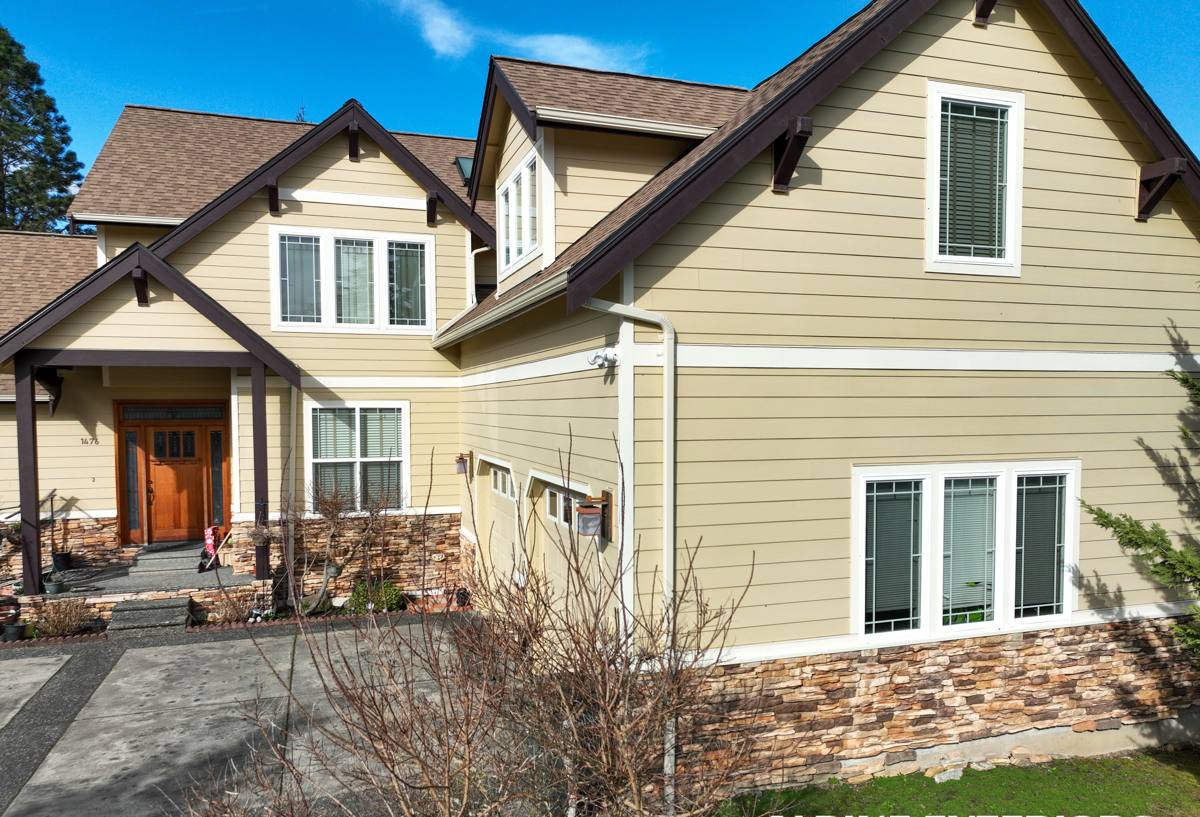
What Actually Damages Roofs in West Sound
Wind and Gusts Off the Water
Orcas Island sits in a channel system that can accelerate wind rather than block it. Homes with clear exposure toward the water often see gusts strong enough to lift shingle tabs, peel back ridge caps, or work fasteners loose on metal panels — even when the storm itself wasn't especially severe by mainland standards. Wind damage is sneaky because it often starts as a few loose or missing shingles that aren't obvious from the ground, and the real problem shows up weeks later as a leak.
Driving, Wind-Driven Rain
San Juan County gets plenty of rain, but the damaging kind for roofs isn't the steady drizzle — it's rain pushed sideways by wind during a front. That kind of rain finds its way under shingle tabs, around chimney and skylight flashing, and into valleys that were fine in normal conditions. If a roof already has a small gap or aging flashing, wind-driven rain is what turns it into an active leak.
Fallen Limbs and Debris
Much of West Sound is wooded — fir, cedar, and madrone crowd right up to rooflines on a lot of properties. Windstorms bring down limbs, and even small branch strikes can crack shingles, dent metal roofing, or puncture underlayment in ways that aren't visible from the ground but let water in during the next rain.
Moss and Prolonged Moisture
This one isn't a single storm event, but it's tied to the same climate. Shaded, damp roof sections that stay wet for days after a storm are exactly where moss takes hold. Moss holds moisture against the roofing material, lifts shingle edges, and works its way under laps over time. A roof that's already stressed by moss is far more vulnerable when the next windstorm or heavy rain event hits.
Salt Air and Corrosion
Waterfront and near-waterfront homes deal with a slow, constant factor: salt in the air corroding exposed fasteners, flashing, and metal roofing edges faster than it would inland. A fastener that's corroded and weak is a fastener that lets go in the next windstorm — so salt exposure and storm damage are connected, not separate issues.
What Counts as Storm Damage (and What Doesn't)
Homeowners sometimes assume "storm damage" means something dramatic and obvious — a hole, a collapsed section, shingles scattered across the yard. Often it's much more subtle, and that's exactly why it needs a trained eye rather than a glance from the driveway.
- Likely storm damage: lifted or creased shingle tabs, missing ridge cap pieces, bent or lifted metal panel edges, cracked or displaced flashing around chimneys and skylights, granule loss concentrated on one slope (usually the windward side), fresh water stains on ceilings after a storm.
- Usually a separate, older issue: widespread moss and moisture damage that built up over years, worn-out underlayment near the end of its service life, chronic condensation from poor attic ventilation. These matter for the repair plan, but they aren't "storm damage" in the insurance sense — they're maintenance and age, and it's important we're honest with you about which is which.
We tell homeowners upfront when something is wear-and-tear rather than storm-caused. It affects both the repair approach and, often, whether it's worth filing an insurance claim.
Our Storm Damage Repair Process
- Immediate assessment and safety check. If there's an active leak or exposed decking, our first priority is stopping water intrusion — not selling you a full job. That can mean temporary tarping or sealing before we even talk about permanent repairs.
- Full roof inspection, not just the obvious spot. Wind and debris damage rarely stays in one place. We walk the whole roof — every slope, every valley, every penetration — because the leak you can see is often not the only damage the storm caused.
- Documentation. We photograph and note the damage in enough detail to support an insurance claim if you're filing one, including close-ups of lifted shingles, damaged flashing, or debris impact points.
- A clear repair plan and honest scope. We tell you what needs to be fixed now, what can reasonably wait, and what we'd flag as a future risk — in plain terms, before any work starts.
- The repair itself. Matching materials as closely as possible, replacing (not just resealing) damaged sections, and correcting any underlying flashing or underlayment issues that made the roof vulnerable in the first place.
- Final check for related weak points. Since one storm often exposes more than one problem, we do a final pass looking for anything else likely to fail in the next event.
Repair or Replace? How We Make That Call
Not every storm-damaged roof needs to come off. But pretending a roof near the end of its life just needs "a patch" isn't honest either. We weigh a few factors before recommending either path:
| Factor | Leans Toward Repair | Leans Toward Replacement |
|---|---|---|
| Extent of damage | Isolated to one slope or section | Spread across multiple slopes or the whole roof |
| Roof age | Well within expected service life | Already near the end of its lifespan |
| Underlying deck condition | Solid, dry sheathing | Soft, stained, or rotted decking found on inspection |
| Moss/moisture history | Minor, surface-level growth | Long-term moss damage already compromising shingles |
| Material match availability | Matching shingles or panels are available | Discontinued material forces a mismatched patch |
When a roof is on the borderline, we'd rather walk you through the trade-offs honestly than push the bigger job. A well-executed repair on a sound roof can add years of service; a repair on a roof that's already failing underneath is usually money spent twice.
Materials and Details That Actually Matter Here
A storm repair that ignores the local climate just fails again sooner. A few details we treat as non-negotiable on West Sound homes:
- Corrosion-resistant fasteners and flashing. Standard fasteners degrade faster this close to salt water. We use materials rated for coastal exposure wherever the roof faces the water or gets regular salt spray.
- Ice-and-water shield at vulnerable points. This self-adhering underlayment goes in valleys, around chimneys and skylights, and along eaves — the exact spots where wind-driven rain gets pushed under shingles. It's cheap insurance against the specific way this island's storms attack a roof.
- Proper flashing details, not just sealant. A bead of caulk over a flashing gap is a temporary fix, not a repair. Correct flashing geometry sheds water regardless of wind direction; sealant alone eventually fails.
- Attic and roof ventilation. Poor ventilation traps moisture, which feeds moss and shortens shingle life. Part of a proper storm repair is checking that ventilation isn't working against the new materials.
- Moss-conscious material choices. Where practical, zinc or copper strips and shingle products with algae/moss resistance make sense on shaded West Sound roofs — not as a guarantee against moss, but as one more layer of defense given how long this climate stays damp.
A Note on Cedar Shake and Older Roofing
Older West Sound homes sometimes still have cedar shake roofs, which were common on the island for years. Cedar can be repaired after storm damage, but it demands more moisture-management skill than asphalt or metal — improper repairs trap moisture under shakes and accelerate rot. If you have a cedar roof, we'll be direct with you about what a proper repair involves and what the realistic maintenance burden looks like going forward, rather than just patching it and moving on.
Working With Your Insurance Company
Most homeowners' policies cover sudden storm damage — wind, falling limbs, wind-driven rain intrusion — but they generally don't cover gradual deterioration like long-term moss damage or an old roof simply wearing out. That distinction matters for your claim, and we won't tell you something is storm damage if it isn't just to make a claim easier.
What we can do is give you clear, dated documentation of the actual storm-caused damage, in language and photos that hold up during the claims process. We're not your insurance adjuster and won't pretend to be, but a well-documented roof inspection makes that conversation with your carrier a lot smoother.
Why West Sound Homeowners Trust a Crew That Already Works This Island
Storm damage repair on Orcas Island isn't quite the same job as it is on the mainland, and it's worth being upfront about why:
- Ferry-dependent logistics. Materials and crews moving to and from the island run on ferry schedules, not same-day mainland delivery. A contractor who works here regularly plans around that; one who doesn't will leave you waiting longer than they quoted, especially right after a storm when everyone on the island needs a roofer at once.
- Familiarity with island roof styles. Steep, complex rooflines, cedar shake, and older original roofing are common here. A crew that mostly works subdivision tract roofs elsewhere isn't necessarily set up to handle what's actually on West Sound homes.
- Understanding of the microclimate. Which slopes hold moss, which exposures take the worst wind, where salt air does the most damage — that's knowledge built from working this specific area repeatedly, not something you get from a single visit.
- Faster response after island-wide storms. When a windstorm hits the San Juans, every roofer on the island gets busy at once. Being an established, responsive presence here — rather than a crew that has to catch a ferry over — matters when you've got an active leak.
Post-Storm Roof Inspection Checklist
After any significant wind or rain event, it's worth doing a basic visual check from the ground before calling for an inspection. Look for:
- Shingles or shake pieces in the yard or gutters
- Visibly lifted, curled, or missing shingle tabs
- Dented, bent, or lifted metal roofing or flashing
- Fresh water stains or drips on ceilings, especially near chimneys, skylights, or valleys
- Sagging or uneven roof sections
- Debris or broken limbs resting on the roof
- Gutters pulling away from the fascia or clogged with granules and debris
If you notice any of these, avoid getting on the roof yourself — wet, mossy, or storm-damaged roofing is not safe to walk, especially on the steeper pitches common here. Call for an inspection instead.
Get a Free, No-Pressure Estimate
If a recent storm has you wondering whether your roof took damage, or you've already spotted a leak, we're glad to come take a look. The estimate is free, there's no pressure to move forward, and we'll tell you plainly whether you're looking at a straightforward repair, a bigger issue, or nothing urgent at all. Use the form below to get started.