 Orcas Island Siding
 Building Decks for Lopez Village's Marine Climate
A deck in Lopez Village works harder than a deck almost anywhere inland. It sits exposed to salt-laden air coming off the water, takes on driving rain for a good chunk of the year, and spends the shoulder seasons shaded and damp enough to grow moss on anything that holds moisture. A deck built with mainland assumptions — the wrong fastener, a skipped flashing detail, decking that traps water against the frame — will show problems within a few seasons instead of a couple decades. A deck built for this specific environment won't.
This page is about one thing: building or replacing a custom deck for a home in Lopez Village, on the water side of San Juan County, where the climate has its own rules. We're not going to give you a generic list of deck styles. We're going to walk through what actually holds up out here, what a correct build looks like underneath the boards, and how we handle the practical side of working on an island.
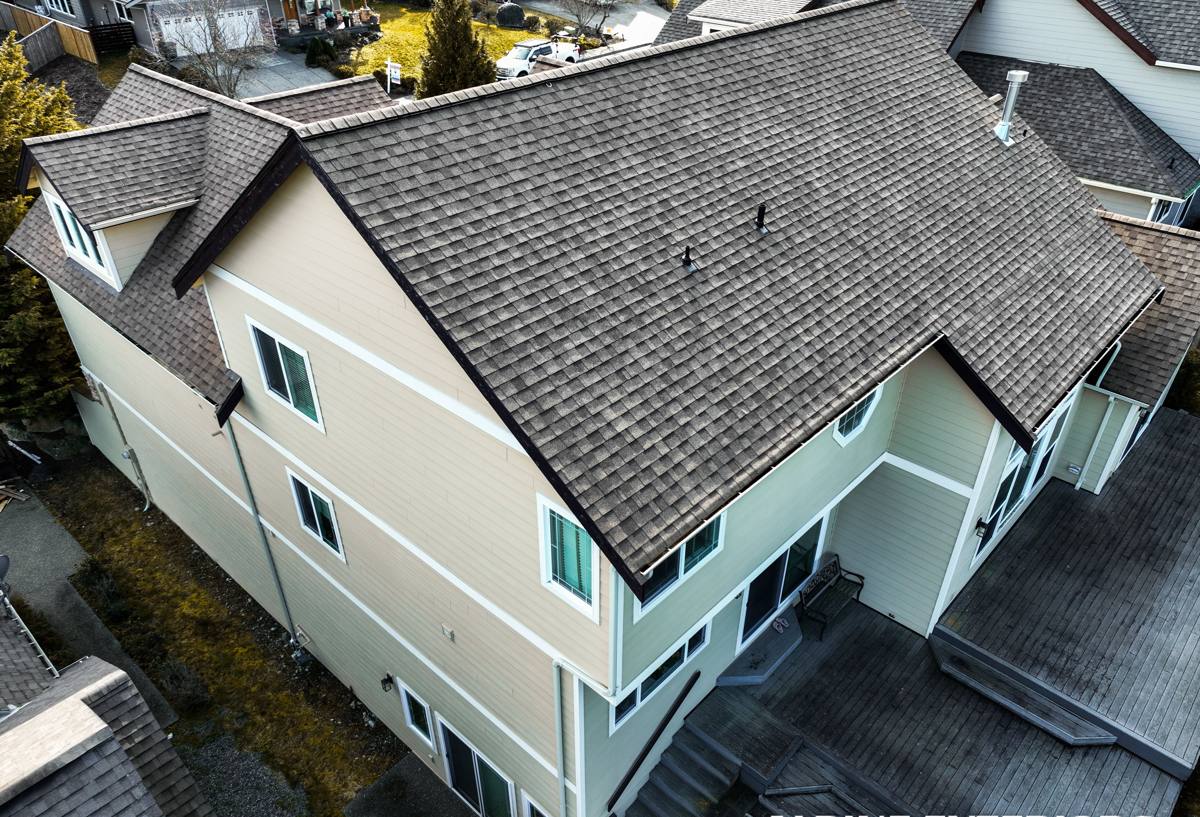
What Salt Air, Rain, and Moss Actually Do to a Deck
Three separate forces are working against an island deck at the same time, and they don't act the same way a straightforward rainstorm does inland.
Salt air and corrosion
Airborne salt accelerates corrosion on anything metal — fasteners, joist hangers, structural screws, railing brackets. A fastener rated for general residential use inland can start rusting and staining the wood around it within a couple of years this close to the water. Once a fastener starts to corrode, it loses holding strength exactly where you need it most: the connections that keep a deck attached to the house and the ground.
Driving rain and water intrusion
Rain here doesn't just fall — wind often drives it sideways and up under railings, fascia, and ledger boards. Any gap in flashing or any spot where water can sit against wood instead of running off becomes a rot starting point. This matters most where the deck attaches to the house (the ledger board) and anywhere two pieces of decking or framing meet.
Moss, algae, and shade
San Juan County's tree cover and marine humidity give moss and algae exactly what they need: shade, moisture, and organic surfaces to grow on. Moss holds water against decking longer than the surface would otherwise stay wet, which speeds up rot in wood decking and can make composite and even some capped products slick and slower to dry. It also finds gaps between deck boards and structural connections that are hard to see from the top.
Choosing the Right Decking Material
There's no single "best" decking material for every home — it depends on how much maintenance you want to do, your budget, and how close the deck sits to the water. Here's how the common options actually compare for a Lopez Village property.
| Material | Moisture & Moss Behavior | Maintenance | Typical Lifespan Here |
|---|---|---|---|
| Pressure-treated wood | Absorbs water, needs to fully dry between rain events; moss grows readily if shaded | Annual cleaning and re-sealing recommended | 10-15 years with upkeep |
| Cedar | Naturally rot-resistant, but still absorbs moisture; moss can take hold if not cleaned | Periodic cleaning and oil or stain every 2-3 years | 15-20 years with upkeep |
| Composite (capped) | Doesn't absorb water into the core; surface can still host algae film if shaded and damp | Occasional wash-down, no staining or sealing | 25-30 years |
| Tropical hardwood (e.g., ipe) | Very dense, naturally moisture- and rot-resistant | Periodic oiling to maintain color, otherwise low | 25+ years |
For homes closest to the water, we lean toward capped composite or a dense hardwood, simply because they don't give moisture a way into the material itself. For homes set back with more sun exposure, a well-maintained cedar deck is still a great, honest choice — it just needs an owner willing to keep up with cleaning and refinishing on schedule.
Our standard on cheap composites
Not all composite decking is built the same. Older, uncapped composite boards can absorb moisture at the surface and are prone to mold staining and swelling in a climate this wet. Our standard is to spec fully-capped composite or PVC products with a manufacturer warranty that explicitly covers moisture and mold performance — not because every uncapped product will fail, but because it's the wrong trade-off for this specific climate and we'd rather spend the extra material cost up front than have a client dealing with a soft, stained deck in five years.
What's Underneath Matters More Than What's On Top
Most deck problems we get called out to inspect aren't decking problems — they're framing, flashing, or fastener problems that eventually show up as decking problems. This is the part of the job that doesn't show in photos but determines whether the deck lasts 10 years or 30.
Ledger flashing
The ledger board — where the deck bolts to the house — is the single most common failure point on any deck, anywhere, and it's worse in a climate with driving rain. Correct flashing means a metal or high-quality membrane flashing that directs water away from the house band board, installed in the right layered order with the house's existing water-resistive barrier, not caulked over as an afterthought.
Fasteners and hardware
Given the salt air, we use stainless steel or heavy hot-dip galvanized fasteners and connectors rated for coastal exposure, not the standard-grade hardware that's fine 50 miles inland. This applies to structural screws, joist hangers, post bases, and railing hardware alike.
Joist protection
Wrapping the tops of joists and beams with a waterproof flashing tape keeps rain from soaking into end grain and screw holes — the two spots where wood framing rots first. It's inexpensive relative to the whole project and it's one of the details that separates a deck that ages well from one that doesn't.
Footings on island lots
San Juan County's terrain is often rocky, sloped, or thin-soiled, which changes how footings need to be engineered compared to a flat mainland lot. We evaluate the actual soil and slope conditions on site rather than assuming a standard footing depth will work, and we size posts and footings to the deck's real height and span rather than the minimum.
Railings, Stairs, and Permitting in San Juan County
Most decks built above a certain height need a code-compliant guardrail, and most jurisdictions — San Juan County included — base their requirements on the same baseline structural and safety standards used across the state. That generally means guardrail height, baluster spacing, and stair rail requirements that are non-negotiable once a deck crosses the height threshold that triggers them.
Deck projects in the county typically require a building permit, and depending on size, height, and location relative to shoreline setbacks, may also involve additional review. We handle the permit application and inspection scheduling as part of the job rather than leaving it for the homeowner to sort out — it's one less thing to manage, and it protects you if the home is ever sold and a buyer's inspector checks for permitted work.
How We Approach a Lopez Village Deck Project
- On-site assessment. We look at sun exposure, prevailing wind and rain direction, existing drainage, and soil/slope conditions before recommending materials or a footing plan.
- Design and material selection. We walk through decking, railing, and hardware options with honest trade-offs for your specific site and budget — not a one-size-fits-all package.
- Permitting. We prepare and submit the permit application to San Juan County and schedule required inspections.
- Demolition and framing. Old decking and any compromised framing come out; new framing goes in with coastal-rated fasteners, ledger flashing, and joist protection as standard, not upgrades.
- Decking, railing, and finish work. Boards, railings, stairs, and trim are installed and finished per manufacturer specification.
- Final walkthrough. We go over the finished deck together, including a plain-language rundown of what maintenance it will need and when.
Getting Materials to Lopez Village
Building on an island adds a logistics layer that mainland contractors often underestimate. Lumber, composite decking, and hardware have to be staged and moved on Washington State Ferries schedules, which means material orders and delivery windows get planned further in advance than a typical mainland job. Weather can also push a ferry crossing, which is worth building into the schedule rather than treating as a surprise mid-project.
Because we already work regularly in the San Juan Islands, we plan material logistics as part of the estimate — timing orders, batching deliveries, and sequencing the work so a missed ferry slot doesn't leave a crew standing around waiting on lumber.
Living With a New Deck Through Moss Season
Even a well-built deck needs some seasonal attention in this climate — the difference is that a correctly built deck needs maintenance, not repair. A short, honest checklist:
- Sweep debris and needles off the deck surface regularly, especially in fall — trapped organic matter is what feeds moss growth
- Rinse or lightly scrub composite and hardwood decking once or twice a year to remove surface algae film before it takes hold
- Clean and re-oil or re-stain wood decking on the schedule the product calls for — skipping a cycle lets moisture back into the wood
- Check that gaps between boards stay clear so water can drain through rather than pooling
- Inspect railing connections and any visible hardware once a year for early rust staining, which signals it's time for a closer look
- Keep gutters and downspouts near the deck clear so roof runoff isn't dumping extra water onto the structure
Why It Matters to Hire a Crew That Already Works Lopez Village
A deck built to a generic spec sheet will pass a first inspection just fine — the problems show up two, five, or ten winters later, after the driving rain and salt air have had time to find every shortcut. Hiring a crew that already builds and repairs decks in the San Juan Islands means the ledger flashing, fastener grade, and footing approach are already dialed in for this exact climate, not adapted from mainland habits after the fact. It also means the material logistics and permitting process aren't being figured out for the first time on your project.
If you're planning a new deck or need to replace one that's showing its age in Lopez Village, we're happy to come take a look and talk through honest options for your site. There's no pressure and no obligation — just fill out the form below to request a free estimate.