 Orcas Island Siding
 West Beach's Exposure Is Different Than Most of Orcas Island
West Beach sits on the exposed western side of Orcas Island, facing open water with little to break the wind coming off the strait. That orientation means homes here take a different kind of beating than a house tucked into an interior cove or shaded inland lot. Salt-laden air rides in on the prevailing westerlies, driving rain hits siding almost horizontally during winter storms, and the combination of moisture and shade from the surrounding evergreens keeps moss and algae growing for most of the year. Siding that would hold up fine on a sheltered lot in Eastsound can fail early out here.
When we replace siding on a West Beach home, we're not just swapping old material for new. We're accounting for wind-driven water intrusion at every seam, salt exposure on fasteners and trim, and the reality that a north- or west-facing wall may never fully dry out between storms. That changes how we flash, how we fasten, and what we install.
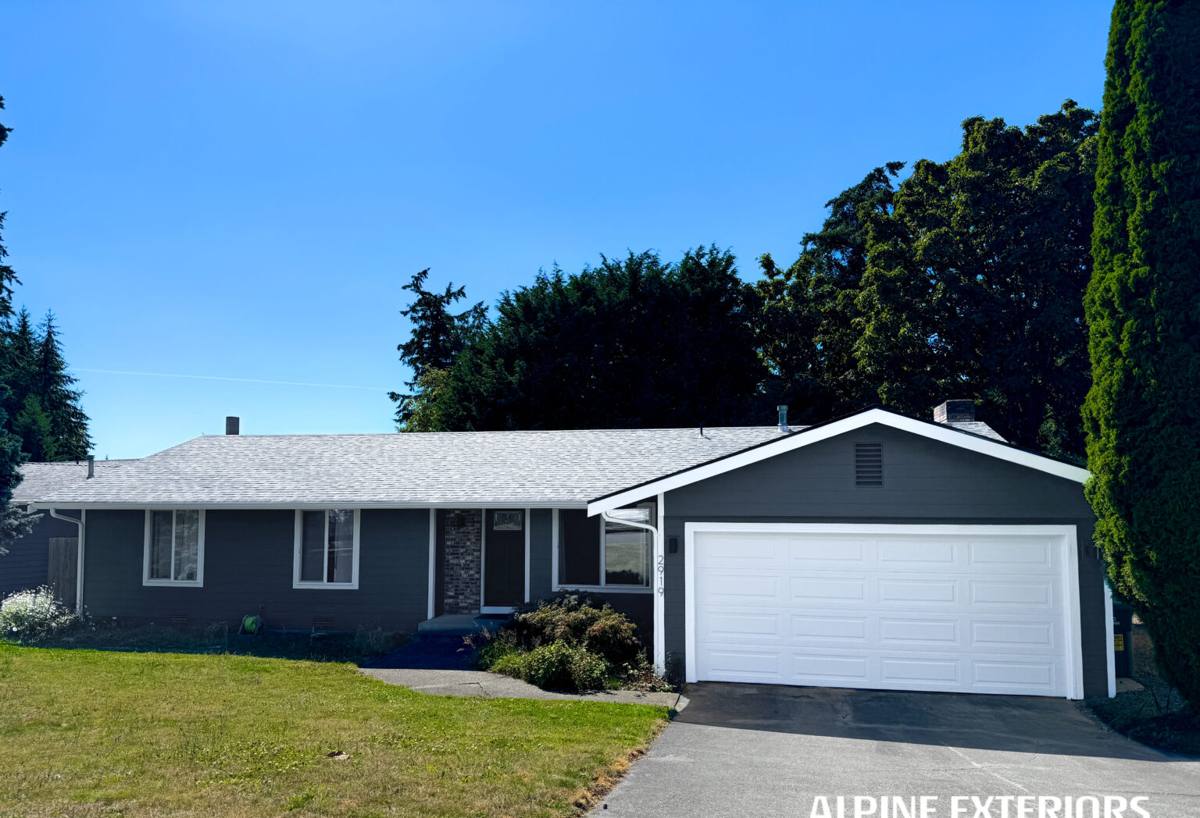
Why Siding Fails Faster Here
Salt Air
Airborne salt doesn't just sit on the surface — it works into seams, fastener heads, and any place paint or finish has thinned. Over years, it accelerates corrosion of exposed metal fasteners and trim, and it breaks down cheaper coatings faster than manufacturers' lab tests (usually run in drier, salt-free conditions) would suggest.
Driving Rain
West-facing walls on Orcas Island don't get gentle vertical rain — storms push water sideways into laps, seams, and any gap around windows, doors, or trim. If the water-resistive barrier, flashing, and lap spacing aren't done correctly the first time, water finds its way behind the siding long before the surface itself looks worn.
Moss and Sustained Moisture
San Juan County's long wet season, combined with tree cover on many West Beach lots, means siding can stay damp for days at a stretch. Moss and algae take hold on any surface that doesn't shed water and dry quickly, and once established they hold moisture against the wall, which speeds up rot in wood-based products and paint failure on anything with a weak factory finish.
What a Correct Siding Replacement Involves
A siding replacement is only as good as what happens underneath it. On an exposed site like West Beach, we treat the tear-off and prep stage as the most important part of the job, not a formality before the "real" work starts.
- Full tear-off to sheathing so we can actually see the wall condition — not a re-side over existing material that hides problems
- Inspection and repair of any rotted or soft sheathing before anything new goes on
- A continuous water-resistive barrier, lapped correctly from bottom to top so water sheds outward, not into the wall
- Properly flashed windows, doors, and any wall penetrations, with extra attention on west- and north-facing elevations
- Correct fastener type, spacing, and placement per manufacturer specification — not "close enough"
- Rainscreen or drainage gap detailing where the wall assembly and exposure call for it, so moisture that does get behind the cladding can drain and dry
- Factory-finished siding and trim so the weather-facing surface isn't relying on a field-applied coat of paint to hold up to salt air and UV
Skip any one of these steps and the new siding may look right for a season or two before problems that started underneath start showing on the surface.
Why We Install Only James Hardie Fiber Cement
We standardized on James Hardie fiber cement siding for every home we side, including West Beach, and we don't install vinyl, LP SmartSide, Cemplank, Allura, primed spruce, or cedar. That's a deliberate professional standard, not a sales preference, and it comes down to how each material performs against exactly the conditions this location produces.
Vinyl can warp and become brittle with age, and its seams and fastening system aren't built to resist sustained wind-driven rain the way a properly installed fiber cement lap is. Engineered wood products like LP SmartSide use a wood-strand substrate that is more vulnerable to moisture intrusion at cut edges and seams than fiber cement — a real liability on a wall that stays damp for days after a storm. Primed spruce and cedar are natural wood: beautiful when new, but they require ongoing maintenance (recoating, caulking, moisture monitoring) to hold up in a salt-air, high-moisture environment, and they're the first to show rot if that maintenance slips even one season. Other fiber cement brands may look similar to Hardie on a spec sheet, but we've standardized on Hardie specifically for its ColorPlus factory-finish technology and its climate-engineered HZ product lines, which are formulated by region rather than sold as one-size-fits-all.
James Hardie fiber cement is non-combustible, doesn't rot, and holds paint and color far longer than field-applied finishes because ColorPlus color is baked on at the factory under controlled conditions — not brushed on in variable Pacific Northwest weather. It's engineered for exactly this kind of exposure, and it carries a strong transferable warranty that reflects that engineering.
HardiePlank Lap Siding for West Beach Homes
For most West Beach homes we recommend HardiePlank lap siding in a color from the ColorPlus collection, which resists fading and chalking far better than a repainted surface. Panel and shingle profiles are also available where a home's design calls for a different look, but lap siding remains the most common and most weather-tested choice for this kind of exposure.
Our Process From Estimate to Finished Job
- On-site evaluation: we look at your home's specific exposure — which walls take the worst weather, current siding condition, and any signs of moisture behind the existing cladding.
- Written estimate: a clear scope covering tear-off, prep, water management details, material, and finish — no surprise change orders for things we could have caught up front.
- Scheduling around island logistics: material and crew scheduling account for ferry timing and weather windows, so the job runs efficiently once it starts.
- Tear-off and inspection: old siding comes off, sheathing is inspected, and any needed repairs are done before new material goes up.
- Water management installation: water-resistive barrier and flashing installed correctly at every seam, window, and penetration.
- Hardie siding installation: installed to manufacturer specification for fastening, spacing, and clearance.
- Final walkthrough: we go over the finished work with you before calling the job done.
Signs Your West Beach Home May Need Siding Replacement
- Persistent moss or algae growth that returns within weeks of cleaning
- Paint that's peeling, bubbling, or chalking heavily, especially on west- or north-facing walls
- Soft or spongy spots when you press on the siding
- Visible warping, cupping, or gaps opening up between boards or panels
- Rising energy bills that suggest the wall assembly is no longer keeping weather out
- Interior staining, musty odor, or peeling paint on interior walls that back up to exterior siding
Cost Factors for Siding Replacement
Every home is different, but the same handful of factors drive most of the cost variation we see on West Beach jobs. This isn't a quote — it's a way to think through what will affect your project.
| Factor | Why It Matters |
|---|---|
| Home size and wall complexity | More square footage, corners, and roof lines mean more material and labor |
| Current siding condition | Rotted sheathing or hidden moisture damage adds repair work before new siding goes on |
| Exposure and elevation | West- and north-facing walls with direct weather exposure often need extra water-management detail |
| Siding profile and finish | Lap, panel, and shingle profiles, plus ColorPlus color selection, affect material cost |
| Site access | Driveway grade, tree cover, and staging space on the lot affect labor time |
| Trim and detail work | Window and door trim, corner detailing, and fascia work add scope beyond the field siding |
Why Hire a Crew That Already Works West Beach
Siding a home on Orcas Island isn't the same as siding one on the mainland. Material and crew scheduling has to work around ferry sailings, weather windows are shorter and less predictable, and every job benefits from a crew that already understands how San Juan County's climate treats a west-facing wall. A contractor who's worked this specific stretch of coastline knows where water tends to find its way in, which details matter most on an exposed elevation, and how to plan a job so it isn't derailed by the first storm that rolls through mid-project.
That local experience shows up in the small decisions — how tight the flashing laps are, where extra attention goes on a west wall, how the crew sequences work around the weather forecast — not just in the finished look of the siding.
If your West Beach home's siding is showing its age or you're planning ahead for a replacement, we're happy to take a look and walk you through what your home specifically needs. Reach out for a free, no-pressure estimate using the form below.