 Orcas Island Siding
 Siding Repair Built for West Beach's Exposure
West Beach sits on the western edge of Orcas Island, facing open water with little to break the wind coming off the Sound. That position gives homes here some of the best views in San Juan County — and some of the hardest weather exposure. Salt-laden air, driving rain that comes in sideways rather than straight down, and a long stretch of gray, damp months that favor moss and algae all put steady pressure on exterior siding. Repairing siding out here isn't the same job as patching a board on a sheltered inland lot, and treating it that way is how homeowners end up calling a second contractor a year later.
This page covers what siding repair specifically means for a West Beach home: what the climate actually does to different siding materials, how to tell a surface problem from a structural one, what a correct repair involves, and why the crew doing the work matters as much as the materials.
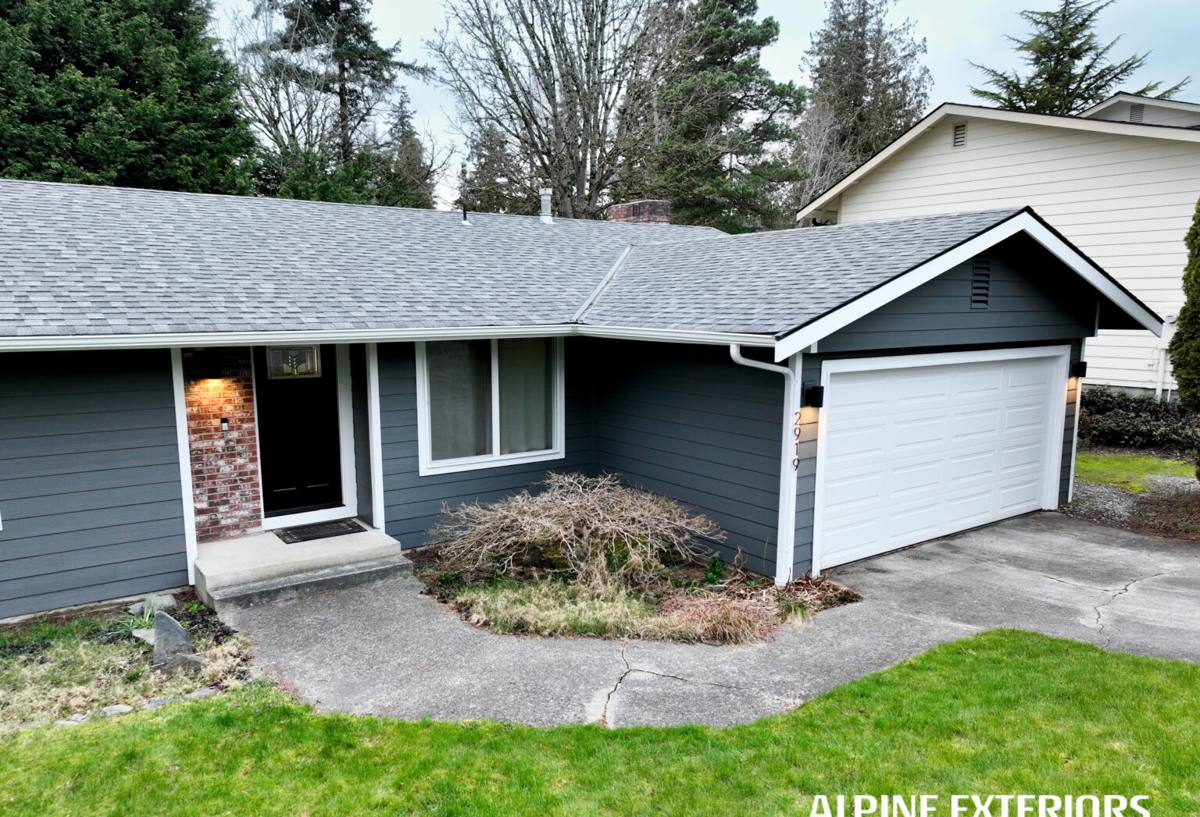
What West Beach's Marine Climate Does to Siding
Salt Air and Corrosion
Airborne salt from the water settles on every exterior surface, including siding, trim, and fasteners. Over time it accelerates corrosion in uncoated or poorly coated metal fasteners and flashing, and it can dull or streak paint finishes faster than the same product would fade a few miles inland. On wood-based sidings, salt combines with moisture to hold dampness against the surface longer, which speeds up rot at seams and butt joints.
Wind-Driven Rain
Rain that comes in horizontally, rather than falling straight down, gets pushed up under laps, around trim, and into any gap in the water-resistive barrier that a calmer climate might never test. This is why a repair that only addresses the visible crack or gap — without checking what's happening behind it — so often fails again within a year or two on this side of the island.
Moss, Algae, and Shade
Tree cover and the region's long damp season create ideal conditions for moss and algae growth on north-facing and shaded siding sections. Beyond the cosmetic issue, moss holds moisture against the siding surface, which is exactly the condition that causes rot, delamination, and fastener corrosion underneath.
Signs Your West Beach Home Needs Siding Repair
Some damage is obvious. A lot of it isn't, especially where trim, corners, and low sections stay shaded or in constant contact with landscaping. Before assuming a small crack or a stained board is a cosmetic fix, look for these signs:
- Soft or spongy spots when you press on siding, especially near the bottom courses or below windows
- Visible cracking, splitting, or buckling in individual boards or panels
- Persistent dark staining or streaking that returns quickly after cleaning
- Moss or algae growth concentrated on shaded or north-facing walls
- Paint that's bubbling, peeling, or failing in patches rather than evenly across a wall
- Gaps that have opened at seams, corners, or where siding meets trim and windows
- Rust streaks running down from fasteners or metal flashing
- Interior signs — musty smell, discoloration on inside walls near exterior corners
Any one of these can be minor on its own. Several showing up together, or in the same section of wall, usually means moisture has been getting behind the siding for a while.
What a Correct Repair Actually Involves
Diagnosing the Cause, Not Just the Symptom
A patch that only replaces the damaged board without asking why that board failed is a temporary fix. On a west-facing, wind-exposed property, the real cause is often a flashing detail, a gap in the water-resistive barrier, or a fastening pattern that let water track in over time. A correct repair starts by opening up the area enough to see what's actually happening behind the siding, not just at the surface.
Checking the Water-Resistive Barrier
Anywhere siding is removed for repair, the barrier underneath needs to be inspected and, if compromised, properly patched and integrated with the surrounding barrier — lapped correctly, taped at seams, and tied into flashing at windows, doors, and penetrations. Skipping this step and just reinstalling siding over damaged barrier guarantees the same failure returns.
Flashing and Drainage
Wind-driven rain finds its way to horizontal surfaces first — window heads, trim boards, and butt joints. Repairs in these areas need flashing that actually sheds water outward rather than caulk alone trying to hold a seam closed. Caulk is a supplement to good flashing detail, never a substitute for it.
Fastening and Fit
Replacement siding needs to be fastened to the manufacturer's specification — correct fastener type, spacing, and depth — and cut and fitted so seams and laps match the surrounding field. Repairs that are "close enough" on fit tend to be exactly where the next leak starts.
Repair or Replace? Weighing the Real Factors
Not every problem area needs full replacement, but on an exposed West Beach lot, isolated repairs sometimes point to a wider issue worth evaluating honestly.
| Factor | Favors Repair | Favors Replacement |
|---|---|---|
| Extent of damage | Isolated to one or two sections | Spread across multiple walls or elevations |
| Age of existing siding | Relatively recent installation | Nearing or past expected service life |
| Underlying barrier condition | Intact where exposed | Compromised or failing in multiple spots |
| Siding material | Still performing well overall | Prone material (wood, older composite) showing systemic wear |
| Cause of damage | One-time event (impact, isolated flashing gap) | Ongoing exposure issue affecting the whole elevation |
The honest answer often only becomes clear once a section is opened up. That's why we assess before quoting a fix, rather than pricing blind from a walk-around.
Why We Only Repair and Install James Hardie Fiber Cement
We don't install vinyl siding, LP SmartSide, primed wood, cedar, or other fiber cement brands, and that standard applies to repairs as well as full installs. In a climate like West Beach's, the trade-offs of those materials show up faster: vinyl can warp and doesn't hold up structurally to repeated impact or wind loading the way fiber cement does; wood and wood-based composites are more sensitive to the sustained moisture exposure that salt air and driving rain create; and not every fiber cement product is engineered or finished the same way.
James Hardie's HZ product lines are engineered for specific climate zones, and the ColorPlus factory finish is baked on under controlled conditions rather than field-painted, which holds color and resists the fading and streaking that salt air accelerates on site-painted surfaces. That consistency also matters directly for repair work: matching a replacement board to existing ColorPlus siding is far more reliable than trying to field-match a repainted patch to weathered wood or vinyl. Hardie's fiber cement composition is also non-combustible, which is a real consideration for homes with tree cover and limited access during fire season.
This is a standard we hold across every job, not a sales pitch for any one repair — it's the reason we can stand behind the repairs we do.
Our Process for a West Beach Siding Repair
- On-site inspection: We look at the visible damage and the surrounding sections, including areas that may not look obviously affected yet.
- Opening up the area: Where damage suggests moisture behind the siding, we remove enough material to inspect the barrier, framing, and flashing beneath it.
- Honest scope and estimate: We tell you what we found, what it takes to fix it correctly, and where a repair is genuinely sufficient versus where a section should be replaced.
- Repair to spec: Barrier repairs, correct flashing, proper fastening, and Hardie fiber cement matched to your existing siding line and color.
- Cleanup and review: We walk the finished work with you before we consider the job done.
Why a Crew That Already Works West Beach Matters
Orcas Island is ferry-dependent, and West Beach's exposed position adds its own scheduling and logistics considerations that a contractor coming from off-island doesn't always plan for. Materials, fastener specs, and flashing details that work fine in a sheltered San Juan County location don't always hold up the same way on an open, wind-exposed shoreline lot — a crew that already services this area has seen how siding actually performs here over time, not just how it's rated on paper.
That local experience also means fewer surprises: knowing what a West Beach repair typically uncovers once a wall is opened, ordering the right materials ahead of the ferry schedule instead of mid-job, and understanding San Juan County permitting and inspection expectations for exterior work. It's the difference between a repair that's planned around the realities of this specific location and one that's improvised on arrival.
Get a Straightforward Look at Your Siding
If you're seeing early signs of trouble on a West Beach home — staining, soft spots, moss buildup, or gaps that weren't there last season — it's worth having someone look before the next round of wind-driven rain finds its way in further. We'll give you a clear, no-pressure assessment of what's actually going on and what it would take to fix it right. Use the form below to request a free estimate.