 Orcas Island Siding
 Siding Installation Built for West Beach's Exposure
West Beach sits on the more open, west-facing shoreline of Orcas Island, and that orientation matters more than most homeowners realize when it comes time to reside a house. Unlike homes tucked into a protected bay or set back under heavy tree cover, properties along this stretch face open water more directly, which means they take weather head-on rather than filtered through a point of land or a sheltered inlet. Salt-laden air moves across these homes constantly, storms drive rain sideways into west- and south-facing walls with real force, and a moss season that can run most of the year keeps shaded and north-facing elevations damp longer than homeowners expect. A siding installation done right here has to account for all of that from the first nail, not treat it as an afterthought.
This page is about one thing specifically: what a correct siding installation looks like for a West Beach home, and why the details matter more on this shoreline than they would on a more sheltered part of the island. We install James Hardie fiber cement exclusively, and everything below reflects what that product needs, and what any siding installation on this stretch of coastline needs, to actually hold up.
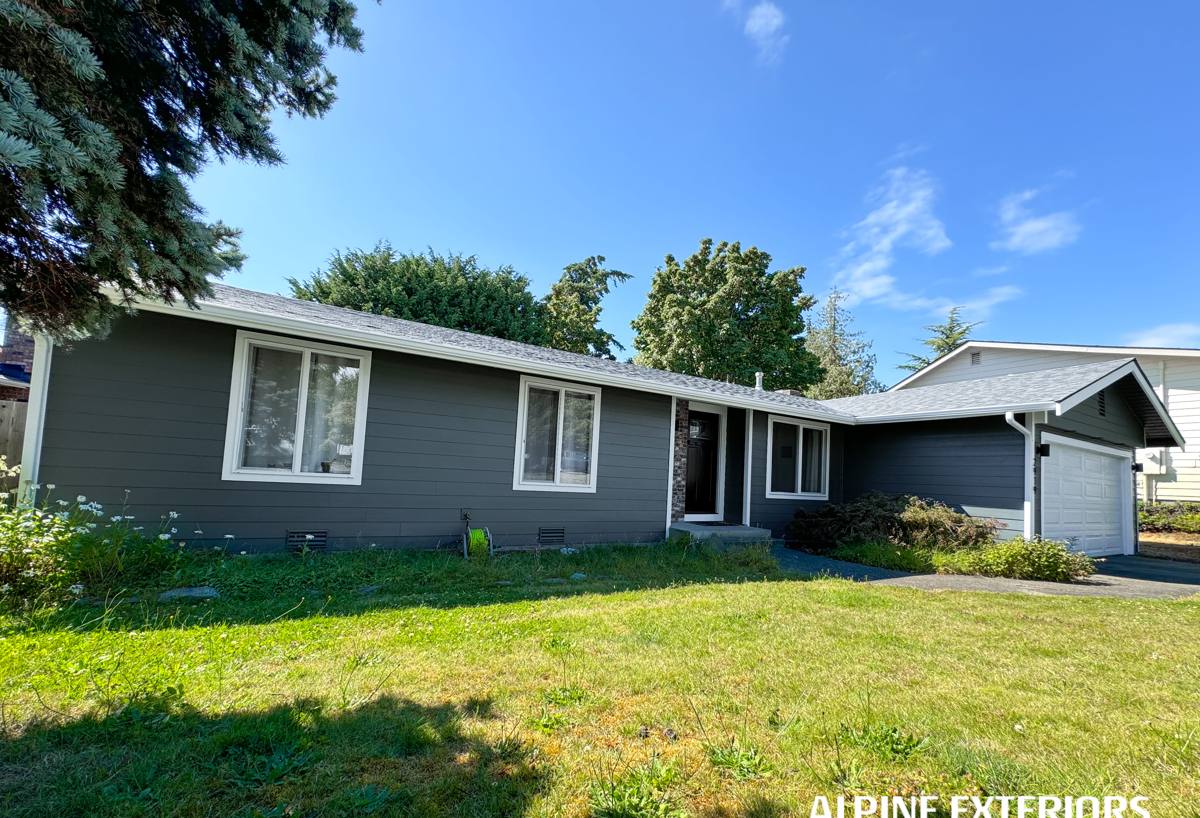
What West Beach's Climate Does to a Siding Installation
Salt Air Off Open Water
Facing open water rather than a protected channel means West Beach homes sit in near-constant salt-laden air, not just the occasional gust off a bay. Over time, that steady exposure corrodes standard fasteners, degrades lower-grade trim hardware, and accelerates the breakdown of field-applied finishes faster than the same materials would fail further inland or in a more sheltered San Juan County location. It's a slow process, which is exactly why it gets missed — the damage tends to show up as rust streaks, loosening trim, and a chalky, faded finish years after the crew that installed it has moved on.
Driving Rain With Nothing to Break It Up
Winter storms in the San Juan Islands rarely fall straight down, and on a west-facing shoreline with open water in front of the house, there's less land and tree cover to slow the wind before it hits the wall. That means rain gets driven directly into siding laps, butt joints, and window and door openings with more force than a sheltered elevation elsewhere on Orcas Island typically sees. Flashing and joint details that would be adequate on a protected lot aren't automatically adequate here — this is the exposure that finds every gap in a weather barrier or every shortcut in a flashing detail, usually within the first few wet seasons.
A Long Moss Season on Shaded Walls
Not every wall on a West Beach property takes direct wind and sun. North-facing walls, and any elevation shaded by trees on a wooded lot, stay damp far longer after a storm passes than the exposed side of the same house. That's the exact condition moss and mildew need to establish and spread, and a moss season here can run close to year-round on the walls that don't get regular sun and wind to dry them out. A siding material that holds moisture at the surface instead of shedding it gives moss more time to take hold before the next dry stretch arrives.
Why James Hardie Is the Only Siding We Install on This Shoreline
We install one siding system, James Hardie fiber cement, and the exposure a West Beach home deals with is a big part of why. A few specific characteristics matter directly here:
- Non-combustible core: Fiber cement doesn't feed a fire the way wood-based siding can, which matters on a wooded island where wildfire risk is a real seasonal concern.
- Factory-applied ColorPlus finish: The color coat is baked on under controlled conditions rather than brushed on in the field, and it holds up against salt exposure and UV far longer than a field-applied stain or paint job would on an open, west-facing wall.
- Climate-engineered HZ product lines: Hardie's HZ5 formulation is built for regions dealing with sustained moisture exposure and freeze-thaw cycling, which fits West Beach's winter conditions closely.
- Dimensional stability: Fiber cement doesn't swell, cup, or warp the way engineered wood siding can after repeated wetting from driving rain.
- A strong transferable warranty: Hardie backs a correctly installed system with one of the more substantial warranty structures in the industry, which matters to island homeowners thinking about resale.
We don't install LP SmartSide, vinyl siding, Cemplank, Allura, primed spruce, or cedar. Each has a place in the broader market, and each has real trade-offs — organic cores that need ongoing finish maintenance, panel seams that can let wind-driven rain behind the cladding, or a maintenance schedule that's harder to stay on top of when getting a crew back out means working around a ferry, not just a calendar. Given what open-water exposure does to a wall on this shoreline over 15 to 20 years, we've made the professional call to install one system we can fully stand behind.
What Correct Siding Installation Actually Involves Here
Substrate Check Before Anything New Goes Up
Once old siding comes off, the sheathing underneath gets inspected for rot, soft spots, or trapped moisture before any new material is installed. On a west-facing wall that's been taking driving rain for years, this step matters more than it would on a sheltered elevation — covering damaged sheathing with new siding just hides a problem that keeps deteriorating behind the wall.
Weather Barrier and Flashing Detail
Most siding failures on exposed shorelines trace back to water getting behind the cladding, not through it. That makes the house wrap, window and door flashing, and every wall penetration the part of the job that determines whether the installation lasts. It's also the easiest step to rush and the hardest to inspect once the new siding is up, which is why it gets treated as a non-negotiable step rather than something to move through quickly.
Fastening for Salt-Air Exposure
Standard fasteners corrode faster in salt-laden air, and a corroding fastener eventually streaks the siding and loosens its hold. On a West Beach installation, fastener type and spacing follow Hardie's published specification for coastal, high-exposure conditions, not a generic inland spec.
Clearance and Joint Placement
Proper clearance from grade, decks, and roof lines, along with correctly placed and sealed butt joints, keeps water from pooling against the bottom edge of the siding or working its way into a joint under wind pressure. On a wall taking direct rain off open water, these details carry more consequence than they would on a protected lot.
How a Siding Installation Runs on a West Beach Home
Inspection and Estimate
Every project starts with an actual walk of the house — current siding condition, sun and wind exposure on each elevation, and any visible signs of trapped moisture. A west-facing wall and a shaded back wall on the same house are dealing with genuinely different conditions, and the estimate reflects that rather than applying one flat number to the whole exterior.
Tear-Off and Substrate Repair
Old siding comes off, sheathing gets checked and repaired as needed, and any rot or moisture damage found gets addressed before new material goes on — not patched over.
Weather Barrier and Flashing Installation
House wrap goes on correctly lapped, and flashing at every window, door, and wall penetration is installed to shed water outward, not let it collect behind the new siding.
Hardie Installation to Manufacturer Spec
James Hardie's warranty depends on installation following their published specifications for fastener spacing, clearances, and joint treatment. That spec is the baseline on every job, not an upgrade.
Final Walkthrough
We walk the finished job with the homeowner, cover what maintenance the new siding will and won't require, and confirm the work matches what was estimated.
Signs a West Beach Home's Siding Needs Attention
- Moss or dark staining that returns quickly after cleaning, especially on shaded or north-facing walls
- Soft or spongy siding near the bottom of the wall or around window and door trim
- Peeling paint, chalking, or visible warping on older wood-based or engineered siding
- Cracked, buckled, or missing sections after a windstorm off open water
- Rust streaking running down from fasteners or trim hardware
- Musty odors or staining on interior walls that back up to exterior siding
- Siding older than 20-25 years with no documented replacement history
None of these automatically means a full tear-off is needed, but on a wall taking direct exposure off the water, any of them are worth a professional look before another wet season adds to the damage.
Comparing Siding Options for a West-Facing Shoreline
| Material | Moisture Behavior | Maintenance on This Exposure | Fastener Corrosion Risk |
|---|---|---|---|
| James Hardie fiber cement | Dimensionally stable; does not swell or warp | Low; factory finish resists fading and moisture intrusion | Low with correct fastener spec |
| Vinyl siding | Panel seams can let wind-driven rain behind the cladding | Low upfront, but seams and edges stay wetter longer on exposed walls | Moderate; underlying hardware still exposed |
| LP SmartSide / engineered wood | Wood-strand core is moisture-sensitive at cut edges and joints | Moderate to high; edge sealing critical in driving rain | Moderate |
| Cedar / primed wood | Absorbs and releases moisture readily | High; needs regular refinishing on an exposed elevation | Higher without marine-rated fasteners |
What Affects Siding Installation Cost in West Beach
Every estimate is specific to the house, but a few factors consistently move the number for a West Beach project:
| Factor | Why It Matters Here |
|---|---|
| Total wall area and number of stories | Larger, taller homes need more material and more staging on an exposed lot |
| Sheathing condition once old siding is removed | Rot or moisture damage from years of driving rain adds repair scope before new siding goes on |
| Trim and detail work around windows and rooflines | More cuts and joints mean more flashing and sealing work on a high-exposure wall |
| James Hardie product line and color selected | HZ5 and ColorPlus options vary in cost and performance |
| Island logistics | Material delivery and crew scheduling run around ferry access on Orcas Island, which affects project timeline more than cost, but is worth planning for upfront |
A Quick Checklist Before Hiring for Siding Work in West Beach
- Ask what siding product they install and why, not just the price per square foot
- Confirm they check and repair sheathing before closing up the wall
- Ask specifically how they handle flashing and fastener choice for open-water, salt-air exposure
- Confirm current Washington contractor licensing and active liability insurance
- Get a written scope of work and a warranty you can actually verify with the manufacturer
Why a Crew That Already Works West Beach Matters
West Beach isn't uniform — a home sitting low and directly facing open water deals with a different load of wind, salt, and driving rain than a home the same distance up the road but shielded by a rise in the land or a stand of trees. A crew that regularly works this shoreline already knows that variation and adjusts flashing, fastener spacing, and joint placement wall by wall instead of applying one generic spec to the whole house. That local judgment, built from seeing how this specific stretch of Orcas Island coastline behaves through repeated wet seasons, is what separates a siding installation that looks good for a year from one still performing correctly two decades later. It also means that if a warranty or maintenance question comes up down the road, it's a call to a crew still working in San Juan County, not one that quoted the job once and never came back.
If your West Beach home needs new siding, or you're not sure whether what's on the house now still has years left in it, we're glad to come take a look and walk the exterior with you. Reach out using the form below for a free, no-pressure estimate.