 Orcas Island Siding
 Roofing on West Beach: A Different Set of Conditions
West Beach sits on Orcas Island's exposed western shoreline, where homes take the weather straight off the water with little in the way of a windbreak. That's a very different roofing environment than a sheltered lot tucked into the trees a few miles inland. Salt-laden air, wind-driven rain, and a long wet season that favors moss growth all combine to shorten the working life of a roof that isn't built and installed with those specific conditions in mind. A roof replacement here isn't just about swapping old shingles for new ones — it's about choosing materials and installation details that are matched to a marine, wind-exposed site.
We've worked on homes up and down this stretch of San Juan County, and the pattern is consistent: roofs on open, west-facing lots wear out faster than the manufacturer's rated lifespan would suggest, almost always because of a small number of predictable, fixable causes.
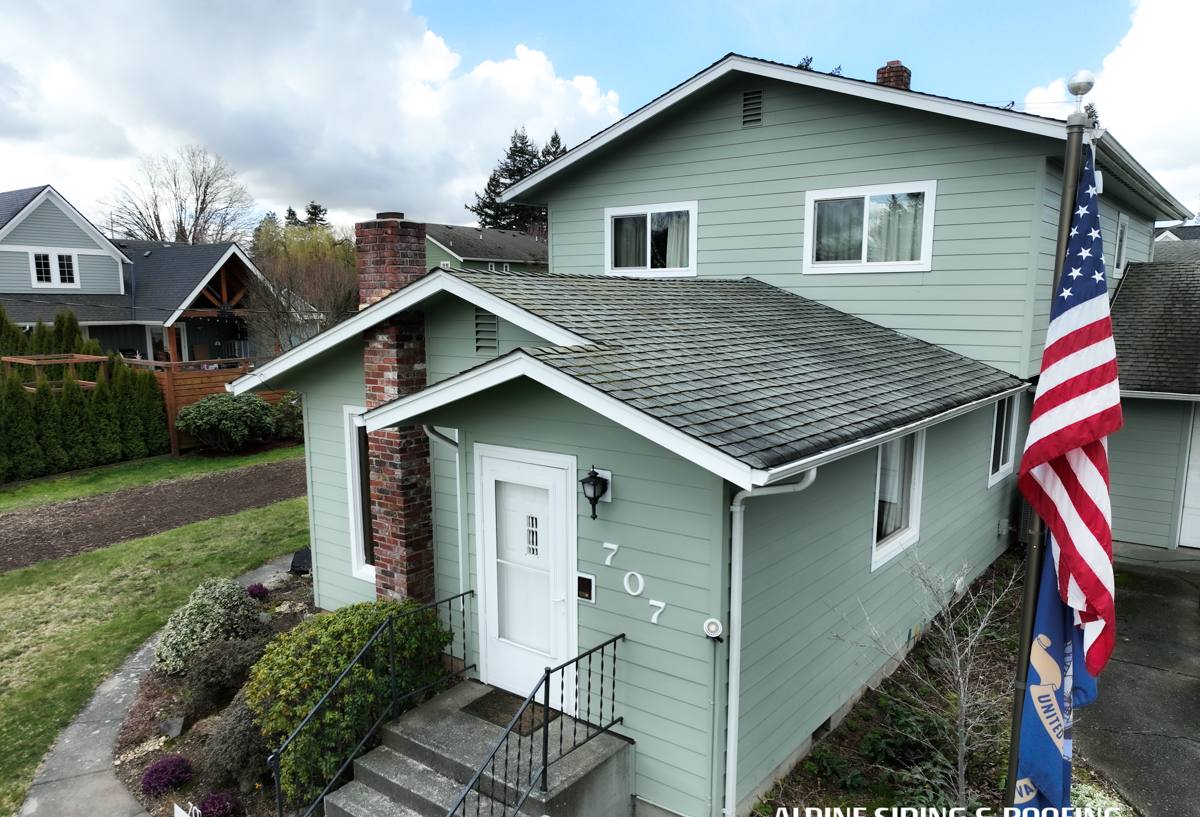
Why West Beach Roofs Wear Out Faster
Salt Air and Corrosion
Airborne salt from the Strait doesn't just affect siding and trim — it accelerates corrosion on any exposed metal roofing component: nails, flashing, vent caps, and gutter hardware. Standard galvanized fasteners can start showing rust streaks well before the shingles themselves are due for replacement. On a coastal lot like this, every metal component on the roof needs to be rated for a marine environment, not just a general residential one.
Wind-Driven Rain
West Beach gets weather with real fetch behind it, meaning rain doesn't just fall — it's pushed sideways and upward under eaves, ridge caps, and roof-to-wall transitions. A roofing system that would perform fine on a calm inland lot can leak here if the underlayment, flashing laps, and sealing details aren't upgraded to handle wind-driven moisture. Most of the leaks we're called out to inspect on exposed sites trace back to flashing or underlayment shortcuts, not the shingles themselves.
Moss and Shade Cycles
San Juan County's long wet season, combined with tree cover on many lots, creates ideal conditions for moss and algae growth on north-facing and shaded roof slopes. Moss holds moisture against the roofing surface, works its way under shingle tabs, and can lift or crack aging material well before it would otherwise fail. Left unaddressed over several seasons, moss growth is one of the most common reasons a roof that "still looks okay" turns out to have significant hidden decking damage underneath.
Signs a West Beach Roof Needs Full Replacement, Not Repair
Not every roofing problem calls for a full tear-off, but on this kind of exposed site, patch repairs sometimes mask a bigger issue rather than fix it. Consider replacement when you're seeing:
- Granule loss heavy enough to expose the shingle mat, especially on the west- and south-facing slopes that take the most direct weather
- Persistent moss or algae staining that comes back within a season or two of cleaning
- Soft or spongy decking felt underfoot during an inspection, a sign moisture has already gotten past the roofing surface
- Rusted or failing flashing around chimneys, skylights, and roof-to-wall junctions
- Multiple repair calls in the same few years for leaks in different spots
- A roof original to the home and past 20-25 years old, even if it "looks fine" from the ground
Materials That Actually Hold Up Here
There's no single "best" roofing material for every home — the right choice depends on your roof's slope, shade exposure, budget, and how the house looks architecturally. But on a wind- and salt-exposed lot like West Beach, some options consistently perform better than others.
| Material | How It Handles This Climate | Trade-Offs to Know |
|---|---|---|
| Architectural asphalt shingle | Good wind ratings available, algae-resistant granule options help with moss/staining, moderate cost | Shorter lifespan than metal; needs periodic moss/debris maintenance |
| Standing seam metal | Excellent wind and rain performance, sheds moss more easily due to smooth surface, long service life | Higher upfront cost; requires correct fastener and coating spec to avoid corrosion near salt air |
| Composite/synthetic shingle | Strong impact and wind resistance, resists moisture absorption better than wood | Higher material cost than standard asphalt; product selection more limited |
| Cedar shake | Traditional island look | Higher maintenance burden in a wet, shaded climate; more susceptible to moss and rot without diligent upkeep — we're honest with clients about this trade-off upfront |
For most West Beach homes, we steer clients toward an algae-resistant architectural shingle or a standing seam metal system, matched to the home's slope and how much shade or wind exposure the roof actually gets. We'll walk your specific roof with you and explain why we're recommending one over another for your situation — not push a single product regardless of fit.
Underlayment and Fasteners Matter as Much as the Shingle
On an exposed coastal roof, what's underneath the visible surface does a lot of the real work. We spec synthetic or self-adhering underlayment at eaves, valleys, and other vulnerable transitions rather than relying on minimum-code coverage, and we use corrosion-resistant fasteners and flashing throughout — stainless or coated hardware rated for coastal exposure, not standard galvanized. This is one of the areas where cutting corners doesn't show up as a problem for a year or two, but shortens the roof's real service life considerably.
What a Correct Roof Replacement Involves
- Full tear-off and decking inspection. We remove the existing roofing down to the deck rather than layering over it, so we can catch and repair any water-damaged sheathing before it's covered up again.
- Deck repair as needed. Any soft, rotted, or delaminated decking gets replaced — this is not an area to skip to save a few dollars, since it undermines everything installed on top of it.
- Ice-and-water or synthetic underlayment at critical zones. Eaves, valleys, and roof penetrations get extra protection against wind-driven rain.
- Corrosion-resistant flashing and fasteners. Chimneys, skylights, vents, and wall transitions are flashed with materials suited to salt air exposure.
- Proper attic ventilation. Balanced intake and exhaust ventilation reduces trapped moisture, which matters even more in a marine, high-humidity climate.
- Shingle or panel installation to manufacturer wind specifications. Nailing patterns and fastener counts are set for the wind exposure of the specific site, not just a generic code minimum.
- Final inspection and cleanup. Including magnetic sweep for stray fasteners and haul-away of old material.
Our Process for West Beach Projects
Working on Orcas Island means building the ferry schedule, weather windows, and material delivery timing into the project plan from day one — it's not something we figure out after the crew shows up. Before we schedule a start date, we confirm material logistics well in advance so a delivery delay doesn't leave your roof partially open during a rain system. We also watch the forecast closely and sequence tear-off and dry-in work to minimize the time your home is exposed.
Depending on your property, San Juan County permitting may apply — we handle that coordination as part of the project rather than leaving it to the homeowner. And because West Beach lots often have limited staging space, we plan material drop points and dumpster or debris removal logistics ahead of time so the job runs efficiently without unnecessary disruption to your property or your neighbors.
Cost Factors for a West Beach Roof Replacement
Every roof is different, and we won't quote a number without seeing yours, but these are the main variables that move the price up or down:
| Factor | How It Affects Cost |
|---|---|
| Roof size and number of planes | More square footage and complexity (valleys, dormers, hips) means more labor and material |
| Material choice | Asphalt shingle is typically the most budget-friendly; standing seam metal and premium composites cost more upfront but often last longer |
| Decking condition | Hidden rot or moisture damage found during tear-off adds repair cost not visible from a roof-only estimate |
| Access and staging | Steep pitches, limited driveway access, or tight lot space can add time and equipment needs |
| Ventilation and flashing upgrades | Bringing an older roof's ventilation and flashing up to current standards adds some cost but pays off in roof lifespan |
We provide a detailed, written estimate that breaks these factors out so you know exactly what you're paying for and why — not a vague lump sum.
Keeping Your New Roof Performing: A Homeowner Checklist
- Have gutters and downspouts cleared at least twice a year, more often if you're under heavy tree cover
- Check for moss or algae buildup each fall and address it early rather than letting it establish
- Trim back overhanging branches to reduce shade, debris buildup, and physical abrasion on the roof surface
- After major windstorms, do a visual check (from the ground) for lifted shingles, displaced flashing, or debris damage
- Schedule a professional inspection every few years, especially as the roof approaches the back half of its rated lifespan
- Address small leaks or stains immediately — on a wind-exposed roof, small problems don't stay small for long
Why Hiring a Crew That Already Works West Beach Matters
A roofing crew that hasn't worked this specific stretch of coastline will often price and spec the job the way they would anywhere else — standard fasteners, standard underlayment coverage, no particular attention to wind direction or salt exposure. That approach might hold up fine inland, but it tends to show its weaknesses fast on an exposed island shoreline. Working West Beach regularly means we already know which slopes take the worst of the weather, what ferry and delivery timing actually looks like for material logistics, and which installation details are worth the extra attention versus which are genuinely optional.
That local, repeated experience is part of what you're paying for when you hire a roof replacement crew here — not just labor and shingles, but judgment calls that are specific to this island and this coastline, made correctly the first time.
If your roof is showing its age, or you just want an honest opinion on whether repair or full replacement makes more sense for your home, we're happy to take a look. Fill out the form below for a free, no-pressure estimate on your West Beach roof replacement.