 Orcas Island Siding
 New-Construction Windows in West Beach
If you're building new on the west side of Orcas Island, the windows you choose and how they're installed will matter more than almost any other exterior decision you make. West Beach sits exposed to weather rolling straight in off the water — salt-laden air, driving rain, and long stretches of damp, shaded moss season that don't let up for months at a time. A window package that would be perfectly fine on a sheltered inland lot in most of the country can fail early here if it's not installed with this specific climate in mind. This page covers what a correct new-construction window installation looks like for a West Beach build, and why the details matter more here than they would somewhere else in San Juan County.
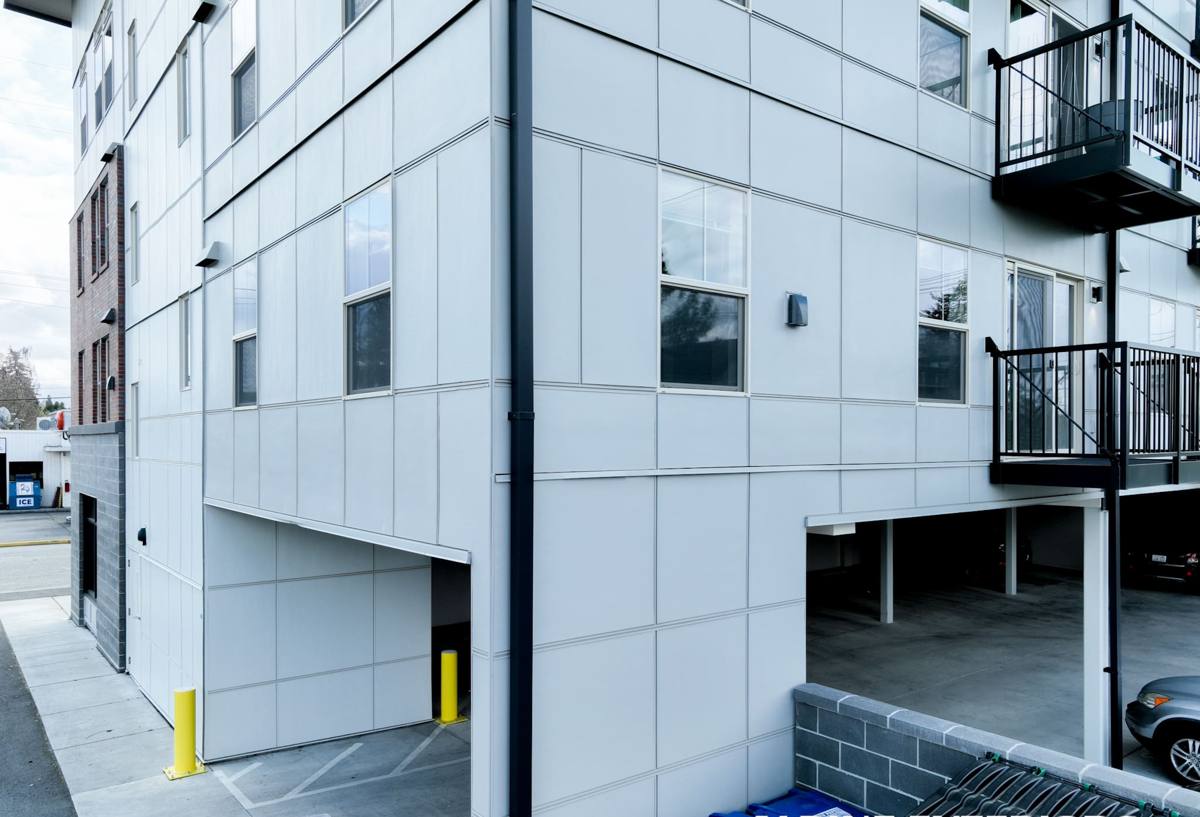
New-Construction vs. Replacement: Why the Install Method Matters
"New construction" windows aren't a different quality tier from replacement windows — they're a different physical product designed for a different situation. New-construction windows have a nailing fin (sometimes called a flange) around the perimeter of the frame. That fin gets fastened directly to the wall sheathing before the siding goes on, and it becomes part of the wall's water management system rather than sitting inside an existing finished opening. Replacement windows, by contrast, are built to slide into an opening that already has trim and siding around it, with no fin.
The Rough Opening Is the Whole Job
On a new build, the window installer isn't just setting glass in a hole. We're building a layered water management assembly around every rough opening — weather-resistive barrier (WRB), flashing tape, sill pans, and the window itself — before a single piece of siding goes up. Get that sequence wrong, even by a small margin, and you've built a leak path into the wall that won't show itself until years later, usually as rot or staining that's expensive to trace back to its source.
Why This Sequencing Matters More Here
In a drier, more sheltered climate, a minor flashing shortcut might never get tested by real weather. On an exposed shoreline lot in San Juan County, it will be tested — repeatedly, by wind-driven rain that doesn't fall straight down but gets pushed sideways into the wall assembly. New construction gives us the chance to build the water management right the first time, before the wall is closed up and that opportunity is gone.
What West Beach's Climate Actually Puts a Window Through
Three conditions define what a window assembly needs to survive on this part of the island, and they compound each other.
Salt Air and Hardware Corrosion
Airborne salt is corrosive to unprotected metal, and it doesn't take direct ocean spray to do the damage — persistent salt-laden air moving off the water is enough over time. Window hardware, fasteners, and cladding finishes that aren't rated for coastal exposure can start showing corrosion, pitting, or finish failure well ahead of their expected service life. This is a hardware and fastener spec issue as much as a glass issue, and it's easy to overlook if you're comparing window quotes on price alone.
Driving, Wind-Driven Rain
Rain that comes in at an angle, pushed by sustained wind off open water, behaves differently than a straight vertical downpour. It gets forced up under trim, into laps, and against seals that a calmer climate would never stress-test. Window flashing details that rely on gravity alone to shed water — rather than a shingled, lapped, taped assembly — are more likely to let water in during a real West Beach storm.
Moss, Shade, and Sustained Dampness
Much of Orcas Island stays shaded and damp for long stretches of the year, and moss and algae growth on exterior surfaces is a normal part of life here. Around windows specifically, sustained dampness at sills and trim accelerates wood rot if the assembly wasn't built to drain and dry properly. A window that traps moisture against wood trim instead of shedding it will show problems years sooner than one that was detailed to dry out between wet spells.
Getting the Flashing and Water Management Right
This is the part of a new-construction window install that homeowners rarely see and almost never think to ask about — but it's the difference between a window that lasts and one that causes a rot problem behind the siding.
- Sill pan first: A sloped, sealed sill pan under the rough opening gives any water that does get past the window a way out, instead of a place to pool.
- WRB integration before the window goes in: The weather-resistive barrier gets cut, folded into the opening, and taped in a specific sequence so water is always directed outward and downward, never trapped behind a lap.
- Flashing tape at the fin, shingle-style: Side and head flashing get layered so each piece overlaps the one below it, the same way roof shingles work — never the reverse.
- Head flashing with a drip edge: Rain hitting the top of the window needs a clean break to kick water away from the wall instead of running down behind the trim.
- Sealant at the right joints only: Some joints should be sealed tight; others need to stay open so trapped moisture can escape. Sealing everything is as much a mistake as sealing nothing.
Choosing a Frame Material for This Location
Frame material affects both how the window holds up to salt air and moisture, and how much upkeep it asks of you afterward. There's no single right answer for every home, but here's how the common options compare for a West Beach build:
| Frame Material | Salt Air / Moisture Behavior | Maintenance | Notes for This Location |
|---|---|---|---|
| Vinyl | Won't corrode; UV and coastal-air exposure can affect finish over decades | Low | Solid budget-friendly option; verify the manufacturer's coastal warranty terms |
| Fiberglass | Very stable, resists moisture movement and corrosion well | Low | Handles temperature and moisture swings with minimal expansion/contraction |
| Aluminum-clad wood | Exterior is protected, but any breach at joints exposes wood to rot | Moderate | Attractive interior wood look; relies heavily on correct install and sealant maintenance |
| Bare aluminum | Prone to corrosion and pitting in salt air unless marine-grade and properly finished | Moderate to high | We're selective about aluminum on shoreline-exposed builds unless the coating is rated for it |
Hardware and fastener specification matters as much as the frame material itself. We spec corrosion-resistant fasteners and hardware for West Beach installs regardless of which frame material a homeowner chooses — cutting corners here is a common source of early hardware failure in coastal builds.
Our New-Construction Window Process
- Rough opening check. We verify every opening is square, plumb, and sized correctly before a window ever arrives on site — catching framing issues now is far cheaper than after the window is set.
- Sill pan and WRB prep. We install sill pans and integrate the weather-resistive barrier into each opening in the correct shingled sequence.
- Window set, level, and shim. The window goes in plumb, level, and square, shimmed correctly so it operates smoothly and doesn't bind for the life of the house.
- Fastening to manufacturer spec. Fastener type, spacing, and pattern follow the window manufacturer's requirements — this is also what keeps the warranty intact.
- Flashing and sealant. Side and head flashing go on shingle-style, with sealant applied only at the joints designed to be sealed.
- Coordination with the siding crew. We make sure trim and siding lap correctly over the flashing so the whole wall assembly sheds water as one system, not a patchwork of separate trades.
- Final inspection. Every opening gets checked for operation, seal, and proper drainage before we call the install complete.
Common New-Build Mistakes We Watch For
- Flashing installed in the wrong order, directing water into the wall instead of out of it
- Sealant used as a substitute for proper flashing instead of a backup to it
- Fasteners or hardware not rated for coastal salt-air exposure
- No sill pan, leaving nowhere for incidental water to drain
- Windows set out of square, causing early hardware wear and drafts
- Trim and siding installed without coordinating the lap over the window flashing
Why a Crew That Already Works West Beach Makes a Difference
Getting to West Beach, working around the access and site conditions specific to Orcas Island, and understanding how this particular stretch of shoreline handles wind and rain isn't something a crew picks up on their first job out here. We work throughout San Juan County and know what this climate does to a window assembly over years, not just what it looks like on install day. That matters when you're making frame material and flashing decisions that you won't get a chance to redo once the siding is closed up around them.
If you're planning a new build in West Beach and want a straight assessment of what your window openings will need, we're glad to take a look and give you a free, no-pressure estimate — just fill out the form below.