 Orcas Island Siding
 Crow Valley sits inland from Orcas Island's shoreline bluffs, which makes some homeowners assume their windows are spared the worst of what the island's climate can do. They're not spared — the problems just show up differently. The valley's tree cover and low-lying terrain hold moisture and shade longer than an open, wind-exposed site would, and that changes what "energy-efficient windows" actually needs to mean for a house here. This page is about that, specifically: what Crow Valley homes need from a window upgrade, what a correct installation involves, and how our process works from first look to final cleanup.
Why Crow Valley's Climate Is Hard on Windows
San Juan County sits in a marine climate, and Orcas Island gets the full package — salt-laden air off the Salish Sea, storms that drive rain sideways into exposed walls rather than straight down, and a moss season that can run most of the year on shaded surfaces. Crow Valley's setting changes the mix but doesn't soften it. Tucked between ridgelines and under a mix of fir, madrona, and open pasture, the valley holds fog and dampness longer after a storm passes than an open coastal lot does, and older wood-frame and farmhouse-style homes common in the valley often have window openings that were never built with today's flashing and moisture standards in mind.
That combination — sustained dampness, shaded walls that dry slowly, and window openings with dated or missing moisture details — is exactly the condition that lets cold air infiltration, condensation, and slow wood rot take hold around frames and sills. A window that's merely old doesn't just cost you on the heating bill. On a shaded Crow Valley wall, it's also sitting in the conditions moss and rot need to get established in the trim and sill around it.
What This Means for Heating Costs Specifically
Most Orcas Island homes heat with propane, electric resistance, or heat pumps rather than natural gas, since the island isn't on a gas grid. That makes every degree of heat lost through a window a more direct hit to the utility bill than it might be somewhere with cheaper gas heat available. Single-pane glass, old aluminum frames with no thermal break, and gaps around settled frames are common sources of that loss in older Crow Valley homes, and they're the first things worth having evaluated before assuming a full-house window replacement is the only fix.
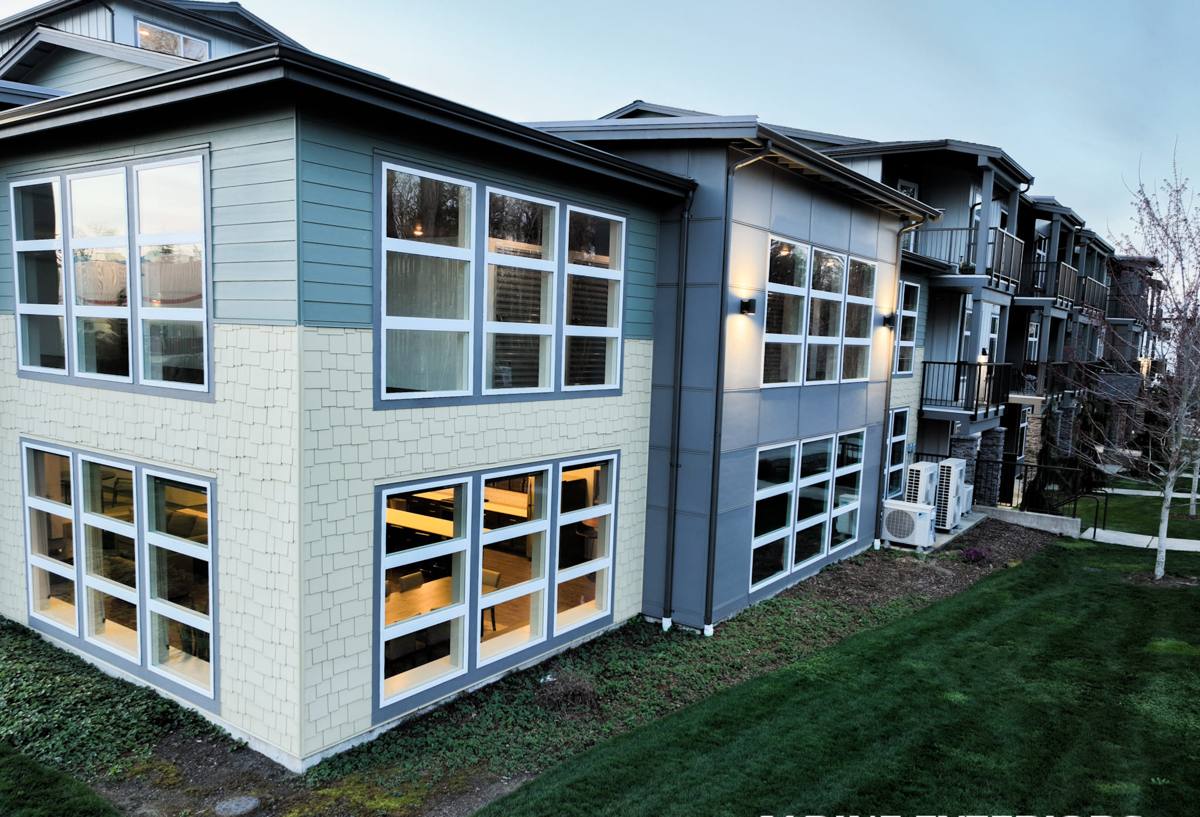
Signs a Crow Valley Home Needs a Window Upgrade
Not every window problem calls for full replacement, but these are the signals worth acting on rather than watching:
- Condensation or fogging between panes, which means a sealed unit's seal has failed and the insulating gas or air gap is gone
- Visible drafts or cold spots near the frame when it's windy or storming outside
- Wood sills or trim that feel soft, show dark staining, or have visible moss or algae growth
- Windows that are difficult to open, close, or latch, which often points to a frame that's swelled, warped, or settled
- Single-pane glass anywhere other than a specialty or decorative window
- Noticeably higher heating bills compared to similar-sized homes nearby, with no other obvious cause
- Paint or finish failing repeatedly around the same window opening despite regular upkeep
What "Energy-Efficient" Actually Means for This Climate
Energy-efficient window shopping usually centers on two numbers: U-factor and Solar Heat Gain Coefficient (SHGC). U-factor measures how much heat the window lets escape — lower is better for a heating-dominated, marine climate like ours. SHGC measures how much solar heat the window lets in — in the Pacific Northwest, where sun exposure is limited and heating costs more than cooling ever will, a moderate-to-higher SHGC is usually the right call rather than the low SHGC glass marketed for hot, sunny climates.
Washington State's energy code sets minimum performance requirements for replacement windows, and a correctly specified window for a Crow Valley home should meet or beat those minimums, not just squeak by. Beyond the glass itself, frame material and installation quality matter just as much as the rating on the sticker — a well-rated window installed with poor flashing will still leak air and moisture around the frame, no matter what the U-factor says.
| Frame Material | How It Handles This Climate | Trade-Offs to Know |
|---|---|---|
| Vinyl | Good insulating value, doesn't corrode in salt air, low maintenance | Can expand and contract with temperature swings; quality varies a lot by manufacturer |
| Fiberglass | Very stable dimensionally, strong resistance to moisture and salt air, holds paint well if a custom color is wanted | Higher upfront cost than vinyl |
| Wood-clad (wood interior, metal or vinyl exterior cladding) | Traditional look that suits older Crow Valley farmhouses, exterior face protected from weather | Interior wood still needs some upkeep; any cladding seam is a spot that needs correct flashing |
| Bare aluminum | Strong and low-maintenance structurally | Poor thermal performance without a thermal break; not a fit for an energy-efficiency upgrade in this climate |
Getting the Installation Right — Where Most Problems Actually Start
A window's published performance rating assumes it's installed correctly. In practice, most of the air leaks, water intrusion, and premature failures we see around window openings trace back to installation shortcuts, not the window itself. That matters more in Crow Valley than in a drier climate, because a poorly flashed opening here doesn't just leak air — it gives wind-driven rain and standing valley moisture a path into the wall assembly, where it can sit against framing for a long time before anyone notices.
A correct installation on a Crow Valley home includes:
- Removing the old window and inspecting the rough opening and sill for existing rot or moisture damage before anything new goes in
- Repairing or replacing any damaged framing or sheathing found during that inspection, rather than boxing a new window in over a compromised opening
- Installing flashing tape and a sloped sill pan so any water that does reach the opening drains back out, rather than pooling against the frame
- Integrating the window's flashing correctly with the home's existing weather-resistive barrier, in the right shingle-lap order, so water sheds down and out at every layer
- Sealing and insulating the gap between the window frame and rough opening fully, without over-compressing insulation in a way that reduces its effectiveness
- Finishing exterior trim and caulking with attention to the joints most exposed to wind-driven rain — typically the top and sides facing prevailing weather
On an older Crow Valley farmhouse or a home with some settling over the decades, rough openings are rarely perfectly square anymore. That's normal, and it's something an experienced installer plans for rather than treats as a surprise mid-job.
Our Process
- On-site evaluation. We look at your existing windows, note condition issues around each opening, and talk through what's actually driving the decision — comfort, energy bills, condensation, or a window that's simply failed.
- Measurement and product selection. Every opening is measured individually rather than assumed uniform, since older homes rarely have perfectly consistent framing. We walk through frame material, glass package, and performance ratings appropriate for this climate.
- Written estimate. You get a clear scope and price before any work is scheduled — no pressure to decide on the spot.
- Scheduling around the weather. Window replacement means the wall is briefly open to the elements, so we plan installation days around forecasted dry windows rather than pushing through a storm.
- Removal and inspection. Old windows come out, and we inspect the opening for hidden moisture or rot before installing anything new.
- Installation. Flashing, sill pans, air sealing, and insulation are installed to spec, followed by the new window and both interior and exterior trim.
- Walkthrough and cleanup. We test operation on every window, walk the job with you, and clear the site of old materials and debris.
Permits and Code Requirements in San Juan County
Whether a window replacement needs a permit in San Juan County depends on the scope of the work — a like-for-like swap in an existing opening is often treated differently than a job that enlarges an opening, adds a new opening, or affects an egress window in a bedroom. We handle that determination as part of the estimate and pull any required permit rather than leaving it for the homeowner to sort out, and we build the current Washington State Energy Code minimums into what we recommend so you're not stuck making a second upgrade a few years down the road.
Why Hiring a Crew That Already Works Crow Valley Matters
Window replacement on Orcas Island comes with logistics that don't exist for a mainland contractor. Materials have to be ordered with ferry schedules in mind, and a crew that hasn't worked the island before can lose days to a missed sailing or a delivery that didn't account for it. A crew that already works Crow Valley regularly also knows the practical realities of the area — the kind of older farmhouse framing that's common there, how shaded, tree-covered lots hold moisture longer after a storm, and how to sequence a job so an opening isn't left exposed any longer than it has to be.
That local familiarity isn't a marketing point — it's the difference between a job that accounts for this valley's specific moisture and weather pattern and one that applies a generic installation approach and hopes it holds up. Given how much of a window's long-term performance rides on installation details rather than the glass itself, that difference matters.
What a Realistic Budget Looks Like
Costs for window replacement vary widely based on frame material, glass package, number of openings, and whether any framing repair is needed once an old window comes out. Rather than quote a number that doesn't reflect your specific home, here's what actually drives the price:
| Cost Factor | Why It Moves the Price |
|---|---|
| Frame material | Vinyl generally costs less upfront than fiberglass or wood-clad options |
| Number and size of openings | More windows and larger openings mean more material and labor |
| Hidden framing or sill damage | Rot or moisture damage found once the old window is out adds repair scope |
| Glass package | Upgraded glass coatings and gas fills for better U-factor cost more than standard double-pane |
| Trim and finish work | Matching existing exterior trim profiles, especially on an older home, takes more labor than a standard trim wrap |
| Access and site conditions | Second-story openings or tight access on a wooded lot can add time |
If you're weighing energy-efficient windows for a Crow Valley home, we're glad to walk through your specific windows in person and give you a straightforward, no-pressure estimate — just fill out the form below.