 Orcas Island Siding
 Decks Built for West Beach's Marine Climate
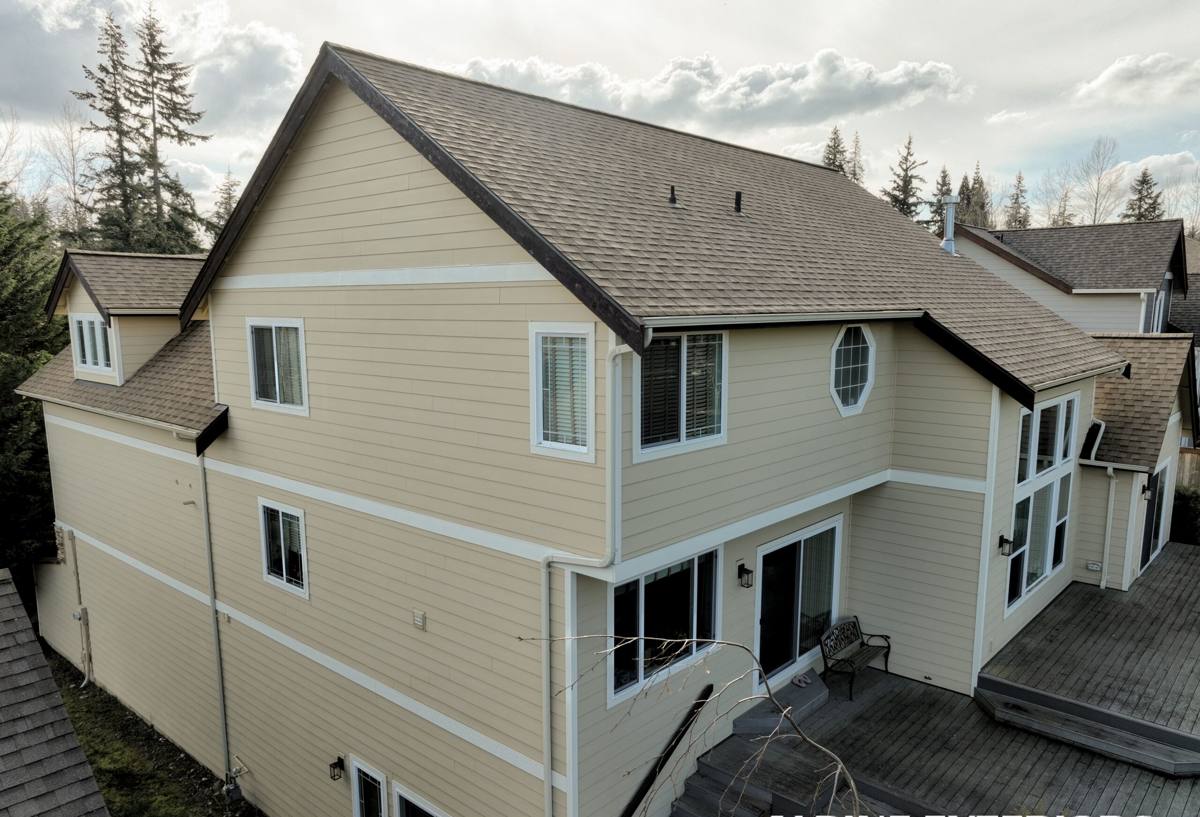
West Beach sits right up against the water on Orcas Island, and that location shapes everything about how a deck should be built here. Salt air, driving rain off the Sound, and a shade-heavy moss season that can stretch from fall through spring all put more stress on outdoor structures than most decking products are designed for out of the box. A deck that looks fine on a lumberyard spec sheet in Arizona doesn't necessarily hold up the same way fifty yards from saltwater in San Juan County. We build decks specifically for this environment, not a generic deck dropped onto a West Beach lot.
What West Beach Conditions Actually Demand From a Deck
Before we talk about boards and railings, it helps to understand what's working against a deck out here year-round.
Salt Air and Metal Fatigue
Airborne salt accelerates corrosion on anything metal, including fasteners, brackets, hinges, and railing hardware. Standard galvanized screws and joist hangers that would last decades inland can start showing rust streaks and weakening within a few seasons this close to the water. Once a fastener starts to corrode, it's not just cosmetic. It loses holding strength, and that's a structural problem, not a maintenance nuisance.
Rain, Runoff, and Standing Water
Orcas Island doesn't get the heaviest rainfall in Washington, but what falls here tends to arrive sideways and linger. Decks that don't shed water properly, whether from flat spots, tight board gaps, or poor slope away from the house, end up holding moisture against the structure for days at a time. That's where rot starts, usually in places you can't see until it's advanced.
Shade, Moss, and Slow-Drying Wood
Many West Beach lots have mature tree cover, which is part of the appeal of living out here but also means less direct sun on a deck surface. Less sun means slower drying after rain, and slower drying means moss, algae, and mildew get a foothold. A deck built without that in mind will need pressure washing and moss treatment every year just to stay safe underfoot.
Choosing the Right Decking Material for This Location
There's no single "best" decking material. There's a best material for your budget, your maintenance appetite, and how exposed your specific lot is. Here's how the common options compare for a West Beach installation:
| Material | Upfront Cost | Maintenance | How It Handles Salt Air & Moisture | Realistic Lifespan Here |
|---|---|---|---|---|
| Pressure-Treated Fir/Pine | Lowest | Annual cleaning, periodic sealing | Fair — needs consistent upkeep to resist rot near the coast | 10-15 years with maintenance |
| Cedar | Moderate | Regular oiling or sealing to hold color and resist moisture | Good natural rot resistance, but surface greys and softens without upkeep | 15-20 years with maintenance |
| Composite / PVC Boards | Highest | Occasional washing, no sealing or staining | Very good — doesn't absorb moisture or feed rot, resists salt staining | 25+ years |
We install all three, and which one makes sense depends on the project. A shaded, close-to-shore lot in West Beach is exactly the situation where composite decking earns its higher upfront cost: less moss to fight, less time spent maintaining, and no wood fibers for moisture to work into over time. On a sunnier, more sheltered lot, cedar can be the right call if you want the look of real wood and are willing to keep up with oiling.
What's Underneath Matters More Than What's On Top
The decking boards are the part everyone sees, but the framing underneath is what determines whether the deck is still safe in fifteen years. A few things we don't cut corners on:
Ledger attachment. The ledger board connects the deck to the house, and it's the single most common point of structural failure on older decks. Correct flashing, proper fasteners, and a real gap for water to escape are non-negotiable, not optional upgrades.
Fasteners and hardware. In a salt-air environment, we use stainless steel or heavy-coated fasteners and connectors rated for coastal exposure, not the standard galvanized hardware that's fine forty miles inland. It costs more upfront and saves the structure from hidden corrosion later.
Joist spacing and footings. Washington's snow and wind loads, plus the soil conditions common on Orcas Island lots, mean footings need to be sized and set correctly, not just deep enough to pass a quick look. We size framing for the actual loads the deck will see, including furniture, hot tubs if that's part of the plan, and gathering-size crowds.
Ventilation underneath. A deck built low to the ground or over a shaded area needs enough airflow underneath to let framing dry out between rains. Skipping this is one of the most common shortcuts we see on older decks that end up needing early repair.
Railings, Stairs, and Code Requirements
Any deck more than a modest height off the ground needs a code-compliant guardrail, and San Juan County follows the state building code for guardrail height, baluster spacing, and stair requirements. These aren't just inspection checkboxes. The spacing rules exist because they keep kids and pets from squeezing through, and the height requirements exist because a low rail doesn't do its job in an actual fall. We design railings that meet code and match the style of the house, whether that's a clean cable rail, traditional wood balusters, or a metal-and-wood combination that holds up to salt air better than an all-wood rail system.
Slip resistance matters as much as looks on stairs and landings here, especially where moss and algae build up on shaded treads. We finish stair treads and high-traffic landing areas with textured or grooved boards, or add a non-slip strip where needed, so the surface stays safer underfoot through the wetter months instead of relying on the homeowner to stay on top of scrubbing moss off every few weeks.
Permitting on Orcas Island runs through San Juan County, and requirements can vary based on deck height, size, and proximity to shoreline setback lines, which matters more in West Beach than in most inland parts of the island given how close many lots sit to the water. We handle that permitting conversation as part of the project instead of leaving it for the homeowner to sort out.
Designing Against Moss and Mildew From the Start
You can't eliminate moss season on Orcas Island, but you can build a deck that doesn't feed it. That means:
- Proper board spacing so water and debris don't collect in the gaps
- A slight, consistent slope so water actually runs off instead of pooling
- Grading and drainage at ground level so runoff from the deck doesn't just sit underneath it
- Material choices matched to how much sun the specific spot actually gets, not a one-size-fits-all spec
- Railing and post details that don't create ledges and pockets where wet debris collects
None of this is exotic. It's just designing for the site instead of using the same plan on every lot regardless of shade and exposure.
Repair, Rebuild, or Resurface: Sorting Out an Aging Deck
If you're dealing with an aging deck rather than starting from scratch, it's worth having someone check the framing before assuming a simple resurface will fix it. Soft spots near the ledger, rust streaks around fasteners, or a deck that feels springy underfoot are signs the structure itself has been affected, not just the surface boards. Replacing decking on top of compromised framing just hides the problem for a season or two. We'll tell you honestly whether a repair, a partial rebuild, or a full replacement is the right call for your situation.
Our Process, Start to Finish
Every West Beach deck project follows the same basic sequence, though the details shift with the site:
- On-site walk to look at sun exposure, drainage, tree cover, and existing structure if we're replacing a deck
- Design and material conversation based on your budget and how much maintenance you actually want to do long-term
- Written estimate with the material and structural specs spelled out, not a vague lump sum
- Permitting through San Juan County where required
- Framing built to coastal-grade fastener and hardware standards
- Decking, railing, and stair installation
- Final walkthrough so you know what maintenance, if any, the specific materials we used will need
Construction timing matters more out here than in a lot of places, mostly because of how weather and ferry availability line up with the building season. Late spring through early fall gives the driest, most predictable working conditions for framing and finishing a deck. That doesn't mean winter projects are off the table; it just means the schedule needs to account for more weather delays and shorter daylight windows. We plan around that instead of pretending the calendar doesn't matter.
Why a Crew That Already Works West Beach Matters
Getting materials, crews, and equipment out here takes planning that a mainland contractor unfamiliar with island logistics can underestimate. Ferry schedules affect delivery timing, and a crew that hasn't worked the island before can lose days to logistics that a local crew has already worked out. Beyond logistics, a contractor who's built decks around West Beach before has already seen how a given lot's shade pattern, wind exposure, or soil holds up over a few seasons, which is knowledge you can't get from a spec sheet. That experience shows up in fewer surprises during the project and a deck that's built for the specific conditions of your lot, not a generic coastal template.
If you're thinking about a new deck or replacing one that's showing its age, we're glad to walk the site with you and put together a straightforward, no-pressure estimate — just fill out the form below.