 Orcas Island Siding
 North Beach Sits Right at the Edge of What Siding Has to Handle
Homes along North Beach face a version of Pacific Northwest weather that's a step harder than what you'll find a few miles inland. Being close to the water means more direct exposure to salt-laden air, wind-driven rain that hits siding at an angle instead of just falling straight down, and the kind of shaded, damp microclimate that lets moss and algae take hold on north- and west-facing walls almost year-round. San Juan County's marine climate is mild in temperature, but mild doesn't mean easy on a building envelope — persistent moisture is a harder problem to solve than cold ever is.
Siding in this setting isn't just a cosmetic layer. It's the first line of defense against a slow, cumulative kind of damage: water finding its way behind panels through poor flashing or caulk-dependent joints, salt air accelerating corrosion on fasteners and trim, and moss holding moisture against the wall long after a storm has passed. A siding job that looks fine going up can still fail early if it wasn't detailed for this specific exposure.
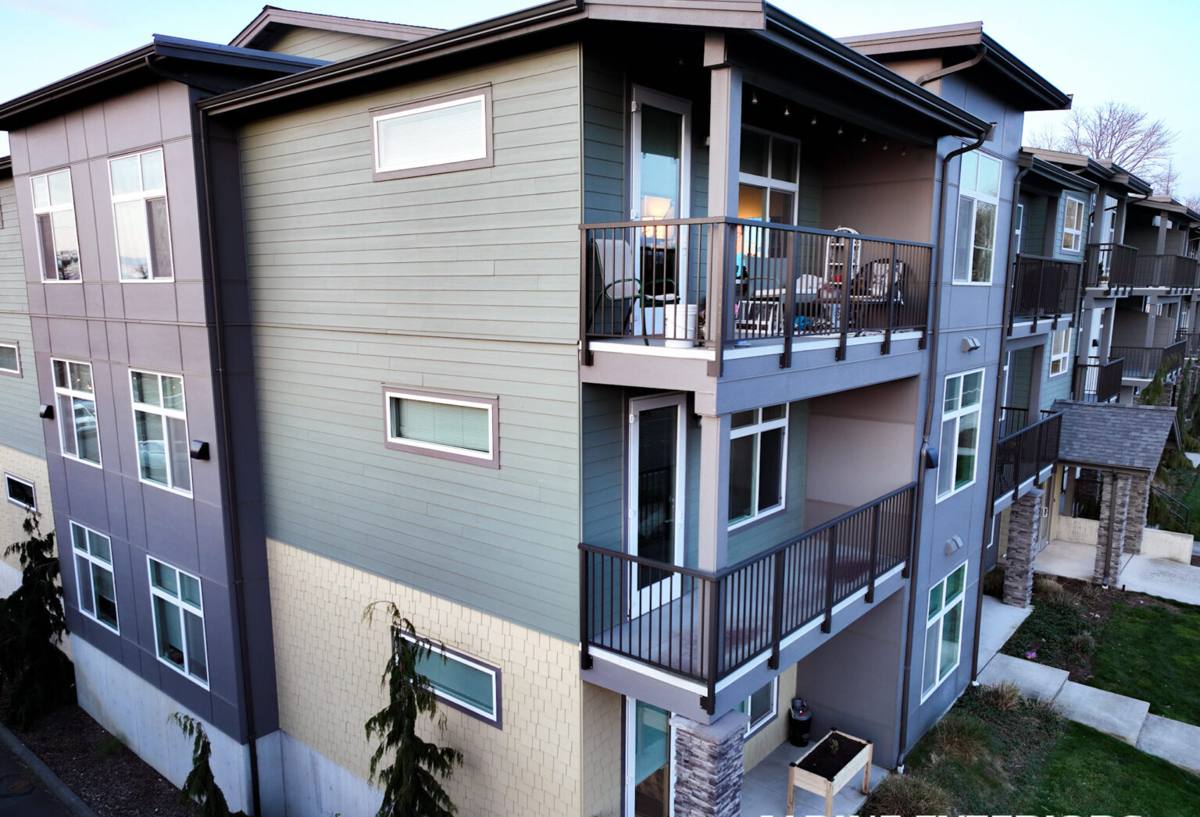
What Siding Actually Needs to Do on a Home Like Yours
Before talking about products or installation steps, it helps to be clear on what "good siding" is actually accomplishing on a North Beach home:
- Shed wind-driven rain without relying on caulk as the primary defense
- Resist moisture absorption so panels don't swell, cup, or hold water against the wall assembly
- Stand up to salt air without corroding fasteners or degrading the finish
- Discourage moss and algae growth, or at least not give them an easy foothold
- Hold paint and color without chalking or fading from UV and salt exposure combined
- Stay dimensionally stable through repeated wet-dry cycles
Every material handles this list differently, and the differences show up over years, not months — which is exactly why the choice matters more here than it would in a drier, more sheltered part of the county.
Why We Only Install James Hardie Fiber Cement
We standardized on James Hardie fiber cement siding for every home we work on, including North Beach, and it's not a brand preference — it's a response to what this climate does to alternatives. Fiber cement is dimensionally stable and doesn't absorb moisture the way engineered wood products can, which matters directly on walls that see driving rain. It's non-combustible, which is a real consideration anywhere on Orcas Island given wildfire risk during dry summer stretches, even in a generally wet climate. And James Hardie's ColorPlus factory finish is baked on and warranted against fading and chipping, which holds up better under UV plus salt exposure than field-applied paint typically does over time.
James Hardie also builds climate-specific HZ product lines engineered for regions like ours — formulated to resist moisture-related damage in areas that see extended wet seasons. That's a meaningfully different design intent than a general-purpose siding product, and it's a big part of why we don't install LP SmartSide, vinyl, Cemplank, Allura, primed spruce, or cedar. Each of those has legitimate uses somewhere, but none of them match Hardie's combination of moisture behavior, fire performance, factory-finish durability, and warranty structure for a coastal, high-moisture environment like North Beach.
What This Means in Practice
Choosing Hardie isn't the end of the decision — it's the starting point. The product still has to be installed correctly to deliver on any of the above. A great material with sloppy flashing, tight-butted joints, or under-driven fasteners will still fail early. The installation details below are just as important as the material choice.
What Correct Installation Looks Like Here
Fiber cement siding is only as good as the water management system behind it. On an exposed North Beach elevation, we pay particular attention to:
- Weather-resistive barrier and flashing sequence — installed so every layer sheds water downward and outward, never trapping it behind the cladding
- Proper gaps and clearances — panel-to-trim, panel-to-panel, and bottom clearance from grade, deck, or roofline set per manufacturer spec, not tightened up for looks
- Fastener pattern and depth — correctly spaced and driven so panels aren't over-compressed or under-secured, which matters more where wind loads are higher near open water
- Joint and butt-seam treatment — sealed and backed properly rather than relying on caulk alone as a water barrier
- Trim and penetration detailing — windows, vents, and any wall penetrations flashed so they don't become the entry point that undermines an otherwise solid job
None of this is unusual for fiber cement installation in general — but on a home exposed to driving rain and salt air, skipping or rushing any one of these steps shows up faster than it would somewhere more sheltered.
Our Process for a North Beach Project
Assessment
We start by walking the exterior and identifying which elevations take the worst of the weather — usually the sides facing open water or prevailing wind — and which have existing moss, staining, or moisture issues that point to problems in the wall assembly, not just the surface.
Prep and Water Management
Old siding comes off, the sheathing gets inspected for hidden rot or moisture damage (common on homes that have had years of marginal flashing), and the weather-resistive barrier and flashing get installed or corrected before a single piece of new siding goes up.
Installation
James Hardie panels, lap siding, or trim go on to manufacturer spec, with extra attention to the elevations we flagged during assessment. Fasteners and trim hardware are selected with corrosion resistance in mind, given the salt air.
Finish and Walkthrough
We walk the finished job with the homeowner, point out anything worth knowing for long-term care, and make sure everything's sealed and detailed the way it should be — not just presentable from the curb.
Fiber Cement vs. the Alternatives, for This Climate
| Factor | James Hardie Fiber Cement | Vinyl | Engineered Wood (e.g. LP SmartSide) | Cedar / Primed Spruce |
|---|---|---|---|---|
| Moisture absorption | Very low | Doesn't absorb, but seams can trap water behind panel | Moderate — vulnerable at cut edges and joints | High — needs consistent maintenance to manage |
| Salt air / corrosion resistance | Strong when installed with corrosion-resistant fasteners | Panel is fine; trim hardware can be a weak point | Moderate; moisture at fasteners is a longer-term risk | Moderate; fasteners and finish both need upkeep |
| Fire resistance | Non-combustible | Combustible, can deform under heat | Combustible | Combustible |
| Factory finish durability | ColorPlus, warranted against fade/chip | Color molded in, can fade and chalk over time | Field or factory paint, variable durability | Requires ongoing paint/stain maintenance |
| Moss/algae resistance | Good, especially with proper detailing | Moderate | Moderate | Lower — porous surface holds moisture |
Signs Your Current Siding May Be Losing the Battle
Homeowners on North Beach often notice these before they call anyone — it's worth knowing what they usually mean:
- Persistent moss or dark streaking that comes back within weeks of cleaning
- Soft spots, bubbling, or visible swelling, especially near the base of walls or under windows
- Paint that's peeling or chalking heavily on one elevation but not others (usually the water-facing side)
- Visible rust streaks near fasteners or trim hardware
- Gaps, warping, or panels that have pulled away slightly at seams
- A musty smell or interior staining on the wall directly behind an exterior problem area
Any one of these on its own isn't necessarily an emergency, but a couple together usually means the wall assembly behind the siding is dealing with more moisture than it should be.
What Drives Cost on a Project Like This
Every home is different, but the main variables that move the price on a North Beach siding installation are generally the same ones that matter anywhere on the island, weighted a little differently because of the exposure:
| Factor | Why It Matters Here |
|---|---|
| Extent of hidden damage | Homes with years of moisture intrusion may need sheathing repair before new siding goes on |
| Elevation exposure | Water- and wind-facing walls may warrant extra flashing detail and time |
| Site access | Waterfront and rural lots can add logistics for material delivery and staging |
| Trim and detail complexity | Windows, dormers, and multiple rooflines add labor beyond flat wall area |
| Siding profile chosen | Lap, panel, and shingle-style Hardie products vary in material and labor cost |
We give a real number after seeing the home, not a generic square-footage estimate — too much of the cost here depends on what condition the wall is actually in underneath the old siding.
Why Hire a Crew That Already Works This Area
Siding installation on North Beach isn't fundamentally different work than siding anywhere else on Orcas Island — but a crew that's used to this stretch of San Juan County knows to expect the moss, knows which elevations tend to take the worst weather, and doesn't treat flashing and clearances as optional extras. That familiarity shows up in fewer callbacks and a job that's still performing well years after installation, not just at the final walkthrough.
If you're dealing with aging siding, visible moss, or just want a straight answer on what your home actually needs, we're glad to take a look. Reach out for a free, no-pressure estimate — there's a form right below.