 Orcas Island Siding
 Board & Batten Siding on Shaw Island: What Actually Matters
Shaw Island sits in the middle of San Juan County, reachable only by ferry, which shapes almost everything about how a siding project there needs to be planned and executed. Homes here face the same marine exposure as the rest of the San Juan Islands — salt-laden air off the water, long stretches of driving rain through the fall and winter, and a moss season that can run for months on shaded roof lines and north-facing walls. Board and batten siding, when built and installed correctly, holds up well against all three. Done wrong, or built from the wrong material, it becomes a maintenance headache within a few years. This page is about getting it right for a Shaw Island home specifically.
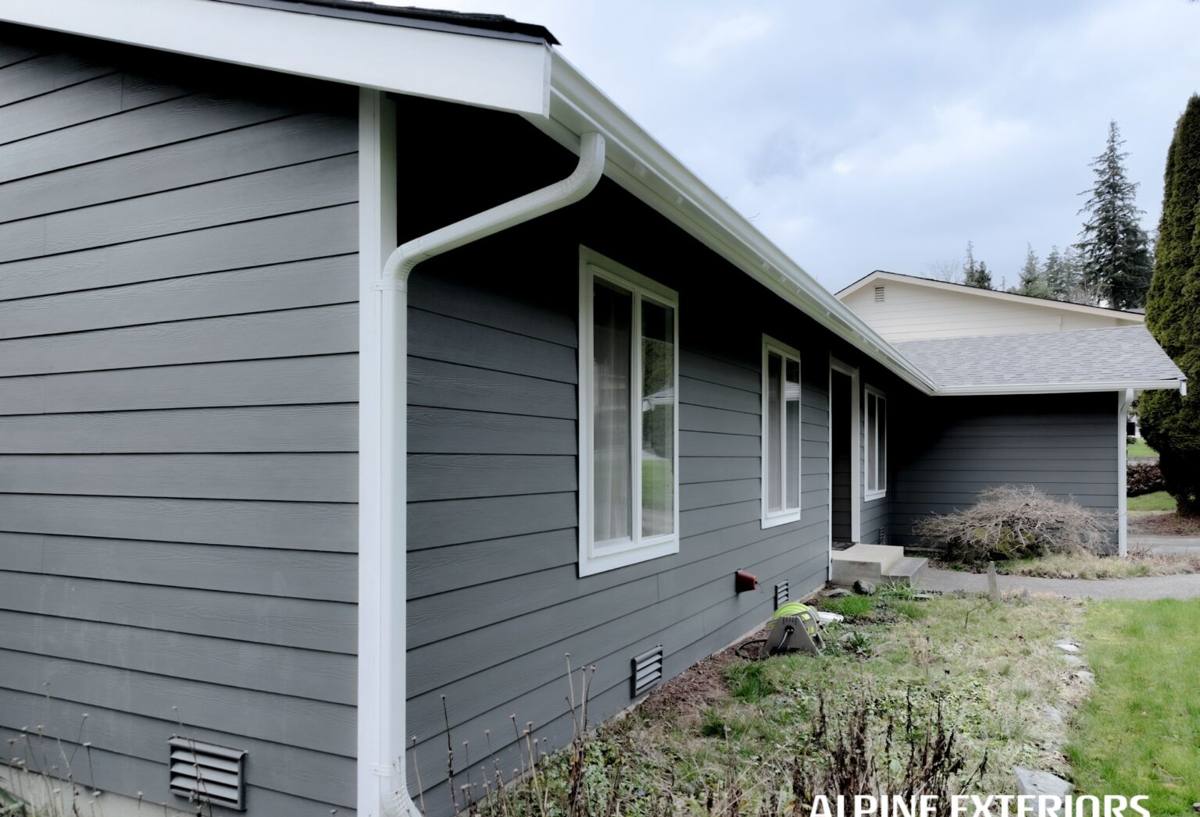
Why Board & Batten Works for This Island
Board and batten is a vertical siding pattern: wide boards installed with their edges butted or gapped, then covered at the seams by narrower strips called battens. It has a clean, distinctly Pacific Northwest look that suits the barns, cabins, and modest single-family homes common on Shaw Island and throughout the San Juans. But the appeal isn't just aesthetic. The vertical orientation sheds water more directly than horizontal lap siding, which matters on a property that takes driving rain off the water for days at a time. Fewer horizontal ledges also means fewer places for moss spores and organic debris to collect and hold moisture against the wall.
That said, board and batten has a real weak point: the seams. Every batten strip creates a joint, and every joint is a place where water can work its way behind the siding if the fastening, gapping, and flashing aren't done to spec. On an island where a slow leak can go unnoticed for a season between visits, that detail is not optional — it's the difference between siding that lasts decades and siding that needs rework in five years.
What Shaw Island's Climate Actually Does to Siding
Salt Air
Airborne salt off the surrounding waters accelerates corrosion on fasteners, flashing, and any exposed metal trim. Standard construction-grade fasteners will rust and streak long before the siding itself fails. It also degrades cheaper paint finishes faster than inland climates, which is why factory-applied, baked-on finishes hold up so much better here than field-applied paint.
Driving Rain
Wind-driven rain off the water doesn't just fall — it pushes sideways into wall assemblies, seams, and trim joints. A siding system that relies on caulk alone to keep water out will eventually let water in. What keeps a wall dry through a real Pacific storm is a correctly lapped water-resistive barrier, proper flashing at every penetration and horizontal transition, and battens fastened in a way that doesn't trap moisture against the board underneath.
Moss Season
Shaded, north-facing walls and anything near tree cover stay damp far longer than sun-exposed elevations. Moss and algae don't just look bad — sustained dampness against a wood-based or poorly sealed substrate accelerates rot and paint failure. A siding material that resists moisture absorption at the material level, not just at the surface, holds up dramatically better under these conditions than one that depends entirely on paint film to stay dry.
Why We Install James Hardie Board & Batten and Nothing Else
We get asked why we don't offer board and batten in vinyl, LP SmartSide, cedar, or primed spruce. Each of those has legitimate uses elsewhere, but none of them holds up the way we want on a Shaw Island exposure, and we'd rather turn down work than install something we know will disappoint a homeowner in ten years.
- Vinyl is inexpensive and low-maintenance in mild climates, but it's a poor fit for a marine environment with real wind — it can warp, fade, and crack at fastening points, and seams on vertical vinyl board and batten are a known weak spot for wind-driven rain intrusion.
- LP SmartSide is engineered wood — better than old-style hardboard, but it's still wood at its core, meaning it depends entirely on an intact factory coating and careful field sealing at every cut edge to keep moisture out. Miss one cut edge in a high-rain environment and rot can start from the inside out.
- Cedar is beautiful and traditional, and it's a defensible choice for homeowners who want it specifically — but it requires real, ongoing maintenance (refinishing, sealing, moss treatment) to survive constant coastal moisture, and most owners underestimate that commitment until the siding is already showing wear.
- Primed spruce is the least durable of the group in this climate — the primer is a starting point, not a finished, weather-resistant surface, and it needs a full paint job immediately and recoating on a short cycle to avoid moisture damage.
James Hardie fiber cement is non-combustible, dimensionally stable, and doesn't absorb water the way wood-based products do, which matters enormously in a climate defined by sustained dampness. The ColorPlus factory finish is baked on under controlled conditions — far more consistent and durable against salt air and UV than a field-applied coat, and it comes with its own finish warranty. Hardie's HZ5 product line is engineered for exactly this kind of exposure. We install this system because we've seen how it performs on island homes over time, not because it's the only thing we know how to install.
What a Correct Board & Batten Installation Involves
The material is only half the equation. A Hardie board and batten job installed to spec involves a specific sequence, and skipping steps is where most siding failures start — regardless of brand.
- Full inspection and repair of the wall sheathing before anything new goes on
- A continuous, properly lapped water-resistive barrier behind the siding
- Correct fastener spacing and type — stainless or coated fasteners rated for coastal exposure, not standard galvanized
- Proper gapping between boards to allow for expansion, per Hardie's published specifications
- Battens fastened independently of the underlying board where required, not just nailed straight through both layers
- Flashing at every window, door, and horizontal trim transition — not caulk used as a substitute for flashing
- Correct clearance from grade, decks, and roof lines to keep the bottom edge of the siding out of standing moisture
- Factory-cut and factory-primed edges used wherever possible, with any field cuts properly sealed
Any one of these done wrong can undercut an otherwise good material. This is the level of detail that separates a siding job that lasts thirty years from one that needs attention in year six.
Cost Factors for a Shaw Island Project
Every project is different, but the factors that actually move the price on an island job like this are consistent. We won't quote numbers without seeing the home, but here's what drives the estimate up or down:
| Factor | Why It Matters |
|---|---|
| Existing siding removal | Tear-off, disposal, and any sheathing repair found underneath adds time and material cost |
| Wall complexity | Dormers, multiple gables, and cut-in trim take more labor per square foot than a simple rectangular wall |
| Access and logistics | Ferry scheduling and material delivery timing on an island job affect crew efficiency and project sequencing |
| Trim and flashing scope | Full flashing replacement at windows and transitions costs more up front but is what prevents callbacks |
| Color and finish selection | Standard ColorPlus colors versus specialty finishes can shift material cost |
| Site conditions | Tree cover, slope, and staging space affect how efficiently a crew can work |
Why a Crew That Already Works Shaw Island Matters
Island jobs are logistically different from mainland siding work. Material has to be ordered, staged, and ferried over with enough lead time that a delayed sailing doesn't stall a crew mid-project. Weather windows for tear-off and dry-in matter more when you can't just run to a supply yard for a missing part. A crew that already routes through the San Juan Islands regularly has that logistics figured out — they know how to sequence a project around ferry schedules and shifting weather instead of learning it for the first time on your home. That experience shows up in fewer delays and fewer surprises, not just in the finished wall.
Maintenance and Long-Term Performance
One of the practical advantages of Hardie board and batten on an island property is how little ongoing maintenance it demands compared to wood-based alternatives. There's no annual sealing or refinishing cycle. Occasional rinsing to keep moss and salt residue from building up on shaded elevations, and a visual check of caulking at trim joints every year or two, is realistically all it takes. That matters on a property that isn't checked on daily — a low-maintenance exterior is one less thing to worry about between visits.
Get an Honest Look at Your Project
If you're considering board and batten siding for a home on Shaw Island, we're happy to come take a look, walk the exterior with you, and give you a straightforward, no-pressure estimate — including an honest read on what your current siding and sheathing condition actually calls for. Use the form below to get started.