 Orcas Island Siding
 Why Shaw Island Siding Takes a Beating
Shaw Island sits inside the same marine weather system that shapes every home in San Juan County, but its small year-round population and ferry-only access mean homes here often go longer between inspections. That's a problem, because the combination of salt-laden air, driving winter rain, and a long shoulder season of damp, low-light weather is exactly the recipe that breaks down the wrong siding material fastest. Wood siding absorbs moisture and starts to cup, split, or rot from the back side where nobody's looking. Vinyl gets brittle in cold snaps and can't stand up to wind-driven rain finding its way behind loose panels. Even primed wood trim, if it isn't fully sealed on every cut edge, becomes a soft spot within a few seasons.
Add in Shaw's tree cover — much of the island is wooded, and homes tucked under a canopy get less direct sun and airflow — and you get ideal conditions for moss and algae to colonize a wall surface. Moss doesn't just look bad. It holds moisture against the siding surface for days after a storm has passed, which accelerates rot in wood-based products and telegraphs through paint on almost anything that isn't factory-finished.
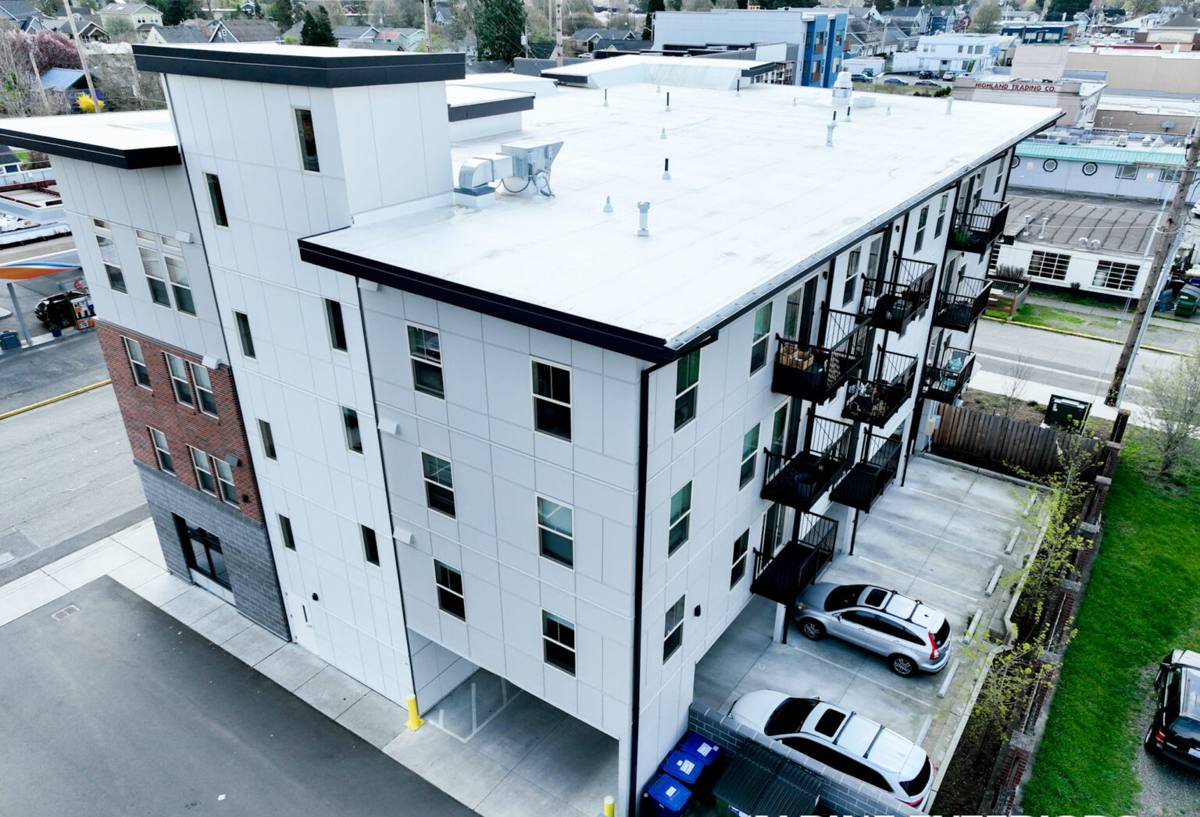
What Shaw Island Homes Actually Need From Their Siding
Given that climate, the siding on a Shaw Island home needs to do three things well: shed water aggressively, resist moisture absorption at the material level (not just at the paint layer), and hold its finish without repainting every few years. This is the entire reason we standardized on James Hardie fiber cement and stopped installing wood, vinyl, and engineered-wood products like LP SmartSide. Fiber cement doesn't rot, doesn't feed moss the way wood fiber does, and with a factory-baked ColorPlus finish, the color layer is cured onto the board before it ever reaches the island — it isn't relying on a field-applied coat of paint to survive marine air.
Salt Air and Corrosion
Salt exposure isn't just cosmetic. It accelerates corrosion in fasteners and trim hardware, which is why the fastener schedule and flashing details matter as much as the siding material itself. A board that resists moisture but is hung with the wrong fasteners will still fail early around every nail head.
Moss and Shade
On heavily shaded lots, we pay close attention to where siding meets grade, where roof lines shed water directly onto walls, and where landscaping crowds the building. Moss needs sustained dampness to take hold, and a lot of that comes down to keeping air moving and water draining away from the wall assembly rather than the siding material alone.
Fiber Cement vs. the Alternatives
Homeowners on Shaw Island often ask why we won't quote vinyl or LP SmartSide alongside Hardie. Both have a place in drier climates, but neither holds up as well against sustained marine moisture and moss pressure. Here's the honest comparison:
| Material | Moisture Behavior | Finish Longevity | Our Position |
|---|---|---|---|
| James Hardie fiber cement | Doesn't absorb water into the board or feed rot | Factory ColorPlus finish, decades before repaint | What we install |
| LP SmartSide (engineered wood) | Wood-strand core can swell or delaminate if cut edges and seams aren't perfectly sealed and maintained | Field or factory finish, more upkeep in wet climates | Not installed by our crew |
| Vinyl | Doesn't rot, but panels can warp or let wind-driven rain behind them; doesn't stop moss growth on the surface | Color is in the material but fades and chalks over time; not repaintable easily | Not installed by our crew |
| Cedar / primed wood | Absorbs moisture readily; highest rot risk in this climate | Needs repainting or restaining every few years | Not installed by our crew |
This isn't a knock on any manufacturer — LP and vinyl products are engineered to a price point and perform reasonably in the right climate. But we install exteriors that have to survive San Juan County winters for 30-plus years with minimal upkeep, and fiber cement is the product that consistently does that without asking the homeowner to babysit it.
What Correct Fiber Cement Installation Involves
Fiber cement only performs as well as its installation. A rushed or generic install can undercut the material's advantages, especially in a wet climate like Shaw Island's.
Water Management First
Before any siding goes up, we confirm the water-resistive barrier is continuous and properly lapped, and we install a rain-screen gap behind the siding wherever the wall assembly calls for it. That gap lets any moisture that does get past the siding drain and dry out instead of sitting against the sheathing — a detail that matters more here than almost anywhere else in the region.
Fastening and Clearances
We follow James Hardie's published fastening schedule and use corrosion-resistant fasteners appropriate for a coastal environment, not whatever's cheapest on the truck. Siding is held off grade, decks, and roof lines by the clearances Hardie specifies, so water sheds away from the wall instead of wicking up into the bottom course.
Cuts, Caulk, and Trim
Every field cut gets sealed per manufacturer spec, and we don't rely on caulk to cover for a bad joint. Butt joints, corners, and penetrations are detailed so caulk is doing its job as a secondary seal, not the only thing standing between the wall and the weather.
Getting the Job Done Right on an Island
Shaw Island's ferry-only access changes how a siding project has to be planned. Materials, crew, and equipment all move on a schedule that isn't ours to set, so we plan deliveries and crew days around ferry availability and build in buffer time rather than promising a timeline we can't control. Weather windows matter too — fiber cement installation and any exposed cut sealing needs dry conditions, and on an island where a storm can roll in fast off the water, we watch the forecast closely and sequence the job so the house isn't left exposed mid-install.
A crew that's worked Shaw Island before already knows to plan this way. A crew coming out for a one-off job often doesn't, and that shows up as delays, rushed work near the end of a weather window, or trips that get cut short.
Our Process
- On-site assessment — we look at the existing siding, wall assembly, moisture history, sun/shade exposure, and any moss or rot already present before we scope the job.
- Prep and moisture check — old siding comes off, sheathing is inspected and repaired as needed, and we confirm the wall is dry before anything new goes up.
- Water-resistive barrier and rain-screen install — the barrier is lapped correctly and the drainage gap is built in per the wall assembly.
- Hardie siding and trim installation — installed to manufacturer fastening and clearance spec, with every cut edge sealed.
- Final walkthrough — we check flashing, caulk lines, and clearances with the homeowner before calling the job done.
Living With Fiber Cement on Shaw Island
One of the real advantages of switching to Hardie in this climate is how little the homeowner has to do afterward. That said, a marine, moss-prone environment still calls for basic upkeep to keep the exterior looking and performing its best:
- Rinse siding annually to clear salt residue and organic buildup before it can support moss growth
- Keep gutters clear so roof water isn't dumping directly onto siding runs
- Trim back vegetation and tree limbs that shade and crowd exterior walls
- Check caulk lines at trim and penetrations every couple of years and touch up if needed
- Address any moss on adjacent surfaces (roof, walkways) promptly so it doesn't spread onto siding
None of this is the constant maintenance wood or paint-dependent siding demands — it's basic upkeep that protects an investment built to last decades in this climate.
Why Local Experience Matters for This Job
Siding work on Shaw Island isn't the same job as siding work in a mainland subdivision. It requires planning around ferry schedules, reading the specific moisture and shade patterns of San Juan County's wooded lots, and knowing how salt air and driving rain actually behave against a wall assembly over years, not just during the install. A crew that already works this island brings that judgment to the job before the first board goes up, instead of learning it at the homeowner's expense.
If you're weighing a siding project on Shaw Island, we're happy to take a look at your home, walk you through what correct fiber cement installation involves for your specific site, and give you a straightforward, no-pressure estimate.