 Orcas Island Siding
 Shaw Island is one of the quieter corners of San Juan County — small, wooded, reached only by state ferry, and a place where a deck project doesn't get planned the same way it would on the mainland. We build custom decks for homeowners out here, and this page is about what that actually involves: what the climate does to a deck over time, what a correctly built one needs from the ground up, and how the logistics of working on a ferry-access island change the plan before a single board gets cut.
What Shaw Island's Climate Does to a Deck
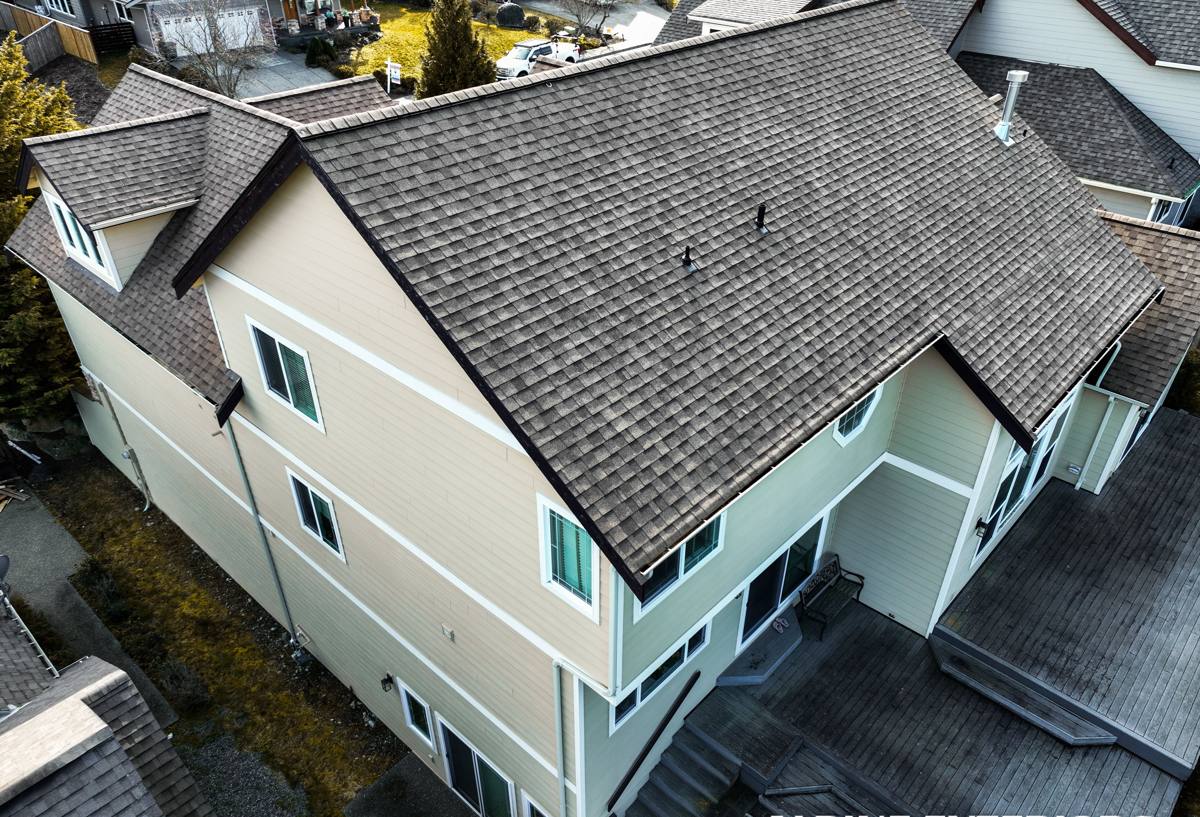
A deck takes more direct, sustained weather exposure than almost anything else on a property. It sits flat under open sky, catches rain straight on instead of shedding it down a wall, and often sits low enough to grade that moisture from the ground works into it from underneath as well as above. On Shaw Island, that exposure comes with a specific set of stresses: salt-laden air moving off the surrounding water that accelerates corrosion in fasteners and hardware, driving rain that doesn't just fall but gets pushed sideways into railings, ledger connections, and joist framing, and a moss season that can run most of the year on shaded, north-facing decks tucked under fir and cedar canopy.
None of that is unusual for the San Juan Islands generally, but it adds up differently on a deck than it does on a wall. Wood siding sheds water vertically and dries relatively fast; a horizontal deck surface holds standing water in every low spot, gap, and fastener recess until it either drains, evaporates, or soaks in. Add salt air working on any exposed metal and a moss season that keeps board surfaces damp and shaded for weeks at a stretch, and you get a structure that will show problems fast if it wasn't built with this specific climate in mind.
Where Decks Actually Start to Fail Here
It's rarely the decking surface itself that goes first. More often it's a ledger board that wasn't properly flashed where the deck meets the house, letting water track behind the siding and into the rim joist. It's fasteners and structural hardware that weren't rated for a marine environment, corroding from the inside of a connection where you can't see it happening. Or it's a shaded section of decking that stays damp long enough for moss to take hold, holding moisture against the wood surface long after the rest of the deck has dried.
Choosing Decking Material for a Shaw Island Home
There's no single right answer here — pressure-treated lumber, cedar, and composite decking all show up on San Juan County decks, and each one is a legitimate choice with real trade-offs. What matters is picking the one that fits your maintenance appetite, your budget, and how much shade and salt exposure your specific site actually gets, and then installing it correctly for this climate.
| Material | Upfront Cost | Maintenance in This Climate | Moss & Salt Resistance |
|---|---|---|---|
| Pressure-treated lumber | Lowest | Needs re-sealing every 1-2 years; fasteners and hardware must be rated for treated lumber's chemical exposure | Fair — treatment resists rot, but surface stays vulnerable to moss without upkeep |
| Cedar | Mid to high | Regular oiling or staining to hold color and protect the surface; more frequent on sun- and salt-exposed sections | Good natural rot resistance, but an organic surface still supports moss growth if it stays damp |
| Composite decking | Highest | Occasional washing; no staining or sealing required | Best — non-organic surface doesn't feed moss or algae the way wood does, though buildup can still sit on top and needs rinsing |
Composite tends to be the lowest-maintenance choice for a shaded, salt-exposed Shaw Island lot precisely because it isn't feeding the moss the way a wood surface can. That said, plenty of homeowners want the look and feel of real wood and are willing to keep up a sealing schedule for it — that's a legitimate call as long as you go in with a realistic sense of what the upkeep actually requires out here, where getting materials or a crew back out isn't a same-day errand.
Framing, Footings, and Hardware Below the Decking
The decking surface is what you see, but the framing underneath is what actually determines how long a deck lasts. This is also where most of the corners get cut on decks that fail early, because the mistakes are invisible until something gives.
Ledger Flashing
Where a deck attaches to the house, the ledger board needs correct flashing to keep water from tracking behind the siding and into the rim joist and framing. This is the single most common source of hidden rot on attached decks, and it's a detail that's easy to see done right or wrong if you know to look for it — a flashed ledger sheds water away from the house; an unflashed or poorly flashed one lets it collect right at the connection.
Footings
Footing depth and type need to account for local frost depth and whatever the site's soil and terrain actually look like — San Juan County ground can be rocky, root-filled, or uneven depending on the lot, and footings need to be sized and placed to hold the structure regardless. Concrete footings poured below frost depth are the standard approach; helical piers are sometimes the better call on sites where digging a proper footing is difficult.
Fasteners and Structural Hardware
This is where salt air does the most damage if it's overlooked. Standard galvanized fasteners and joist hangers will corrode faster in a marine environment than they would inland, and a corroding connector loses holding strength well before it looks obviously bad from the outside. Stainless steel or coated fasteners rated for coastal exposure cost more upfront and are worth every dollar of it on a Shaw Island deck.
Railings and San Juan County Permitting
Railings aren't optional on most decks and aren't just a style choice — guardrail height and baluster spacing are set by building code, and getting them wrong is both a safety issue and a code compliance issue. Wood, composite, and cable railings are all common choices; the right one usually comes down to the look you want and how much upkeep you're willing to put into it, since cable railing hardware needs the same salt-air-rated fastener attention as the rest of the structure.
San Juan County requires a building permit for most deck construction, particularly for decks above a certain height off grade or attached to the primary structure. Permitting adds a step to the timeline, but it also means the project gets reviewed against code requirements for footings, framing, and guardrails before it's built rather than after — worth factoring into your project timeline from the start rather than treating it as an afterthought.
Why Ferry Access Changes How We Plan a Deck Project
Building on Shaw Island isn't the same job as building on the mainland with a different backdrop. Every board, every bag of concrete, every box of fasteners has to make it onto the island on a ferry schedule, and if something gets missed or measured wrong, "running back to the yard" isn't a same-day fix the way it would be somewhere with road access. That changes how a project gets planned from the start.
We order and stage materials with enough margin to cover what a site actually needs, plan crew time in blocks that make sense against the ferry schedule rather than assuming we can pop back out for a half-day, and build in realistic buffer for weather delays that can affect ferry sailings as much as they affect the work itself. A contractor who doesn't already build this way tends to find out the hard way, mid-project, with materials stuck on the wrong side of the water and a crew standing around. We've done enough work in San Juan County to plan around it instead of learning it in real time on your project.
Our Process for a Shaw Island Deck Build
- Site visit and design. We look at your site's sun exposure, shade, soil, and how the deck will connect to the house, and talk through material options against your budget and maintenance preferences.
- Permitting. We handle the San Juan County permit application and design details needed to satisfy footing, framing, and guardrail requirements.
- Material staging. Decking, framing lumber, footings materials, and marine-rated hardware are ordered and staged for ferry transport with enough lead time to cover delays.
- Framing and footings. Footings go in to proper depth for the site and local frost line, ledger flashing is installed correctly at the house connection, and the frame goes up with corrosion-rated fasteners throughout.
- Decking and railings. Your chosen decking material and railing system are installed to spec, with attention to drainage and spacing that helps the deck shed water and dry out between wet spells.
- Final walkthrough. We go over the finished deck with you, including what maintenance schedule makes sense for the material you chose and this climate.
Keeping a New Deck Ahead of Moss and Salt
A well-built deck still needs some ongoing attention in this climate — the goal of good construction is to make that upkeep minimal and manageable, not to eliminate it entirely. A few habits go a long way:
- Sweep debris and organic buildup off the deck surface regularly, especially in shaded areas where moss gets a foothold fastest
- Rinse the deck periodically to clear salt residue and organic buildup before it has time to set in
- Trim back overhanging branches where practical to let more sun and airflow reach shaded sections
- Check railing connections and structural hardware annually for early signs of corrosion, especially anything exposed to direct salt air
- Re-seal or re-stain wood decking on the schedule appropriate to the product, and don't let it slide a season or two past due
- Confirm gaps between boards stay clear so water actually drains through rather than pooling on the surface
None of this is complicated, but it matters more here than it would somewhere drier and less exposed, and it's a lot easier to keep up with when the deck was built with correct flashing, drainage, and hardware in the first place.
A Deck Built for This Island, Not a Generic Spec
A deck that would hold up fine in a dry inland climate can fail early on Shaw Island if it's built to a generic spec instead of this one — standard fasteners in salt air, unflashed ledger connections, or decking chosen without accounting for a shaded lot's moss exposure. We build for the conditions this island actually has, and we plan the logistics of working on a ferry-access site into the project from day one instead of discovering the problem partway through.
If you're considering a custom deck for a Shaw Island property, we're glad to come take a look at your site, talk through material and layout options, and give you a straight answer about what we think makes sense for your house and budget. Reach out for a free, no-pressure estimate.