 Orcas Island Siding
 Roofing on Shaw Island: A Different Set of Conditions
Shaw Island doesn't get talked about as much as its larger neighbors, but the homes here face the same demanding mix of weather that defines roofing work across the San Juan Islands: salt-laden air off the water, long stretches of driving rain in the fall and winter, and shaded, damp conditions that let moss and moisture-loving growth take hold on roofs that don't get much direct sun or wind to dry them out. An asphalt shingle roof that's installed correctly for this environment can perform well for decades. One that's installed with mainland assumptions — standard ventilation, minimal flashing, no real algae resistance — tends to show problems years before it should.
This page is about that one job, done right, for this one place: asphalt shingle roofing on Shaw Island homes, and what it actually takes to get a roof that holds up to island weather instead of just looking good on install day.
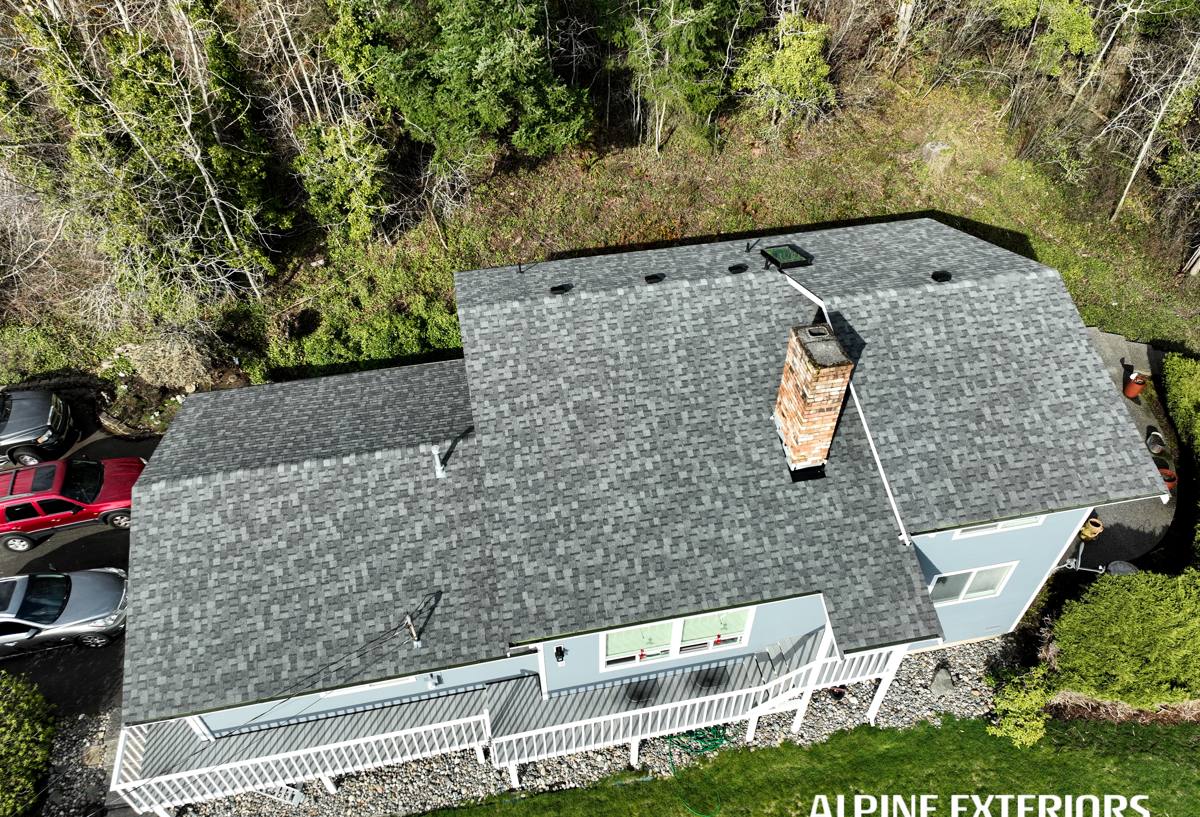
Why Asphalt Shingles Still Make Sense Here
Asphalt shingles remain the most common roofing material on Shaw Island and the wider Orcas Island area for good reason. They're a proven, well-understood system with a wide range of price points, they're manufactured to handle wind and rain when installed to spec, and repairs are straightforward compared to some of the specialty roofing systems homeowners sometimes consider for coastal properties. The key is matching the shingle and the installation details to the actual conditions, not just installing a standard package and hoping it holds.
Architectural vs. Three-Tab
Architectural (laminated) shingles have largely replaced older three-tab shingles for a reason relevant to island homes specifically: their heavier, multi-layer construction gives them better wind resistance and a longer expected service life, which matters when a roof is exposed to the kind of sustained gusts and driving rain that come off the water. Three-tab shingles are lighter, cheaper, and can still be appropriate for outbuildings or budget-driven projects, but for a primary home roof on Shaw Island, architectural shingles are almost always the better long-term value.
What a Correct Installation Actually Involves
A shingle roof is only as good as the layers underneath it. On a marine-climate island roof, several of these details matter more than they would on a drier inland job.
Tear-Off and Deck Inspection
We don't install new shingles over old ones, and we don't install over a deck we haven't inspected. Roofing over existing layers traps moisture and hides the condition of the plywood or board sheathing underneath — a real problem on a roof that's been absorbing salt air and rain for years. A full tear-off lets us check the deck for soft spots, rot, or delamination and replace only what actually needs it, rather than guessing.
Underlayment and Ice-and-Water Protection
Synthetic underlayment across the full roof, with self-adhering ice-and-water membrane at the eaves, valleys, and any roof penetrations, is the baseline for this climate — not an upgrade. Valleys and eaves are where wind-driven rain backs up under shingles during a hard storm, and that's exactly where a lot of hidden leaks start on island roofs that were built to a lower spec.
Ventilation
Balanced intake and exhaust ventilation keeps the attic space dry and close to outdoor temperature, which does two things: it protects the roof deck from the underside, and it helps prevent the kind of trapped moisture that speeds up moss and mildew growth on the shingles themselves. A roof can be shingled perfectly and still fail early if the attic underneath it is holding moisture.
Flashing at Every Transition
Chimneys, skylights, dormers, and wall-to-roof transitions are where most leaks actually originate — not in the open field of shingles. Properly formed step flashing, counterflashing, and valley metal, sealed and layered correctly with the underlayment, are what keep those transition points dry through years of driving rain.
Moss, Algae, and Salt Air: The Ongoing Maintenance Reality
No roofing material is maintenance-free on Shaw Island, but the choices made at installation change how much maintenance a roof actually needs. Standard shingles can develop dark algae streaking and moss growth within a few years in shaded, damp spots — especially on north-facing slopes or under tree cover, which is common on wooded island lots. Shingles manufactured with algae-resistant granules (copper- or zinc-infused) resist that staining significantly longer, though they don't eliminate the need for periodic moss removal on roofs with heavy shade or debris buildup.
| Factor | Standard Shingles | Algae-Resistant Shingles |
|---|---|---|
| Algae/moss staining timeline | Can appear within 2-4 years in shaded areas | Resistance typically holds much longer |
| Upfront cost | Lower | Modestly higher per square |
| Best fit | Sunny, open, well-ventilated roof planes | Shaded, tree-covered, or north-facing roof planes |
| Maintenance need | Earlier and more frequent cleaning | Reduced but not eliminated |
On most Shaw Island homes we recommend algae-resistant shingles on any roof plane that sits under trees or stays shaded most of the day, and standard or upgraded shingles on planes that get regular sun and wind exposure. Mixing the choice by roof plane, rather than defaulting to one product for the whole roof, is often the more cost-effective approach.
Our Process for Shaw Island Projects
Working on a smaller San Juan County island adds a logistics layer that mainland roofing jobs don't have. Materials, equipment, and crew all move by ferry, so scheduling and staging matter more here than they would on a job a few miles from a supply yard.
- On-site assessment and measurement, with photos of deck condition, flashing points, and ventilation as they exist today
- A written scope and estimate that separates material selection, deck repair allowances, and labor so you know what you're paying for
- Material ordering and delivery timed around ferry schedules, staged so the crew isn't waiting on materials once the tear-off starts
- A defined weather window — we don't start a tear-off without a realistic dry stretch to get the roof dried in
- Daily site cleanup, including magnetic sweep for nails and staples around the work area
- A final walkthrough covering flashing, ventilation, and any deck repairs that were made
What Drives Cost on a Shaw Island Re-Roof
| Cost Factor | Why It Matters Here |
|---|---|
| Roof size and pitch | Steeper pitches and multiple roof planes take longer and require more safety equipment |
| Deck condition | Rot or soft sheathing found at tear-off adds material and labor that can't be fully known until the old roof is off |
| Shingle grade | Standard three-tab, architectural, and algae-resistant options each carry different material costs |
| Number of penetrations | Chimneys, skylights, and vents each require individual flashing work |
| Access and logistics | Ferry-dependent material delivery and equipment staging affect scheduling and, in some cases, cost |
We'll always give you a broad, honest range up front and a firm number once we've seen the roof in person — not a low estimate designed to get a signature and change later.
Signs a Shaw Island Roof Needs Attention
A few things worth checking, or asking us to check, before a small problem becomes a bigger one:
- Granule buildup in gutters or downspouts, which signals shingles are wearing faster than expected
- Dark streaking or moss patches concentrated on shaded or north-facing roof planes
- Curling, cracked, or missing shingles, especially after a winter storm cycle
- Soft or spongy spots on the roof deck felt from inside the attic
- Daylight visible through the roof deck at any point from inside the attic
- Water stains on ceilings or in the attic near chimneys, skylights, or valleys
Any one of these is worth a look before the next heavy rain season rather than after.
Why a Crew That Already Works Orcas Island and Shaw Island Matters
Roofing crews who work exclusively on the mainland don't always account for what island jobs actually require — ferry-dependent scheduling, higher exposure to wind-driven rain, and the moss and algae pressure that comes with the region's tree cover and humidity. A crew that already works the San Juan Islands on a regular basis knows how to plan material delivery around ferry sailings, how to read a roof's exposure and shading before recommending a shingle type, and how to build in flashing and ventilation details that hold up to this specific climate rather than a generic specification sheet. That local familiarity tends to show up less in how a new roof looks and more in how it performs five, ten, and fifteen years down the road.
Get a Straight Answer on Your Roof
If you're weighing a re-roof, dealing with early moss growth, or just want an honest read on how much life is left in your current roof, we're glad to take a look. Reach out for a free, no-pressure estimate through the form below.