 Orcas Island Siding
 Why San Juan Island Homes Go Through Siding Faster Than Mainland Homes
Homes in San Juan County live in a different climate than a house 40 miles inland. San Juan Island and the surrounding waters of the Salish Sea put every exterior wall in the path of salt-laden air, wind-driven rain that comes in sideways off the water, and a long, damp shoulder season where moss and algae get a real foothold on north-facing walls. None of this is dramatic on its own, but it is constant, and constant is what wears siding out.
Salt air is corrosive to exposed fasteners and metal trim, and it accelerates the breakdown of paint film on wood and composite products. Driving rain finds every gap in flashing and caulk long before a homeowner notices a problem, because the damage happens behind the siding, not on the surface. And moss season — which on the islands can run from fall through spring — holds moisture against the wall assembly for months at a time, which is exactly the condition that rots wood trim, delaminates weaker composite panels, and keeps paint from curing properly on repaint jobs.
None of that means island homes need exotic materials. It means they need siding, flashing, and fasteners chosen and installed with this specific climate in mind, by people who already know what it does to a wall.
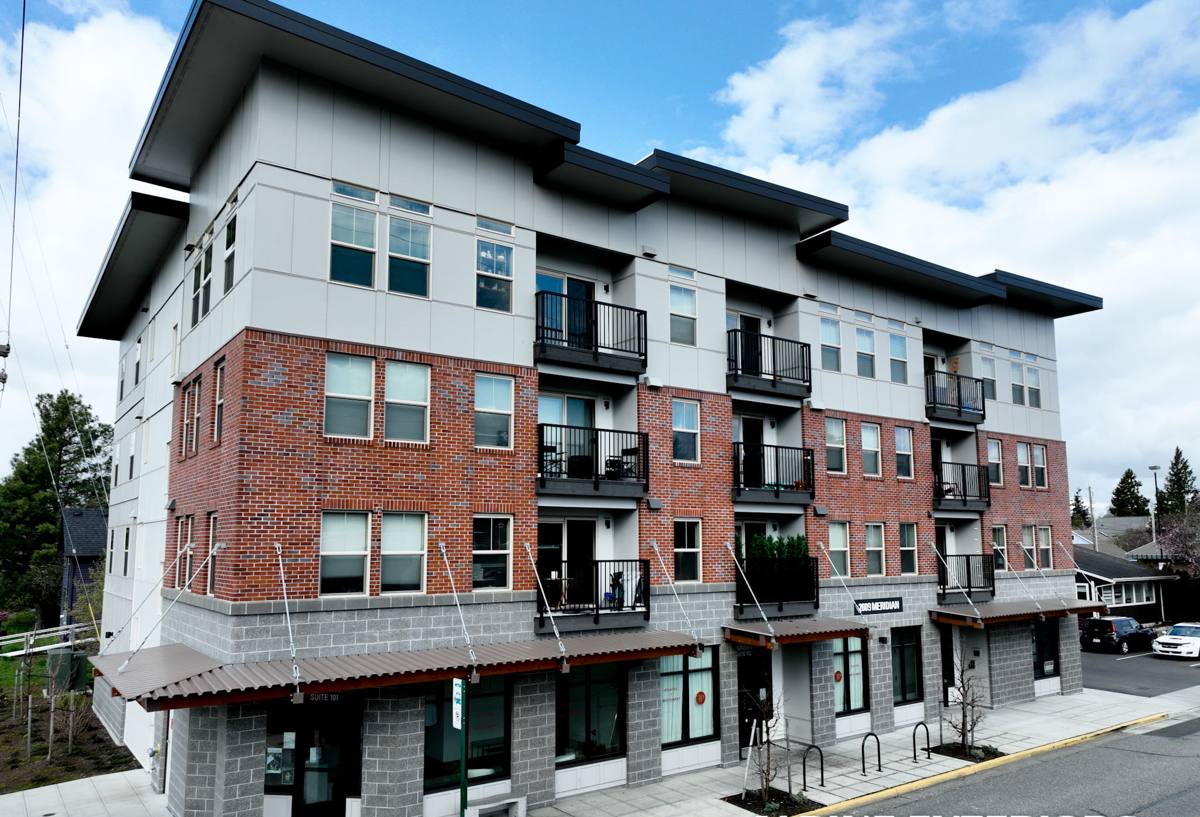
Signs Your San Juan Island Home's Siding Has Reached the End
Siding failure on the islands is rarely one dramatic event. It's usually a slow accumulation of small signs that, together, mean the wall assembly is no longer doing its job.
- Paint that's failing repeatedly in the same spots, especially on the north and west-facing walls that take the worst of the wind and moss
- Soft or spongy boards near the bottom of walls, around window trim, or at deck ledgers — a strong sign of moisture behind the siding, not just on it
- Visible cupping, warping, or separation at panel seams
- Persistent moss or algae staining that returns within a season or two of cleaning
- Cracked or rusting caulk joints and corroding fasteners
- A musty smell in an interior room that shares a wall with a problem area
- Siding that's simply original to a much older home and has never been fully replaced or re-flashed
Any one of these can often be repaired. Several together, especially with soft wood underneath, usually mean it's more cost-effective to replace the affected walls properly than to keep patching a system that's already compromised.
What a Correct Siding Replacement Actually Involves
Siding replacement is not just removing old panels and nailing up new ones. On a marine-climate island property, the work that happens underneath the siding matters more than the siding itself.
Tear-off and inspection
Once the old siding comes off, we inspect the sheathing, framing, and existing flashing for rot, soft spots, or prior water damage — especially around windows, doors, and any place two rooflines or wall planes meet. Anything compromised gets repaired or replaced before anything new goes back on. Covering up damaged sheathing with new siding just hides the problem for a few more years.
Weather-resistive barrier and flashing
A correctly lapped weather-resistive barrier, properly integrated window and door flashing, and a drainage plane behind the siding are what actually keep wind-driven rain out of the wall. This is the step that gets rushed on cut-rate jobs and it's the step that determines whether a house stays dry through its next twenty years of San Juan County winters.
Installation to manufacturer spec
Correct fastener spacing, proper clearances at grade and roof lines, and factory-specified gaps at joints all affect how the siding performs and how long its warranty stays valid. We install to the manufacturer's published specifications, not shortcuts that look fine on install day and fail two winters later.
Trim, caulking, and paint touch-up
Finish work — corner trim, caulking at penetrations, and any factory-finish touch-up — is where a job either looks sharp for years or starts showing seams within a season. We treat this as part of the install, not an afterthought.
Why We Install Only James Hardie Fiber Cement
We get asked why we don't offer vinyl, LP SmartSide, cedar, or other fiber cement brands. The honest answer is that after years of working island and coastal homes, we standardized on one system because it holds up best against exactly the conditions San Juan Island throws at a wall.
| Material | How it handles this climate | Why it's not what we install |
|---|---|---|
| Vinyl siding | Sheds rain well when new, but flexes and can warp with temperature swings and wind loads off the water | Seams and butt joints open over time, giving moisture a path in; limited long-term color durability |
| Cedar / primed spruce | Natural look, but wood is the material most vulnerable to the moss, rot, and moisture the islands see | Requires frequent repainting and vigilant maintenance to avoid the rot issues described above |
| LP SmartSide | An engineered wood product — better moisture resistance than raw cedar, but still wood-based | Wood-based composites remain more sensitive to sustained moisture exposure than fiber cement |
| Other fiber cement brands | Similar core material to Hardie | We standardized on one manufacturer's factory finish, warranty, and climate-specific product line for consistency and accountability |
| James Hardie fiber cement | Non-combustible, dimensionally stable, engineered moisture and climate-specific product lines | What we install on every job |
James Hardie fiber cement doesn't absorb water the way wood does, doesn't warp the way vinyl can, and carries a factory-applied ColorPlus finish that's baked on rather than site-painted, which matters when your paint has to survive months of damp, low-light island winters. It's also non-combustible, which is a real advantage during dry summer wildfire-smoke seasons in the Pacific Northwest. We back it with a strong transferable manufacturer warranty and stand behind our own installation on top of that.
Working on San Juan Island: Logistics That Matter
Island projects have real logistical differences from a mainland job, and pretending otherwise is how homeowners end up with delayed timelines and surprise costs.
- Ferry scheduling — material deliveries and crew transport are planned around ferry sailings, not around a generic mainland schedule. We build that into the project timeline up front instead of discovering it mid-project.
- Weather windows — tear-off and dry-in work is scheduled around realistic weather windows for San Juan County, not just a calendar date, because an exposed wall in a surprise rain event is a real risk on the water.
- Material staging — because a forgotten trim piece can't be picked up at a nearby hardware store the way it could on the mainland, we order thoroughly and stage extra on-site.
- Local knowledge — a crew that already works Orcas Island and the surrounding San Juan Islands knows which wall orientations take the worst weather and plans the job accordingly.
What Drives the Cost of a Siding Replacement Here
| Factor | Why it affects your project |
|---|---|
| Extent of hidden damage | Rotted sheathing or framing found during tear-off adds repair scope that can't be priced until the old siding is off |
| Home size and wall complexity | More corners, dormers, and roof-to-wall transitions mean more flashing detail and labor time |
| Siding profile and trim selection | Lap width, trim style, and accessory details affect material cost and install time |
| Access and staging | Waterfront lots, steep driveways, or limited staging space on an island property can affect scaffolding and delivery logistics |
| Existing paint or coating removal | Some older siding requires careful handling or disposal considerations before tear-off begins |
We won't quote a firm number without seeing the home, but we'll always explain what's driving the estimate and flag anything that could change once we're behind the old siding.
Maintenance After Replacement
New Hardie siding is low-maintenance, not no-maintenance. A yearly rinse to knock down salt residue and early moss growth, a periodic check of caulk joints at windows and trim, and prompt attention to anything that looks off after a hard winter storm will keep a properly installed system performing for decades. Because the factory finish is baked on rather than site-applied, you're not on a repainting cycle the way you would be with wood siding — that alone removes one of the biggest recurring maintenance burdens island homeowners deal with.
Why Hire a Crew That Already Works the Islands
A contractor who only occasionally works San Juan County has to relearn the ferry schedule, the weather patterns, and the material logistics on your dime. A crew that already works Orcas Island and the surrounding islands regularly has that built into how we bid, schedule, and execute the job — which means fewer surprises and a tighter timeline for you.
If your San Juan Island home's siding is showing its age — soft spots, chronic moss staining, failing paint, or you're simply planning ahead — we're happy to take a look and give you a straight, no-pressure assessment of what it actually needs. Fill out the form below for a free estimate.